American Pulls Philadelphia-Doha As Qatar Airways Eyes A Return To PHL
American Airlines appears to be walking away from one of the most unusual long-haul routes in its network: Philadelphia International Airport (PHL) to Doha Hamad International Airport (DOH).

The route had been suspended amid continued instability and airspace concerns in the Middle East, with American previously expected to push any return into early 2027. Now, the Philadelphia–Doha nonstop has reportedly been removed from future sale altogether, suggesting the carrier no longer intends to resume the route in its own metal.
For Philadelphia (PHL), the change is significant. Doha (DOH) was the longest route American had ever operated from the airport and one of the most ambitious long-haul services in the carrier’s modern network. The flight linked American’s strongest Northeast hub with Qatar Airways’ global hub at Doha, giving passengers one-stop access to destinations across the Middle East, South Asia, East Africa, Southeast Asia, and beyond.
Read our stories in your inbox
Two aviation newsletters. Zero fluff.
The route may not disappear from Philadelphia for long, however. Qatar Airways is reportedly preparing for a possible return to PHL, with hiring activity suggesting the carrier could step back into the market it left in 2023 when American took over the service.
If that happens, it would mark a full-circle moment for a route that has already changed hands once between two oneworld partners.
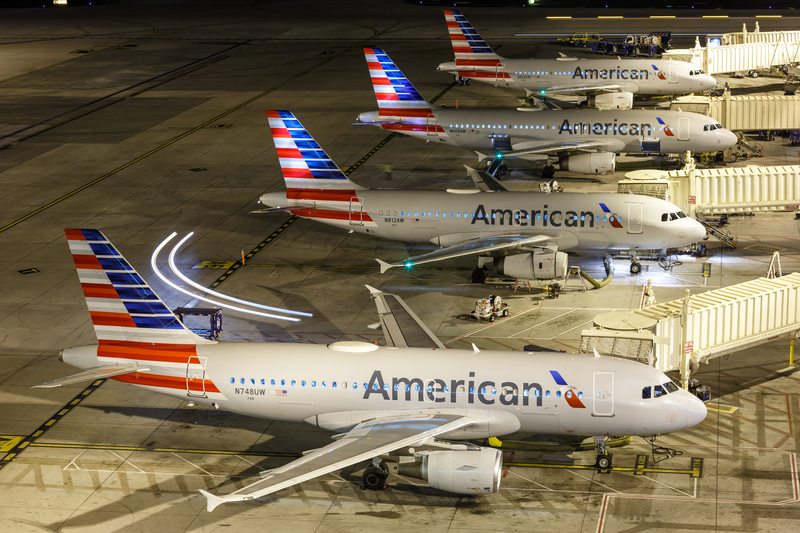
American’s Longest Philadelphia Route Is Off The Board
American’s Philadelphia (PHL) to Doha (DOH) route covered roughly 6,798 miles, or about 10,940 kilometers.
That made it the longest nonstop route ever operated from Philadelphia (PHL), easily exceeding American’s transatlantic services to cities such as Athens (ATH), Rome (FCO), Zurich (ZRH), Barcelona (BCN), and London Heathrow (LHR). The longer westbound sector from Doha (DOH) to Philadelphia (PHL) could approach 14.5 hours, depending on routing, winds, and airspace restrictions.
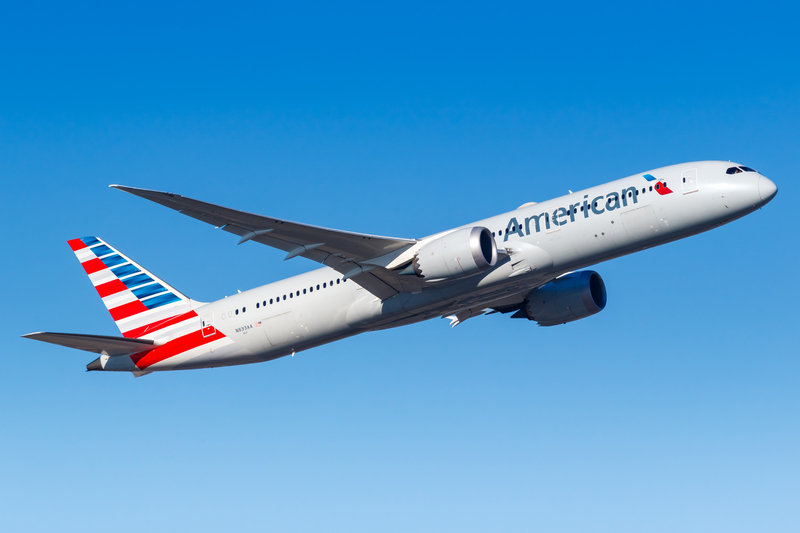
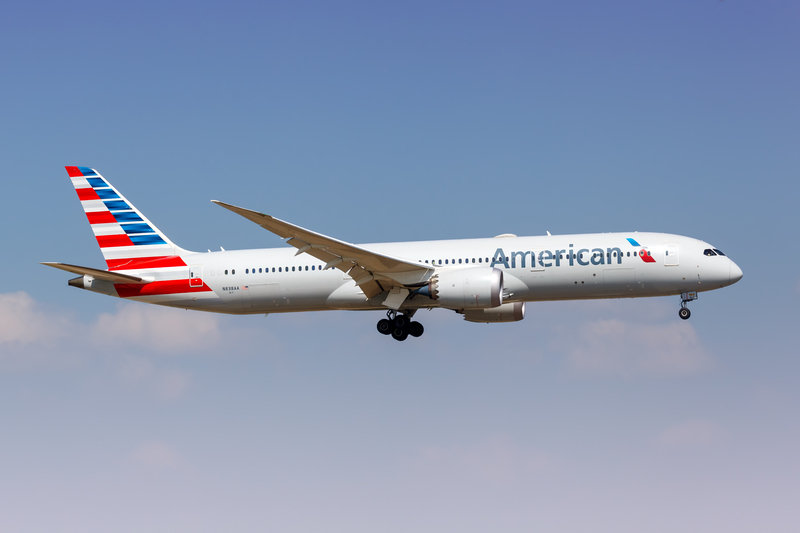
American operated the route with the Boeing 787-9 Dreamliner. The aircraft was a logical choice for the mission. It gave American the range to operate deep into the Middle East while providing a three-cabin long-haul product with Flagship Business, Premium Economy, Main Cabin Extra, and Main Cabin seating.
The 787-9 also gave American enough cargo and passenger capability for a route built heavily around connecting traffic. Philadelphia–Doha was not simply about local Philadelphia–Qatar demand. It was about feeding Qatar Airways’ massive Doha hub.

That made the route strategically interesting, but also vulnerable.
Why American Launched Philadelphia–Doha
American first launched Doha service from New York John F. Kennedy International Airport (JFK) in 2022. The route was notable because it came after years of tension between American and Qatar Airways during the U.S. carrier campaign against Gulf airline expansion.
That relationship later improved. American and Qatar Airways restored and expanded their partnership, and the Doha route became part of a broader oneworld strategy.
In October 2023, American shifted its Doha operation from New York (JFK) to Philadelphia (PHL). The move made sense on paper. American’s Northeast Alliance with JetBlue had been unwound, reducing the value of JFK as a long-haul feed point. Philadelphia, by contrast, remained a true American hub with a large domestic network and strong connecting flows from the Northeast, Midwest, Southeast, and parts of Canada.
At the same time, Qatar Airways ended its own Doha–Philadelphia service, freeing the market for American to operate the nonstop while preserving the joint network value through the partnership.
The result was unusual: a U.S. airline operating a deep Middle East route to feed a Gulf partner’s hub.
The Route Was More About Connections Than Local Demand
Philadelphia (PHL) to Doha (DOH) was never a traditional local market route.
There is some local demand between Pennsylvania, New Jersey, Delaware, and Qatar, especially tied to business, education, government, and energy-related travel. But that alone would not support a daily Boeing 787-9.
The route’s real value was beyond Doha.
Qatar Airways’ hub at Hamad International Airport (DOH) gives passengers access to cities across South Asia, the Middle East, Africa, and Southeast Asia. For American passengers in Philadelphia and beyond, the route opened one-stop itineraries to markets such as Lahore (LHE), Islamabad (ISB), Karachi (KHI), Dhaka (DAC), Kathmandu (KTM), Colombo (CMB), Hyderabad (HYD), Chennai (MAA), Bengaluru (BLR), Delhi (DEL), Mumbai (BOM), Nairobi (NBO), Dar es Salaam (DAR), and many others.
That is the kind of connectivity American cannot replicate on its own.
American has a large transatlantic network, but it does not have a major Middle East, South Asia, or Africa long-haul network. Qatar Airways fills that gap for oneworld. From a partnership perspective, PHL–DOH was a way for American to keep passengers inside the oneworld ecosystem rather than losing them to Emirates, Etihad, Turkish Airlines, Air India, Lufthansa Group, Air France-KLM, or other competitors.
Why The Route Became Harder To Operate
The route’s strategic logic did not protect it from geopolitical and operational risk.
American suspended the service amid heightened Middle East security concerns and airspace disruption. The issue was not simply demand. It was the complexity of operating a very long route into a volatile region, with routing, insurance, crew planning, passenger confidence, and aircraft utilization all affected.
For American, the Doha route was also a one-off. Unlike Qatar Airways, which has an entire hub and fleet strategy built around Doha (DOH), American had only a small Middle East presence. When one route becomes operationally difficult, a carrier with a limited regional footprint has less reason to fight through the disruption.
That is especially true when its partner can potentially operate the route instead.
A Boeing 787-9 used on Philadelphia–Doha is a high-value aircraft tied up for a long rotation. If the route is not operating reliably, American can redeploy that aircraft to other long-haul markets where it has more control, more local demand, or stronger hub economics.
That appears to be where the carrier has landed.
Qatar Airways May Be The More Natural Operator
If Qatar Airways returns to Philadelphia (PHL), it would be a logical development.
Qatar Airways launched Doha (DOH)–Philadelphia (PHL) in 2014, shortly after joining oneworld. It operated the route for nearly a decade before ending service in 2023, when American shifted Doha flying to PHL.
The Qatari carrier is simply better built for this market.
For Qatar Airways, Philadelphia is an outstation feeding its global hub. Every passenger boarding at PHL can connect over Doha into a vast long-haul network. The aircraft, crew, scheduling, catering, and network design all fit the Qatar Airways model.
For American, the same route required a U.S. airline to operate an ultra-long sector to a partner hub, with much of the revenue dependent on onward connections beyond Doha. That can work, but it is less natural.
Qatar Airways also has a stronger brand proposition for many passengers traveling to South Asia, the Middle East, and Africa. Its onboard product, global network, and Doha hub are well known in those markets. If it returns to PHL, it may be able to capture demand more efficiently than American did, even if the two remain close partners.
A Formal Qatar Announcement Is Still Missing
The key caveat is that Qatar Airways has not yet officially announced a Philadelphia return.
The current evidence is based on industry reporting and hiring activity at Philadelphia (PHL), including airport-based roles that suggest a station restart may be in planning. That is a strong signal, but it is not the same as a loaded schedule, bookable flights, or a formal airline announcement.
Until Qatar Airways publishes the route, the proper framing is that the airline appears to be preparing for a return, not that it has definitively resumed service.
That distinction matters for passengers and airport stakeholders. Airline hiring can precede a launch, but route plans can still change based on aircraft availability, regulatory timing, security conditions, commercial performance, and alliance coordination.
Still, the logic is strong. If American is out of the market and Qatar Airways is staffing up at PHL, the pieces point in one direction.
Philadelphia Still Matters To American
American’s Doha exit should not be read as a retreat from Philadelphia.
Philadelphia (PHL) remains one of American’s most important hubs, particularly for transatlantic flying. The airport has long served as American’s main East Coast gateway to Europe, a role inherited from US Airways and strengthened by American’s large domestic feed network.
The airline has continued to use PHL for routes that fit the hub especially well: European markets with strong summer demand, secondary cities that may not work as well from larger hubs, and long-haul routes that benefit from American’s domestic connections.
In summer 2026, American launched or resumed notable Philadelphia long-haul flying, including Budapest (BUD) and Prague (PRG) with Boeing 787-8 aircraft. It also continues serving major European markets such as London Heathrow (LHR), Dublin (DUB), Rome (FCO), Barcelona (BCN), Athens (ATH), Zurich (ZRH), Amsterdam (AMS), Lisbon (LIS), and others depending on season.
Looking ahead, American plans to launch Philadelphia (PHL) to Porto (OPO) in summer 2027 using the Airbus A321XLR, subject to government approval. That is exactly the kind of route Philadelphia is increasingly built for: a long, thin European market where a widebody may be too much aircraft, but a premium long-range narrowbody can work.
The A321XLR Changes Philadelphia’s Future
American’s planned Porto route shows where Philadelphia’s long-haul growth may be headed.
The Airbus A321XLR gives American the ability to fly smaller long-haul routes with lower trip costs than a widebody. That matters for a hub like Philadelphia (PHL), where the airline can combine local demand with connecting traffic but may not need a 787 or 777 on every route.
A321XLR routes can open markets such as Porto (OPO), Edinburgh (EDI), Naples (NAP), or other secondary European cities where demand is real but not necessarily large enough for daily widebody service.
That is a very different strategy from Philadelphia–Doha.
Doha required a 787-9 flying nearly 6,800 miles to feed a partner hub across a geopolitically sensitive region. Porto requires a smaller aircraft flying a more conventional transatlantic mission into a strong leisure and VFR market.
Both are international routes, but the risk profile is completely different.
American appears to be leaning into the latter.
What PHL Loses Without Doha
The loss of Doha still matters.
Without a nonstop PHL–DOH flight, Philadelphia loses a direct link to one of the world’s most powerful connecting hubs. Passengers heading from the region to South Asia, the Middle East, and Africa will need to connect elsewhere unless Qatar Airways returns.
Some will route through New York (JFK), Washington Dulles (IAD), Boston (BOS), Chicago O’Hare (ORD), or Dallas/Fort Worth (DFW). Others may connect in Europe over London (LHR), Frankfurt (FRA), Paris (CDG), Amsterdam (AMS), Istanbul (IST), or other hubs. Some may choose Emirates through Dubai (DXB) from nearby gateways, or Etihad through Abu Dhabi (AUH) depending on available service.
For American, the bigger issue is loyalty leakage. If AAdvantage members in Philadelphia cannot fly nonstop to Doha on American or Qatar, some may choose competitors for South Asia, Africa, and Middle East itineraries.
That is why a Qatar Airways return would be valuable not only for the airport, but for American as well. It would restore the oneworld connection without forcing American to operate the aircraft.
Why Qatar Previously Left Philadelphia
Qatar Airways did not leave Philadelphia because the market had no value.
It left because American took over the route as part of the carriers’ partnership strategy. Qatar’s withdrawal from PHL allowed it to redeploy capacity elsewhere, including additional New York (JFK) flying, while American handled Philadelphia with its own Boeing 787-9.
That arrangement made sense when American was willing and able to operate the route. If American is now exiting, the same logic may reverse. Qatar can return to PHL, operate the route as a natural extension of its Doha hub, and keep the oneworld partnership intact.
The market has already shown that it can support nonstop service. The question is which airline is best positioned to operate it.
The answer now appears to be Qatar Airways.
The Competitive Context
Philadelphia sits in a crowded Northeast aviation region.
Travelers in the broader Delaware Valley can access Philadelphia (PHL), Newark (EWR), New York JFK (JFK), Baltimore/Washington (BWI), and Washington Dulles (IAD) depending on where they live and how far they are willing to drive. That creates both opportunity and pressure.
A nonstop Doha route from PHL can capture passengers who would otherwise drive or connect through another gateway. But if the route is removed, those passengers still have options. They may use Qatar Airways at nearby airports, Emirates or Etihad from other markets, Turkish Airlines over Istanbul, or European carriers through their own hubs.
That means Philadelphia needs nonstop long-haul service to retain certain traffic flows.
The airport has done well rebuilding and expanding Europe links, but Doha is unique because it reaches beyond Europe. It gives the region one-stop access to destinations that are otherwise much harder to reach from PHL.
That is why a Qatar return would be strategically important.
American’s Middle East Strategy Remains Limited
American has never had the same Middle East commitment as some of its peers.
United Airlines has built a deeper Middle East and India strategy, including service to Dubai (DXB), Tel Aviv (TLV), Delhi (DEL), and other markets at various points. Delta has also maintained a more active transatlantic and Tel Aviv strategy through its partnerships. American has relied more heavily on oneworld partners for the Middle East, South Asia, and Africa.
That is not necessarily a weakness. It is a strategic choice.
American’s strengths are in the U.S., Latin America, the Caribbean, Europe, and select long-haul Pacific markets. Qatar Airways fills many of the gaps beyond Doha. British Airways and Iberia fill Europe and parts of Africa. Japan Airlines supports Japan and parts of Asia. Qantas supports Australia. Cathay Pacific, Malaysia Airlines, Royal Jordanian, and others add additional reach.
The Philadelphia–Doha experiment was unusual because American operated the route itself. Its likely end suggests the carrier may be returning to a more partner-led model for that part of the world.
What Passengers Should Watch
Passengers who previously relied on PHL–DOH should watch for three things.
The first is whether Qatar Airways formally loads Doha (DOH)–Philadelphia (PHL) flights for sale. Hiring activity is meaningful, but schedule publication is the real confirmation.
The second is whether American continues selling Philadelphia-to-Doha itineraries via codeshare or connections. Even if American does not operate the nonstop, it can still sell Qatar Airways-operated service once it exists.
The third is how American reallocates 787 capacity. Removing PHL–DOH frees a long-haul aircraft for other markets. That could support Europe, South America, Pacific flying, or other long-haul opportunities where American sees stronger returns.
For Philadelphia travelers, the most important outcome would be continuity. If Qatar Airways returns quickly, the practical impact may be limited. If no nonstop replaces American, the region loses a significant global connection.
Bottom Line
American Airlines appears to be ending its Philadelphia (PHL) to Doha (DOH) nonstop, removing the longest route ever operated from its Pennsylvania hub after an extended suspension tied to regional instability and airspace concerns.
The route was ambitious from the start. American used the Boeing 787-9 to connect Philadelphia with Qatar Airways’ Doha hub, giving passengers access to a wide range of destinations across the Middle East, South Asia, Africa, and Southeast Asia. The flight was less about local Philadelphia–Doha traffic and more about feeding a major oneworld partner’s global network.
Its removal does not mean Philadelphia is losing importance for American. The airline continues to invest in PHL as a transatlantic hub, including new and planned European routes such as Budapest (BUD), Prague (PRG), and Porto (OPO), with the Airbus A321XLR opening new long-thin opportunities from 2027.
But Doha is different. It was a rare link from Philadelphia to a major Gulf hub, and its loss leaves a meaningful gap.
Qatar Airways now appears to be preparing for a possible return to Philadelphia, though no formal route announcement has been made. If Qatar does come back, the market would shift to the airline that is arguably the more natural operator: a Doha-based global carrier using PHL as another North American gateway into its hub.
For American, the move would let a partner carry the long-haul risk. For Philadelphia, it would preserve a valuable global connection. For passengers, it would mean the same basic network benefit returning under a different tail.
Keep reading FlyMag
Get the Daily Brief in the morning or the Route Watch weekly recap on Fridays. Or both.