Lufthansa Strengthens St. Louis-Frankfurt Link With Five Weekly A330 Flights
Lufthansa is increasing service between St. Louis Lambert International Airport (STL) and Frankfurt Airport (FRA), giving Missouri’s largest metropolitan region more nonstop capacity to continental Europe during the peak summer and early fall travel season.

Beginning June 1, 2026, the German flag carrier is raising its St. Louis (STL)–Frankfurt (FRA) schedule from three to five weekly flights. The seasonal increase is scheduled to run through October 20, with service operating on Monday, Tuesday, Wednesday, Friday, and Sunday.
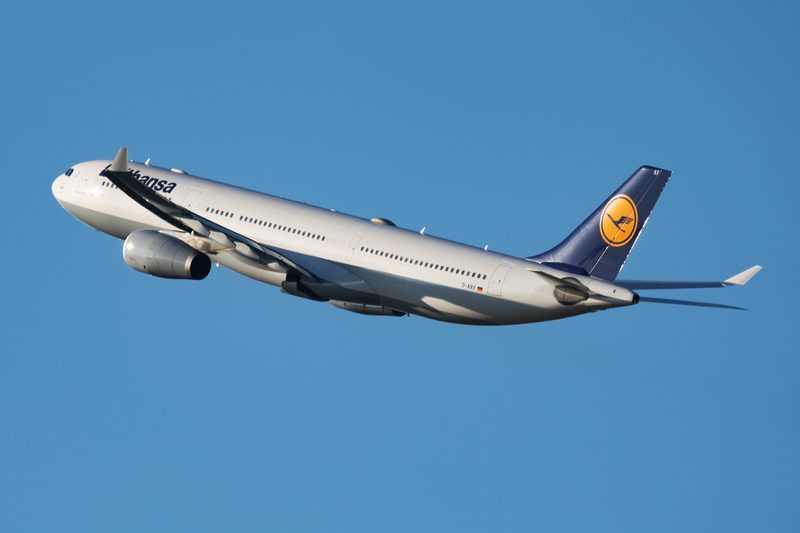
The route will continue to be flown by Lufthansa’s Airbus A330-300, a long-haul widebody configured with 255 seats across Business Class, Premium Economy, and Economy. For St. Louis (STL), the additional frequencies are a meaningful vote of confidence in a transatlantic route that only launched in June 2022 but has quickly become one of the airport’s most important international services.
For Lufthansa, the move strengthens Frankfurt (FRA) as a global gateway for the U.S. Midwest and gives the airline more access to a market with a strong corporate, academic, healthcare, and advanced-manufacturing base.
Five Weekly Flights To Frankfurt
Lufthansa’s expanded St. Louis (STL) schedule adds Monday and Tuesday service to the existing Wednesday, Friday, and Sunday operation.
That may sound like a modest increase, but for a long-haul market of this size, the step from three to five weekly flights is significant. It improves schedule utility for business travelers, gives leisure passengers more flexibility, and makes the route more attractive for connecting itineraries beyond Frankfurt (FRA).
A three-weekly transatlantic route can work well for leisure and visiting-friends-and-relatives traffic, but it is less convenient for corporate travelers who need specific departure and return days. Moving to five weekly flights narrows that gap without requiring Lufthansa to commit to daily service.
The published schedule filed by Lufthansa shows LH448 departing Frankfurt (FRA) at 10:40 a.m. and arriving in St. Louis (STL) at 1:30 p.m. The return, LH449, departs St. Louis (STL) at 3:30 p.m. and arrives in Frankfurt (FRA) at 7:25 a.m. the following morning.
That timing is useful on both ends. The westbound arrival gives St. Louis passengers and visitors an early-afternoon arrival into Missouri. The eastbound overnight flight from STL reaches Frankfurt (FRA) in time for Lufthansa’s morning connecting bank across Europe, the Middle East, Africa, and parts of Asia.
Why The Route Matters For St. Louis
The St. Louis (STL)–Frankfurt (FRA) route is more than a nonstop flight to Germany.
Frankfurt is one of Europe’s most important connecting hubs and the core of Lufthansa’s intercontinental network. Through Frankfurt (FRA), St. Louis travelers can reach major European business centers such as Munich (MUC), Berlin (BER), Hamburg (HAM), Vienna (VIE), Zurich (ZRH), Brussels (BRU), Milan (MXP), Paris (CDG), Amsterdam (AMS), Madrid (MAD), and Stockholm (ARN), along with long-haul destinations beyond Europe.
That matters for St. Louis because the region has spent years rebuilding international connectivity after losing much of its former hub-era air service. A nonstop to Frankfurt (FRA) gives the region something that a domestic connection through Chicago O’Hare (ORD), Washington Dulles (IAD), Newark (EWR), Atlanta (ATL), or New York (JFK) cannot fully replicate: direct access to a major European hub on a global network carrier.
The route also supports companies and institutions with international ties. St. Louis has major healthcare, bioscience, financial services, agriculture, aviation, defense, technology, and university sectors. Nonstop long-haul service makes it easier for those organizations to move people between Missouri and Europe without the added time and uncertainty of a domestic connection.
Airport officials have said Lufthansa’s St. Louis service has produced strong loads since its 2022 launch, including very high summer-season performance. The expanded schedule is therefore not just symbolic; it reflects real demand from the region.
The Airbus A330-300 Remains On The Route
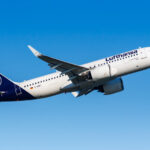
Lufthansa will continue using the Airbus A330-300 between Frankfurt (FRA) and St. Louis (STL).
The A330-300 is a twin-engine, long-haul widebody powered by Rolls-Royce Trent 772B engines. Lufthansa lists the aircraft with a range of 10,000 kilometers, a maximum cruising speed of 870 km/h, and a maximum cruising altitude of 12,500 meters.
On the St. Louis route, the aircraft is configured with 255 seats: 42 in Business Class, 28 in Premium Economy, and 185 in Economy.
That configuration is well suited to a market like St. Louis. It gives Lufthansa enough total capacity to support the route, but it also provides a meaningful premium cabin for corporate travelers, university traffic, higher-yield leisure passengers, and connecting customers headed beyond Frankfurt (FRA).
The A330-300 is not Lufthansa’s newest long-haul aircraft. The airline is introducing more Boeing 787-9 Dreamliners, Airbus A350s, and Allegris-equipped cabins across parts of its network. Still, the A330-300 remains a capable and commercially useful aircraft for certain routes, particularly where the airline wants a widebody with a balanced cabin but does not necessarily need its newest premium product.
For St. Louis (STL), the aircraft choice also shows that Lufthansa sees the market as a true long-haul route rather than a thin experimental service. A 255-seat widebody five times weekly represents a meaningful amount of transatlantic capacity.
Frankfurt Gives St. Louis Global Reach
The power of this route is the Frankfurt hub.
Frankfurt Airport (FRA) is Lufthansa’s largest intercontinental hub and one of Europe’s most important transfer airports. For passengers leaving St. Louis (STL), the route is not only about reaching Frankfurt or Germany. It is about entering the Lufthansa Group network.
Connections can flow onto Lufthansa, Austrian Airlines, SWISS, Brussels Airlines, Discover Airlines, and other Star Alliance partners. That gives St. Louis travelers access to a broad network that includes Europe’s major capitals, secondary German cities, the Balkans, the Middle East, India, Africa, and Asia.
Frankfurt also works well for rail connectivity. Many European travelers and business passengers use Frankfurt Airport’s integrated rail station to connect onward by train, particularly within Germany and neighboring countries. That expands the practical catchment of the STL–FRA route beyond cities served by onward flights.
For St. Louis, that matters. The region’s global links are not limited to a single European city. The Frankfurt route gives the airport a gateway into a much wider network.
St. Louis Is Becoming More Relevant Internationally
Lufthansa’s increase comes as St. Louis Lambert (STL) is gaining broader international momentum.
British Airways launched seasonal St. Louis (STL)–London Heathrow (LHR) service in April 2026, giving the airport a new nonstop U.K. link. That route is operated with Boeing 787 Dreamliner aircraft and provides access to British Airways’ London hub and the broader oneworld network.
That means St. Louis now has two major transatlantic gateway options: Lufthansa to Frankfurt (FRA) and British Airways to London Heathrow (LHR). The two routes serve different roles.
Frankfurt (FRA) gives St. Louis nonstop access to continental Europe and the Lufthansa Group/Star Alliance network. London Heathrow (LHR) gives the region direct access to the U.K. and British Airways’ global network through one of the world’s most important long-haul hubs.
The Lufthansa increase therefore should not be viewed in isolation. It is part of a broader shift in how St. Louis (STL) is positioning itself internationally. The airport is no longer dependent on a single transatlantic link to make its global case.
Why Five Weekly Flights Matter More Than They Sound
Frequency is one of the most important measures of a route’s maturity.
A three-weekly service can be enough to launch a market, test demand, and serve leisure traffic. But five weekly flights create a more durable schedule. Passengers have more itinerary choices. Corporate travel departments have more flexibility. Tour operators can build more package options. Connecting passengers face fewer forced overnight stays or awkward routings.
For an airline, adding frequency also helps defend market share. A traveler who cannot make a Wednesday, Friday, or Sunday schedule work may choose to connect through another hub. Adding Monday and Tuesday service reduces that leakage.
This is especially important in a market like St. Louis (STL), where travelers have many one-stop alternatives through major U.S. gateways. Lufthansa’s job is not simply to fill the nonstop flight. It must persuade passengers that flying nonstop to Frankfurt (FRA) is better than connecting through Chicago (ORD), Newark (EWR), Washington Dulles (IAD), Atlanta (ATL), Charlotte (CLT), Dallas/Fort Worth (DFW), or New York (JFK).
More frequency makes that easier.
Economic Development Is Part Of The Story
Long-haul service is often discussed in terms of passengers and aircraft, but the economic-development angle is just as important.
Nonstop service to Europe can influence how a region is perceived by investors, universities, convention planners, tourism boards, and multinational companies. It reduces travel friction and helps a city compete for business that might otherwise flow to better-connected metros.
That is why St. Louis officials have emphasized the route’s importance for the region’s academic institutions and Fortune 500 companies. The St. Louis area has major anchors in healthcare, life sciences, agriculture technology, aerospace, manufacturing, geospatial intelligence, and higher education. Easier access to Europe supports those sectors.
The additional Lufthansa frequencies also come as St. Louis prepares for major travel events and broader international visibility. More nonstop long-haul service gives the region a stronger platform to attract visitors and business travel from overseas.
In aviation terms, this is what successful long-haul service can do for a mid-sized U.S. market: make the city easier to reach, easier to sell, and easier to connect to the global economy.
A Competitive But Encouraging Signal
Lufthansa’s expansion also suggests that the route has found a sustainable niche.
St. Louis (STL) is not Chicago (ORD), Atlanta (ATL), Dallas/Fort Worth (DFW), or New York (JFK). It does not have the local demand of the largest U.S. gateways, and it does not function as a large connecting hub. That makes long-haul service harder to sustain.
But mid-sized markets can support international flights when the right airline, aircraft, hub, and local demand come together. Lufthansa has a powerful Frankfurt (FRA) hub, a Star Alliance network, a widebody aircraft with a balanced cabin, and four years of route history at STL.
The seasonal increase to five weekly flights indicates that the route is not just surviving. It is developing.
That does not automatically mean daily service is imminent. Five weekly flights are still a measured level of capacity, and the route remains tied to seasonal demand patterns. But the increase is a clear sign of confidence in the market.
Bottom Line
Lufthansa is increasing its St. Louis (STL)–Frankfurt (FRA) service from three to five weekly flights from June 1 through October 20, 2026.
The German flag carrier will continue operating the route with Airbus A330-300 aircraft configured with 42 Business Class seats, 28 Premium Economy seats, and 185 Economy seats. Flights will operate on Monday, Tuesday, Wednesday, Friday, and Sunday, improving schedule flexibility for both local and connecting passengers.
For St. Louis, the added frequencies strengthen one of the airport’s most important international links and give the region better access to Lufthansa’s Frankfurt hub. For Lufthansa, the increase shows confidence in a market that has produced strong demand since the route launched in 2022.
The timing is also notable. With British Airways now serving London Heathrow (LHR), St. Louis (STL) has a stronger transatlantic portfolio than it has had in years. Lufthansa’s expanded Frankfurt (FRA) schedule reinforces that momentum and gives the Midwest city a more credible place on the global aviation map.