Starlux Airlines is preparing for the next stage of its long-haul expansion, with Zurich and Barcelona emerging as planned additions to the Taiwanese carrier’s European network.

Speaking during the airline’s annual shareholders’ meeting, Chairman Chang Kuo-wei said Starlux has applied to launch flights to Zurich Airport (ZRH) in Switzerland and Josep Tarradellas Barcelona–El Prat Airport (BCN) in Spain. The two routes would follow the airline’s confirmed European debut to Václav Havel Airport Prague (PRG), which is scheduled to begin from Taipei Taoyuan International Airport (TPE) on August 1, 2026.
For Starlux, the move is significant. The airline is still young by global network-carrier standards, having launched commercial operations in 2020, but it has already built a premium-focused long-haul strategy around Airbus widebody aircraft, a high-service brand identity, and carefully chosen markets in North America and Europe.
Read our stories in your inbox
Two aviation newsletters. Zero fluff.
Zurich (ZRH) and Barcelona (BCN) would give Starlux two very different European footholds. Zurich is one of Europe’s most premium business and finance markets. Barcelona is a major leisure, cultural, cruise, and corporate gateway in the western Mediterranean. Together, they would move Starlux beyond a single Central European entry point and begin giving the airline a more balanced European portfolio.
Prague Comes First
Before Zurich (ZRH) or Barcelona (BCN), Starlux will launch Taipei (TPE) to Prague (PRG), its first scheduled European route.
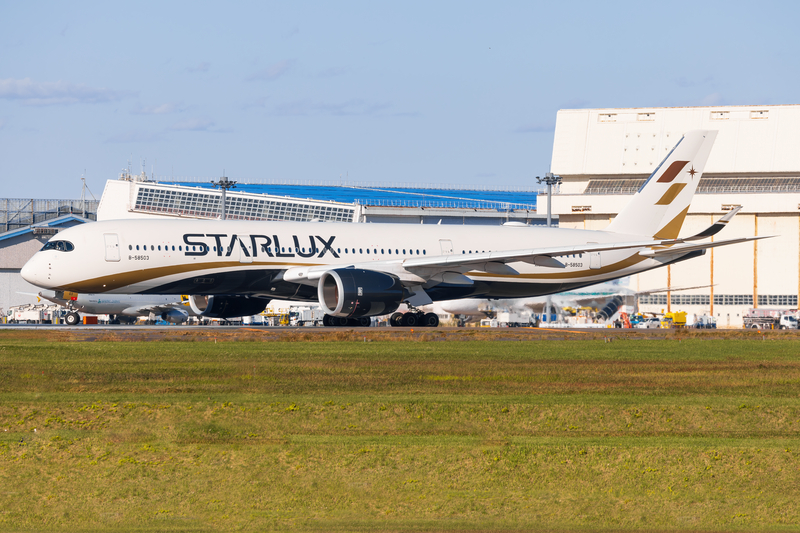
The Prague service is scheduled to begin on August 1, 2026, initially operating three times weekly before increasing to four weekly flights in October. Starlux will deploy the Airbus A350-900, configured with 306 seats across four cabins: First Class, Business Class, Premium Economy, and Economy.
That aircraft choice is important. Starlux is not entering Europe with a stripped-down long-haul product. The A350-900 allows the airline to offer the full brand experience, including a small First Class cabin, lie-flat Business Class suites, Premium Economy, and long-haul Economy.
Prague (PRG) is a smart first European city for Starlux. The Czech Republic and Taiwan have increasingly visible business and technology ties, including semiconductor-related cooperation. Prague also offers a strong tourism proposition and access to Central Europe, with onward surface connections into Germany, Austria, Slovakia, Hungary, and Poland.
From Taipei (TPE), the Prague (PRG) route covers roughly 5,600 miles. That is well within the Airbus A350-900’s operating profile and gives Starlux a route long enough to showcase its premium cabin product without facing the same level of competition it would encounter at larger European hubs such as London Heathrow (LHR), Frankfurt (FRA), Paris Charles de Gaulle (CDG), or Amsterdam Schiphol (AMS).
Zurich Would Give Starlux A Premium European Market
Zurich (ZRH) would be a very different type of route.
Switzerland is a high-yield aviation market, and Zurich Airport (ZRH) is one of Europe’s strongest premium gateways. It serves a wealthy local catchment, major financial institutions, pharmaceutical companies, technology firms, luxury-sector traffic, and extensive inbound leisure demand from Asia.
For Starlux, a Taipei (TPE) to Zurich (ZRH) route would fit the airline’s premium positioning. The carrier has deliberately built its brand around an elevated onboard experience, and Zurich is the kind of market where a four-class Airbus A350 product could make commercial sense.
The route would cover roughly 5,900 miles, or about 5,140 nautical miles, between Taipei (TPE) and Zurich (ZRH). That is a long-haul mission well suited to the Airbus A350 family. Starlux could operate the route with the A350-900 or eventually the larger A350-1000, depending on frequency, slot availability, premium demand, and aircraft delivery timing.

The competitive environment would still be complex. Taiwan-Europe traffic is already served by established airlines, including EVA Air and China Airlines from Taipei (TPE), as well as one-stop competitors via hubs such as Hong Kong (HKG), Singapore (SIN), Bangkok (BKK), Istanbul (IST), Doha (DOH), Dubai (DXB), Seoul Incheon (ICN), and major European gateways.
But Zurich (ZRH) gives Starlux something valuable: a market where brand, service quality, premium cabins, and schedule convenience can matter as much as raw fare competition.
Barcelona Adds A Different Kind Of Opportunity
Barcelona (BCN) would add a broader leisure and mixed-demand market to Starlux’s European network.
The Taipei (TPE) to Barcelona (BCN) sector would be longer than Zurich, at roughly 6,420 miles, or about 5,580 nautical miles. That still sits comfortably within the Airbus A350’s long-haul mission profile, but it is a substantial route that would require disciplined capacity planning.
Barcelona (BCN) is one of Europe’s largest tourism gateways and a major cruise, convention, and business destination. It draws year-round leisure traffic, but demand is especially strong in the warmer months. The city also has deep appeal across East Asia, and Spain remains a major outbound destination for Taiwanese and broader Asian travelers.
For Starlux, Barcelona (BCN) could work as both a point-to-point leisure market and a broader gateway into Spain and the western Mediterranean. The challenge is that Barcelona is less of a premium financial hub than Zurich and more exposed to seasonal leisure swings. That does not make the route unattractive, but it changes the revenue mix.
An Airbus A350-900 could be the logical starting aircraft if the route begins at limited frequency. The A350-1000 could make sense later if Starlux finds stronger premium and Economy demand, but the -1000’s additional capacity would raise the bar for year-round performance.
That is why Barcelona may be a good test of how far Starlux can stretch its premium model into large leisure markets.
No Firm Schedule Yet
The most important caveat is that Zurich (ZRH) and Barcelona (BCN) remain planned routes, not fully launched services.
Starlux has applied to fly to both destinations, and the airline has identified them as part of its next European growth phase. However, no final public schedule, frequency, aircraft assignment, or start date has been formally loaded in the way Prague (PRG) has been.
That distinction matters for readers and industry observers. Route applications and chairman-level remarks are important signals, especially from an airline like Starlux, but they are not the same as bookable flights.
The airline still needs to finalize regulatory approvals, airport arrangements, aircraft availability, commercial planning, and schedule timing. Long-haul routes into Europe also require careful slot planning, particularly if an airline is targeting commercially attractive arrival and departure windows.
The more accurate way to frame the story is that Starlux is lining up Zurich (ZRH) and Barcelona (BCN) as the next phase of its European expansion, with Prague (PRG) already confirmed as the first step.
The A350 Is The Core Of The Strategy
Starlux’s European ambitions are built around Airbus widebody aircraft.
The airline already operates Airbus A350-900s on long-haul routes and has begun adding the larger Airbus A350-1000 to its fleet. The A350-900 is configured with 306 seats, including four First Class seats, 26 Business Class seats, 36 Premium Economy seats, and 240 Economy seats.
The A350-1000 gives Starlux more capacity and more premium inventory. The type is expected to carry 350 passengers in Starlux’s layout, with four First Class seats, 40 Business Class seats, 36 Premium Economy seats, and 270 Economy seats.
That additional Business Class capacity is particularly important. If Starlux wants to compete seriously on routes such as Taipei (TPE) to Zurich (ZRH), New York (JFK), Chicago O’Hare (ORD), or Dallas/Fort Worth (DFW), it needs enough premium seats to capture corporate and high-yield leisure demand. The A350-1000 gives the airline more room to do that without abandoning its premium-heavy brand positioning.
Starlux’s widebody strategy is also supported by the Airbus A330-900neo, which is used on medium- and long-haul routes where the A350 may be too much aircraft. The A321neo remains important for regional Asian flying. Together, the A321neo, A330-900neo, A350-900, and A350-1000 give Starlux an all-Airbus structure with useful cockpit and maintenance commonality.
That fleet consistency is a major advantage for a young airline trying to scale.
North America Remains A Major Growth Platform
Europe is only part of the story.
Starlux has already built a meaningful U.S. network from Taipei (TPE), with service to Los Angeles International Airport (LAX), Ontario International Airport (ONT), San Francisco International Airport (SFO), Seattle-Tacoma International Airport (SEA), and Phoenix Sky Harbor International Airport (PHX).
That network is heavily West Coast and western U.S.-oriented, which makes sense. Los Angeles (LAX), San Francisco (SFO), Seattle (SEA), Ontario (ONT), and Phoenix (PHX) all offer strong Asia demand, technology ties, Taiwanese community links, and partnership opportunities. Phoenix (PHX) is especially interesting because of the semiconductor industry’s growing presence in Arizona.
Chang also indicated that Starlux is evaluating further U.S. expansion, including Chicago, Washington, New York, and Dallas. In practical long-haul terms, those markets could point toward airports such as Chicago O’Hare (ORD), Washington Dulles (IAD), New York JFK (JFK), Newark (EWR), or Dallas/Fort Worth (DFW), though Starlux has not formally named airports or schedules for those future candidates.
Those cities would be a much larger step than the current West Coast-focused network. Taipei (TPE) to New York or Washington is a very long mission, pushing beyond 7,700 miles depending on the airport. Chicago (ORD) and Dallas/Fort Worth (DFW) would also be deep long-haul sectors. These are routes where the Airbus A350-1000 becomes increasingly relevant.
If Starlux eventually adds East Coast or central U.S. service, it would move from being a West Coast-focused transpacific airline into a much broader North America–Asia competitor.
Partnerships Are Doing Important Work
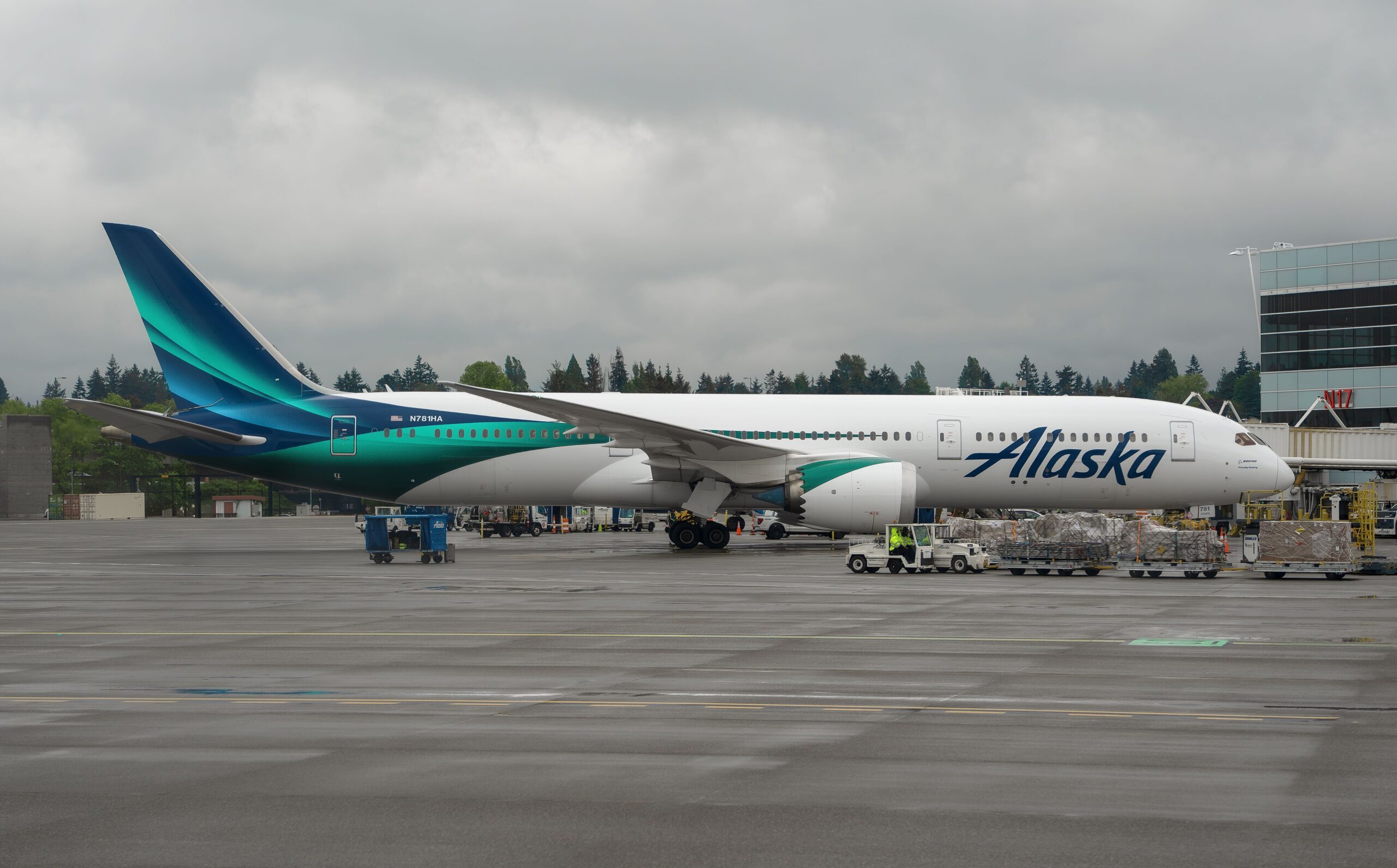
Starlux’s partnerships with Alaska Airlines and American Airlines are central to its growth strategy.
The airline is not currently a member of oneworld, but its partnership choices are clearly aligned with that ecosystem. Alaska Airlines gives Starlux strong feed through Seattle (SEA), San Francisco (SFO), Los Angeles (LAX), and other western U.S. markets. American Airlines gives Starlux access to a much broader domestic network, particularly as the Taiwanese carrier considers markets such as Phoenix (PHX), Dallas/Fort Worth (DFW), Chicago (ORD), New York (JFK), and Washington (IAD).
For a young airline, this is a practical approach. Joining a global alliance is a major strategic and technical undertaking. It requires systems integration, frequent flyer alignment, through-check processes, customer service standards, airport handling coordination, and commercial approvals. Building bilateral partnerships first allows Starlux to prove its value to existing alliance members while expanding its reach without immediately joining the alliance itself.
Chang’s comments suggest Starlux understands that sequence. The airline can strengthen its U.S. and global connectivity through Alaska and American while keeping formal alliance membership as a future possibility rather than an immediate necessity.
That is especially important as Starlux expands into Europe. A more mature partnership base in North America helps support transpacific traffic. Future European growth could eventually require similar cooperation, either with oneworld members or other carriers that can provide local European feed.
Cargo Is Becoming A Larger Part Of The Plan
Starlux is also investing heavily in cargo.
The airline has ordered ten Airbus A350F freighters, a major commitment for a carrier that began life as a passenger-focused premium airline. The A350F will give Starlux a modern, long-range freighter platform that fits into its all-Airbus fleet strategy and gives the airline a stronger position in Taiwan’s high-value cargo market.
Taiwan is one of the most important technology manufacturing centers in the world, and air cargo plays a critical role in moving semiconductors, electronics, machinery, e-commerce goods, and time-sensitive industrial shipments. A dedicated freighter fleet would allow Starlux to serve cargo flows more directly instead of relying only on belly capacity in passenger aircraft.
The cargo strategy also complements long-haul passenger growth. Routes to North America and Europe can benefit from belly cargo, especially on widebody aircraft such as the A350-900 and A350-1000. A stronger cargo division can improve route economics and help support long-haul expansion during periods when passenger demand is seasonal or uneven.
In 2025, Starlux carried 4.9 million passengers and 87,000 tonnes of cargo, according to remarks from CEO Glenn Chai. Those figures show how quickly the airline has scaled, but they also show why cargo is becoming more important. Long-haul airlines need more than passenger revenue alone if they want resilient network economics.
A Young Airline Moving Quickly
Starlux is still a young airline, but it is no longer a small experiment.
At the end of last year, the carrier operated 29 aircraft. Its fleet has grown around an all-Airbus model, including A321neos for regional flying, A330-900neos for medium- and long-haul routes, and A350s for the longest sectors. The airline’s brand has been built around premium service, distinctive cabin design, and a full-service experience aimed at competing with established Asian carriers rather than undercutting them.
That positioning puts Starlux in a challenging but potentially rewarding part of the market. It is not trying to be a low-cost airline. It is competing against EVA Air, China Airlines, Cathay Pacific, Singapore Airlines, Korean Air, ANA, Japan Airlines, and other premium Asian carriers. In Europe and North America, it must also compete with major global network airlines and powerful hub systems.
The risk is overexpansion. Long-haul growth consumes aircraft, crew, capital, and management attention. New European and North American routes can be expensive to launch and slow to mature. A young airline must be careful not to add too many destinations before its commercial base is deep enough to support them.
But the opportunity is clear. Taiwan is a high-value aviation market with strong outbound demand, technology links, cargo flows, and a strategic location between Southeast Asia, Northeast Asia, and North America. If Starlux can build a strong Taipei (TPE) hub and connect it intelligently with North America, Europe, Australia, and Asia, it can occupy a distinctive premium niche.
Australia And New Zealand Are Also In View
Starlux is not only looking west.
Chang also identified Australia and New Zealand as future expansion targets, with Sydney Kingsford Smith Airport (SYD) mentioned as a possible destination. Auckland Airport (AKL) has also appeared in reporting as part of the airline’s longer-range Oceania thinking, potentially as an extension of a Sydney route.
That would add another dimension to the Starlux network. Taipei (TPE) to Sydney (SYD) is roughly 4,530 miles, while Taipei (TPE) to Auckland (AKL) is about 5,520 miles. Both are within the operating envelope of the airline’s Airbus widebody fleet, though Auckland would be a more demanding market.
Oceania would also create more connecting possibilities over Taipei (TPE), linking Australia and New Zealand with Japan, South Korea, Southeast Asia, and North America. That is the kind of network flow a growing hub carrier wants to build.
The question is sequencing. Starlux cannot add every desired long-haul route at once. Aircraft deliveries, crew availability, yields, partner feed, and market maturity will determine what comes first.
Why Zurich And Barcelona Make Strategic Sense
Zurich (ZRH) and Barcelona (BCN) are not random European choices.
Prague (PRG) gives Starlux a Central European entry point with strong tourism and business rationale. Zurich (ZRH) would add a high-yield, premium market. Barcelona (BCN) would add a large western Mediterranean gateway with strong leisure, cruise, and convention demand.
Together, the three cities would give Starlux a more balanced European footprint without immediately plunging into the most crowded mega-hubs. That is a smart way to grow. A young airline can avoid some of the heaviest competitive pressure at Heathrow (LHR), Frankfurt (FRA), Paris (CDG), and Amsterdam (AMS), while still serving attractive European markets with strong brand value.
For passengers, the appeal is simple: nonstop access between Taipei (TPE) and more European cities on a premium Asian carrier with a modern Airbus widebody product.
For Starlux, the opportunity is more complex. The airline needs to prove it can fill long-haul aircraft at sustainable yields, build enough connecting traffic through Taipei (TPE), and maintain its premium service reputation as it scales.
Bottom Line
Starlux Airlines is preparing for a broader European push, with Zurich (ZRH) and Barcelona (BCN) identified as planned additions after its confirmed Taipei (TPE) to Prague (PRG) launch on August 1, 2026.
The two potential routes would make strategic sense. Zurich (ZRH) fits Starlux’s premium positioning, while Barcelona (BCN) gives the airline access to one of Europe’s most important leisure and cultural markets. Both routes are long-haul Airbus A350 missions and would deepen Starlux’s presence beyond Central Europe.
The key point is that Zurich and Barcelona are still in the planning and application stage. No final schedule, frequency, aircraft assignment, or confirmed launch date has been formally published in the same way as Prague.
Even so, the direction is clear. Starlux is moving from a fast-growing Asian premium airline into a more ambitious long-haul network carrier, supported by A350-900s, incoming A350-1000s, future A350F freighters, and partnerships with Alaska Airlines and American Airlines.
If the airline executes carefully, Zurich and Barcelona could be the next important steps in turning Taipei (TPE) into a more serious premium bridge between Asia, North America, Europe, and Oceania.