Delta Makes Austin a Transatlantic Gateway With Daily Paris A330neo Flights
Delta Air Lines will launch its first transatlantic route from Austin-Bergstrom International Airport (AUS) in March 2027, opening a new daily nonstop connection to Paris Charles de Gaulle Airport (CDG).

The summer-seasonal service begins March 27, 2027, and will operate with a 281-seat Airbus A330-900neo. According to Delta’s official route announcement, the flight will also make the carrier the only U.S. airline offering nonstop service between Austin Airport (AUS) and Europe.
The significance goes beyond adding another European destination. Paris was already Austin’s largest international market without nonstop service, while Charles de Gaulle Airport (CDG) gives Delta access to the extensive Air France connecting network across Europe, Africa, and India.
Read our stories in your inbox
Two aviation newsletters. Zero fluff.
Daily Flights Begin March 27
Delta will operate the Austin Airport (AUS)–Paris Charles de Gaulle Airport (CDG) route seven days per week throughout the summer season.

The airline’s Austin-to-Paris booking page lists a flight time of approximately 10 hours and says departures from Austin will leave during the afternoon before arriving in Paris the following morning.
The roughly 5,100-mile route is currently scheduled for the 2027 summer season. Published schedules indicate service is planned through October 24, aligning closely with the International Air Transport Association’s Northern Summer scheduling period.
Daily frequency is an aggressive starting point for Delta’s first European route from Austin. Rather than testing Paris with three or four weekly flights, the airline is immediately committing enough capacity to appeal to business travelers, corporate accounts, vacationers, and passengers making onward connections.
With 281 seats per departure, Delta will offer 1,967 seats in each direction every week, or 3,934 one-way seats across the route.
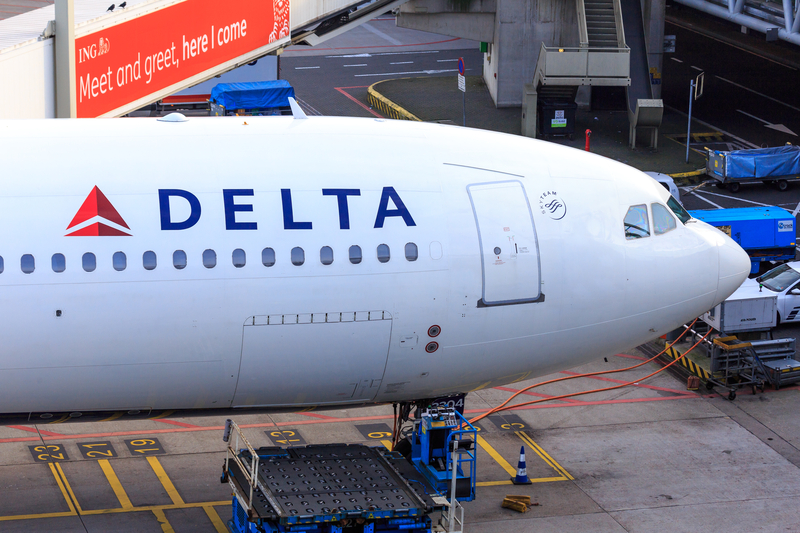
ID 136027510 © Richair | Dreamstime.com
Airbus A330-900neo Brings Delta’s Full Premium Product
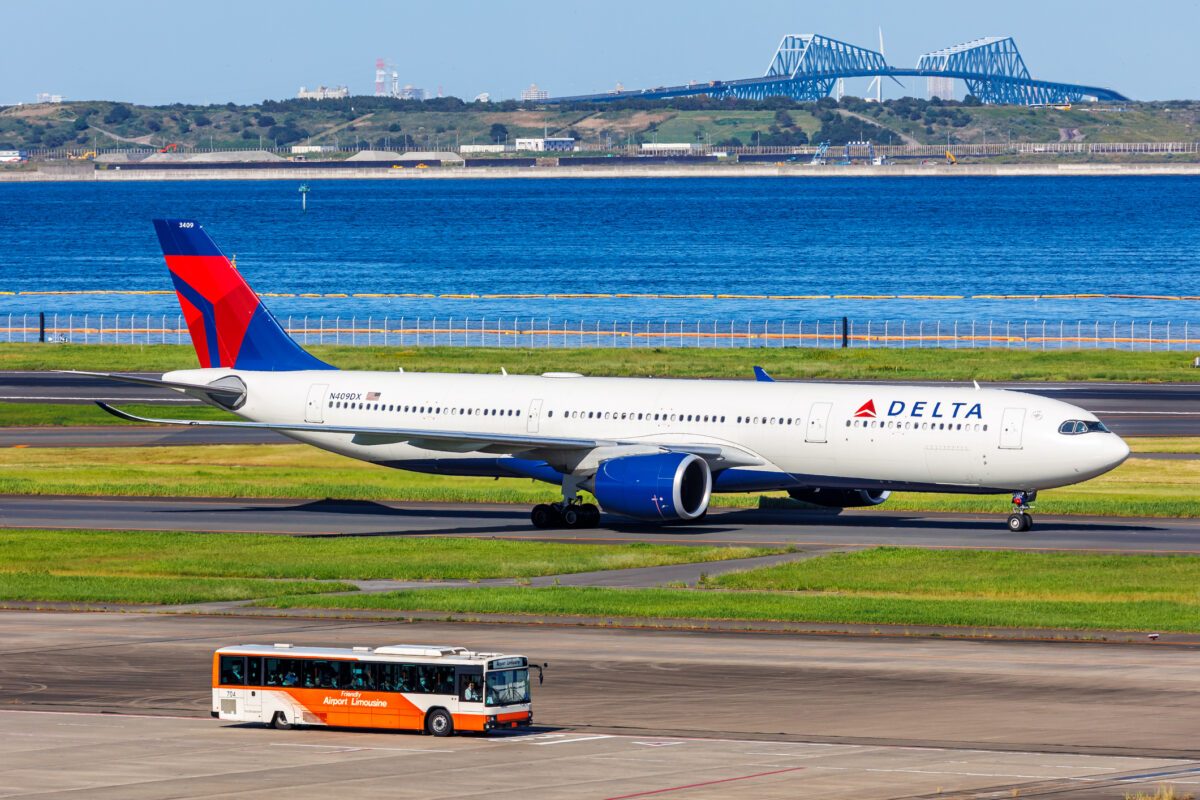
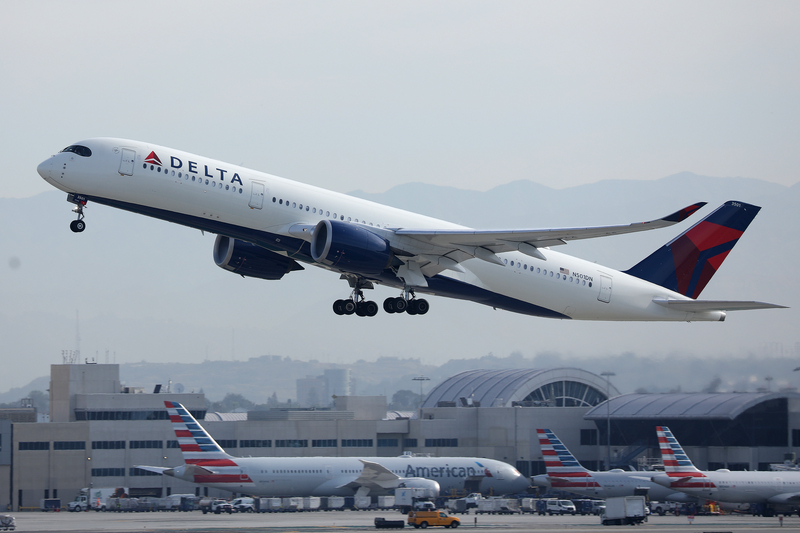
Delta will use the Airbus A330-900neo, one of the most modern widebody aircraft in its long-haul fleet.
The carrier’s official A330-900 seat map shows 281 seats divided among four cabin products:
29 Delta One suites, 28 Delta Premium Select seats, 56 Delta Comfort seats, and 168 Delta Main seats.
That gives the aircraft a particularly strong premium configuration for a new route.
Delta One is arranged with fully flat beds and sliding privacy doors. Delta lists the seats at approximately 22.5 inches wide, with beds measuring between 79 and 80 inches when fully extended.
Delta Premium Select provides 38 inches of pitch and wider seats in a dedicated premium-economy cabin, while Delta Comfort offers 34 inches of pitch compared with approximately 31 to 33 inches in Delta Main.
The aircraft also provides individual inflight entertainment throughout the cabin, and Delta says passengers have access to more than 1,000 hours of content.
For a roughly 10-hour overnight eastbound flight, offering both a proper business-class suite and a separate premium-economy cabin should help Delta compete for more than leisure traffic.
Nearly 35% of Seats Are Above Standard Economy
The cabin mix is particularly interesting from a revenue perspective.
Of the A330-900neo’s 281 seats, 113 are located in Delta One, Premium Select, or Delta Comfort.
That means approximately 40% of the aircraft is outside standard Delta Main, while only 168 seats are sold as conventional economy.
Delta is therefore not approaching Austin–Paris purely as a high-volume leisure route. The aircraft configuration gives the airline substantial inventory to sell to Austin’s corporate, technology, government, and higher-income leisure markets.
Austin has developed into one of the most important technology centers in the United States, with major operations from companies including Apple, Tesla, Dell, Google, Meta, Oracle, and numerous semiconductor businesses.
Paris itself generates significant corporate and premium demand, while Charles de Gaulle Airport (CDG) provides connections into Air France’s large European and international network.
Paris Was Austin’s Largest Unserved International Market
The route also addresses a very clear gap in Austin Airport’s network.
Austin-Bergstrom’s May 2026 air-service analysis ranked Paris Charles de Gaulle Airport (CDG) as the largest international passenger market from Austin without nonstop service.
Paris ranked ahead of Seoul Incheon International Airport (ICN), Tokyo Haneda Airport (HND), Rome Fiumicino Airport (FCO), Dublin Airport (DUB), São Paulo Guarulhos Airport (GRU), Madrid Airport (MAD), and Barcelona Airport (BCN).
That is important because Delta is not simply selecting Paris because Air France has a hub there. There was already measurable passenger demand between Central Texas and the Paris market, even though every traveler had to connect elsewhere.
Adding a nonstop flight allows Delta to capture passengers currently traveling through Atlanta Hartsfield-Jackson International Airport (ATL), New York John F. Kennedy International Airport (JFK), London Heathrow Airport (LHR), Amsterdam Schiphol Airport (AMS), Frankfurt Airport (FRA), and other connecting gateways.
Charles de Gaulle Provides Far More Than Paris Traffic
Local Austin–Paris demand alone will not need to fill the Airbus A330-900neo.
Delta says passengers will have access to nearly 70 one-stop destinations across Europe, India, and Africa through its partnership with Air France-KLM.
Paris Charles de Gaulle Airport (CDG) is Air France’s principal hub and one of Europe’s largest connecting airports. A passenger beginning in Austin can potentially travel on the Delta-operated flight to Paris before continuing on Air France to destinations such as Rome, Madrid, Barcelona, Geneva, Copenhagen, Warsaw, Athens, Delhi, Mumbai, Casablanca, and numerous African markets.
Delta, Air France, KLM, and Virgin Atlantic operate through a long-established transatlantic joint venture. The companies can coordinate schedules and commercial activity on eligible transatlantic markets rather than operating as completely independent competitors.
Air France-KLM describes the arrangement as the largest transatlantic joint venture and says the partnership covers hundreds of daily flights between Europe and North America.
That makes Paris a much more logical first European destination for Delta from Austin than a market where the airline would need to depend almost entirely on local traffic.
Delta and KLM Will Offer Up to 10 Weekly Europe Flights
Delta’s Austin expansion also strengthens the broader Air France-KLM position at Austin Airport (AUS).
KLM already operates nonstop service between Austin Airport (AUS) and Amsterdam Schiphol Airport (AMS). Delta says that during peak summer 2027, Delta, Air France, and KLM will collectively offer up to 10 weekly nonstop flights between Austin and Europe, with the flying concentrated on Paris and Amsterdam.
Seven of those flights will be Delta’s daily Paris service.
Passengers will therefore have two major SkyTeam connecting hubs available nonstop from Central Texas: Paris Charles de Gaulle Airport (CDG) and Amsterdam Schiphol Airport (AMS).
The combination gives the partnership considerably broader connectivity than either route would provide by itself.
Delta Is Not Austin’s First Airline to Europe
One distinction is important.
Delta will become the first U.S. airline to fly nonstop between Austin Airport (AUS) and Europe, but Austin already has established transatlantic service.
British Airways operates Austin–London Heathrow Airport (LHR), Lufthansa serves Frankfurt Airport (FRA), and KLM flies to Amsterdam Airport (AMS).
Austin airport traffic statistics show all three European airlines carrying passengers from the airport during 2026. In May alone, British Airways handled 28,855 Austin passengers, Lufthansa carried 9,879, and KLM recorded 6,867.
Delta is therefore entering an established Austin–Europe market rather than creating transatlantic travel from Central Texas.
What is new is a U.S. carrier placing its own widebody aircraft at Austin for a European route.
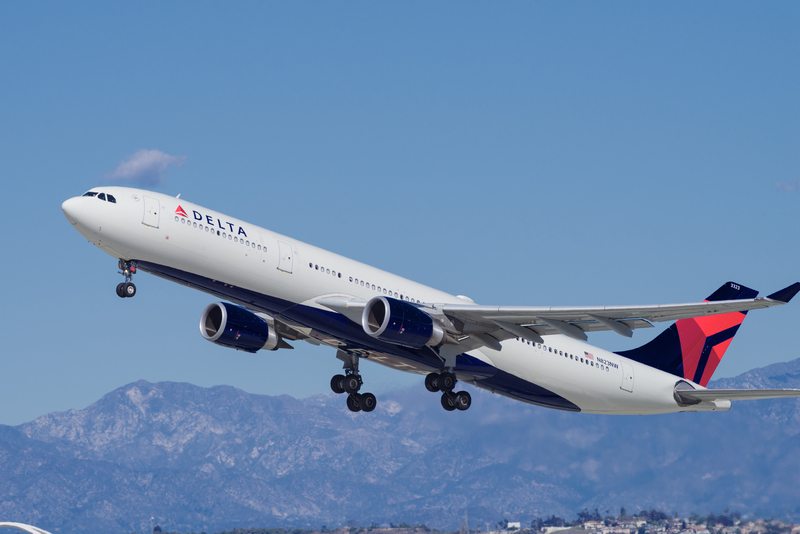
ID 137423354 © Ajdibilio | Dreamstime.com
Delta Continues Growing Austin Into a Major Focus City
Paris is the most visible part of a much broader Delta expansion at Austin Airport (AUS).
By summer 2027, the airline expects to serve approximately 30 destinations from Austin and operate more than 70 peak-day departures.
Delta will also add daily Austin–San Diego International Airport (SAN) service beginning April 12, 2027, convert Austin–Cancún International Airport (CUN) to year-round service, and add a second daily flight to San José Mineta International Airport (SJC).
The airline says it has more than 900 employees in Austin and recently established a flight-attendant base with more than 100 crew members.
Delta already operates a Sky Club at Austin Airport (AUS) and plans to build a second, larger lounge as part of the airport’s expansion program. It also expects eventually to operate across 15 gates in Austin’s planned Concourse A.
Those investments show that Paris is not an isolated seasonal experiment. Delta has been systematically increasing its relevance in Austin even though the airport is not one of its traditional core hubs such as Atlanta, Detroit, Minneapolis, Salt Lake City, or New York.
Austin’s Growth Makes Long-Haul Flying More Attractive
Austin Airport (AUS) handled almost two million passengers in May 2026 alone, an increase of 3.3% from the previous year.
Delta’s growth was much faster. The carrier handled 383,783 passengers during the month, up 9.4% year over year.
Through the first five months of 2026, Delta carried more than 1.6 million Austin passengers, an increase of 18%.
Those numbers provide important context for Paris.
Long-haul routes generally become easier to support when an airline already has substantial local market share and a domestic network capable of feeding passengers onto the international flight.
A traveler originating in another Delta city may now be able to connect through Austin rather than Atlanta, Detroit, or New York. More importantly, Delta already has a large base of Austin-area SkyMiles members and corporate customers who can be directed onto the Paris flight.
Cargo Could Also Matter
Delta specifically highlighted the A330-900neo’s cargo capacity when announcing the route.
Passenger widebody aircraft carry substantial freight below the cabin, and Austin’s semiconductor, electronics, technology, pharmaceutical, and manufacturing sectors can generate high-value cargo suitable for air transportation.
Paris Charles de Gaulle Airport (CDG) is also one of Europe’s major cargo gateways.
The 281-seat A330-900neo therefore gives Delta an opportunity to generate revenue from both passengers and freight. Cargo will not determine the route’s success by itself, but it can materially improve the economics of a long-haul flight where the aircraft would otherwise carry unused lower-deck capacity.
Bottom Line
Delta Air Lines will launch daily nonstop service between Austin-Bergstrom International Airport (AUS) and Paris Charles de Gaulle Airport (CDG) on March 27, 2027.
The summer-seasonal route will become Delta’s first transatlantic service from Austin and make it the only U.S. airline operating nonstop flights between Austin and Europe.
Delta will use a 281-seat Airbus A330-900neo featuring 29 Delta One suites, 28 Premium Select seats, 56 Delta Comfort seats, and 168 Delta Main seats.
Paris is a particularly logical addition because Charles de Gaulle Airport (CDG) ranked as Austin’s largest international market without nonstop service before the announcement. The Air France hub also gives passengers access to nearly 70 onward destinations across Europe, India, and Africa.
Delta will offer almost 2,000 seats in each direction every week, while its partnership with KLM will give the group up to 10 weekly nonstop Austin–Europe flights during peak summer.
More broadly, the route demonstrates how dramatically Delta’s position in Central Texas has changed. With more than 70 planned peak-day departures, approximately 30 destinations, a growing employee base, additional gates, and another Sky Club planned, Austin Airport (AUS) is developing into much more than another spoke in Delta’s domestic network.
Keep reading FlyMag
Get the Daily Brief in the morning or the Route Watch weekly recap on Fridays. Or both.