SAS Airbus A350 Shuts Down Engine Over Poland, Returns Safely to Copenhagen
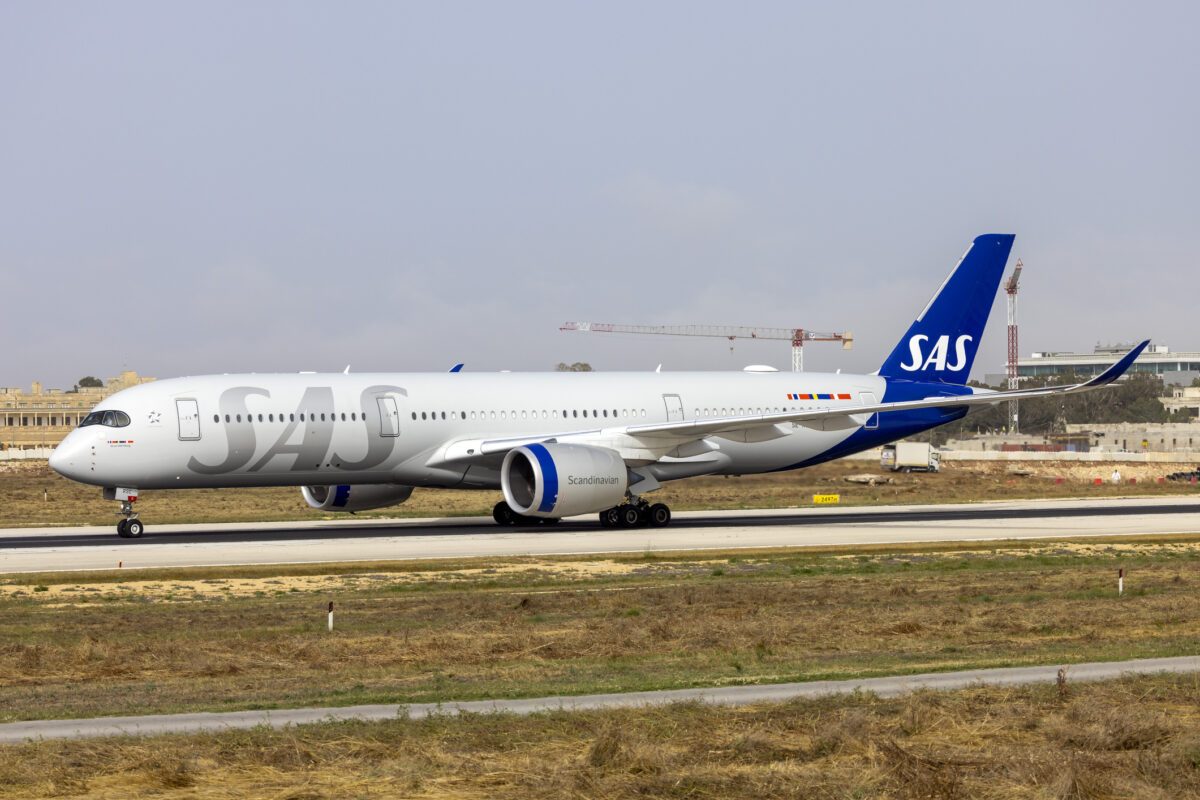
A Scandinavian Airlines Airbus A350-900 returned safely to Copenhagen Airport (CPH) on August 3, 2026, after its pilots shut down one of the aircraft’s engines following a reported low-oil-pressure indication.

Flight SK983 was traveling from Copenhagen Airport (CPH) to Tokyo Haneda Airport (HND) when the issue developed approximately one hour after departure. The aircraft, registered SE-RSF, had reached 37,000 feet and was flying over Poland when the crew received the engine indication.
Flight-tracking information reviewed by AIRLIVE shows that the pilots reversed course and returned to Denmark after shutting down the affected Rolls-Royce Trent XWB engine. The Airbus A350 landed safely at Copenhagen Airport (CPH), where emergency vehicles were waiting as a precaution.
Read our stories in your inbox
Two aviation newsletters. Zero fluff.
No injuries or additional problems were reported during the landing.
SK983 Returned Two Hours After Departure
Flight SK983 departed Copenhagen Airport (CPH) from Runway 22R at 1:04 p.m. local time, 19 minutes after its scheduled 12:45 p.m. departure.
The nonstop service to Tokyo Haneda Airport (HND) normally takes approximately 12 hours and 35 minutes. SAS operates the route with the Airbus A350-900, which replaced the carrier’s previous service to Tokyo Narita International Airport (NRT) when the airline moved its Tokyo operation to Haneda.
According to the available timeline, the aircraft continued east across the Baltic region and entered Polish airspace before the engine indication appeared. The crew shut down the affected engine and turned back toward Copenhagen.
SE-RSF landed on Copenhagen Airport’s (CPH) Runway 22L at 3:14 p.m., exactly two hours and 10 minutes after takeoff. The pilots completed a normal approach rather than an emergency evacuation or high-speed landing.
The aircraft’s return to Copenhagen rather than continuing toward another airport was operationally logical. The flight was still relatively early in its journey, while Copenhagen is SAS’ primary long-haul base and provides the airline with A350-qualified maintenance personnel, spare parts, replacement aircraft, and extensive passenger-handling resources.
That reasoning is an operational inference. SAS has described the return as precautionary but has not publicly provided the crew’s complete diversion decision-making process.
Low Oil Pressure Does Not Automatically Mean an Engine Failed
The available reports describe a low-oil-pressure indication, not a confirmed mechanical engine failure.
Oil performs several essential functions inside a modern turbofan engine. It lubricates bearings and other moving components, assists with cooling, and helps protect internal parts operating under extremely high temperatures and rotational speeds.
If oil pressure falls below an acceptable level, continued operation could damage the engine. Pilots may therefore shut it down even when it is still producing thrust normally.
A low-pressure warning can result from several different conditions, including an actual loss of oil, an oil-pump issue, a problem within the lubrication system, or an incorrect sensor indication. Maintenance teams will need to inspect the engine and review the aircraft’s recorded technical data before determining what happened.
Describing the event simply as an “engine failure” would therefore go beyond the information currently available. The confirmed operational event was an intentional in-flight engine shutdown following a low-oil-pressure indication.
A350 Is Designed to Operate Safely on One Engine
The Airbus A350 is a twin-engine aircraft, but losing the use of one engine does not leave it incapable of controlled flight.
The remaining engine can provide sufficient thrust to maintain flight, climb under certain conditions, and complete a safe diversion. Aircraft performance will be reduced, and the crew may descend to a lower altitude, but the airplane remains fully controllable.
The A350-900 has received approval for extended-range twin-engine operations, commonly known as ETOPS. Airbus’ A350 ETOPS certification permits appropriately approved airlines to plan routes that can place the aircraft more than three hours from a suitable diversion airport under specified single-engine conditions.
ETOPS does not mean an aircraft with one engine shut down is expected to continue routinely to its original destination. It establishes aircraft, engine, maintenance, dispatch, and operational standards that allow twin-engine jets to operate safely on long routes over oceans and remote regions.
Once the oil-pressure indication appeared, the crew’s priority was to protect the aircraft and land at a suitable airport. Returning to Copenhagen Airport (CPH) avoided continuing toward the more remote portions of the planned route to Japan.
Emergency Vehicles Attended as a Precaution
Airport rescue and firefighting vehicles met Flight SK983 after it landed at Copenhagen Airport (CPH).
Their presence does not indicate that the engine was on fire or that the landing itself was unstable. Emergency services routinely position near the runway when an aircraft arrives with an engine shut down or another potentially significant technical problem.
The vehicles allow firefighters and rescue personnel to respond immediately if the situation deteriorates during landing, braking, or taxiing.
No fire, smoke, evacuation, or landing-gear problem was reported after SE-RSF touched down. The aircraft was able to leave the runway safely before undergoing a technical inspection.
SE-RSF Is a Five-Year-Old Airbus A350
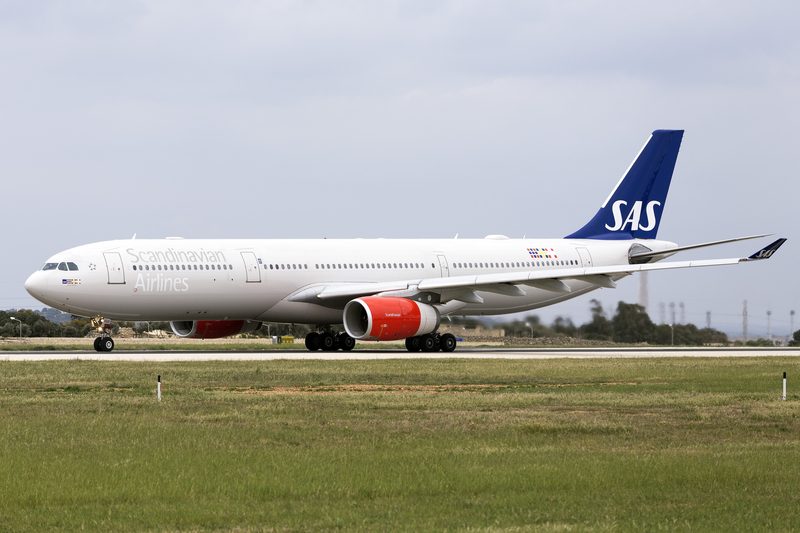
The aircraft involved was SE-RSF, an Airbus A350-941 with manufacturer serial number 499.
The jet made its first flight on April 29, 2021, and was delivered to SAS on June 23 of that year, according to its aircraft delivery record. It was approximately five years old at the time of the incident.
SE-RSF is powered by two Rolls-Royce Trent XWB-84 engines. The Trent XWB was developed specifically for the Airbus A350 family and is the aircraft type’s only available engine platform.
SAS configures its Airbus A350-900 fleet with 300 seats across Business, Premium Economy, and Economy. The airline lists a range of approximately 8,575 miles, a cruising speed of 570 mph, a length of nearly 220 feet, and a wingspan of approximately 213 feet.
The aircraft’s range comfortably supports the approximately 5,440-mile journey between Copenhagen Airport (CPH) and Tokyo Haneda Airport (HND).
SAS Arranged a Replacement Aircraft
SAS said it was working to replace the affected aircraft and continue the passengers’ journey to Tokyo Haneda Airport (HND).
The airline initially targeted a revised departure from Copenhagen Airport (CPH) at 4:00 p.m., less than one hour after SE-RSF returned. That would have required another available long-haul aircraft and crew, as the original A350 needed to remain on the ground for inspection.
It was not immediately clear whether the replacement departure operated at that exact time. Long-haul aircraft substitutions can be complicated because SAS must have an available aircraft with sufficient range, a qualified crew within legal duty limits, catering, baggage handling, and a departure slot at Copenhagen Airport (CPH).
Passengers may also need new seat assignments if the replacement aircraft has a different cabin configuration.
SAS continues to sell its regular Copenhagen–Tokyo service, and subsequent SK983 flights remained scheduled. The incident therefore appears to have affected an individual aircraft rotation rather than triggering a wider suspension of the route.
Returning to Base Can Simplify Recovery
Although Warsaw Chopin Airport (WAW), Berlin Brandenburg Airport (BER), and other airports were closer to the aircraft’s position when the problem developed, returning to Copenhagen offered several advantages.
Landing at an outstation would have required SAS to support a disabled A350 away from its home base. The airline might have needed to transport specialized engineers, tools, replacement components, and possibly an engine to another airport.
Passengers would also have needed to clear immigration, recover baggage, and continue through an airport where SAS may not have another A350 or long-haul crew immediately available.
Because the aircraft remained safely controllable and Copenhagen was within practical reach, returning to the airline’s main hub likely simplified both the technical response and passenger recovery.
The crew would still have continuously evaluated the affected engine, remaining engine, fuel, weather, aircraft performance, and available diversion airports. Had conditions changed, the pilots could have landed elsewhere rather than continuing to Copenhagen.
Bottom Line
SAS Flight SK983 returned to Copenhagen Airport (CPH) on August 3, 2026, after the crew received a low-oil-pressure indication while traveling to Tokyo Haneda Airport (HND).
The pilots shut down one of the Airbus A350-900’s two Rolls-Royce Trent XWB engines while flying over Poland and turned back toward Denmark. The aircraft, registered SE-RSF, landed safely on Runway 22L approximately two hours and 10 minutes after departure.
Emergency vehicles attended the landing as a precaution, but no fire, evacuation, injuries, or additional complications were reported.
The incident should not be described as a confirmed engine failure until maintenance personnel determine what caused the oil-pressure indication. What is known is that the crew intentionally shut down the engine, returned to the airline’s primary hub, and completed a safe single-engine landing.
For SAS, returning to Copenhagen Airport (CPH) placed the aircraft at a station with qualified A350 maintenance support and gave the airline its best opportunity to arrange a replacement aircraft for the disrupted passengers traveling to Japan.
Keep reading FlyMag
Get the Daily Brief in the morning or the Route Watch weekly recap on Fridays. Or both.