US-Bangla Unveils $1.5 Billion Plan to Add 21 Boeing 737s
US-Bangla Airlines has announced one of the largest private airline fleet expansions in Bangladesh, with plans to add 21 Boeing narrowbody aircraft by the end of 2027.

The approximately $1.5 billion program includes 15 Boeing 737-8s and six Boeing 737-800s. Although some initial reports described the transaction as a direct aircraft purchase, US-Bangla says the airplanes will be obtained through leasing arrangements involving five leasing companies. The lease agreements have reportedly already been finalized.
The expansion was formally presented at the “Beyond with Boeing” event in Dhaka on July 29, 2026. US-Bangla intends to use the additional aircraft to strengthen its existing international schedule and open routes across South Asia, Southeast Asia, East Asia, and the Middle East.
Read our stories in your inbox
Two aviation newsletters. Zero fluff.
15 Boeing 737-8s Will Lead the Expansion
The Boeing 737-8, commonly referred to as the 737 MAX 8, represents the most important part of the order.
US-Bangla plans to take 15 of the next-generation narrowbody aircraft, giving the airline a more efficient platform for medium-haul international flying from Hazrat Shahjalal International Airport (DAC) in Dhaka.
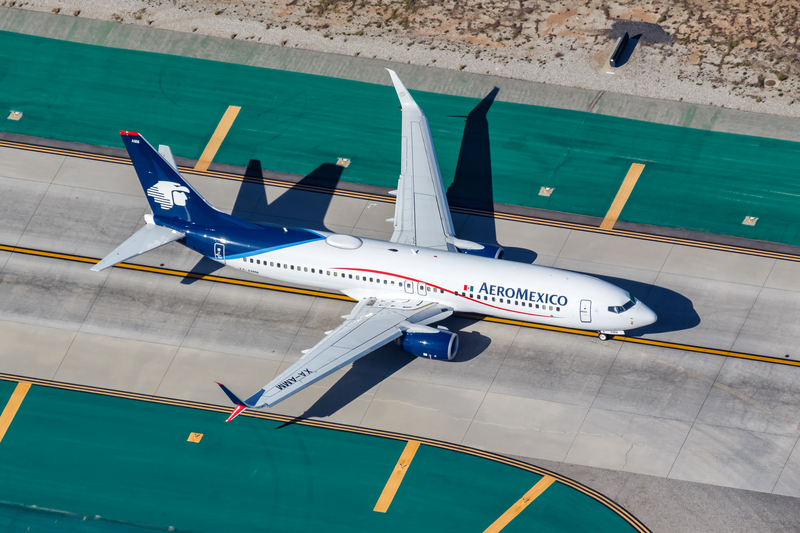
Boeing lists the 737-8 with a typical two-class capacity of between 160 and 180 passengers, although it can carry as many as 210 passengers in a high-density layout. The aircraft has a maximum published range of approximately 3,500 nautical miles, or 4,028 statute miles.
That range would cover nearly all of US-Bangla’s planned regional markets from Dhaka Airport (DAC), including destinations in China, the Gulf, India, Malaysia, and potentially parts of Japan and South Korea.
The 737-8 is powered by two CFM International LEAP-1B engines and incorporates redesigned winglets, updated aerodynamics, and other changes intended to reduce fuel consumption compared with the previous-generation 737-800.
For US-Bangla, lower fuel burn will be particularly important on longer sectors from Dhaka Airport (DAC) to airports such as King Abdulaziz International Airport (JED) in Jeddah, King Khalid International Airport (RUH) in Riyadh, and Guangzhou Baiyun International Airport (CAN).
Six 737-800s Will Provide Additional Near-Term Capacity
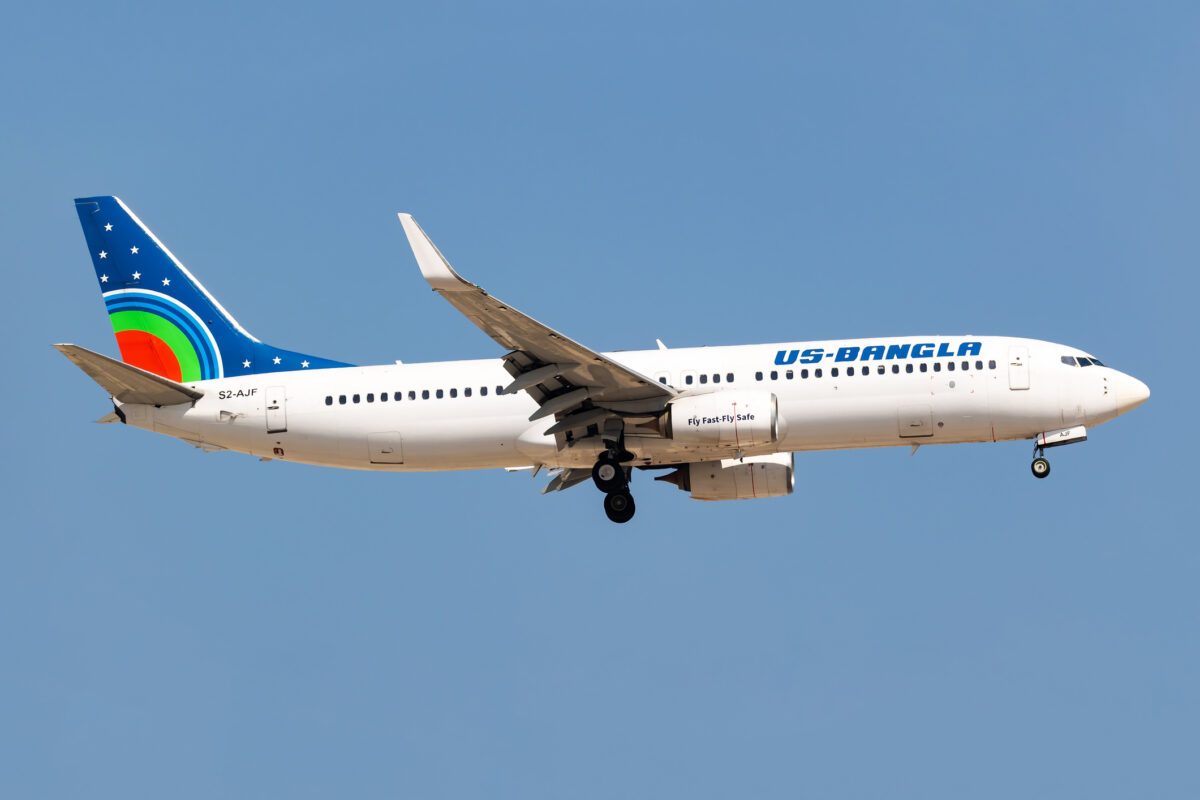
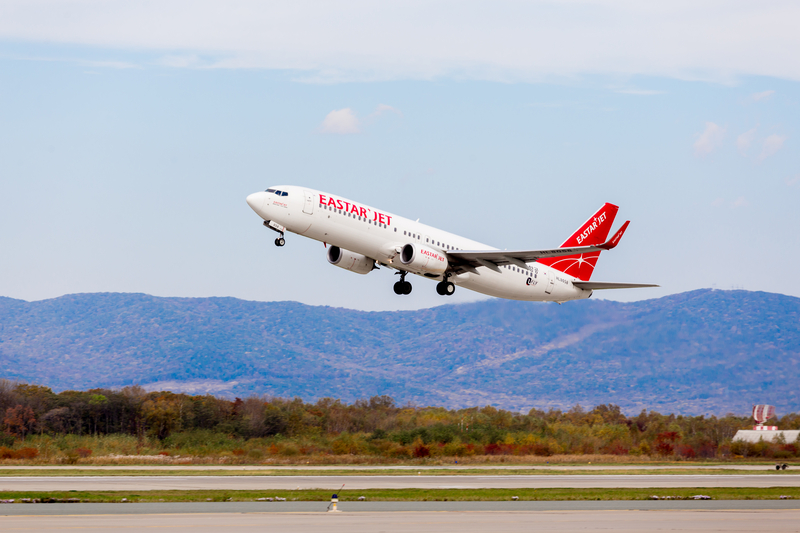
The remaining six aircraft will be Boeing 737-800s, a type US-Bangla already operates on domestic and international routes.
The 737-800 is part of Boeing’s previous-generation 737NG family. It typically accommodates between 160 and 180 passengers in a two-class configuration and has a maximum certified capacity of 189. Boeing publishes a range of up to 2,800 nautical miles for the type.
Because commercial passenger production of the 737-800 has ended, the six aircraft will be previously operated airplanes rather than newly manufactured jets. References to “new” aircraft in the announcement should therefore be understood as aircraft being newly added to US-Bangla’s fleet.
The inclusion of six 737-800s could help US-Bangla obtain capacity more quickly while waiting for all 15 737-8s to become available. Used 737-800s can generally be sourced and placed into service sooner than newly produced 737 MAX aircraft, particularly when manufacturers continue to hold large order backlogs.
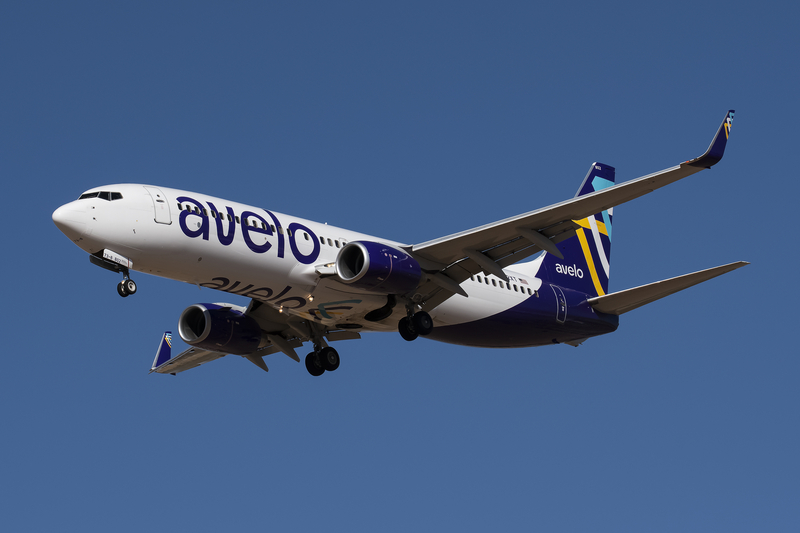
Using both versions also provides substantial fleet commonality. The 737-800 and 737-8 share the same basic fuselage dimensions and can use much of the same airport infrastructure, ground equipment, and maintenance organization.
However, they are not identical aircraft. The 737-800 uses CFM56-7B engines, while the 737-8 uses the larger LEAP-1B. Pilots transitioning between the two require differences training, and the newer aircraft introduces updated flight-deck systems and operating procedures.
US-Bangla Already Has Boeing 737 Experience
US-Bangla’s decision to remain with the Boeing 737 family reduces some of the complexity that would accompany the introduction of an entirely unfamiliar narrowbody type.
The airline currently operates a mixed fleet built around Boeing 737-800s for regional services, Airbus A330-300 widebodies for high-capacity international flights, and ATR 72-600 turboprops for domestic and shorter regional operations.
Published fleet totals vary depending on whether wet-leased, temporarily inactive, or returned aircraft are included. US-Bangla has recently described its wider fleet as containing approximately 25 aircraft, while parts of its corporate website refer to 20 aircraft. The active fleet nevertheless clearly includes the Boeing 737-800, Airbus A330-300, and ATR 72-600.
The airline’s existing 737 operation provides a foundation of trained pilots, engineers, dispatchers, spare-parts support, and ground-handling procedures. That should make the 737-8 introduction less disruptive than adopting a new aircraft family such as the Airbus A320neo.
US-Bangla can also use the six additional 737-800s as a bridge between its current operation and the larger MAX fleet expected by the end of 2027.
New Aircraft Will Support a Much Larger International Network
US-Bangla says the aircraft will help it develop Hazrat Shahjalal International Airport (DAC), Shah Amanat International Airport (CGP) in Chattogram, and Osmani International Airport (ZYL) in Sylhet as regional aviation gateways.
Most of the carrier’s international operation is currently concentrated at Dhaka Airport (DAC). Expanding direct international flying from Chattogram Airport (CGP) and Sylhet Airport (ZYL) could reduce the need for passengers to make domestic connections or travel overland to Dhaka.
The airline has identified numerous potential destinations, subject to regulatory approval. Proposed markets include Bengaluru Kempegowda International Airport (BLR), Hyderabad Rajiv Gandhi International Airport (HYD), Colombo Bandaranaike International Airport (CMB), and Kathmandu Tribhuvan International Airport (KTM).
In East and Southeast Asia, US-Bangla is considering Kunming Changshui International Airport (KMG), Shenzhen Bao’an International Airport (SZX), Penang International Airport (PEN), and Senai International Airport (JHB) in Johor Bahru. The airline has also discussed future service to Beijing, Japan, and South Korea, although specific airports have not been finalized publicly.
Potential Middle Eastern additions include Kuwait International Airport (KWI), Bahrain International Airport (BAH), Prince Mohammad bin Abdulaziz International Airport (MED) in Medina, King Fahd International Airport (DMM) in Dammam, and Salalah International Airport (SLL).
Not every proposed route is likely to launch immediately. Traffic rights, airport slots, aircraft delivery timing, crew availability, and regulatory approvals will determine how quickly the network can expand.
Bangladesh’s International Market Is the Main Prize
US-Bangla’s expansion is intended to capture a larger share of Bangladesh’s international passenger market, which remains heavily dependent on foreign airlines.
Bangladesh’s international air travel market generates an estimated $5.8 billion annually. However, overseas airlines carry most passengers, particularly on routes connecting Bangladesh with the Gulf, Southeast Asia, and major long-haul hubs.
Demand is supported by Bangladesh’s large overseas workforce, growing middle class, manufacturing sector, and extensive visiting-friends-and-relatives market.
Routes to Saudi Arabia, the United Arab Emirates, Qatar, Oman, Kuwait, and Bahrain are particularly important because of the large number of Bangladeshi citizens working in those countries. Markets such as Kuala Lumpur International Airport (KUL), Singapore Changi Airport (SIN), and Bangkok Suvarnabhumi Airport (BKK) also combine labor, tourism, business, and connecting demand.
Additional aircraft would allow US-Bangla to operate more frequencies, improve schedule consistency, and retain more passengers who currently connect through foreign airline hubs.
The expansion could nearly double the airline’s fleet if all 21 aircraft are added without a corresponding number of older airplanes leaving. In practice, some of the incoming 737s may replace leased aircraft or provide capacity while existing jets undergo maintenance.
This Is Separate From Biman’s Boeing Order
US-Bangla’s leasing program should not be confused with the major Boeing order announced by Bangladesh’s national carrier in April 2026.
Biman Bangladesh Airlines placed a direct order for 14 Boeing aircraft consisting of eight 787-10 Dreamliners, two 787-9s, and four 737-8s. Boeing valued that separate agreement at approximately $3.7 billion based on list prices.
The two programs serve different purposes.
Biman’s order includes 10 widebody Dreamliners intended for high-capacity and long-haul routes, along with four narrowbody 737-8s. US-Bangla’s transaction is entirely focused on 737-family narrowbodies intended primarily for regional and medium-haul expansion.
Together, however, the two fleet programs could significantly increase the share of international traffic carried by Bangladeshi airlines.
US-Bangla Wants to Become More Than an Airline
Managing Director Mohammad Abdullah Al Mamun described the fleet expansion as part of a plan to transform US-Bangla into a fully integrated global aviation group.
In addition to acquiring aircraft, the company intends to invest in pilot and technical training, maintenance, cargo operations, catering, technology, and aviation infrastructure.
Developing those capabilities internally could reduce reliance on overseas service providers while allowing US-Bangla to support a much larger fleet. An expanded maintenance operation could eventually provide services to other airlines, while greater cargo capacity would allow the company to benefit from Bangladesh’s export-oriented economy.
The 737 expansion is therefore not simply about adding passenger routes. It is intended to provide the operating scale needed to support a wider aviation business.
Bottom Line
US-Bangla Airlines plans to add 21 Boeing aircraft by the end of 2027 through leasing arrangements reportedly worth approximately $1.5 billion.
The fleet expansion includes 15 Boeing 737-8s and six Boeing 737-800s. The newer 737-8s will provide improved range and fuel efficiency, while the additional 737-800s could give US-Bangla access to capacity sooner as it waits for the full MAX fleet to arrive.
The aircraft will support planned growth from Dhaka Airport (DAC), Chattogram Airport (CGP), and Sylhet Airport (ZYL), with potential new routes across India, China, Southeast Asia, and the Middle East.
US-Bangla already has extensive experience operating the 737-800, giving it a practical foundation for introducing the 737-8. The mixed 737 fleet should also offer meaningful training, maintenance, and operational commonality.
If completed as planned, the program will fundamentally change US-Bangla’s scale and give Bangladesh’s largest private carrier a much stronger position in a rapidly growing international travel market currently dominated by foreign airlines.
Keep reading FlyMag
Get the Daily Brief in the morning or the Route Watch weekly recap on Fridays. Or both.