Pan Am’s Clipper Endeavor Found 74 Years After Crash That Reshaped Overwater Safety
The wreckage of a Pan American World Airways Douglas DC-4 that sank off Puerto Rico in 1952 has been located nearly 2,000 feet beneath the Atlantic Ocean, closing one of the Caribbean’s longest-running aviation mysteries.
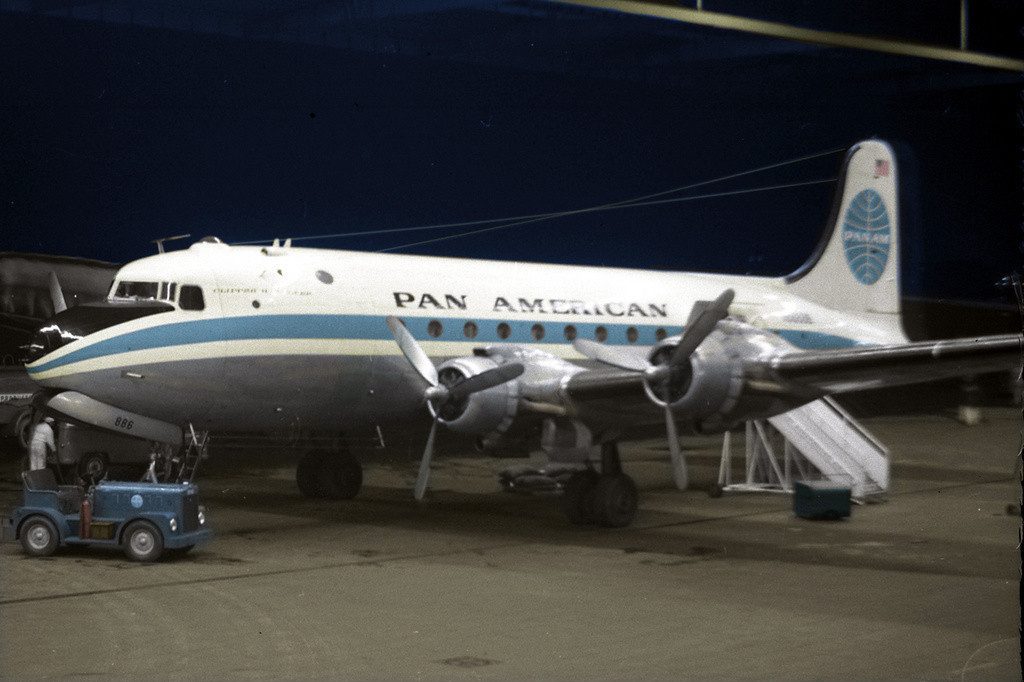
Pan Am Flight 526A, operated by an aircraft named Clipper Endeavor, ditched shortly after departing San Juan for New York on April 11, 1952. Although the water landing was survivable, the airplane sank within minutes as passengers struggled to locate life jackets and the crew attempted to launch life rafts.
Only 17 of the 69 people aboard survived. The other 52 occupants died, including 39 whose bodies were never recovered.
Read our stories in your inbox
Two aviation newsletters. Zero fluff.
The disaster did not single-handedly create every safety demonstration used today. However, the accident became an important catalyst for requirements covering passenger briefings, life-jacket demonstrations and the accessibility of emergency flotation equipment on overwater flights.
Wreckage Located Nearly 2,000 Feet Below the Atlantic
The Air/Sea Heritage Foundation announced the discovery on July 21, 2026, following a multiyear investigation conducted with Deep Sea Vision and the Discovery Channel series Expedition Unknown.
The wreckage was found on June 2, 2026, at 7:14 p.m. Atlantic Standard Time. It was resting in two main sections almost 2,000 feet below the Atlantic Ocean off Puerto Rico’s northern coast.
A high-resolution autonomous underwater vehicle surveyed the seabed using sonar. A subsequent photographic mission conclusively identified the aircraft, with images showing the Pan American winged logo and the Clipper Endeavor name still visible on the fuselage.
Despite more than seven decades underwater, researchers described much of the aluminum structure as recognizable and comparatively well preserved.
The search area had been narrowed through years of archival work. Researchers examined Pan Am records, U.S. Coast Guard documents and evidence held by the General Archives of Puerto Rico.
One of the most valuable discoveries was a chart created by U.S. Air Force pilots who witnessed the ditching while conducting a training flight. The pilots circled the crash site and directed rescue crews toward survivors, leaving investigators with an unusually useful contemporary estimate of where the airplane disappeared.
Flight 526A Was Bound for New York
Pan Am Flight 526A departed Isla Grande Airport, now Fernando Luis Ribas Dominicci Airport (SIG), at 12:11 p.m. on Good Friday, April 11, 1952.
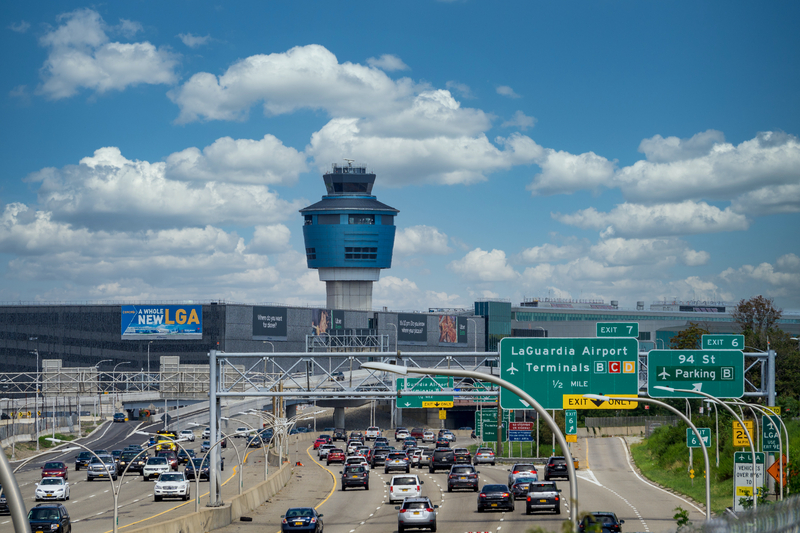
The flight was bound for New York International Airport, then commonly known as Idlewild Airport and later renamed John F. Kennedy International Airport (JFK).
There were 64 passengers, including six infants, and five crew members aboard. Pan Am had planned an eight-hour-and-three-minute journey at an altitude of 8,000 feet.
According to the official Civil Aeronautics Board accident investigation, the DC-4 weighed 70,256 pounds at departure, below its approved maximum takeoff weight of 73,000 pounds. Investigators found that the load was properly distributed and that weight and balance did not contribute to the accident.
The Douglas DC-4 Helped Define Postwar Air Travel
Clipper Endeavor was a four-engine Douglas DC-4 registered N88899.
The unpressurized piston airliner became an important long-distance aircraft during the years immediately following World War II. Its military counterpart, the C-54 Skymaster, had been used extensively for cargo and personnel transportation before the design became a foundation of early postwar airline networks.
Unlike modern jetliners, the DC-4 cruised at relatively low altitudes and relied on four large radial piston engines driving propellers.
N88899 was powered by four Pratt & Whitney R-2000 engines connected to Hamilton Standard propellers. The aircraft had accumulated 20,835 flight hours, including 1,514 hours since its most recent overhaul.
The presence of four engines provided redundancy, but the DC-4’s ability to maintain altitude after losing power depended on aircraft weight, airspeed, propeller position and how much power could be obtained from the remaining engines.
A failed engine’s propeller also had to be feathered, turning its blades closer to the airflow. A windmilling or improperly feathered propeller could create substantial drag and severely reduce aircraft performance.
Engine Trouble Began Moments After Takeoff
As the DC-4 climbed through approximately 250 feet after leaving Isla Grande Airport (SIG), the first officer noticed falling oil pressure and rising oil temperature on the No. 3 engine.
The No. 3 engine was the inboard engine on the right wing.
The crew immediately advised the San Juan control tower that Flight 526A was returning. At approximately 350 feet, the pilots feathered the No. 3 propeller and attempted to continue with the remaining engines.
The No. 4 engine, located outboard on the same wing, then began backfiring and losing usable power whenever higher power settings were attempted.
Some modern accounts describe the accident as a complete failure of both right-side engines. The official investigation was more precise: the No. 3 engine failed, while the No. 4 engine continued operating but suffered a partial loss of power.
The aircraft initially reached approximately 550 feet before beginning to descend. The pilots maneuvered away from populated areas and nearby reefs while attempting to remain close enough to Puerto Rico for an emergency landing.
At 12:19 p.m., the crew warned the tower that the aircraft might have to ditch. Flight 526A touched down in the Atlantic approximately one minute later, about 11 miles northwest of Isla Grande Airport (SIG).
Everyone Was Believed to Have Survived the Impact
The pilots landed with the landing gear and flaps retracted while the aircraft encountered heavy seas.
The rear fuselage separated near the main cabin door, but the central passenger compartment remained largely intact immediately after impact. Survivor accounts indicated that everyone aboard was believed to have survived the initial ditching.
The aircraft then began taking on water rapidly.
Passengers had not been given a preflight demonstration showing where their life jackets were stored or how to put them on. Flotation devices were available in pockets behind the seats, and their locations were marked in English and Spanish, but many passengers did not understand how to retrieve or use them.
The cabin crew also received almost no time to prepare the passengers.
When a flight crew member first entered the cabin and instructed the attendants to switch off electrical circuits while fuel was dumped, the attendants interpreted the request as a routine precaution. They only realized that a ditching was imminent when another pilot returned and communicated through gestures.
By then, there was little time to organize the cabin, distribute instructions or prepare passengers for the water landing.
Four Life Rafts Were Carried, but Only One Was Launched
The DC-4 carried four life rafts, but all of them were stored together in a compartment behind the flight deck.
That arrangement made the equipment difficult to reach as water entered the airplane. The crew successfully released only one raft. A second became jammed, and attempts to deploy the remaining rafts were unsuccessful.
The official accident report concluded that additional lives might have been saved if the rafts had been positioned where they were more readily accessible.
Twelve passengers and all five crew members escaped from the aircraft. Seven passengers used emergency cabin exits, four left through the main door and one escaped through a cockpit window.
The only successfully deployed raft carried five passengers and two cabin crew members. Other survivors remained in the water until they were reached by rescue aircraft and vessels.
Clipper Endeavor sank approximately three minutes after the ditching.
Maintenance Failures Began Before the Fatal Flight
The engine failure was not an unpredictable event with no prior warning.
During N88899’s previous flight from New York to San Juan, the No. 3 engine had run roughly, backfired and eventually been shut down in the air.
Maintenance personnel in San Juan later found metal particles in the engine’s oil system and heard abnormal sounds from the engine’s nose section. Additional metal fragments were discovered after that section was removed.
Rather than replacing or fully disassembling the engine, mechanics changed the nose section and returned the aircraft to service after abbreviated testing.
Investigators found that a maintenance procedure specified in Pan Am’s own manual had not been completed. The prescribed process required the engine to be run for approximately 30 minutes with a limited quantity of oil so the system could be flushed and checked for additional metal contamination.
That test was omitted.
The CAB later determined that the reduction-drive bearing had experienced a progressive failure. Pan Am’s maintenance office in Miami should have instructed the San Juan team to replace the engine after receiving reports of the metal contamination.
The Board concluded that N88899 was not airworthy when it departed Isla Grande Airport (SIG).
Investigators Also Criticized the Flight Crew’s Response
The official probable-cause finding did not place responsibility exclusively on maintenance.
Investigators found that the captain continued trying to regain altitude without immediately using all available power from the remaining engines. The aircraft entered a nose-high attitude, progressively lost airspeed and descended from an altitude too low to allow recovery.
The CAB identified two principal causes: Pan Am’s inadequate maintenance and the captain’s continued attempt to climb after the critical loss of power.
Weather was not considered a contributing factor.
That finding is important because it provides a more complete account than simply saying that two engines failed. Flight 526A was lost through a combination of a known mechanical deterioration, inadequate maintenance decisions and the handling of the aircraft after takeoff.
The Accident Changed Overwater Safety Procedures
Flight 526A is frequently described as the accident that created the modern airline safety briefing. That claim requires some qualification.
The CAB said the changes were proposed as a result of this accident and similar accidents, rather than attributing the entire regulatory shift to Clipper Endeavor alone.
Still, the Flight 526A investigation directly documented several of the problems the new rules were intended to correct.
The Board proposed that required life jackets and rafts be approved for the route, positioned in approved locations and made easily accessible during an unplanned ditching.
It also proposed that airlines operating extended overwater flights orally brief passengers on the location and use of life jackets, emergency exits and life rafts. The briefing was to include a physical demonstration of how to put on a life jacket.
Those principles remain part of U.S. airline operations today.
Under 14 CFR 121.571, passengers must be briefed before takeoff on subjects including emergency exits, safety belts and required flotation equipment.
For extended overwater flights, 14 CFR 121.573 requires passengers to receive instructions on life preservers, life rafts and other flotation devices, including a demonstration showing how to put on and inflate a life preserver.
The familiar life-jacket demonstration may seem routine to modern travelers. In 1952, however, the lack of that information became a decisive factor during the three minutes available to escape Flight 526A.
Researchers Plan to Preserve the Wreck as a Memorial
The wreckage is not expected to be raised from the Atlantic.
Recovering a large aircraft from nearly 2,000 feet of water would be technically difficult and extremely expensive. More importantly, the site is closely connected to the 39 victims whose bodies were never recovered.
The Air/Sea Heritage Foundation is working with Puerto Rican authorities to secure additional protection for the wreck and establish a permanent memorial honoring the people who died.
Researchers have also made contact with victims’ families and the accident’s two known living survivors.
The wreck’s greatest value is not as an object to be salvaged. It is a documented historic site that connects an early postwar air disaster with safety procedures still used on every passenger flight today.
Bottom Line
The discovery of Pan Am’s Clipper Endeavor ends a 74-year search for one of Puerto Rico’s most historically significant aircraft wrecks.
Flight 526A departed Isla Grande Airport (SIG) for what is now John F. Kennedy International Airport (JFK) on April 11, 1952. Its No. 3 engine failed shortly after takeoff, while the neighboring No. 4 engine suffered a partial loss of usable power.
The ditching itself was survivable. The evacuation was not.
Passengers had not been shown how to find or use their life jackets, the cabin crew received almost no warning and three of the four life rafts could not be deployed before the Douglas DC-4 sank. Only 17 of the 69 people aboard survived.
The accident investigation also exposed serious maintenance failures. Metal contamination and abnormal engine behavior had been identified before the flight, yet the No. 3 engine was not replaced and the aircraft was returned to service without completing the prescribed testing.
Flight 526A became one of the accidents that pushed regulators toward mandatory passenger briefings, life-jacket demonstrations and more accessible emergency equipment on overwater flights.
Seventy-four years later, the Pan Am logo and Clipper Endeavor name remain visible on the Atlantic seabed—a lasting reminder that many of aviation’s most familiar safety procedures were developed from lessons learned at an extraordinary human cost.
Keep reading FlyMag
Get the Daily Brief in the morning or the Route Watch weekly recap on Fridays. Or both.
Share this story
Composed for each network — click to share, or copy the composed text for your own timing.