Ural Airlines Prepares for MC-21 With 10-Billion-Ruble Maintenance Hub at Koltsovo
Ural Airlines is investing heavily in maintenance infrastructure for an aircraft it has not yet placed under a firm purchase contract.

The Yekaterinburg-based carrier and Airports of Regions Management Company have signed a memorandum covering the construction of a major maintenance complex at Koltsovo International Airport (SVX). The project is intended to prepare Ural Airlines for the arrival of the Yakovlev MC-21, although the facility will also be capable of supporting the carrier’s existing Airbus fleet and potentially Superjet-family aircraft.
Ural Airlines CEO Kirill Skuratov has separately confirmed that the airline is working toward firm contracts for an initial 10 MC-21s. However, he acknowledged that the airline does not yet have a defined delivery schedule.
Read our stories in your inbox
Two aviation newsletters. Zero fluff.
A Five-Aircraft Maintenance Complex at Koltsovo
The new maintenance, repair and overhaul complex at Koltsovo International Airport (SVX) will cover approximately 15,000 square meters. That includes an 8,000-square-meter primary hangar and roughly 6,000 square meters of storage and support space for components, equipment and spare parts.
The facility will be able to accommodate as many as five aircraft simultaneously. It will also include specialized capabilities for landing gear and avionics repair, allowing Ural Airlines to complete more technically demanding work at its home base rather than sending aircraft elsewhere.
Regional officials put the total investment at approximately 10 billion rubles, with the airline expected to finance the project itself. Design work is beginning following the signing of the memorandum at the Innoprom 2026 exhibition, while the complex is expected to enter service between 2032 and 2033.
Despite its close association with the MC-21 program, the hangar will not be exclusively dedicated to the Russian-built narrowbody. Public descriptions of the project indicate that it will support Airbus, MC-21 and Superjet aircraft. That multitype capability is important because Ural Airlines will likely operate a mixed fleet for years as it gradually introduces domestically produced jets.
Ural Airlines Remains an All-Airbus Operator
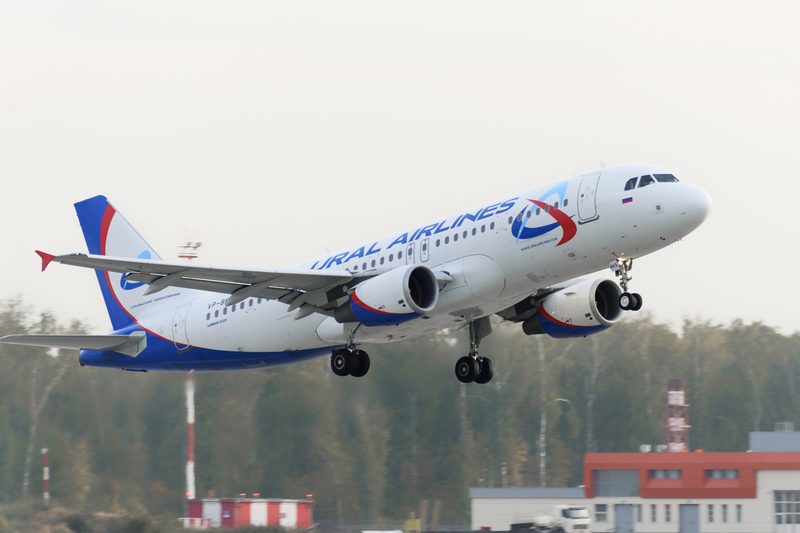
Contrary to some reports, Ural Airlines does not currently operate Sukhoi Superjet 100 regional jets. Its commercial fleet consists entirely of Airbus A320-family aircraft.
According to the airline’s official fleet information, Ural Airlines operates 51 aircraft: four Airbus A319s, 22 Airbus A320s, 14 Airbus A321s, three Airbus A320neos and eight Airbus A321neos. The combination of current-generation A320ceo aircraft and newer A320neo-family jets gives the airline a relatively standardized narrowbody operation today.
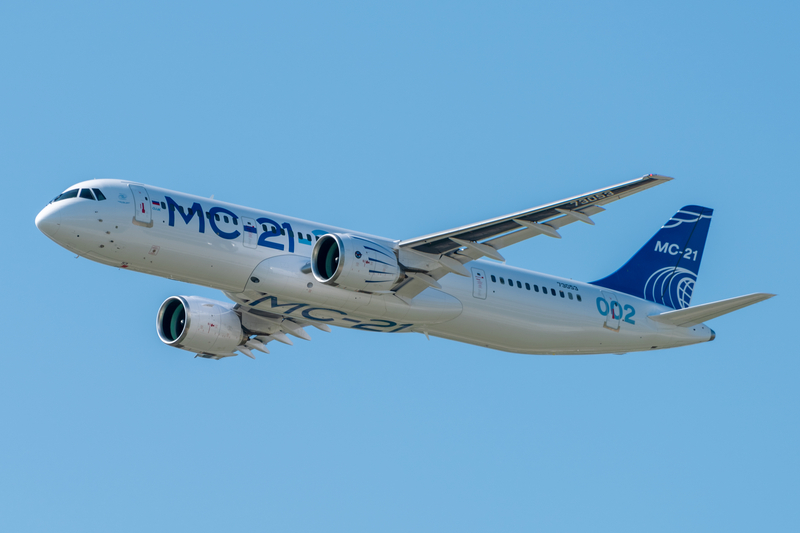
Introducing the MC-21 will therefore represent a major operational transition rather than a simple fleet expansion. Ural Airlines will need new pilot training programs, type-specific maintenance procedures, diagnostic equipment, spare-parts inventories and technical personnel familiar with Russian-built systems and engines.
Its existing Airbus infrastructure cannot simply be transferred to the MC-21. Even where the aircraft perform similar missions, the engineering and support requirements are fundamentally different.
What the MC-21-310 Would Bring to Ural Airlines
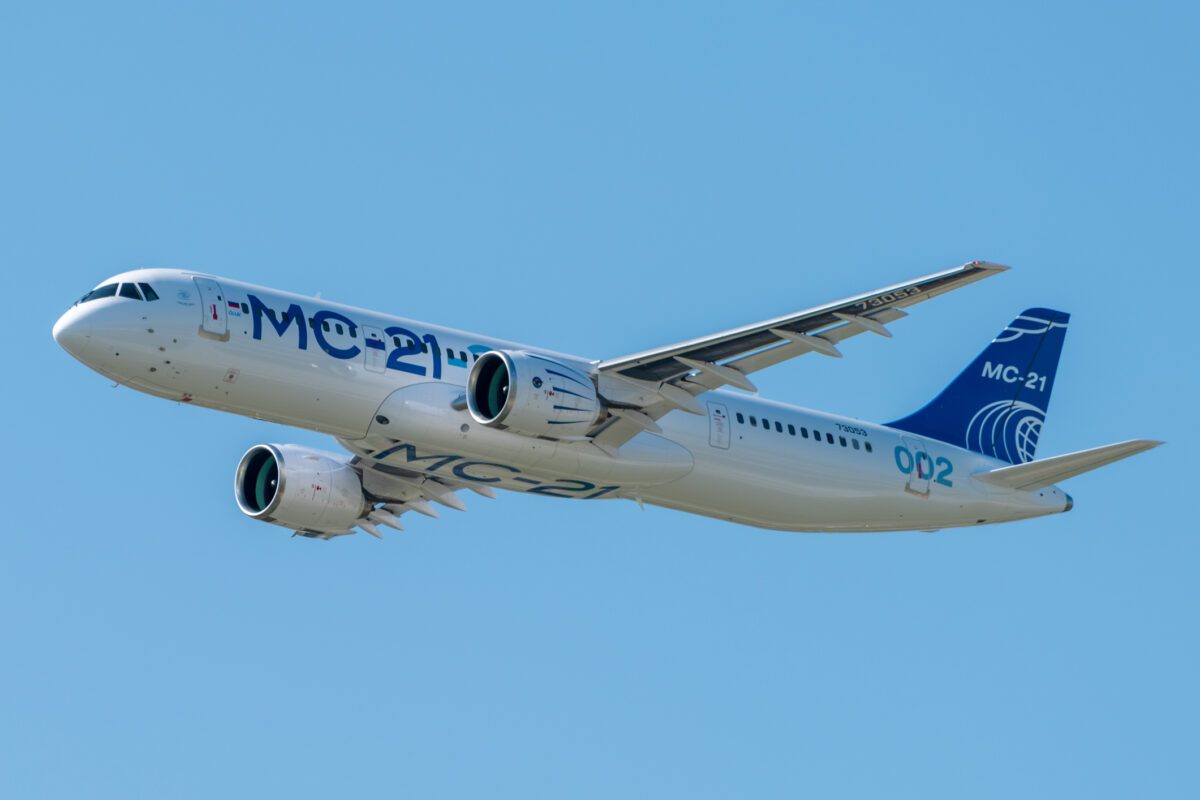
The Yakovlev MC-21-310 is a Russian-built, twin-engine, single-aisle aircraft intended for the heart of the short- and medium-haul market currently dominated internationally by the Airbus A320neo and Boeing 737 MAX families.
The aircraft can accommodate as many as 211 passengers in a high-density configuration. Yakovlev lists a maximum range of approximately 3,830 kilometers, or 2,380 miles, with 175 passengers in a mixed-class layout.
The MC-21-310 is powered by two Russian-built Aviadvigatel PD-14 turbofan engines. More than 30% of its structure consists of composite materials, including its high-aspect-ratio composite wing. Its cabin is also wider than those of the A320 and 737 families, potentially allowing a wider aisle and more passenger space, depending on an airline’s interior configuration.
In June 2026, an MC-21-310 completed a series of performance flights that included a sector of more than 3,800 kilometers with a payload equivalent to 175 passengers and standard fuel reserves. The test was designed to reproduce a realistic airline operating profile rather than demonstrate an empty-aircraft ferry range.
That distinction matters for Ural Airlines. An aircraft’s commercially useful range with passengers, baggage, reserves and operational restrictions is far more important than its theoretical maximum range. A roughly 3,800-kilometer capability would still cover a large portion of Ural Airlines’ domestic and near-international network from Koltsovo International Airport (SVX).
MC-21 Certification Has Slipped Into 2027
The original timeline for the domestically produced MC-21 has changed substantially.
Yakovlev’s chief designer said in June 2026 that certification of the current MC-21 configuration is now targeted for June 2027. At that point, two aircraft involved in the test program had completed 200 flights, including 101 certification flights. A total of 232 certification flights were planned.
That means the physical maintenance facility at Koltsovo International Airport (SVX) is not expected to open before the MC-21 is certified. Under the current schedule, the hangar would become operational approximately five to six years after the certification target.
What is running ahead of the aircraft is Ural Airlines’ planning process. The carrier is beginning site development, design work and infrastructure preparation before it has a firm order, confirmed delivery positions or an established in-service record for the MC-21-310.
The long lead time may prove useful. It gives Ural Airlines several years to monitor the aircraft’s operational reliability, maintenance requirements, component availability and actual delivery schedule before finalizing the facility’s equipment and workflow.
Why Koltsovo Airport Is the Logical Location
Koltsovo International Airport (SVX) is Ural Airlines’ principal home base and one of Russia’s most important regional aviation centers. The carrier also maintains significant operations at Moscow Domodedovo Airport (DME) and St. Petersburg Pulkovo Airport (LED).
Koltsovo International Airport (SVX) handled approximately 8.39 million passengers in 2025, including 5.8 million domestic passengers and 2.6 million international travelers. That was a 4% increase over 2024. The airport’s largest passenger markets included Moscow, Sochi and St. Petersburg.
Locating the new technical center at SVX should reduce maintenance-related ferry flights, shorten aircraft downtime and allow Ural Airlines to centralize engineering personnel and component inventories near its largest operational base.
The facility could eventually become valuable beyond Ural Airlines itself. If Russian carriers adopt the MC-21 in significant numbers, an established maintenance center with landing gear, avionics and heavy-check capabilities could support aircraft operated by other airlines throughout the Ural region.
Sanctions Add Urgency to the Fleet Transition
Western sanctions have made the continued operation of foreign-built aircraft increasingly complicated for Russian airlines. Access to manufacturer-approved components, technical assistance and international maintenance networks has been severely restricted, forcing operators to develop alternative supply chains and expand domestic maintenance capabilities.
Ural Airlines was itself added to the European Union’s sanctions list in June 2024. The EU alleged that the airline had provided logistical support to the Russian government, including transporting military personnel during the mobilization phase of the Special Military Operation in Ukraine.
Against that background, the planned complex at Koltsovo International Airport (SVX) is about more than preparing for one new aircraft type. It is part of a broader effort to give Ural Airlines greater control over the continued airworthiness of its fleet as Russia’s civil aviation industry becomes increasingly separated from Western manufacturers and support providers.
Bottom Line
Ural Airlines has not yet signed a firm contract for the MC-21, and the aircraft still faces a substantial certification and production ramp-up before it can become a dependable part of the carrier’s operation.
Nevertheless, the proposed 10-billion-ruble maintenance center at Koltsovo International Airport (SVX) shows that Ural Airlines is preparing seriously for a future built around Russian-produced aircraft.
Designing the facility to support Airbus, MC-21 and Superjet aircraft is a practical hedge. It allows Ural Airlines to strengthen maintenance support for its current fleet while preparing for a gradual transition to domestic equipment.
The greatest uncertainty is no longer whether Russia wants airlines to operate the MC-21. It is whether Yakovlev can certify, manufacture and support the aircraft in sufficient numbers to justify the infrastructure airlines are now being asked to build around it.
Keep reading FlyMag
Get the Daily Brief in the morning or the Route Watch weekly recap on Fridays. Or both.