Virgin Atlantic Pulls 26 Weekly Flights From Fall Schedule but Keeps Five Routes Daily
Virgin Atlantic is scaling back its fall 2026 schedule from London Heathrow Airport (LHR), removing additional frequencies to four major U.S. cities and Bengaluru, India.

The revised schedule affects flights to Boston Logan International Airport (BOS), Harry Reid International Airport in Las Vegas (LAS), Miami International Airport (MIA), San Francisco International Airport (SFO), and Kempegowda International Airport in Bengaluru (BLR).
None of the five routes is being suspended. Each will continue operating daily during September and October, but Virgin Atlantic is abandoning plans to provide additional departures during what is traditionally a shoulder-season period between the summer and winter schedule peaks.
During the busiest affected weeks, the revisions remove as many as 26 weekly one-way departures from Heathrow. Bengaluru falls from 13 weekly flights to seven, Boston and Miami drop from as many as twice daily to once daily, and Las Vegas and San Francisco decline from 10 weekly flights to seven.

Full List of Virgin Atlantic’s Fall Schedule Cuts
The latest schedule data shows the following changes for September and October 2026:
| Route from London Heathrow (LHR) | Previously planned frequency | Revised frequency | Revised aircraft |
|---|---|---|---|
| Bengaluru (BLR) | 13 weekly | Daily | Boeing 787-9 |
| Boston (BOS) | Up to twice daily | Daily | Airbus A350-1000 |
| Las Vegas (LAS) | 10 weekly | Daily | Boeing 787-9 |
| Miami (MIA) | Twice daily | Daily | Airbus A350-1000 |
| San Francisco (SFO) | 10 weekly | Daily | Airbus A350-1000 |
The exact number of removed flights varies slightly by week, but the largest reduction amounts to approximately 26 departures from Heathrow:
| Route | Maximum weekly flights removed |
| Bengaluru | 6 |
| Boston | 7 |
| Las Vegas | 3 |
| Miami | 7 |
| San Francisco | 3 |
| Total | 26 |
Virgin Atlantic’s own destination pages now describe Boston, Miami, Las Vegas, and San Francisco as daily Heathrow routes, matching the reduced schedule. Flights to Bengaluru also remain available throughout September and October.
The Routes Are Being Reduced, Not Canceled
The distinction is important for passengers.
Qatar Airways Trims San Francisco Flights for Summer 2026 as the DOH–SFO Market Cools
Virgin Atlantic is not withdrawing from any of the five markets. The airline is consolidating demand onto one daily flight rather than maintaining the additional departures it had previously loaded into reservation systems.
Daily service is generally the minimum schedule required to remain competitive on a major long-haul business or connecting route. It allows passengers to travel on any day of the week, supports corporate contracts, and provides a consistent flow of connecting passengers through Heathrow (LHR).
The reductions primarily affect schedule choice.
A passenger traveling between London and Miami, for example, will have only one Virgin Atlantic departure instead of choosing between two flights at different times of the day. A canceled secondary frequency can also affect connections, particularly when the remaining departure does not align as well with a traveler’s domestic or international itinerary.

Edelweiss Pulls Back on Long-Haul Growth as U.S. Cuts and Oman Exit Reset the Network
Passengers booked on removed flights should be transferred to the remaining Virgin Atlantic service, a joint-venture partner, or another acceptable itinerary. Virgin Atlantic’s schedule-change policy also provides guidance for customers who prefer to request a refund instead of accepting the revised travel arrangements.
Boston Falls From Two Virgin Flights to One
Virgin Atlantic had planned to operate as many as two daily flights between London Heathrow (LHR) and Boston Logan International Airport (BOS).
Earlier schedule filings showed one flight using an Airbus A330-900neo and another using a Boeing 787-9. The revised operation consists of one daily Virgin Atlantic Airbus A350-1000.
The frequency reduction does not leave the Virgin Atlantic–Delta partnership with only one daily Boston flight.
Delta Air Lines will continue operating its own daily London-Boston service using an Airbus A330-900neo. Delta lists flight DL59 from Heathrow to Boston, with the return operating as DL58.
Virgin Atlantic and Delta participate in a transatlantic joint venture with Air France and KLM. The carriers coordinate schedules, sales, connections, and loyalty benefits across the Atlantic, giving them more flexibility to determine which airline should physically operate each flight.
The revised Boston market should therefore retain two daily joint-venture departures:
| Operating airline | Revised daily aircraft |
| Virgin Atlantic | Airbus A350-1000 |
| Delta Air Lines | Airbus A330-900neo |
That still gives passengers a choice between a Delta-operated flight and a Virgin Atlantic-operated flight. What disappears is the second Virgin frequency that would have increased the combined partnership schedule to three daily departures.
From Virgin’s perspective, Boston is the route where reducing its own service may have the least effect on the wider partnership. Delta can continue carrying passengers under the coordinated joint-venture network, while Virgin releases a widebody aircraft and crew for another assignment.
The A350 Softens Boston’s Capacity Reduction
Reducing two daily flights to one sounds like a 50% capacity cut, but the aircraft change means the actual reduction in available seats will be smaller.
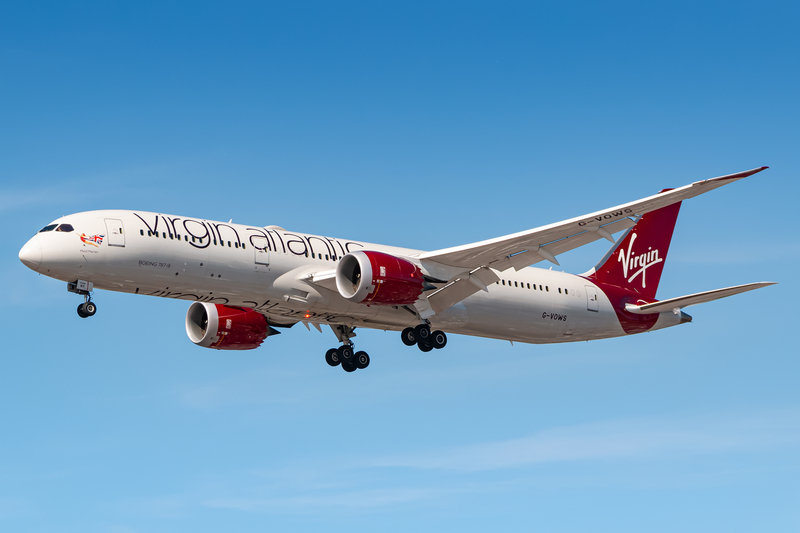
Virgin Atlantic’s Boeing 787-9 carries 258 passengers:
| Boeing 787-9 cabin | Seats |
| Upper Class | 31 |
| Premium | 35 |
| Economy | 192 |
| Total | 258 |
Virgin’s original A330-900neo layout carries 262 passengers, including 32 Upper Class seats, 46 Premium seats, and 184 Economy seats.
Operating one of each aircraft would provide approximately 520 seats from Heathrow to Boston each day.
Virgin Atlantic operates two Airbus A350-1000 configurations. The premium-heavy version carries 335 passengers, while the leisure-focused aircraft accommodates 397. The airline has not publicly identified which layout will operate every Boston departure.
Depending on the A350 configuration, daily Virgin capacity could fall from roughly 520 seats to between 335 and 397 seats. That represents a reduction of approximately 24% to 36%, not a full 50%.
The frequency cut is still significant, particularly for business travelers who value departure-time choice. However, using the larger A350 allows Virgin Atlantic to consolidate passengers onto one airplane without removing half of its seats from the market.
Miami Loses Its Second Daily Flight
Miami International Airport (MIA) faces one of the largest frequency reductions.
Virgin Atlantic had scheduled two daily flights from Heathrow using a mixture of Airbus A330-300s, A330-900neos, and Boeing 787-9s. The new schedule provides one daily Airbus A350-1000.
Unlike Boston, Miami does not have a parallel Delta-operated flight from Heathrow that can absorb passengers while preserving the joint venture’s total frequency. Virgin Atlantic’s reduction therefore removes an entire daily option from the nonstop market.
The route carries several different passenger flows.
Miami attracts substantial leisure and visiting-friends-and-relatives traffic between the United Kingdom and South Florida. It is also a major cruise gateway and a connecting point for destinations across the Caribbean and Latin America.
Virgin Atlantic can use the A350’s greater capacity to retain a meaningful number of seats while eliminating the operating cost of a second daily rotation. One larger airplane requires fewer cockpit and cabin crew duty periods, fewer Heathrow slots, and fewer takeoff and landing cycles than two smaller widebodies.
The tradeoff is schedule concentration. Passengers lose the ability to choose between two Virgin departures, and any cancellation or severe delay affects the airline’s entire daily Miami operation rather than one of two flights.
Las Vegas Expansion Is Reversed Before It Begins
The Las Vegas reduction is especially notable because Virgin Atlantic had formally announced plans to increase service only a few months earlier.
In March, the airline said strong demand during September and October justified expanding Heathrow-Las Vegas from seven to 10 weekly flights beginning August 31. Virgin listed the additional flights as available for booking and planned to use the Boeing 787-9 throughout the expanded schedule.
That plan has now been reversed. Virgin’s own Las Vegas page lists one daily nonstop flight from London Heathrow (LHR), returning the route to seven weekly departures.
The reduction eliminates three weekly flights, or 30% of the planned frequency and seat capacity, because both the original and revised schedules used the same 258-seat Boeing 787-9.
Each removed round trip represents 516 seat positions across both directions. Three fewer weekly round trips therefore remove approximately 1,548 two-way seats every week.
The timing of the reversal suggests that Virgin’s demand forecast changed materially after the March schedule announcement.
It may have seen weaker-than-expected advance bookings, softer post-summer demand, increased fuel costs, or an opportunity to use the aircraft more profitably elsewhere. Virgin Atlantic has not publicly provided a detailed explanation for this specific round of cuts, so the commercial cause should not be presented as confirmed.
The route itself remains strategically important. Las Vegas is a major leisure destination, and Virgin also operates seasonal service from Manchester Airport (MAN). The airline is reducing its Heathrow growth plan rather than abandoning the market.
San Francisco Returns to One Daily A350
San Francisco International Airport (SFO) is also being reduced from 10 weekly Virgin Atlantic flights to one daily departure.
Virgin had previously scheduled a combination of Airbus A350-1000 and Boeing 787-9 flights. The revised schedule uses one daily A350-1000. Virgin’s current destination page confirms daily nonstop service from Heathrow.
The A350 is a logical aircraft for San Francisco.
The route has a substantial premium component linked to technology, finance, corporate travel, and connections beyond both cities. Virgin’s premium-heavy A350 layout contains 44 Upper Class seats and 56 Premium seats, giving the airline 100 premium-cabin positions before Economy is counted.
Using the A350 allows Virgin to protect its most valuable passenger segments while removing the three additional weekly 787 rotations.
The flight also supports onward connections between California and Virgin Atlantic’s India network. Bengaluru, Mumbai, and Delhi are important technology and business markets, and Virgin sells one-stop itineraries between San Francisco and India through London Heathrow.
Reducing San Francisco and Bengaluru simultaneously may therefore affect passengers at both ends of the connecting flow. The airline must ensure that its remaining daily flights are timed closely enough to maintain practical connections at Heathrow.
Bengaluru Expansion Is Almost Completely Reversed
The largest percentage cut affects Bengaluru.
Virgin Atlantic launched daily service between London Heathrow (LHR) and Bengaluru (BLR) in March 2024 using the Boeing 787-9. The airplane offers 31 Upper Class seats, 35 Premium seats, and 192 Economy seats.
In March 2026, Virgin announced that Bengaluru would increase from seven to 13 weekly flights from June through the end of the summer season. The airline described India as one of its fastest-growing markets and said the near-double-daily schedule would provide more choice and flexibility.
The September and October revision returns Bengaluru to one daily flight.
Because both the removed and remaining flights use the same 258-seat Boeing 787-9, the frequency and seat-capacity reductions are almost identical:
| Bengaluru schedule | Weekly flights | Approximate weekly one-way seats |
| Previous plan | 13 | 3,354 |
| Revised plan | 7 | 1,806 |
| Reduction | 6 | 1,548 |
Across both directions, Virgin is removing approximately 3,096 weekly seat positions from the Bengaluru route.
The reduction does not mean Virgin Atlantic is retreating from India altogether.
The airline will still operate five daily flights between Heathrow and India: one to Bengaluru and two each to Delhi Indira Gandhi International Airport (DEL) and Chhatrapati Shivaji Maharaj International Airport in Mumbai (BOM).
Current schedule data indicates all five will use Boeing 787-9s during the affected period, with the previously planned A350 operation to Delhi removed.
India Remains One of Virgin Atlantic’s Largest Markets
The temporary Bengaluru reduction should be viewed against Virgin Atlantic’s broader growth in India.
The airline marked 25 years of Indian service in 2025 and described India as its third-largest market after the United Kingdom and United States. Virgin had grown to approximately one million annual seats across Delhi, Mumbai, and Bengaluru, representing a 350% increase from 2019.
India also supports an important cargo business.
Virgin Atlantic carries fashion products, pharmaceuticals, technology equipment, and other freight between India, the United Kingdom, and destinations across its transatlantic network. The airline said its five daily services provided tens of millions of kilograms of annual cargo capacity.
Reducing Bengaluru from 13 weekly flights to seven therefore removes more than passenger capacity. It also reduces lower-deck cargo space during September and October.
The continued double-daily Delhi and Mumbai schedules indicate that Virgin still considers India strategically critical. The adjustment concentrates the airline’s capacity on its two more established Indian markets while returning the newer Bengaluru route to its original daily baseline.
U.S. Departures Fall by Approximately 14%
Before the latest schedule revision, Virgin Atlantic had planned approximately 22 daily departures from Heathrow to the United States during much of September and October.
The cuts to Boston, Miami, Las Vegas, and San Francisco reduce that figure to approximately 19 daily flights on many dates, a decline of nearly 14%. The exact total can vary according to the week and day of operation.
Virgin Atlantic is still expected to serve 11 U.S. destinations from Heathrow during the period:
| U.S. destination | Airport code | Approximate revised Virgin frequency |
| New York-JFK | JFK | Six daily |
| Los Angeles | LAX | Three daily |
| Orlando | MCO | Two daily |
| Atlanta | ATL | Daily |
| Boston | BOS | Daily |
| Las Vegas | LAS | Daily |
| Miami | MIA | Daily |
| Seattle | SEA | Daily |
| San Francisco | SFO | Daily |
| Tampa | TPA | Daily |
| Washington-Dulles | IAD | Daily |
Aircraft assignments vary among the Airbus A330-300, A330-900neo, A350-1000, and Boeing 787-9.
The schedule would temporarily place Virgin behind American Airlines in the number of Heathrow-U.S. departures. American is expected to operate around 21 daily flights, while Virgin and United Airlines each provide approximately 19 on many dates. British Airways remains the largest operator by a substantial margin.
The comparison concerns flight frequency rather than total passengers or seats. Virgin’s use of large A350-1000s means its share of seat capacity can differ from its share of departures.
Frequency Cuts Do Not Equal Seat Cuts
The revised aircraft assignments reveal a deliberate consolidation strategy.
Virgin Atlantic is not simply removing flights and leaving the same smaller aircraft on the remaining schedule. It is placing the Airbus A350-1000 on Boston, Miami, and San Francisco, while retaining the Boeing 787-9 on Las Vegas and Bengaluru.
| Aircraft | Virgin Atlantic configurations | Total seats |
| Boeing 787-9 | 31 Upper, 35 Premium, 192 Economy | 258 |
| Airbus A330-900neo | 32 Upper, 46 Premium, 184 Economy | 262 |
| Airbus A350-1000 premium-heavy | 44 Upper, 56 Premium, 235 Economy | 335 |
| Airbus A350-1000 leisure | 16 Upper, 56 Premium, 325 Economy | 397 |
Virgin’s A350-1000 is its largest aircraft by passenger capacity, with the exact total depending on whether the premium-heavy Loft configuration or leisure-focused Booth configuration is assigned.
Consolidating two smaller flights into one A350 reduces frequency more sharply than total seats.
This strategy can lower operating costs by reducing the number of takeoffs, landings, crew rotations, and airport handling events while still carrying a substantial portion of the planned passengers.
It can also improve load factors. Rather than dividing demand between two departures that may each operate with empty seats, Virgin can concentrate travelers onto one larger aircraft.
The disadvantage is reduced schedule convenience and resilience. If the daily A350 develops a technical problem, there is no second Virgin departure later that day to absorb all of the displaced passengers.
Heathrow Slots Are Not the Immediate Constraint
Virgin Atlantic’s reductions should not be interpreted as evidence that it is surrendering its Heathrow slots permanently.
Heathrow is one of the world’s most slot-constrained airports, and airlines generally seek to protect valuable arrival and departure rights. A flight removed from one route can be reassigned elsewhere within the carrier’s network, leased or exchanged under applicable rules, or used for other eligible operations.
Virgin’s broader network still averages approximately 34 daily departures from Heathrow, Manchester, and Edinburgh between August and December, with Heathrow accounting for roughly 89% of the total.
The airline may use aircraft and slots released by these five reductions for stronger routes, charter operations, schedule recovery, or additional maintenance flexibility.
The changes also occur as Virgin prepares for its winter schedule, including new seasonal Boeing 787-9 flights to Phuket International Airport (HKT) beginning October 18.
Virgin Has Not Given a Detailed Public Explanation
Virgin Atlantic has not published a route-by-route statement explaining the five reductions.
Secondary reporting has linked the changes to softer demand following the summer travel peak, higher fares affecting Indian demand, and elevated jet-fuel costs. Another report said Virgin had not commented directly on this specific schedule revision.
Those explanations are plausible but should not be presented as confirmed airline statements.
Virgin has previously described other 2026 network revisions as responses to “evolving customer demand.” Its March announcement said Las Vegas and Bengaluru required additional flights because of strong demand, while a later winter update used the same demand-based approach to increase South Africa capacity and temporarily suspend other services.
Airline schedules remain dynamic until relatively close to operation.
Carriers initially load flights based on demand forecasts, aircraft availability, fuel expectations, competitive capacity, and historical booking patterns. As actual reservations develop, revenue-management and network-planning teams may add, remove, or resize services.
The reversal of the Las Vegas and Bengaluru increases shows how quickly those forecasts can change.
The Reductions May Improve Operational Stability
A smaller schedule can also create additional operational margin.
Virgin Atlantic operates an all-widebody fleet, meaning every canceled flight releases a high-value long-haul aircraft, several pilots, a large cabin crew, maintenance capacity, and substantial ground-handling resources.
Widebody operations are particularly sensitive to disruption. A delayed aircraft returning from San Francisco or Bengaluru may arrive too late to operate its next assignment, while long crew duty periods reduce the ability to recover the flight without replacing personnel.
Removing up to 26 weekly departures gives Virgin more flexibility to cover scheduled maintenance, technical problems, weather disruption, or late inbound aircraft.
Virgin has been gradually retiring its older Airbus A330-300s and replacing them with A330-900neos. By 2028, the airline plans to operate 45 next-generation aircraft consisting of 19 A330-900neos, 12 A350-1000s, and 14 Boeing 787-9s.
The fleet transition is designed to improve efficiency, but delivery schedules, maintenance requirements, and the gradual withdrawal of older aircraft can still create periods when less spare capacity is available.
There is no public confirmation that aircraft availability caused these five reductions. Operational resilience is nevertheless one potential benefit of flying a less aggressive fall schedule.
Passengers Still Have Significant Alternatives
The effect on passengers varies considerably by route.
Boston travelers retain both Virgin Atlantic and Delta nonstop service under the joint venture. Las Vegas, Miami, and San Francisco passengers can also choose British Airways, while additional one-stop options are available through U.S. and European hubs.
Bengaluru passengers retain Virgin’s daily nonstop and can choose British Airways or Air India, depending on the final seasonal schedules. Numerous one-stop itineraries are also available through the Gulf, Europe, and other Indian hubs.
The largest inconvenience will affect passengers who specifically selected the departure time of a removed Virgin flight.
A traveler may still reach the destination on the same day but be required to leave several hours earlier or later. Changes can be more disruptive when the revised flight no longer connects with a separate domestic service, cruise departure, business meeting, or independently booked itinerary.
Virgin should contact affected customers as reservation systems are updated. Passengers should review the complete itinerary rather than assuming that retaining the same travel date means every connection remains workable.
The Cuts Are Temporary, but Future Capacity Is Not Guaranteed
The revised frequencies apply to September and October and should not automatically be extended into the winter 2026–2027 schedule.
Virgin could restore the additional flights in a future season if demand improves. Boston, Miami, Las Vegas, San Francisco, and Bengaluru remain strategically important markets with established passenger bases.
The airline may also choose a different mix of frequencies and aircraft.
A route could return to twice-daily service with smaller aircraft, remain daily with the A350, or gain additional flights only during holiday and peak-demand periods.
The previous schedule provides evidence of Virgin’s willingness to add capacity when bookings justify it. The latest revision shows that the airline is equally willing to remove that capacity before departure when the expected economics change.
Bottom Line
Virgin Atlantic is temporarily reducing service from London Heathrow Airport (LHR) to Bengaluru (BLR), Boston (BOS), Las Vegas (LAS), Miami (MIA), and San Francisco (SFO) during September and October 2026.
None of the routes is being canceled. Each will continue operating daily.
The most substantial changes are:
- Bengaluru falls from 13 weekly Boeing 787-9 flights to seven.
- Boston drops from as many as two daily flights to one daily Airbus A350-1000.
- Miami declines from two daily flights to one daily A350-1000.
- Las Vegas falls from 10 weekly Boeing 787-9 flights to seven.
- San Francisco drops from 10 weekly flights to one daily A350-1000.
During the busiest affected weeks, Virgin is removing as many as 26 one-way departures from its planned Heathrow schedule.
The frequency reductions do not translate directly into the same percentage of lost seats. Virgin is consolidating Boston, Miami, and San Francisco onto the larger Airbus A350-1000, which can carry either 335 or 397 passengers depending on its cabin configuration.
Boston will also retain a daily Delta Air Lines Airbus A330-900neo flight, leaving the Virgin-Delta joint venture with two daily services despite Virgin cutting its own operation in half.
Las Vegas and Bengaluru experience the clearest capacity reductions because the removed and remaining flights all use the same 258-seat Boeing 787-9. Bengaluru loses approximately 46% of its planned flights and seats, while Las Vegas declines by 30%.
The timing is notable because Virgin announced additional Las Vegas and Bengaluru flights in March, citing strong demand. The airline has not publicly provided a detailed explanation for reversing those increases.
For Virgin Atlantic, the revised schedule concentrates passengers onto fewer, larger aircraft and may improve load factors, operating costs, and schedule resilience.
For passengers, all five cities remain available every day—but with fewer departure choices, less rebooking capacity during disruptions, and potentially less convenient connections through Heathrow.