Air Canada Gives Berlin Its Most Important New North American Link With Montréal Launch
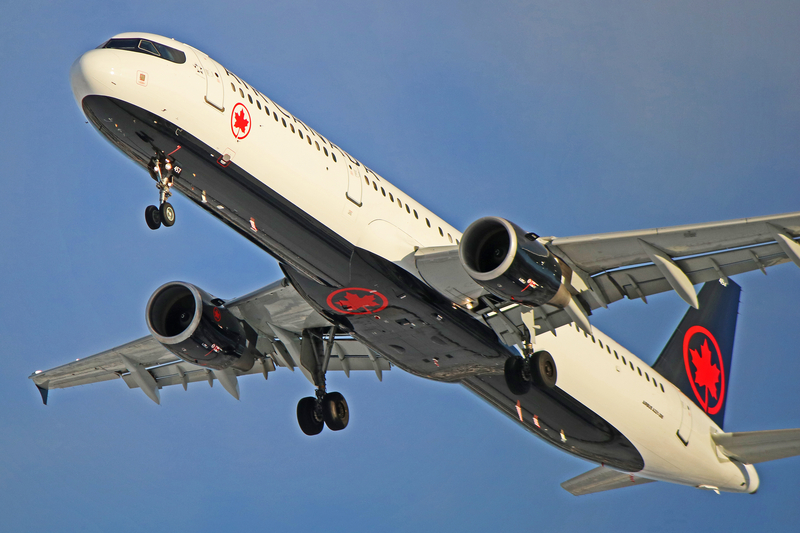
Air Canada has launched nonstop service between Berlin Brandenburg Airport (BER) and Montréal-Trudeau International Airport (YUL), giving the German capital region a new long-haul link to Canada and setting up Germany’s first regular scheduled long-haul operation with the Airbus A321XLR.

The new Berlin (BER)-Montréal (YUL) route began on July 3, 2026, and is scheduled to operate three times weekly through September 6. Flights depart Berlin on Wednesdays, Fridays and Sundays, while the westbound pattern is fed by Montréal departures on Tuesdays, Thursdays and Saturdays.
For Berlin, this is a meaningful addition. BER has steadily improved its long-haul network, but the airport remains underdeveloped compared with the size of the Berlin-Brandenburg market. A nonstop Air Canada route to Montréal gives the region a stronger North American bridge, better access to Québec, and one-stop connectivity across Canada and the wider Air Canada network.
The Route Starts With the 787 Before Moving to the A321XLR
The inaugural flight from Berlin (BER) to Montréal (YUL) was operated by the Boeing 787-8 Dreamliner, a widebody aircraft already well established in Air Canada’s long-haul fleet. From July 19, however, Air Canada plans to transition the route to the Airbus A321XLR.
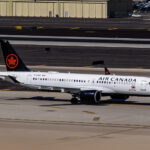
That transition is the aviation story behind the route. BER says this will be the first time the A321XLR is deployed regularly on a long-haul route to Germany. For Air Canada, it is exactly the type of market the aircraft was designed to serve: long enough to require true transatlantic range, but not necessarily large enough to justify year-round widebody capacity.
The A321XLR gives Air Canada a more precise tool. It can open thinner transatlantic routes with lower trip costs than a widebody, while still offering a long-haul cabin product. That matters in a market like Berlin-Montréal, where demand is attractive but not necessarily deep enough for large daily widebody service.
A321XLR Economics Fit Berlin Better Than a Bigger Widebody
The Airbus A321XLR is the longest-range member of the A320neo family, with Airbus listing a range of up to 4,700 nautical miles and flight times of up to 11 hours. That puts Berlin (BER)-Montréal (YUL) comfortably inside the aircraft’s mission profile.
Air Canada’s A321XLR configuration is especially important. The aircraft has 182 seats: 14 in Business Class and 168 in Economy Class. The Business Class cabin introduces lie-flat seating on a single-aisle Air Canada aircraft, a major product distinction for a route that will be flown across the Atlantic.

That gives Air Canada two advantages. First, it can offer a premium cabin credible enough for business travelers, government traffic, academic travel, and high-yield leisure passengers. Second, it avoids the capacity risk of a larger widebody. A Boeing 787 can work for the launch period, but the A321XLR is the long-term strategic aircraft for this route.
For BER, that is a powerful development. The aircraft type can make routes viable that might otherwise remain stuck in a planning deck because the widebody economics are too heavy.
The Schedule Is Designed for Connectivity
The Berlin (BER)-Montréal (YUL) schedule is built around usable timings on both ends. Flights depart Berlin at 11:40 a.m. and arrive in Montréal at 1:45 p.m. local time after a scheduled flight time of 8 hours and 40 minutes. The return departs Montréal at 8:30 p.m. and arrives in Berlin at 10:15 a.m. the following day.
That timing works well for both local and connecting traffic. The afternoon arrival at Montréal (YUL) gives passengers from Berlin access to Air Canada’s onward network across Canada and North America. The evening departure from Montréal creates a classic overnight transatlantic pattern, landing in Berlin the following morning.
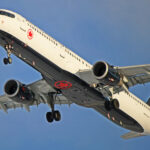
Montréal is one of Air Canada’s largest hubs, and that matters for the route’s commercial case. The airline can carry Berlin-origin passengers to Montréal, but it can also flow traffic beyond YUL to cities such as Toronto (YYZ), Ottawa (YOW), Halifax (YHZ), Calgary (YYC), Vancouver (YVR), New York (LGA/EWR/JFK), Boston (BOS), Chicago (ORD), and other North American points depending on schedule connectivity.
That hub feed is what makes the route stronger than a simple city-pair link. Berlin-Montréal demand alone is important, but the route becomes much more useful when it is connected to Air Canada’s broader network.
Montréal Gives Berlin a Different North American Gateway
Most European long-haul growth to North America tends to focus on New York, Toronto, Chicago, Boston, Washington, or major sunbelt markets. Montréal is different.
Montréal (YUL) gives Berlin (BER) direct access to Québec’s largest city, a bilingual economic and cultural center with strong links to aerospace, artificial intelligence, gaming, higher education, life sciences, and the creative industries. Those sectors matter because Berlin has similar strengths. The route is not only about tourists heading across the Atlantic. It is also about connecting two cities with overlapping business, academic, and cultural profiles.
That is why the route has attracted support from airport, tourism, and business leaders. Berlin and Montréal both have strong creative economies, deep startup ecosystems, and major research institutions. Direct air service reduces friction between those communities, especially for travelers who would otherwise connect over Frankfurt (FRA), Munich (MUC), London Heathrow (LHR), Paris Charles de Gaulle (CDG), Amsterdam (AMS), or another European hub.
For Air Canada, Montréal also provides a less congested and highly strategic alternative to Toronto Pearson (YYZ). YUL is a strong transatlantic gateway in its own right, particularly for French-speaking markets, Québec-bound traffic, and connecting flows across eastern Canada.
BER Gets a Long-Haul Win It Needed
Berlin has long had a complicated long-haul story. The city is one of Europe’s major capitals, but its air service profile has historically lagged behind its size and economic importance. The transition from Tegel and Schönefeld to BER was meant to create a more efficient airport platform, but long-haul growth has still been gradual.
Air Canada’s arrival helps address that gap. BER already has North American service, but every additional long-haul link is valuable because Berlin does not have the same intercontinental density as Germany’s two primary hubs, Frankfurt Airport (FRA) and Munich Airport (MUC).
That is why the A321XLR matters so much. BER may not be able to support every desired long-haul route with widebody aircraft. But with long-range narrowbodies, airlines can test and sustain more targeted intercontinental routes. The A321XLR effectively lowers the entry barrier for long-haul service from airports such as Berlin.
If the Berlin-Montréal route performs well, it could strengthen the case for additional transatlantic service using similar aircraft economics.
Air Canada Is Already Planning a Bigger 2027 Season
Air Canada is not treating Berlin as a one-off experiment. The route is already scheduled to return in summer 2027, when it will increase to four weekly flights from early June through mid-October.
That is an encouraging sign. Airlines do not normally extend and expand seasonal flying unless the route has a credible forward booking profile or strategic value. Moving from three weekly flights in 2026 to four weekly flights in 2027 gives Air Canada more schedule relevance and gives Berlin travelers a more useful service pattern.
The longer 2027 season also matters. A route ending in early September is more limited. A schedule extending from early June into mid-October captures more of the summer peak, late-summer leisure demand, fall business travel, and shoulder-season tourism.
For BER, a longer season and higher frequency make the route more meaningful. For Air Canada, it gives the carrier more time to build brand awareness and establish Montréal (YUL) as a viable North American gateway for the Berlin market.
A Small Aircraft With Big Strategic Value
Calling the A321XLR a “narrowbody” undersells its role. Technically, yes, it is a single-aisle aircraft. Strategically, it is a long-haul route opener.
The aircraft allows airlines to serve markets that sit between traditional categories. Berlin-Montréal is not a short-haul route, not a leisure-only route, and not necessarily a widebody-heavy trunk market. It is exactly the kind of transatlantic city pair where right-sized capacity can make the difference between no service and sustainable service.
Air Canada’s use of the A321XLR also reflects a larger industry shift. Airlines are increasingly using long-range narrowbodies to connect secondary long-haul markets, reduce seasonal risk, and maintain premium product standards without committing larger aircraft. The aircraft does not replace the 787 or A330 on major trunk routes. It complements them by opening routes that would otherwise be too thin or too seasonal.
That is why BER-YUL is so significant. It is not just a new route. It is a demonstration of how aircraft technology can change airport connectivity.
Bottom Line
Air Canada’s new Berlin (BER)-Montréal (YUL) service gives the German capital region a valuable nonstop link to Canada and strengthens BER’s still-developing long-haul network. The route launches with the Boeing 787-8 before transitioning on July 19 to the Airbus A321XLR, making Berlin the first German airport to receive regular scheduled long-haul service with the type.
For Air Canada, the A321XLR is the key. With 182 seats, lie-flat Business Class, long transatlantic range, and lower trip costs than a widebody, it gives the airline a realistic way to serve thinner long-haul markets such as Berlin-Montréal.
For BER, the route is a statement of progress. It adds North American connectivity, improves access to Québec and Canada, and shows how new-generation narrowbodies can help Berlin win long-haul service that might not have worked with larger aircraft. If the 2026 season performs well, the planned four-weekly 2027 return could mark the start of a more durable Air Canada presence in the German capital.