American Airlines Pulls Back Hard on Austin-Los Cabos as AUS Leisure Flying Gets More Competitive
American Airlines is sharply reducing its seasonal nonstop service between Austin-Bergstrom International Airport (AUS) and Los Cabos International Airport (SJD), turning what had been filed as a much larger winter leisure schedule into a limited peak-period operation.

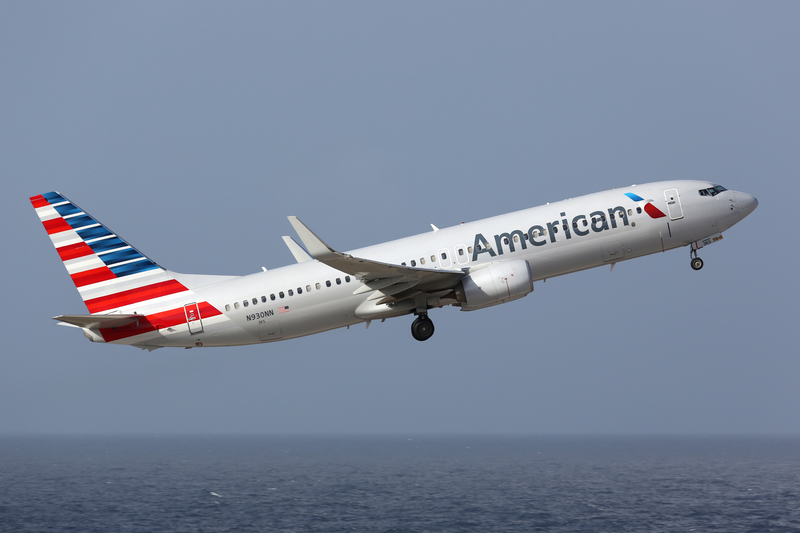
The change removes nearly 19,000 seats from the Austin (AUS)-Los Cabos (SJD) market during the early winter travel period, based on schedule data cited by aviation route trackers. The aircraft involved is American’s 172-seat Boeing 737-800, meaning the 18,920-seat reduction equates to roughly 110 fewer flight segments than originally filed.
That is a major change for a route that sits squarely in the premium leisure category. Los Cabos is one of Mexico’s strongest U.S.-origin vacation markets, and Central Texas has been one of the country’s most active growth regions for air service. On paper, Austin (AUS) to San José del Cabo (SJD) looks like exactly the kind of route that should work during the winter escape season.
American’s revised schedule suggests the carrier is taking a much more cautious view.

American Is Not Leaving AUS-SJD, But It Is Shrinking the Route
The route has not been canceled outright. According to the latest AeroRoutes schedule update, American now plans to operate Austin (AUS)-Los Cabos (SJD) once weekly during three limited windows in the Northern Winter 2026/27 season: November 21-28, December 19-January 2, and March 6-April 3.
The planned flight is AA2442, operating on Saturdays with a Boeing 737-800. The southbound flight is scheduled to depart Austin (AUS) at 8:52 a.m. and arrive at Los Cabos (SJD) at 10:34 a.m. The return departs Los Cabos (SJD) at 11:35 a.m. and lands back in Austin (AUS) at 3:07 p.m.
That is a very different product from a robust winter schedule. Instead of sustained seasonal flying, American is effectively concentrating its Austin-Cabo service around the highest-demand travel windows: Thanksgiving, Christmas/New Year, and spring break.
For passengers, the distinction is important. The route remains available, but availability becomes much narrower. Travelers who want a nonstop American option between Austin (AUS) and Los Cabos (SJD) will have fewer departure dates, less flexibility, and more reliance on connections over American’s larger hubs, particularly Dallas/Fort Worth International Airport (DFW).

The Boeing 737-800 Makes the Seat Cut Easy to Measure
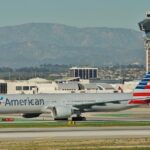
American’s use of the Boeing 737-800 makes the capacity reduction straightforward. American configures its 737-800 fleet with 172 seats: 16 First Class seats, 24 Main Cabin Extra seats, and 132 Main Cabin seats.
On a leisure route like Austin (AUS)-Los Cabos (SJD), that cabin mix matters. The 737-800 gives American a domestic narrowbody with real premium inventory, but not so much capacity that the airline must fill a widebody-style seat count. The aircraft is also a known quantity for American’s Mexico network, especially out of Texas.
Still, 172 seats per departure is meaningful. Cutting 110 one-way segments removes 18,920 seats from the market. That is not a small trim around the edges. It is a material reduction in nonstop capacity between Central Texas and Baja California Sur.
The 737-800 itself remains a logical aircraft for the sector. The Austin-Los Cabos flight is under three hours, well within the 737-800’s operating profile, and the aircraft provides enough First Class and extra-legroom seating to capture higher-yield vacation traffic. The question is not whether the airplane fits the mission. It is whether American wants that airplane tied up in a competitive leisure market when it can be used elsewhere in the network.
Austin Has Demand, But American Has Been Recalibrating
The cut also fits into a broader American Airlines story at Austin (AUS). American built up Austin aggressively during the pandemic and early recovery period, treating the airport as a focus-city opportunity. That experiment has been steadily unwound.
In 2023 and 2024, American removed a large number of Austin routes and shifted more attention back toward its core hub structure. The Los Cabos reduction does not carry the same symbolism as those broader cuts, but it points in the same direction: American is willing to keep selective Austin flying, but only where the economics are compelling.
That is especially clear when looking at current airport data. Austin-Bergstrom International Airport reported 8.7 million passengers for January-May 2026, up 4.62% from the same period in 2025. Yet American’s passenger count at AUS was down 10.1% over that same period, while Delta and United grew and Southwest remained the airport’s largest carrier.
That does not mean American is abandoning Austin. It does mean American’s role at AUS is changing. The carrier appears more focused on hub connectivity, selective international leisure routes, and high-confidence seasonal flying rather than rebuilding a large non-hub Austin network.
Delta and Southwest Get a Cleaner Shot at Cabo Traffic
American’s pullback changes the competitive setup on Austin (AUS)-Los Cabos (SJD). The route is not just an American market. Delta Air Lines lists Austin among its seasonal nonstop gateways to Los Cabos, while Southwest Airlines also markets Austin-Los Cabos service.
That gives travelers alternatives, but it also gives Delta and Southwest more room to work the market when American reduces capacity.
Delta’s position is particularly interesting. The airline has been growing in Austin and has increasingly framed AUS as a meaningful focus city within its network. Delta’s Airbus A319 is well suited to a route like Austin (AUS)-Los Cabos (SJD), offering 132 seats with First Class, Delta Comfort+, and Main Cabin. That is a smaller gauge than American’s 737-800, but it gives Delta a premium cabin and a manageable seat count for a seasonal leisure route.
Southwest brings a different strength. Its Austin base and large local customer base make it a natural competitor in short- and medium-haul leisure markets. Even without a traditional premium cabin, Southwest can compete strongly on price, loyalty, schedule familiarity, and local brand strength.
With American less aggressive on AUS-SJD, Delta and Southwest may not need to add capacity immediately to benefit. In peak travel weeks, simply holding their schedules could give them more pricing power and better load factors.
Los Cabos Is Still a Strong Market
The schedule cut should not be read as a negative judgment on Los Cabos itself. Los Cabos International Airport (SJD) remains one of Mexico’s most important leisure gateways, serving San José del Cabo, Cabo San Lucas, and the broader resort corridor at the southern tip of the Baja California Peninsula.
The destination has several advantages for U.S. airlines. It is close enough for narrowbody aircraft, popular with high-spending leisure travelers, and attractive during the winter months when demand from U.S. travelers rises. Delta’s own Los Cabos destination material notes that December through April is the busiest period for travel to Cabo San Lucas.
That is exactly why American’s reduction is notable. The carrier is not cutting a marginal off-season route. It is shrinking capacity during a period when Los Cabos normally sees strong demand.
The most likely explanation is network discipline. American may see better uses for the 737-800 aircraft elsewhere, particularly in hub markets where it can carry both local and connecting traffic. A point-to-point Austin-Cabo flight depends more heavily on local origin-and-destination demand, and if the fare mix or booking curve does not justify the planned schedule, the airline has little reason to keep excess capacity in the market.
A More Surgical Austin Strategy
This is what a more surgical Austin strategy looks like. American can still serve Austin (AUS), still offer Los Cabos (SJD), and still capture peak leisure demand without committing to a full seasonal schedule.
From a network-planning perspective, that is not irrational. A Saturday-only flight during peak windows can pick up the strongest leisure demand while limiting exposure during weaker weeks. It also allows American to keep the route in the schedule, preserve market visibility, and avoid fully handing the city pair to competitors.
But it comes at a cost. The product becomes less useful for travelers who want flexible trip lengths. A once-weekly schedule works best for seven-night vacations. It is less attractive for long weekends, five-night resort stays, or passengers who need more choice around work and school calendars.
That is where Delta and Southwest may gain. If either carrier offers more consistent frequency, it becomes more useful to the average traveler, even if American maintains a premium cabin and AAdvantage loyalty appeal.
What This Means for Austin Travelers
For Central Texas travelers, the practical effect is simple: nonstop seats to Los Cabos (SJD) on American will be much harder to find during winter 2026/27.
Travelers loyal to American may still be able to reach Los Cabos through Dallas/Fort Worth (DFW), Phoenix Sky Harbor International Airport (PHX), or other American connecting points. But that changes the value proposition. A two-hour-and-change nonstop from Austin (AUS) becomes a longer, connection-dependent itinerary.
For leisure travelers comparing total trip time, price, schedule, and nonstop availability, that can be enough to shift bookings to Delta or Southwest. In a market like Cabo, convenience matters. Resort travelers often choose the itinerary that gets them to the beach fastest, not necessarily the carrier they fly most often.
That is why capacity reductions on leisure routes can have an outsized impact. The airline may view the change as a tactical aircraft deployment decision. Passengers experience it as fewer nonstop options and potentially higher fares during the weeks they most want to travel.
Bottom Line
American Airlines is not abandoning Austin (AUS)-Los Cabos (SJD), but it is dramatically reducing the route’s winter footprint. What had been filed as a much larger seasonal schedule is now a limited once-weekly Boeing 737-800 operation during peak travel windows.
The move removes nearly 19,000 seats from the early winter Austin-Cabo market and reflects American’s broader shift away from aggressive Austin point-to-point flying. The airline appears focused on protecting peak demand without overcommitting aircraft to a competitive leisure route.
For Delta and Southwest, American’s retreat creates opportunity. For Austin travelers, it means fewer nonstop American options to one of Mexico’s most popular winter vacation markets. And for airline planners, it is another reminder that even in a growing airport like AUS, capacity only stays where the revenue case is strong enough to defend it.