Azerbaijan Airlines Adds Brussels As Baku’s European Network Push Continues
Azerbaijan Airlines will launch a new nonstop route between Baku and Brussels in May 2027, giving the Azerbaijani flag carrier a direct link to one of Europe’s most important political, diplomatic, and business capitals.

The new service will connect Heydar Aliyev International Airport (GYD) in Baku with Brussels Airport (BRU), beginning May 8, 2027. Flights are scheduled four times weekly, operating on Mondays, Wednesdays, Thursdays, and Saturdays.
For Azerbaijan Airlines, also known as AZAL, the route is a logical European network addition. Brussels (BRU) is not only Belgium’s main international airport; it also serves the headquarters city of the European Union and NATO. For Baku (GYD), the route adds a politically and commercially significant nonstop link into Western Europe while giving passengers another direct alternative to connecting through Istanbul, Warsaw, Vienna, Frankfurt, Doha, or other hubs.
Four Weekly Flights Between Baku And Brussels
AZAL has opened ticket sales for the new Baku (GYD)–Brussels (BRU) service, with the first flight scheduled for May 8, 2027.

The route will operate four times per week in each direction. That is a meaningful starting frequency for a new capital-to-capital market. It gives passengers schedule flexibility without forcing AZAL to commit daily capacity before the airline has had time to develop the market.
The four-day pattern also fits the likely demand profile. Baku–Brussels is expected to carry a mix of government, diplomatic, business, leisure, visiting-friends-and-relatives, and connecting traffic. It is not purely a holiday route, but it is also unlikely to behave like a high-frequency corporate shuttle from day one.
For business and institutional travelers, four weekly flights can be enough to support short stays, midweek meetings, and long weekends. For leisure travelers, the schedule gives more flexibility than a once- or twice-weekly service while still keeping the route commercially measured.
Why Brussels Matters For AZAL
Brussels is a strategically useful destination for Azerbaijan Airlines.
The city is one of Europe’s key political centers, home to the main institutions of the European Union and NATO headquarters. That makes Brussels (BRU) relevant for government delegations, diplomatic travel, international organizations, legal and regulatory work, energy discussions, trade missions, and corporate travel.
For Azerbaijan, that matters. The country has important relationships with Europe through energy, transport, trade, investment, regional diplomacy, and connectivity between the Caspian region and the wider European market. A nonstop Baku (GYD)–Brussels (BRU) route gives those flows a more direct air link.
There is also a tourism angle. Brussels is a strong city-break destination in its own right, with access to Belgium’s cultural network, including Bruges, Ghent, Antwerp, Leuven, and Liège. For Belgian and European travelers, Baku offers a very different proposition: Caspian Sea frontage, modern architecture, the Old City, UNESCO-listed heritage, regional cuisine, and access to Azerbaijan’s mountain, wine, and cultural tourism regions.
The route is therefore not just about one city pair. It links two capitals with very different but complementary travel demand.

Brussels Airport Offers More Than Brussels
One of the route’s strengths is that Brussels Airport (BRU) is well connected beyond the airport itself.
BRU’s railway station sits directly beneath the terminal, making onward travel by train unusually convenient. Passengers can reach central Brussels quickly, while domestic rail links connect the airport with cities across Belgium, including Antwerp, Ghent, Bruges, Leuven, Liège, Namur, and Charleroi.
International rail connections are also part of the airport’s appeal. Brussels Airport is linked into wider rail networks toward the Netherlands, France, Germany, and Luxembourg, and Deutsche Bahn is adding a direct high-speed Cologne–Brussels Airport link from September 2026. That gives passengers arriving from Baku (GYD) another layer of onward connectivity without requiring a second flight.
This matters because BRU can serve a broader catchment than Belgium alone. A traveler flying from Baku to Brussels may be heading to EU institutions in the city, but they may also continue by train to Antwerp, Amsterdam, Luxembourg, Cologne, or another regional destination. For some passengers, that rail access can make Brussels more useful than a larger but less centrally connected hub.
The Aircraft Question Remains Open
AZAL has not publicly confirmed which aircraft type will operate the Baku (GYD)–Brussels (BRU) route.
That means the aircraft should be discussed carefully. The sector is approximately 3,660 kilometers, or about 1,975 nautical miles, between the two airports. That places it well within the range of modern Airbus A320-family aircraft and also comfortably within the capability of AZAL’s widebody aircraft, including the Boeing 787-8 Dreamliner.
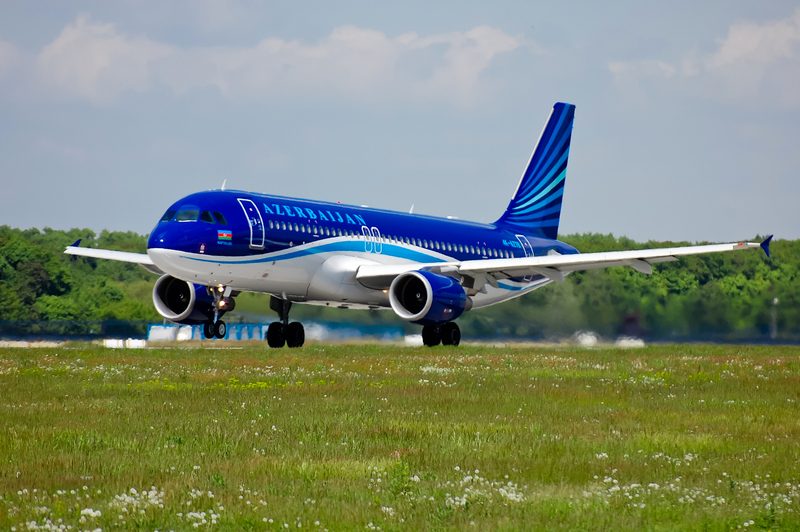
AZAL’s current published passenger fleet includes the Airbus A319-100, Airbus A320-200, Airbus A320neo, Embraer E190, Boeing 767-300ER, and Boeing 787-8. The airline has also been modernizing its fleet with newer Airbus A320neo-family and Boeing 787 aircraft, reflecting a broader shift toward more efficient aircraft for both regional and long-haul flying.
For a route such as Baku–Brussels, an Airbus A320neo-family aircraft would be the natural narrowbody candidate if AZAL wants efficient medium-haul capacity. The A320neo offers lower fuel burn than older-generation A320-family aircraft and is well suited to sectors of this length. The A319 or A320ceo could also be capable, depending on payload, configuration, and commercial requirements.
A Boeing 787-8 would be much larger and would only make sense if AZAL expects stronger premium, cargo, or connecting demand, or if the aircraft is needed for rotation purposes. Until the airline publishes equipment details, the safest conclusion is that Brussels is well within AZAL’s existing fleet capability, but the assigned type remains unconfirmed.
Fleet Modernization Supports European Growth
The Brussels route fits AZAL’s broader fleet and network evolution.
Azerbaijan Airlines has been adding newer narrowbody and widebody aircraft to support a more modern operation from Baku (GYD). The Airbus A320neo-family aircraft are particularly important for European, Middle Eastern, and regional routes, while the Boeing 787-8 gives AZAL a long-haul platform for larger and longer markets.
That fleet mix gives the airline flexibility. Baku’s geography makes AZAL interesting as a bridge between Europe, the Caucasus, Central Asia, the Middle East, and parts of Asia. Not every route needs a widebody, but many routes require more range and comfort than a small regional aircraft can provide. Modern narrowbodies are ideal for that middle ground.
Brussels (BRU) sits squarely in that category. It is a long enough route for aircraft economics and passenger comfort to matter, but not so long that a widebody is automatically required.
For AZAL, the ability to match aircraft gauge to demand will be key. A four-weekly launch with the right aircraft could build the market carefully. Too much capacity too early would create yield pressure. Too little capacity or an inconvenient schedule would limit the route’s usefulness to business and institutional travelers.
Baku’s Role As A Regional Gateway
Heydar Aliyev International Airport (GYD) has become increasingly important as Azerbaijan builds its air connectivity.
The airport serves as AZAL’s main hub and is one of the most modern gateways in the Caucasus region. Its location gives the airline access to traffic flows between Europe, the Caucasus, Central Asia, the Middle East, and parts of Asia.
For passengers in Brussels, a nonstop flight to Baku is not only about Azerbaijan. Depending on scheduling and connectivity, GYD can also function as a gateway to regional destinations across the Caucasus and Caspian region. That is an important part of the route’s potential.
For Azerbaijan-originating travelers, Brussels opens direct access to Belgium and the European institutional market. For inbound travelers, Baku offers both a destination and a regional access point.
The success of the route will depend partly on how well AZAL times connections at GYD and how effectively it markets Azerbaijan as both a destination and a bridge market.
A Route With Diplomatic And Economic Weight
Some airline routes are mostly about leisure. Others are mostly about network feed. Baku–Brussels is more strategic than that.
Azerbaijan and Belgium have diplomatic, economic, and institutional ties, while Brussels’ role in European policymaking gives the route additional relevance. A nonstop flight can make official travel, business delegations, conferences, and institutional visits easier.
This is especially important for a national carrier. Flag carriers often play a role in national connectivity that goes beyond narrow route profitability. That does not mean the route can ignore economics, but it does mean the strategic value of direct capital-to-capital air service is real.
Air links can support trade, tourism, education, political dialogue, and investment. For Azerbaijan, a direct link to Brussels is a practical tool for engagement with Europe.
Competitive Context
The new AZAL service will reduce the need for one-stop travel between Belgium and Azerbaijan.
Today, many passengers traveling between Brussels and Baku route through hubs such as Istanbul (IST/SAW), Warsaw (WAW), Vienna (VIE), Frankfurt (FRA), Doha (DOH), or other connecting airports. Those options will remain relevant, especially for passengers seeking lower fares, different schedules, or loyalty benefits with other airline groups.
A nonstop flight changes the value equation. It saves time, reduces missed-connection risk, simplifies baggage handling, and makes the journey more attractive for official, business, and premium travelers.
That is where AZAL can compete. It does not need to offer the same global network depth as Turkish Airlines, Lufthansa Group, or Qatar Airways. It needs to provide a reliable nonstop product between two capitals where nonstop convenience has real value.
Cargo Could Add Support
Baggage and belly cargo may also matter on the route.
Baku and Brussels have economic links tied to energy, logistics, government, technology, trade, and institutional activity. Brussels Airport is also a major European cargo platform, particularly for pharmaceuticals, high-value goods, and time-sensitive freight.
If AZAL operates the route with a narrowbody, cargo capacity will be limited compared with a widebody but still useful for selected shipments and passenger baggage. If the airline occasionally uses a widebody, cargo could become more meaningful.
Either way, the route is not purely passenger-driven. For airlines, marginal cargo revenue can help support long medium-haul routes, especially when passenger demand is still developing.
What To Watch Before Launch
Several details remain worth watching before the May 2027 launch.
The first is aircraft assignment. AZAL’s choice between an A320-family aircraft and a widebody will reveal how the airline views the market’s demand, yield, cargo potential, and operational requirements.
The second is timing. Four weekly flights are confirmed by day of week, but exact departure and arrival times will shape how useful the route is for business travelers and connections at both ends.
The third is distribution. If AZAL can sell the route effectively through corporate channels, tour operators, institutional travel agencies, and interline or codeshare partners, the route will have a stronger base than if it relies only on local point-to-point bookings.
The fourth is seasonality. Brussels has year-round institutional demand, while tourism flows may peak differently in each direction. The route’s long-term performance will depend on whether AZAL can sustain demand outside peak travel periods.
Bottom Line
Azerbaijan Airlines’ new Baku (GYD)–Brussels (BRU) route is a strategically important European addition, not just another city-pair launch.
The service begins May 8, 2027, and will operate four times weekly on Mondays, Wednesdays, Thursdays, and Saturdays. It gives Azerbaijan a direct link to Belgium’s capital and to one of Europe’s most important political and institutional centers.
The aircraft type has not yet been announced, but the route is comfortably within the capabilities of AZAL’s current fleet, including its Airbus A320-family aircraft and Boeing widebodies. The final equipment choice will say a lot about how the airline views expected demand and route economics.
For passengers, the route means a faster and simpler nonstop option between Azerbaijan and Belgium. For AZAL, it strengthens the airline’s European network from Baku (GYD). For Brussels (BRU), it adds another direct link into the Caucasus and Caspian region, with strong diplomatic, business, tourism, and rail-connectivity potential.
The route’s significance is clear: Baku is becoming more directly connected to Europe’s institutional core, and AZAL is using its network to support that broader national and commercial strategy.