STARLUX Adds Eight More A321neos As Taiwan’s Boutique Carrier Builds Regional Scale
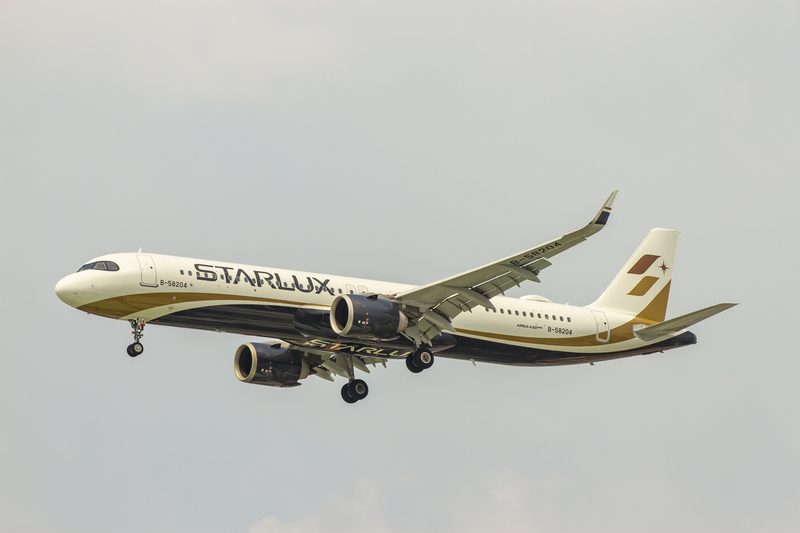
STARLUX Airlines will add eight more Airbus A321neo aircraft through a new lease agreement with BOC Aviation, strengthening the narrowbody fleet that underpins much of the Taiwanese carrier’s short- and medium-haul network from Taipei Taoyuan International Airport (TPE).

The aircraft will come from BOC Aviation’s existing Airbus orderbook and are scheduled for delivery from 2028. All eight will be powered by CFM International LEAP-1A engines, the CFM option available on the Airbus A320neo family.
The agreement is a dry lease, meaning BOC Aviation provides the aircraft without crew, maintenance, or operational control. STARLUX will operate the aircraft under its own air operator framework, using the type to support network growth across Asia from its Taiwan base.
For STARLUX, this is not a headline-grabbing widebody order like an Airbus A350 expansion. It is something more fundamental: a move to build more regional scale around the aircraft type that launched the airline and still gives it flexibility across Japan, South Korea, Southeast Asia, Greater China, and leisure-heavy Asian markets.
Eight More A321neos From BOC Aviation
BOC Aviation said it has placed eight Airbus A321neo aircraft with STARLUX from its own orderbook, with deliveries beginning in 2028.
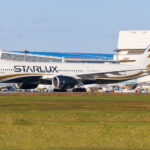
That structure matters. STARLUX is not waiting for a new direct Airbus order slot of its own. It is taking aircraft already held in BOC Aviation’s delivery pipeline, which can be valuable at a time when new-generation narrowbody aircraft remain heavily backlogged across the industry.
The deal also deepens STARLUX’s relationship with the leasing market. The airline already operates 13 Airbus A321neos, all of them leased, and has six additional A321neos due from a separate lease commitment with CDB Aviation. If all disclosed commitments are delivered, STARLUX’s A321neo fleet could grow substantially by the end of the decade.
For a relatively young airline, leasing makes sense. It allows STARLUX to expand without tying up as much capital as direct aircraft ownership would require. It also gives the carrier access to delivery positions held by major lessors, which can be especially important when manufacturers’ production slots are scarce.
The tradeoff is long-term cost. Leasing adds recurring obligations, but it also gives an airline flexibility as it builds scale, tests routes, and manages growth.
Why The A321neo Is Central To STARLUX
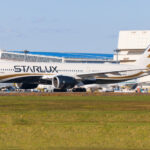
The Airbus A321neo is the backbone of STARLUX’s regional operation.
The aircraft gives the airline enough capacity for major regional routes while remaining smaller and more flexible than widebodies such as the Airbus A330neo or Airbus A350. That makes it well suited to routes from Taipei (TPE) to cities such as Tokyo Narita (NRT), Osaka Kansai (KIX), Fukuoka (FUK), Seoul Incheon (ICN), Hong Kong (HKG), Macau (MFM), Bangkok (BKK), Singapore (SIN), Ho Chi Minh City (SGN), Da Nang (DAD), Penang (PEN), Cebu (CEB), and other short- and medium-haul markets.
Those routes are critical for STARLUX because they build the feed and brand awareness that support the airline’s long-haul ambitions. A passenger may first encounter STARLUX on a regional flight to Japan, Thailand, Vietnam, or the Philippines before using the airline on a longer itinerary to Los Angeles (LAX), San Francisco (SFO), Seattle (SEA), Ontario, California (ONT), or future long-haul points.
The A321neo also gives STARLUX a premium product on routes where many competitors use standard narrowbody cabins. That is part of the airline’s identity. STARLUX has positioned itself as a boutique, design-heavy, premium-leaning carrier rather than a basic capacity operator.
The Aircraft: Airbus A321neo
The Airbus A321neo is the largest member of the A320neo family and has become one of the most important single-aisle aircraft in global aviation.
Airbus lists the A321neo with a typical two-class seating range of 180 to 220 passengers, up to 244 seats in a high-density layout, and a range of up to 4,000 nautical miles. The aircraft uses new-generation engines and Sharklet wingtip devices, giving it significantly better fuel burn and emissions performance than previous-generation A321ceo aircraft.
STARLUX’s current A321neo layout is notably premium for a narrowbody aircraft. The airline’s configuration has 188 seats, with 8 in Business Class and 180 in Economy Class. Its Business Class cabin features lie-flat seating in a 2-2 arrangement, while every seat onboard has personal inflight entertainment.
That matters because STARLUX is not trying to use the A321neo only as a dense regional shuttle. It is using the aircraft as an extension of its premium brand. Even on shorter regional flights, the airline offers a more elevated product than many carriers provide on comparable narrowbody sectors.
CFM LEAP-1A Engines Keep Fleet Commonality Simple
The eight BOC Aviation aircraft will be powered by CFM International LEAP-1A engines.
The LEAP-1A is one of two engine options for Airbus A320neo-family aircraft, the other being the Pratt & Whitney GTF. For airlines, engine selection is not simply a technical specification. It affects maintenance planning, spare-engine strategy, mechanic training, performance data, reliability tracking, and long-term cost.
Using LEAP-1A-powered A321neos gives STARLUX a clear engine platform for these new aircraft. That is important as the A321neo fleet grows. A larger, standardized subfleet gives the airline more flexibility in scheduling, maintenance rotation, crew planning, and spare-parts management.
For BOC Aviation, LEAP-powered A321neos are also highly liquid assets. Lessors like aircraft that can be placed with multiple airlines around the world, and the A321neo with CFM engines has broad market appeal.
BOC Aviation Brings Delivery Access
BOC Aviation’s role is strategically important because the lessor is not only financing the aircraft. It is providing access to aircraft from its orderbook.
The Singapore-based lessor is one of the world’s major aircraft leasing companies, with hundreds of aircraft and engines owned, managed, or on order and a customer base spread across dozens of countries and regions. For a growing airline such as STARLUX, working with a large lessor can help secure capacity in a tight market.
Aircraft delivery positions are a valuable commodity. Airbus and Boeing narrowbody production remains constrained by supply-chain issues, engine availability, certification work, and years of accumulated demand. Airlines that need aircraft in the late 2020s often cannot simply place a new order and expect near-term deliveries.
That is why lessor orderbooks matter. A lessor with earlier delivery slots can place aircraft with airlines that need growth aircraft sooner than a new direct order might allow.
For STARLUX, the 2028 timing gives it a visible narrowbody growth pipeline while its widebody network continues to expand.
STARLUX Is Growing In Two Directions At Once
STARLUX’s fleet plan is increasingly split between two complementary priorities.
The first is long-haul growth. The airline has built a reputation around its Airbus A350 operation, including flights from Taipei (TPE) to the United States and the addition of larger Airbus A350-1000 aircraft. STARLUX has also been preparing for its first European destination, Prague (PRG), scheduled to launch in August 2026.
The second is regional depth. That is where the A321neo matters. Long-haul routes need local demand, but they also benefit from regional feed. A carrier based in Taiwan can use narrowbodies to connect passengers from Southeast Asia, Japan, Korea, Macau, Hong Kong, and other regional markets into Taipei (TPE), then carry them onward on widebody services.
That makes the A321neo fleet more important than its size might suggest. It is not only a regional aircraft. It is the lower-cost feeder and frequency-building tool for a wider network strategy.
If STARLUX wants to compete more effectively with EVA Air and China Airlines, it needs both sides of the fleet: widebodies for long-haul prestige and narrowbodies for regional scale.
Taipei Taoyuan Remains The Platform
Taipei Taoyuan International Airport (TPE) is central to STARLUX’s strategy.
TPE is Taiwan’s main international gateway and already supports strong networks from EVA Air and China Airlines. For STARLUX, building a third major Taiwanese international brand requires enough aircraft to offer credible schedules, not just attractive cabins.
The A321neo helps with frequency. On regional routes, frequency can matter as much as product. Travelers comparing Taipei (TPE) with Hong Kong (HKG), Seoul (ICN), Tokyo (NRT/HND), Singapore (SIN), or Bangkok (BKK) care about departure times, connection windows, and daily reliability.
Adding more A321neos from 2028 gives STARLUX more room to increase frequencies, enter new secondary markets, or support thinner destinations without deploying an A330neo or A350.
The airline’s growth is therefore not just about adding aircraft. It is about making Taipei (TPE) more useful as a connecting and origin-and-destination platform.
A321neo Range Opens More Than Short-Haul Flying
The A321neo’s range gives STARLUX flexibility beyond short regional hops.
From Taipei (TPE), the aircraft can comfortably handle many high-demand routes across East Asia and Southeast Asia. Depending on payload, configuration, and airport conditions, the type can also support longer medium-haul sectors that would have been more demanding for older narrowbodies.
That range is valuable for markets where widebody capacity is too much but where a smaller narrowbody may lack the comfort or economics STARLUX wants. The A321neo can serve major leisure destinations, secondary Japanese cities, developing Southeast Asian markets, and regional business routes with a consistent cabin product.
The aircraft is also useful for schedule development. A widebody may need to be concentrated on long-haul flights to maximize utilization. A narrowbody can be rotated through multiple regional sectors, helping the airline maintain frequency and aircraft productivity.
For a young premium carrier, that flexibility is essential.
Leasing Fits A Fast-Growing Airline
STARLUX’s reliance on leased A321neos reflects a broader reality for young airlines.
Buying aircraft outright can be attractive over the very long term, but it requires significant capital and exposes the airline to delivery, financing, residual-value, and balance-sheet risk. Leasing spreads those commitments differently and allows the airline to scale faster.
That is especially useful for a carrier still building its market position. STARLUX launched in 2020, just as the global aviation market entered one of its most disruptive periods. Since then, the airline has grown rapidly into regional and long-haul markets, but it is still young compared with Taiwan’s established incumbents.
Leasing allows STARLUX to match capacity more closely with demand growth. It also gives the airline room to adjust if market conditions, aircraft technology, or network priorities change.
The risk is that lease costs can rise and long-term fleet ownership remains outside the airline’s control. But for now, access to modern aircraft appears to be the priority.
The Competitive Context In Taiwan
Taiwan is a challenging market for a premium startup.
EVA Air and China Airlines are both well-established, globally recognized carriers with long-haul networks, alliance partnerships, cargo operations, corporate relationships, and deep experience at Taipei (TPE). STARLUX has had to compete not only on routes, but on identity.
The airline has done that by positioning itself as a premium boutique carrier with strong design, high service standards, premium cabins, and a modern all-Airbus fleet. Its A321neo cabin was part of that positioning from the beginning. Offering lie-flat Business Class seats on a narrowbody helped signal that STARLUX was not entering the market as a bare-bones challenger.
The eight additional A321neos support that brand strategy by giving STARLUX more aircraft of the type that best represents its regional product.
More aircraft will not automatically guarantee profitability or market share. But they give STARLUX the scale needed to be more than a niche premium airline.
What To Watch Next
The next questions are deployment and configuration.
BOC Aviation has confirmed the aircraft type, engine, and delivery start, but STARLUX has not yet detailed where the eight new aircraft will be placed in the network. If they follow the existing A321neo cabin layout, each aircraft would add 188 seats of capacity, including 8 Business Class seats and 180 Economy seats.
That would give STARLUX meaningful additional premium regional capacity from 2028 onward.
Watch for growth in Japan, Southeast Asia, and secondary regional markets. Also watch whether STARLUX uses the aircraft to increase frequencies on existing routes rather than simply adding new destinations. Frequency growth may be just as important as map expansion, especially if the carrier wants to support more long-haul connections through Taipei (TPE).
The other item to watch is how STARLUX balances A321neo growth with its A330neo, A350-900, A350-1000, and future A350F fleet plans. The airline is becoming a more complex operator, and fleet discipline will matter as much as brand polish.
Bottom Line
STARLUX Airlines’ lease agreement for eight more Airbus A321neos is a narrowbody fleet decision with wider strategic importance.
The aircraft will come from BOC Aviation’s existing orderbook, will be powered by CFM LEAP-1A engines, and are scheduled for delivery from 2028. STARLUX already operates 13 leased A321neos and has six more due from a separate CDB Aviation commitment, making the A321neo a central part of its growth plan.
The aircraft type fits STARLUX’s network. It has the range, efficiency, and capacity to support regional flying from Taipei (TPE), while the airline’s 188-seat layout preserves the premium positioning that has defined the brand since launch.
For BOC Aviation, the deal places high-demand A321neo assets with one of Asia’s most visible young carriers. For STARLUX, it strengthens the regional foundation needed to support a broader long-haul strategy.
The big takeaway is simple: STARLUX is not only growing upward with A350 widebodies. It is growing outward with the A321neo, the aircraft that gives its Taipei network the frequency and reach needed to compete.