JetBlue A321 Lands Safely At JFK After Reported Drone Strike On Approach
A JetBlue Airbus A321 landed safely at New York John F. Kennedy International Airport after its pilots reported a possible drone strike while descending toward the airport on Monday morning.

JetBlue Flight 948 was operating from Harry Reid International Airport (LAS) in Las Vegas to John F. Kennedy International Airport (JFK) when the crew advised air traffic control that the aircraft had apparently struck a drone during the arrival. The aircraft was at approximately 3,000 feet and nearing the final stages of its approach into JFK when the report was made.
The flight continued to land normally at JFK, and passengers deplaned without incident. JetBlue later removed the aircraft from service for inspection, but the airline said technicians found no damage and no physical evidence of a collision.
Read our stories in your inbox
Two aviation newsletters. Zero fluff.
That makes the event both serious and unresolved. The crew reported what they believed was a drone impact. The aircraft landed safely. The inspection did not confirm a strike. The FAA is now investigating.
JetBlue 948 Was Arriving From Las Vegas
Flight B6 948 is a long domestic overnight service from Las Vegas (LAS) to New York JFK (JFK), a route JetBlue regularly operates with Airbus A321-family aircraft.
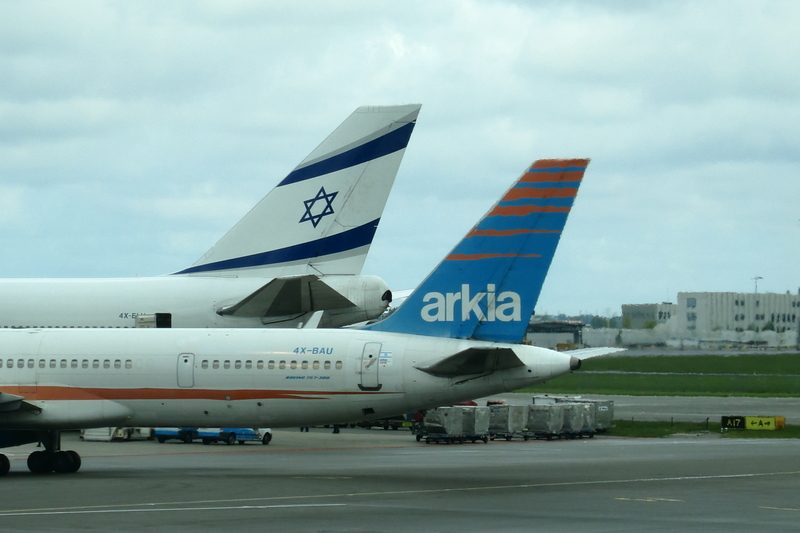
The A321 is a natural fit for the mission. It gives JetBlue enough capacity for a high-demand leisure and transcontinental-style market while staying within narrowbody economics. JetBlue’s non-Mint A321 Classic and A321neo aircraft are listed with 200 seats in a 3-3 cabin layout, while Mint-equipped A321 aircraft carry fewer passengers because of the premium cabin.
On the Las Vegas (LAS)–New York JFK (JFK) route, the A321 gives JetBlue a mix of seat density, range, and passenger amenities that works well for a five-hour overnight sector. The aircraft type is part of the Airbus A320 family, but the A321 is the stretched version, offering more capacity than the A320 while still operating as a single-aisle aircraft.
In this case, the aircraft type matters because the reported strike was said to have occurred near the cockpit area. The Airbus A321 has a reinforced flight-deck windshield designed to withstand bird impacts and normal operational hazards, but drones create a different concern because of their rigid components, motors, cameras, batteries, and circuit boards.
ID 273792799 | Airport © Boarding1now | Dreamstime.com
The Crew Reported A Drone Strike At Around 3,000 Feet
According to air traffic control audio cited in multiple reports, the JetBlue crew told controllers they had collided with a drone during the turn toward the airport and that the object appeared to hit above the cockpit.
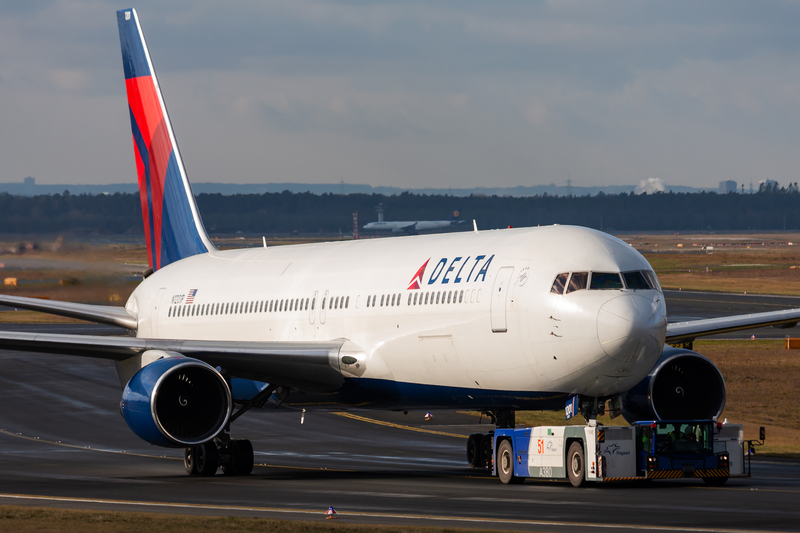
The crew did not request emergency assistance and continued the approach. That is an important operational detail. If the pilots had seen damage, abnormal indications, pressurization concerns, windshield cracking, flight-control issues, or engine problems, the response could have escalated quickly. Instead, the aircraft landed safely and taxied normally.
Still, a report of a drone at 3,000 feet near JFK is not routine. That altitude is far above the normal operating limit for recreational drone flights in most circumstances and is directly inside the kind of arrival environment where commercial aircraft are descending, slowing, configuring, and communicating continuously with air traffic control.
The crew’s workload would have been high. During an arrival into JFK, pilots are managing speed, altitude, configuration, landing checklists, radio calls, traffic awareness, weather, and approach guidance. A sudden object near the cockpit during that phase of flight is not something crews can ignore, even if the aircraft appears to be operating normally.
JetBlue Found No Damage After Inspection
JetBlue’s post-flight statement is the key reason the event should be described as a reported or possible drone strike rather than a confirmed collision.
The airline said the aircraft landed without incident, customers deplaned normally, and the plane was removed from service for a post-flight inspection. That inspection found no damage and no evidence of a collision.
That does not mean the pilots were wrong to report what they saw or felt. It means the investigation has not yet confirmed that an impact occurred. At approach speeds, pilots may have only a fraction of a second to see an object. Lighting, cockpit reflections, motion, workload, and aircraft speed can all make identification difficult.
There are several possibilities. The aircraft may have struck a small object that left no visible trace. The object may have passed very close without contact. It may not have been a drone. Or evidence may have been too limited to confirm the event after landing.
This uncertainty is common in drone-related aviation reports. Pilot sightings are taken seriously, but not every report becomes a confirmed drone strike after inspection.
Why Drone Reports Near Airports Are Treated Seriously
Drone reports near major airports are taken seriously because drones occupy the same low-altitude airspace that aircraft use during takeoff and landing.
The FAA requires recreational drone operators to keep drones at or below 400 feet in uncontrolled airspace and to obtain authorization before operating in controlled airspace around airports. Drone operators must also give way to crewed aircraft and avoid interfering with the national airspace system.
A drone at 3,000 feet near JFK would be well outside normal recreational limits unless it had specific authorization, which would be highly unusual in a busy arrival corridor.
The safety concern is not theoretical. Unlike birds, drones contain hard components. Even a small quadcopter can include metal, plastic, high-density batteries, motors, sensors, and camera hardware. The damage potential depends on the size of the drone, the speed of impact, and the point of contact on the aircraft.
A drone hitting a non-critical fuselage panel may leave little or no damage. A drone striking a cockpit windshield, pitot/static sensor, angle-of-attack vane, radome, engine inlet, leading edge, flap, slat, or control surface could create a much more serious maintenance or safety issue.
The Airbus A321 Can Withstand Bird Strikes, But Drones Are Different
Commercial aircraft are designed and certified around known hazards, including bird strikes. But a drone impact is not exactly the same event as a bird strike.
Birds are organic material. Drones are mechanical objects. Their mass can be concentrated in dense parts, including battery packs and motors. That can create a different impact profile, especially against thinner aircraft surfaces or exposed components.
For an Airbus A321 on approach, the most concerning impact points would include the windshield, engine fan, radome, nose sensors, wing leading edges, slats, and flight-control surfaces. An impact in any of those areas could trigger a maintenance inspection, a possible aircraft-on-ground event, or, in more serious cases, an in-flight abnormal procedure.
That said, the absence of visible damage on the JetBlue aircraft is significant. A confirmed strike serious enough to damage a windshield, sensor, leading edge, or engine would normally leave some inspection evidence. Since JetBlue said there was no damage or evidence of collision, the FAA investigation may have limited physical evidence to evaluate.
JFK’s Airspace Leaves Little Room For Unauthorized Drones
JFK is one of the busiest international airports in the United States, with heavy airline, cargo, private, and government traffic moving through tightly controlled New York-area airspace.
The airport’s arrival and departure corridors sit inside one of the most complex terminal airspace systems in the world. JFK traffic is coordinated alongside LaGuardia (LGA), Newark (EWR), Teterboro (TEB), Westchester County (HPN), Republic (FRG), and multiple helicopter routes and general aviation corridors.
A drone in that environment creates a problem for both pilots and controllers. Air traffic controllers cannot vector every aircraft around an object that may be small, visually reported, moving, and difficult to track. Pilots may see the object too late to maneuver, especially during final approach when aircraft are configured for landing and operating at low altitude.
That is why drone activity near major airports is treated as a law enforcement and aviation safety issue, not simply a nuisance.
The New York Area Had Another Drone Scare Days Earlier
The JetBlue report came just days after a separate drone encounter involving a United Airlines flight descending toward Newark Liberty International Airport (EWR).
In that incident, a United crew reported a drone passing close to the aircraft during descent. The flight landed safely, but the report added to concerns about unauthorized drone activity in the New York metropolitan area.
A single report can be difficult to assess. Multiple reports in the same region over a short period create more urgency for investigators, especially when the airspace is already under heavy pressure from normal airline traffic, summer travel, and major public events.
The FAA has said it receives more than 100 drone-sighting reports near airports each month. Most do not result in confirmed collisions. But the volume of reports shows why airports, airlines, law enforcement agencies, and federal authorities continue to push for better detection, enforcement, and public education.
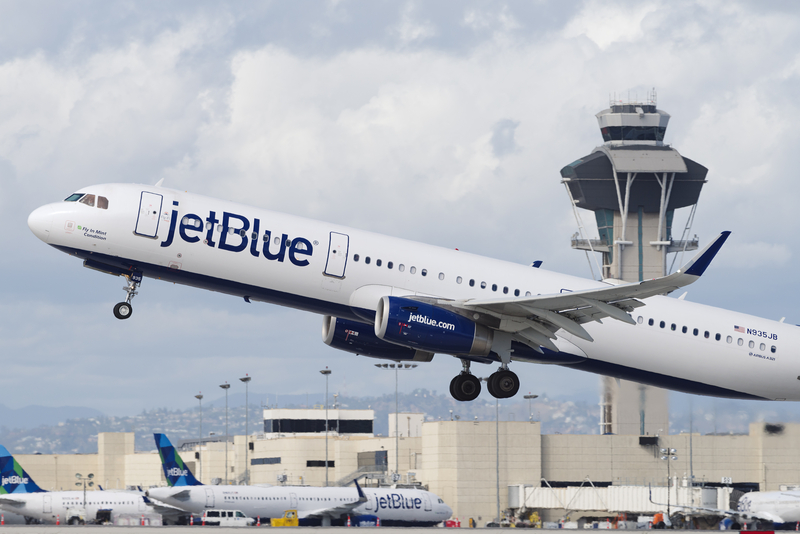
ID 112212154 | Airport © Ajdibilio | Dreamstime.com
Confirmed Drone Collisions Remain Rare
For all the concern, confirmed drone strikes involving crewed aircraft in the United States remain rare.
One of the best-known cases occurred in 2017, when a privately operated DJI Phantom 4 collided with a U.S. Army UH-60M Black Hawk helicopter near Staten Island. The National Transportation Safety Board found that the drone was operating beyond visual line of sight and that the helicopter received minor damage while the drone was destroyed.
Other documented or probable drone collisions have generally involved helicopters or smaller aircraft operating at lower altitudes, not large commercial jets. That is why a confirmed drone strike involving a JetBlue Airbus A321 on approach to JFK would be especially notable if investigators eventually verify it.
But that has not happened yet. The aircraft inspection found no evidence of a collision, and the FAA investigation remains open.
The correct aviation-safety posture is therefore balanced: take the crew report seriously, investigate thoroughly, but avoid treating the incident as a confirmed drone strike until physical, radar, video, operator, or other evidence supports that conclusion.
Why The Crew’s Report Still Matters
Even without confirmed damage, the crew’s report is valuable.
Pilots are trained to report hazards that could affect other aircraft. If the crew believed an object was a drone at 3,000 feet near the JFK arrival path, that information needed to reach air traffic control immediately. Controllers could then warn other aircraft, notify supervisors, coordinate with law enforcement, and begin the reporting process.
That is how safety systems work. A report does not need to be proven instantly to be useful. It creates a data point that can be checked against other reports, radar returns, security cameras, drone-detection systems, law enforcement activity, and public sightings.
If the report turns out to be unconfirmed, it still helps authorities understand what crews are seeing in the terminal environment. If it is confirmed, it becomes evidence of a serious airspace violation.
A Growing Challenge For Airport Security
The incident also highlights a larger issue: drones are cheap, capable, and difficult to police near airports.
Modern consumer drones can fly far beyond the pilot’s immediate location, carry cameras, climb quickly, and operate in places where they should not be. Many are equipped with geofencing and remote identification features, but those tools do not eliminate misuse, modification, operator ignorance, or deliberate violations.
For airport operators, the challenge is detection and response. Spotting a small drone visually is difficult. Tracking it consistently can be harder. Identifying the operator may be harder still. Counter-drone measures are also complicated because airports must avoid creating additional hazards to aircraft, people, and communications systems.
That is why unauthorized drone activity near airports has become a major policy issue. The aviation system is built around predictable traffic, controlled routes, clearances, separation, and known aircraft. A small uncoordinated drone entering that environment breaks the assumptions that make the system work smoothly.
What Investigators Will Look For
The FAA investigation will likely focus on several areas.
Investigators will review the crew’s report, ATC audio, aircraft tracking, airport surveillance systems, possible drone detection data, law enforcement reports, and any public sightings near the approach path. They may also examine the aircraft inspection findings in more detail, including the windshield, nose section, radome, sensors, and upper fuselage area.
If no damage, debris, paint transfer, drone fragments, radar target, video, or operator evidence is found, the case may remain unresolved. That would not be unusual. Drone reports can be difficult to prove after the fact, especially when the reported object is small and the aircraft lands without damage.
If evidence is found, the case would become much more significant. A confirmed drone strike on a commercial A321 approaching JFK would likely prompt renewed focus on drone enforcement, remote ID compliance, detection systems, and airport-area restrictions.
Bottom Line
JetBlue Flight 948’s reported drone strike near JFK is a serious event, but it is not yet a confirmed collision.
The Airbus A321 was arriving from Las Vegas (LAS) when its pilots reported a possible drone impact at about 3,000 feet on approach to New York JFK (JFK). The aircraft landed safely, passengers deplaned normally, and JetBlue removed the aircraft from service for inspection. That inspection found no damage and no evidence of a collision.
The distinction matters. A pilot-reported drone strike near one of the busiest airports in the country deserves immediate investigation, especially at an altitude where unauthorized drone activity would be a major safety concern. But without physical evidence, the final determination remains open.
For airlines, airports, and regulators, the incident is still a warning. Drone sightings near airports are frequent, detection remains difficult, and even a small drone can create a serious hazard during takeoff or landing. Whether this particular event proves to be a confirmed strike or an unverified encounter, it reinforces the same point: drones do not belong in commercial arrival corridors.
Keep reading FlyMag
Get the Daily Brief in the morning or the Route Watch weekly recap on Fridays. Or both.