Delta A330 Bound For Nice Returns To Boston After Cockpit Smoke Report
A Delta Air Lines transatlantic flight from Boston to the French Riviera returned to its departure airport shortly after takeoff on Thursday evening after the crew reported smoke in the cockpit.

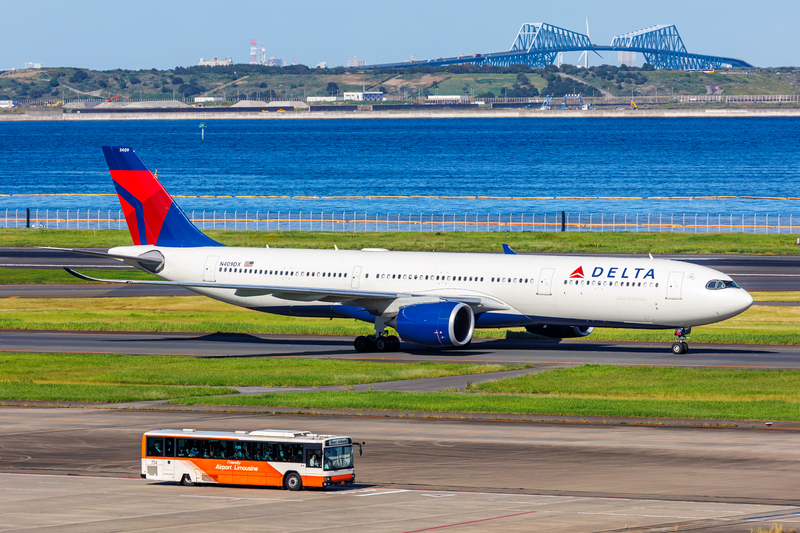
Flight DL276 was operating from Boston Logan International Airport (BOS) to Nice Côte d’Azur Airport (NCE) when the Airbus A330-300 turned back toward Boston (BOS). The aircraft landed safely, was met by emergency crews, and later taxied to the gate under its own power.
The aircraft involved was N820NW, an Airbus A330-323 in Delta’s long-haul fleet. The flight carried 250 passengers, three pilots, and 10 flight attendants, according to Delta. No injuries were reported publicly, and the airline said it was working to get passengers to their final destination.
Read our stories in your inbox
Two aviation newsletters. Zero fluff.
The return was short, but the decision was significant. Smoke in the cockpit is one of the few airborne abnormalities that crews are trained to treat as immediately time-critical, particularly at the start of a long overwater flight.
DL276 Turns Back Minutes After Departure From Boston
DL276 departed Boston Logan (BOS) shortly after 8:00 p.m. local time on June 25, beginning what should have been an overnight transatlantic crossing to Nice (NCE).
The flight initially departed from runway 04R at Boston (BOS) and began climbing out over the Atlantic. Flight-tracking data and incident summaries show the Airbus A330-300 stopped its climb at roughly 10,000 feet before returning to the airport.
The aircraft then landed safely on runway 15R at Boston Logan (BOS), less than 30 minutes after departure. Emergency vehicles were positioned to meet the widebody as a precaution, but the aircraft was able to taxi back to Terminal E, the international terminal at Boston (BOS), under its own power.
That is an important operational detail. A safe taxi back generally suggests the aircraft remained controllable and mobile after landing, though it does not indicate anything about the source or seriousness of the smoke event. The aircraft still required inspection before any return to service.
Why Cockpit Smoke Triggers An Immediate Response
Smoke in the cockpit is not treated as a routine technical fault. It is treated as a potential fire, electrical event, avionics issue, air-conditioning/bleed-air problem, or contamination event until proven otherwise.
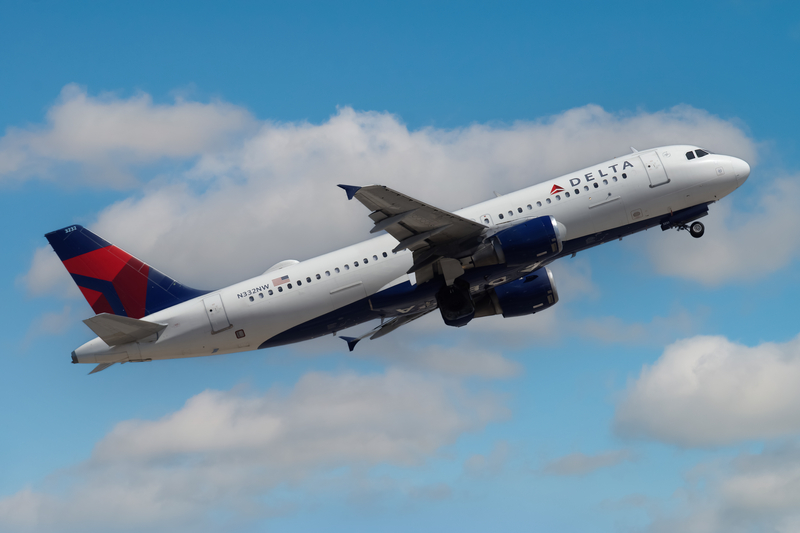
That uncertainty is what drives the conservative response. A crew may not immediately know whether the smoke is coming from an electrical component, wiring insulation, a fan, an avionics bay, a galley-related source, the air-conditioning system, or another hidden area of the aircraft. In a widebody jet at the beginning of an oceanic flight, continuing across the Atlantic with an unidentified smoke source would create unacceptable risk.
Standard crew response typically prioritizes three things: protect the pilots’ ability to see and breathe, maintain control of the aircraft, and get the aircraft on the ground at the nearest suitable airport. That is why cockpit oxygen masks, abnormal checklists, air traffic control coordination, and a rapid return or diversion are central to smoke and fumes procedures.
In this case, returning to Boston (BOS) made more sense than continuing toward Nice (NCE) or attempting to troubleshoot while proceeding offshore. Boston Logan offered long runways, airport rescue and firefighting services, Delta ground support, maintenance access, and the ability to reaccommodate passengers.
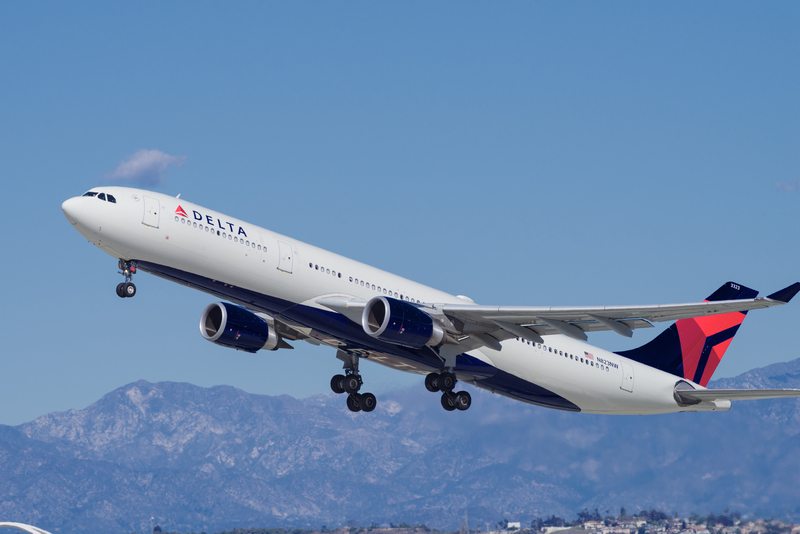
ID 137423354 © Ajdibilio | Dreamstime.com
The Aircraft: Delta’s Airbus A330-323 N820NW
N820NW is an Airbus A330-323, a member of the A330-300 family and one of Delta’s workhorse international widebodies.
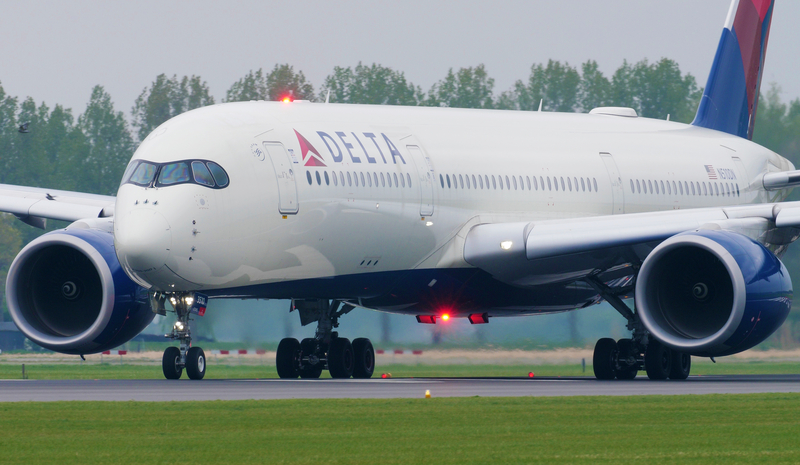
FAA registration data lists the aircraft as a 2007-built Airbus A330-323, serial number 0859, powered by two Pratt & Whitney PW4168A turbofan engines. Like several aircraft in Delta’s A330 fleet, N820NW has Northwest Airlines heritage, reflecting the widebody fleet Delta inherited and later integrated after the Delta-Northwest merger.
Delta’s A330-300 fleet is configured for long-haul international service. The airline’s current A330-300 layout includes Delta One, Delta Premium Select, Delta Comfort+, and Main Cabin seating, giving the aircraft a strong mix of premium and economy capacity for transatlantic markets.
The A330-300 has a published Delta range of 6,330 miles and a cruising speed of 531 mph. That gives the type more than enough capability for Boston (BOS)–Nice (NCE), a sector of roughly 3,800 miles depending on routing. For Delta, the A330-300 remains particularly useful on long-haul routes where the airline wants widebody capacity but does not necessarily need the larger gauge of an Airbus A350-900 or Boeing 767-400 replacement aircraft.
The A330 is also a familiar platform for Delta crews and maintenance teams. That matters in an event like this. When an aircraft returns to a major Delta international gateway such as Boston (BOS), technicians can work from established maintenance programs, parts support, and fleet-specific troubleshooting procedures.
Boston–Nice Is Part Of Delta’s Expanding European Push
The incident occurred on one of Delta’s newer seasonal European routes from Boston (BOS).
Delta launched Boston (BOS)–Nice (NCE) service for the 2026 summer season as part of a broader push to make Boston a stronger transatlantic gateway. The airline has been building Boston Logan (BOS) into a more meaningful international platform, adding or expanding service to European markets including Madrid (MAD), Barcelona (BCN), Milan Malpensa (MXP), and Nice (NCE).
Nice Côte d’Azur Airport (NCE) is a strategically attractive destination for Delta. It is the main airport serving the French Riviera, Monaco, Cannes, Antibes, and the broader Côte d’Azur region. The market is highly seasonal, but it carries strong premium leisure demand, business aviation spillover, cruise traffic, and high-income U.S.-Europe travel.
For Boston (BOS), the route also adds another nonstop link between New England and southern Europe. While New York (JFK) and Atlanta (ATL) remain major Delta gateways to France, Boston gives Delta another high-income origin point with strong local demand and significant connecting potential through its domestic network and SkyTeam partnerships.
That makes a DL276 disruption more than a simple operational inconvenience. On a seasonal, premium-heavy transatlantic route, a widebody return creates aircraft-utilization pressure, crew-duty complications, missed hotel and cruise connections, and reaccommodation challenges on a market that may not have daily service.
Passenger Recovery Likely Required A Widebody Substitution
Because DL276 was a long-haul international flight, Delta’s recovery operation would have been more complicated than simply moving passengers onto the next domestic departure.
A Boston (BOS)–Nice (NCE) flight requires a suitable widebody aircraft, long-haul-qualified crew, international catering, customs and border coordination, landing-slot and arrival planning, and crew-duty legality on both sides of the Atlantic. If the original aircraft is removed from service for inspection, the airline must either find a substitute aircraft or reaccommodate passengers through other European gateways.
In this case, subsequent flight-tracking data showed passengers ultimately reached Nice (NCE) several hours late after Delta arranged onward recovery. For travelers, that delay is frustrating. For operations teams, it is the kind of disruption that tests fleet flexibility, spare aircraft availability, and the ability to protect a seasonal international schedule.
The affected aircraft remaining on the ground afterward would be expected. A cockpit smoke event requires maintenance inspection even when the aircraft lands normally. Technicians would need to examine likely sources, including electrical systems, avionics cooling, air-conditioning packs, recirculation fans, cockpit equipment, galley or cabin systems, and any relevant fault messages recorded by the aircraft.
Why The Crew’s Decision Was The Right One
The short duration of the flight should not make the event seem minor. In aviation, smoke and fumes events are treated seriously because they can escalate quickly and because the source is not always visible.
The industry’s approach has been shaped by decades of accident investigation. In-flight smoke and fire events have shown that crews may have only limited time if a hidden fire develops behind panels, in ceiling areas, or in electrical spaces. The safest course is almost always to land at the nearest suitable airport unless the source is clearly identified and controlled.
DL276 was still close to Boston (BOS), had not yet entered the oceanic phase of flight, and had a major airport immediately available. Returning to BOS avoided the operational and safety risks of continuing eastbound with an unresolved cockpit smoke report.
The crew’s actions also demonstrate why dispatch planning, airport suitability, and early decision-making matter. A long-haul flight may be scheduled for more than seven hours, but the most critical decision can come in the first few minutes after takeoff.
A330 Reliability And The Bigger Fleet Picture
The Airbus A330 has been one of the most successful widebody aircraft families in commercial aviation, and Delta has relied on the type heavily for both Atlantic and Pacific flying.
The A330-300 gives Delta a useful balance of range, passenger capacity, cargo volume, and operating economics. It is larger than Delta’s Boeing 767-300ERs and many 767-400ER missions, but not as large as the Airbus A350. That makes it a flexible aircraft for seasonal Europe, core transatlantic routes, and long-haul markets where demand supports a full widebody but not necessarily Delta’s largest gauge.
Delta also operates the newer Airbus A330-900neo, which offers improved fuel burn, longer range, and a more modern cabin product. Still, the older A330-300 remains relevant because it has the capacity and range to operate many of Delta’s established international routes efficiently.
An event like DL276 does not by itself indicate a fleet-wide issue. Smoke reports can come from many systems and may be isolated to a specific component, aircraft, or condition. The key questions for maintenance and safety teams will be what caused the smoke, whether the source was confirmed, and what corrective action was required before the aircraft could return to service.
Bottom Line
Delta Flight DL276’s return to Boston (BOS) was a textbook conservative response to a serious but safely managed cockpit smoke report.
The Airbus A330-323, registered N820NW, had just departed Boston Logan (BOS) for Nice Côte d’Azur (NCE) when the crew stopped the climb, returned to the airport, and landed safely. Emergency crews met the aircraft, and Massport said the jet later taxied to the gate under its own power.
For passengers, the result was a disrupted transatlantic journey and a delayed arrival in France. For aviation professionals, the event is a reminder of why smoke in the cockpit is treated with urgency, especially before an ocean crossing. The aircraft was close to a major airport, the crew acted quickly, and the flight ended safely — exactly the outcome the system is designed to deliver.
Keep reading FlyMag
Get the Daily Brief in the morning or the Route Watch weekly recap on Fridays. Or both.