Norse Atlantic Leans Into Thailand With Major Winter 2026/27 Expansion
Norse Atlantic Airways is making Thailand one of the centerpieces of its Winter 2026/27 network.

The long-haul low-cost carrier is adding more capacity from the United Kingdom, Norway and Sweden after strong demand for Southeast Asia. The expansion includes a new route from London Gatwick Airport (LGW) to Phuket International Airport (HKT) and more flying from Manchester Airport (MAN) to Bangkok Suvarnabhumi Airport (BKK).
Norse will also increase Thailand flights from Oslo Airport (OSL) and Stockholm Arlanda Airport (ARN).
For Norse, this is not just another winter leisure push. It shows how the airline is moving more aircraft time toward routes where long-haul demand is strongest and where its Boeing 787 economics can work.
London Gatwick Gets A New Phuket Route
The headline addition is London Gatwick (LGW)–Phuket (HKT).

Norse will launch the route with three weekly flights for the Winter 2026/27 season. The service gives the airline a second major Thailand destination from the UK and adds direct long-haul competition into one of Southeast Asia’s most important leisure markets.
Phuket is a natural fit for Norse.
The island has strong winter demand from Europe, especially from travelers looking for beaches, resorts, diving, wellness trips and longer warm-weather holidays. It is also a market where nonstop service can be attractive because many passengers want to avoid a connection through the Gulf, Istanbul or another Asian hub.
For Gatwick, the new route adds another long-haul leisure destination and strengthens the airport’s position as a UK gateway for point-to-point winter sun flying.
Manchester–Bangkok Grows To Four Weekly Flights
Norse is also increasing Manchester (MAN)–Bangkok (BKK) to four weekly flights from December 2026.
That is a significant upgrade for a route that began with a much smaller schedule. The airline is clearly seeing enough demand from northern England to justify more capacity.
Bangkok is one of Asia’s strongest leisure and visiting-friends-and-relatives markets. It also works as a gateway to the rest of Thailand, including Phuket, Chiang Mai, Koh Samui and beach destinations across the south.
For passengers in the North of England, the appeal is simple. A nonstop Manchester–Bangkok flight removes the need to connect through London, the Middle East or continental Europe.
That convenience matters on a long-haul trip.
It also supports Manchester’s long-term ambition to remain the UK’s main long-haul gateway outside London.
Gatwick–Bangkok And Gatwick–Cape Town Continue
Norse will also continue its existing winter-sun routes from London Gatwick (LGW) to Bangkok (BKK) and Cape Town International Airport (CPT).
That is important because it shows the airline is not only adding new flying. It is building a more coherent winter network from Gatwick.
Bangkok and Phuket give Norse a stronger Thailand program. Cape Town gives the airline another major Southern Hemisphere winter-sun market.
Together, these routes give Norse a winter network that is less dependent on the transatlantic market.
That matters because the North Atlantic has become more competitive. Large airline groups and joint ventures dominate many routes. Norse is looking for markets where its low-cost long-haul model can stand out more clearly.
Scandinavia Also Gets More Thailand Capacity
The expansion is not limited to the UK.
Norse will also boost Thailand flying from Oslo (OSL) and Stockholm Arlanda (ARN). Oslo–Bangkok (BKK) will increase to up to five weekly flights, while Oslo–Phuket (HKT) will rise to up to two weekly flights.
Stockholm will see a similar pattern. Stockholm Arlanda (ARN)–Bangkok (BKK) will increase to up to five weekly flights, while Stockholm–Phuket (HKT) will rise to up to two weekly flights.
That gives Norse a much stronger Nordic Thailand platform.
Thailand has long been popular with Scandinavian travelers. The market has strong winter appeal, long-stay leisure demand and a broad mix of families, couples, backpackers and premium leisure passengers.
For Norse, the Nordic increases are a logical use of winter widebody capacity.
The Aircraft: Boeing 787 Dreamliner
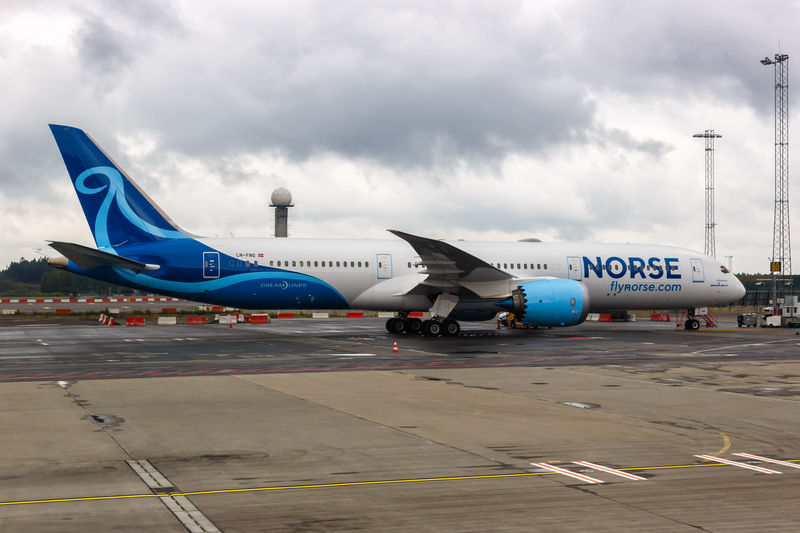
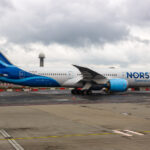
Norse operates a fleet of Boeing 787 Dreamliners, and the aircraft is central to this expansion.
The 787 is built for long-haul efficiency. Boeing lists the 787-9 with a range of up to 8,300 nautical miles, depending on configuration. That gives Norse the range needed for nonstop Europe–Thailand flying.
Norse’s 787-9 aircraft are configured with Premium and Economy cabins. The Premium cabin gives the airline a higher-yield product for passengers who want more space without paying traditional business-class fares.
That cabin mix is useful on Thailand routes.
Some travelers will book the lowest economy fare. Others will pay more for extra comfort on a long overnight sector. Norse can serve both groups on one aircraft.
Why The 787 Fits Thailand
The Boeing 787-9 is a good aircraft for long-haul leisure markets such as Bangkok and Phuket.
It offers widebody comfort and long range, but it is smaller than very large aircraft such as the Airbus A380 or Boeing 777-300ER. That gives Norse a better capacity balance on routes where demand is strong but still seasonal.
The 787 also supports the airline’s low-cost long-haul model.
Norse needs aircraft with good fuel efficiency, strong range and enough seats to spread costs. The Dreamliner gives the airline that platform.
It also helps on routes where direct service is the main selling point.
Passengers flying from Manchester, Oslo or Stockholm to Thailand often face one-stop options. A nonstop 787 flight gives Norse a product advantage that does not require a hub network.
Thailand Is Becoming A Core Winter Market
Norse says Thailand is one of the strongest-performing destinations in its network.
That is easy to understand.
Thailand offers a rare combination of high awareness, broad price appeal and strong winter-season demand. Bangkok offers culture, nightlife, food, shopping and onward travel. Phuket offers beaches, resorts and island holidays.
The two cities also work well together from a network perspective.
Bangkok is a capital-city and gateway market. Phuket is a high-demand leisure island. Serving both allows Norse to capture different kinds of travelers without moving away from its core winter-sun strategy.
For a long-haul low-cost carrier, this is valuable.
The airline can build marketing around one country while serving two very different demand pools.
A Shift Away From Pure Transatlantic Dependence
Norse was originally best known for low-cost transatlantic flying.
That market is still part of the business. However, the airline is clearly becoming more flexible.
In its Q1 2026 report, Norse said it was moving capacity toward higher-growth markets such as South and Southeast Asia and Africa while focusing more selectively on competitive transatlantic routes.
That is exactly what this Thailand expansion shows.
The airline is not abandoning the Atlantic. But it is no longer trying to define itself only by Europe–U.S. flying.
Instead, Norse is becoming more of an “airline on demand,” placing its 787 fleet where the market looks strongest.
Thailand is now one of those markets.
Falcon Gives The Expansion A Financial Backdrop
The Thailand growth also comes as Norse continues its Falcon transformation program.
Project Falcon is designed to simplify the airline, reduce costs and improve efficiency. Norse has said the program is expected to deliver annualized cost savings of up to USD 50 million compared with its 2025 baseline.
That matters because long-haul low-cost flying is difficult.
Aircraft are expensive. Fuel risk is high. Seasonal demand can be uneven. A few weak routes can quickly hurt margins.
Norse is trying to solve that by cutting structural costs while shifting aircraft toward stronger markets.
The Thailand expansion fits that plan. It puts capacity into destinations where the airline says demand and customer satisfaction are strongest.
A More Balanced Business Model
Norse has also been building a more balanced business model across scheduled flying, charter work and ACMI operations.
That flexibility is important.
A long-haul airline with only scheduled routes can be exposed when fuel prices rise or demand changes. By mixing its own network with charter and aircraft-crew-maintenance-insurance flying, Norse can spread risk.
Its Q1 report said the airline had transitioned toward a dual model with a significant part of the fleet used for ACMI and charter operations.
That helps explain the Thailand decision.
When Norse adds scheduled flying, it needs those routes to work hard. Thailand appears to be one of the places where the airline sees the best opportunity.
More Choice For UK And Nordic Travelers
For passengers, the expansion means more direct long-haul choice.
UK travelers gain a new nonstop London Gatwick (LGW)–Phuket (HKT) option and more Manchester (MAN)–Bangkok (BKK) capacity. Nordic travelers gain more flights from Oslo (OSL) and Stockholm (ARN) to both Bangkok and Phuket.
That is especially useful for winter holidays.
Travelers who want Thailand often face one-stop routings through Doha, Dubai, Abu Dhabi, Istanbul, Helsinki or other hubs. Those itineraries can work well, but they add connection time and sometimes increase total trip complexity.
Norse is offering a simpler proposition.
Direct flights, lower base fares and a two-cabin 787 product.
For many leisure travelers, that is enough.
Competition Will Be Strong
Norse will not have Thailand to itself.
Gulf carriers are powerful in the Europe–Thailand market. Emirates, Qatar Airways and Etihad all offer high-frequency one-stop connections. Turkish Airlines is also a major competitor through Istanbul.
In the UK, other airlines are adding or rebuilding Southeast Asia capacity. Virgin Atlantic is launching London Heathrow–Phuket service, and legacy carriers remain strong to Bangkok through their own networks or partners.
That means Norse must compete on price, convenience and nonstop access.
The airline’s biggest advantage is simplicity. A nonstop flight from Gatwick, Manchester, Oslo or Stockholm can be more attractive than a connecting itinerary, especially for leisure travelers with luggage, families or longer stays.
The challenge is keeping yields strong enough to make the long stage length profitable.
Bottom Line
Norse Atlantic Airways’ Winter 2026/27 Thailand expansion is a major statement about where the airline sees long-haul demand.
The carrier will launch three weekly London Gatwick (LGW)–Phuket (HKT) flights, increase Manchester (MAN)–Bangkok (BKK) to four weekly services from December 2026, and continue its London Gatwick routes to Bangkok and Cape Town.
It will also boost Thailand capacity from Oslo (OSL) and Stockholm Arlanda (ARN), with Bangkok rising to as many as five weekly flights from each city and Phuket rising to up to two weekly flights.
For Norse, Thailand is becoming more than a seasonal experiment. It is now one of the airline’s most important winter markets.
The move also shows how Norse is evolving.
It is using its Boeing 787 Dreamliners, lower-cost model and more flexible network strategy to chase long-haul leisure demand beyond the crowded North Atlantic.
If the extra flights perform well, Thailand could become one of the clearest examples of how Norse plans to build a more durable long-haul business.