Vietnam Airlines Opens Amsterdam With First Nonstop Vietnam-Netherlands Route
Vietnam Airlines has launched nonstop service between Hanoi and Amsterdam, creating the first direct air link between Vietnam and the Netherlands and adding one of Europe’s most strategically important aviation markets to the carrier’s long-haul network.

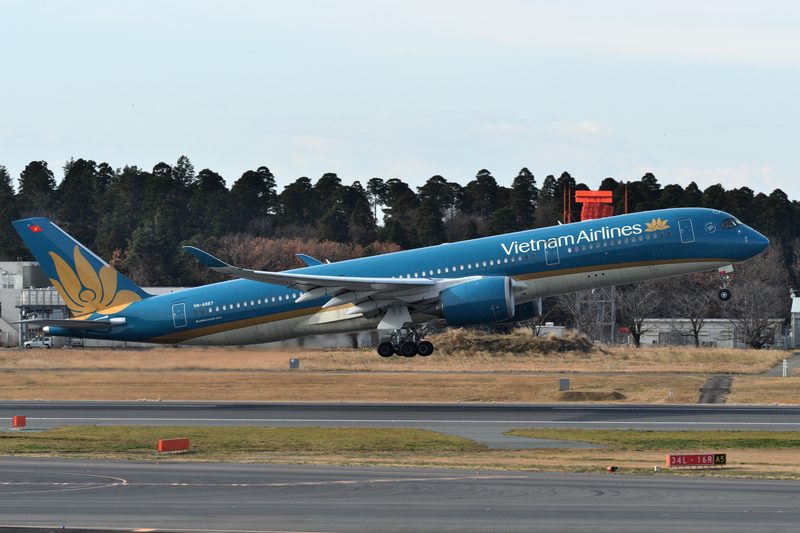
The inaugural flight departed Noi Bai International Airport (HAN) in Hanoi on June 16, 2026, operating to Amsterdam Airport Schiphol (AMS). The flight was operated by an Airbus A350-900, carrying nearly 300 passengers on a sector of more than 12 hours.
For Vietnam Airlines, the route is more than a new dot on the map. Hanoi (HAN)–Amsterdam (AMS) gives the airline direct access to a major Western European gateway, strengthens its position inside the SkyTeam alliance, and supports growing passenger, cargo, trade and tourism flows between Vietnam and the Netherlands.
Read our stories in your inbox
Two aviation newsletters. Zero fluff.
Three Weekly Airbus A350 Flights Between HAN And AMS
Vietnam Airlines says it will operate the Hanoi (HAN)–Amsterdam (AMS) service three times per week, with flights scheduled on Tuesdays, Thursdays and Saturdays. The airline is also promoting the route through its official Hanoi to Amsterdam booking page, where the carrier highlights the new nonstop link from June 16, 2026.
The inaugural westbound flight, VN83, departed Hanoi (HAN) in the early morning and arrived at Amsterdam Schiphol (AMS) after the long overnight sector. The return flight, VN82, departed Amsterdam (AMS) for Hanoi (HAN) later the same day.
The schedule gives Vietnam Airlines a direct bridge into the Dutch market while also supporting onward connections through Hanoi (HAN). Passengers from Amsterdam (AMS) can connect across Vietnam Airlines’ domestic network to Ho Chi Minh City (SGN), Da Nang (DAD), Nha Trang (CXR), Phu Quoc (PQC) and other destinations in Vietnam.
That network feed matters. Vietnam Airlines is not only targeting local Hanoi–Amsterdam traffic. The carrier is also using Hanoi (HAN) as a gateway for broader Vietnam, Southeast Asia and Northeast Asia flows.
Why Amsterdam Is A Valuable Addition
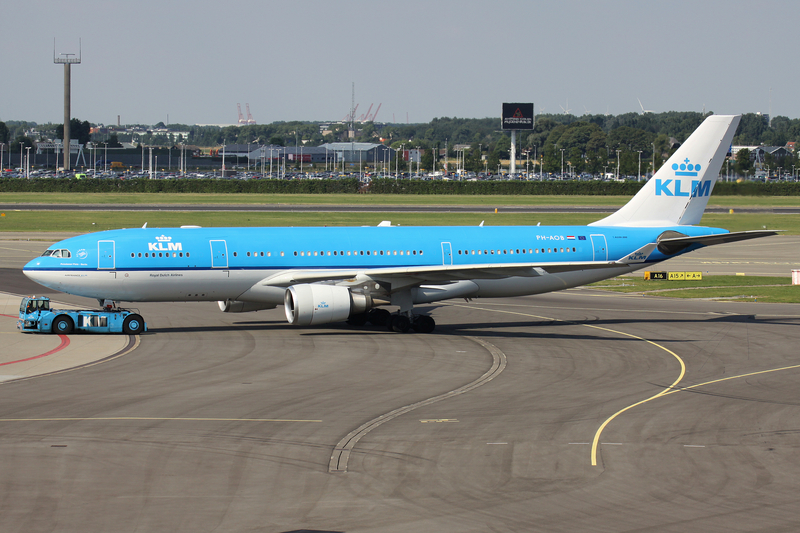
Amsterdam Schiphol (AMS) is one of the most useful airports Vietnam Airlines could add in Europe. Schiphol is a major long-haul gateway, a major transfer airport, and the home base of KLM Royal Dutch Airlines, another SkyTeam member.
That gives the route a stronger strategic profile than a simple point-to-point service. Amsterdam (AMS) can support Dutch-origin traffic to Vietnam, but it can also provide onward European connectivity through the wider SkyTeam ecosystem.
For business travelers, the route is also highly relevant. The Netherlands is a major European trade and logistics market, while Vietnam has become one of Southeast Asia’s most important manufacturing, export and tourism economies. A nonstop widebody service makes that relationship easier to serve.
A Difficult Airport To Enter
Gaining access to Amsterdam Schiphol (AMS) is notable in its own right. Schiphol is one of Europe’s most capacity-constrained airports, and new long-haul access is not always easy to secure.
Slot coordination at Amsterdam Schiphol (AMS) is handled by Airport Coordination Netherlands, which manages slot allocation and monitoring at the country’s coordinated airports. For any long-haul airline, access to AMS is valuable because the airport combines high local demand with strong connecting traffic and cargo potential.
Schiphol itself listed Vietnam Airlines among its new airline additions for the summer season, noting that the carrier would operate direct flights between Hanoi and Amsterdam using the Airbus A350. That makes the route a visible addition at one of Europe’s most closely watched airports.
The Airbus A350 Is The Right Aircraft For The Route
Vietnam Airlines is using the Airbus A350 on the Hanoi (HAN)–Amsterdam (AMS) route, which is a logical aircraft choice for a long-haul Vietnam–Western Europe sector.
The Vietnam Airlines Airbus A350 fleet is configured for long-haul international flying and offers 305 or 323 seats, depending on the aircraft. Vietnam Airlines lists the type with a maximum distance of 14,350 km and a cruising speed of 901 km/h.
From a performance standpoint, the A350-900 is one of the defining long-haul aircraft of the current generation. Airbus markets the aircraft for routes of up to 9,700 nautical miles, while its modern aerodynamics, composite structure and efficient Rolls-Royce Trent XWB engines help reduce fuel burn and emissions compared with previous-generation widebodies.
For passengers, the A350 also matters. It offers a quieter cabin, modern inflight environment and long-haul comfort advantages that are especially important on a flight lasting more than 12 hours. For Vietnam Airlines, it also provides useful belly cargo capacity on a route with real freight potential.
Strong Passenger And Cargo Potential
The commercial case for Hanoi (HAN)–Amsterdam (AMS) extends well beyond tourism.
The Netherlands is one of Vietnam’s most important European economic partners. Official Dutch trade information describes the Netherlands as Vietnam’s largest EU investor and a major EU trading partner, with cooperation across economic cooperation and trade, water, agriculture, maritime, aviation and circular economy.
Recent Vietnamese trade reporting also shows the importance of the Dutch market. Vietnam’s exports to the Netherlands reached $13.5 billion in 2025, while total bilateral trade reached $14.3 billion. That makes the Netherlands a major European destination for Vietnamese goods.
This creates a strong air cargo story. Electronics, garments, footwear, seafood, agricultural goods and high-value manufactured products all benefit from faster transport and more direct logistics flows. A nonstop A350 passenger flight can carry meaningful belly cargo, especially on a route connecting Vietnam with one of Europe’s strongest distribution markets.
Amsterdam (AMS) is particularly useful for cargo because Schiphol sits inside a dense European logistics network. The airport has access to road, rail, warehousing and distribution links that extend beyond the Netherlands into Germany, Belgium, France and the wider European market.
Europe Becomes A Deeper Part Of Vietnam Airlines’ Network
Amsterdam becomes Vietnam Airlines’ eighth destination in Europe and expands the airline’s direct Vietnam–Europe network to 12 routes. The carrier already serves major European points including Paris, London, Frankfurt, Munich, Milan, Copenhagen and Moscow.
The Amsterdam (AMS) launch gives Vietnam Airlines another high-value Western European gateway and reduces reliance on one-stop routings through other hubs. It also improves the airline’s ability to compete for premium, business, leisure, student and visiting-friends-and-relatives traffic between Vietnam and Europe.
For Dutch travelers, the new route makes Vietnam easier to reach. Instead of connecting through the Middle East, another European hub or Southeast Asia, passengers can now fly nonstop from Amsterdam (AMS) to Hanoi (HAN), then continue across Vietnam or onward through the region.
That matters for tourism as well. Vietnam continues to draw growing interest from European travelers, and a nonstop link from one of Europe’s best-connected airports makes the destination easier to sell through tour operators, corporate travel programs and premium leisure channels. Travelers planning onward trips can also use the official Vietnam tourism portal for destination information.
A Strategic Move For Vietnam Airlines
Vietnam Airlines has been working to strengthen its international profile through fleet modernization, network growth and service upgrades. The airline is already recognized as a Skytrax 4-Star Airline, and the Amsterdam launch fits its broader push to compete more strongly in long-haul markets.
The route also gives the airline a presence at one of Europe’s most demanding airports. Amsterdam Schiphol (AMS) is highly competitive, operationally complex and strategically important. For Vietnam Airlines, serving AMS is both a commercial opportunity and a brand-building move.
It also strengthens Vietnam’s aviation connectivity at a time when the country is becoming more integrated into global trade and tourism flows. Nonstop long-haul service is not only about passenger convenience. It is also about market access, cargo reliability and the ability to connect national economies more efficiently.
Bottom Line
Vietnam Airlines’ new Hanoi (HAN)–Amsterdam (AMS) route is one of the carrier’s most important European additions in recent years.
The three-times-weekly Airbus A350 service creates the first nonstop air link between Vietnam and the Netherlands, adds a major SkyTeam hub to Vietnam Airlines’ long-haul network, and gives passengers and cargo customers a more direct option between Southeast Asia and Western Europe.
For travelers, it removes a connection. For Vietnam Airlines, it opens a valuable new European gateway. For Vietnam and the Netherlands, it creates a direct aviation bridge between two markets with growing economic, cultural and tourism ties.
Keep reading FlyMag
Get the Daily Brief in the morning or the Route Watch weekly recap on Fridays. Or both.