Air Canada’s 72-Hour Widebody Push Rebuilds Key Links To Asia, Sicily And Hungary
Air Canada opened June with one of the most concentrated long-haul growth spurts in its recent network history, placing three major international routes into service in just three days.

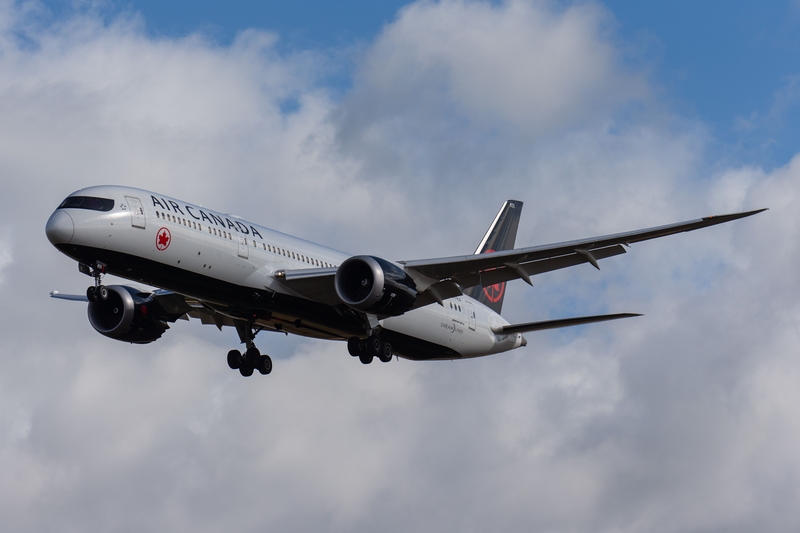
Between June 3 and June 5, the Canadian flag carrier relaunched Toronto Pearson International Airport (YYZ) to Shanghai Pudong International Airport (PVG), opened a new Montréal–Trudeau International Airport (YUL) link to Catania-Fontanarossa Airport (CTA) in Sicily, and restored Toronto Pearson (YYZ) to Budapest Ferenc Liszt International Airport (BUD). All three routes are being operated with Boeing 787 Dreamliner aircraft, giving Air Canada the range, operating economics, and cabin mix needed for very different long-haul markets.
The sequence is notable because the three routes are not simply seasonal leisure adds. Shanghai (PVG) restores a major Asia-Pacific business and cargo market from Toronto (YYZ). Catania (CTA) gives Montréal (YUL) a first-mover advantage in a previously unserved Canada–Sicily market. Budapest (BUD) brings Air Canada back to a Central European capital it last served through Air Canada Rouge before the pandemic-era restructuring of its long-haul network.
Read our stories in your inbox
Two aviation newsletters. Zero fluff.
Together, the launches show how Air Canada is using the 787 family to rebuild long-haul connectivity from both Toronto (YYZ) and Montréal (YUL), while balancing year-round strategic routes with high-season transatlantic demand.
Toronto–Shanghai Returns After A Long Absence
The most strategically important of the three launches came first. On June 3, Air Canada resumed nonstop service between Toronto Pearson (YYZ) and Shanghai Pudong (PVG), restoring a route that disappeared from the carrier’s network during the COVID-19 pandemic.
The revived YYZ–PVG service operates as Air Canada flight AC27 from Toronto (YYZ) to Shanghai (PVG), with the return sector operating as AC28 from Shanghai (PVG) to Toronto (YYZ). Air Canada is operating the route four times weekly, with westbound departures from YYZ on Mondays, Wednesdays, Fridays, and Sundays, and return flights from PVG on Mondays, Tuesdays, Thursdays, and Saturdays.
Unlike the two European routes launched later in the week, Toronto–Shanghai is scheduled as a year-round service. That distinction matters. It suggests Air Canada sees YYZ–PVG not merely as a summer traffic opportunity, but as a long-term restoration of a core transpacific market.
The route is operated by the Boeing 787-9 Dreamliner, the larger of the two 787 variants currently used by Air Canada. The 787-9 is well suited for YYZ–PVG, a sector that pushes into ultra-long-haul territory and typically runs around 15 to 16 hours depending on winds, routing, and seasonal conditions. Boeing lists the 787-9 with a range of roughly 7,565 nautical miles, giving the aircraft the capability to handle long transpacific missions while still offering meaningful belly cargo capacity.
That cargo component is particularly relevant on a route such as Toronto (YYZ) to Shanghai (PVG). Shanghai remains one of Asia’s most important commercial and logistics centers, and long-haul passenger widebodies play an important role in moving high-value goods between China and North America. For Air Canada, the reinstated PVG flight is as much about network depth and trade connectivity as it is about passenger traffic.
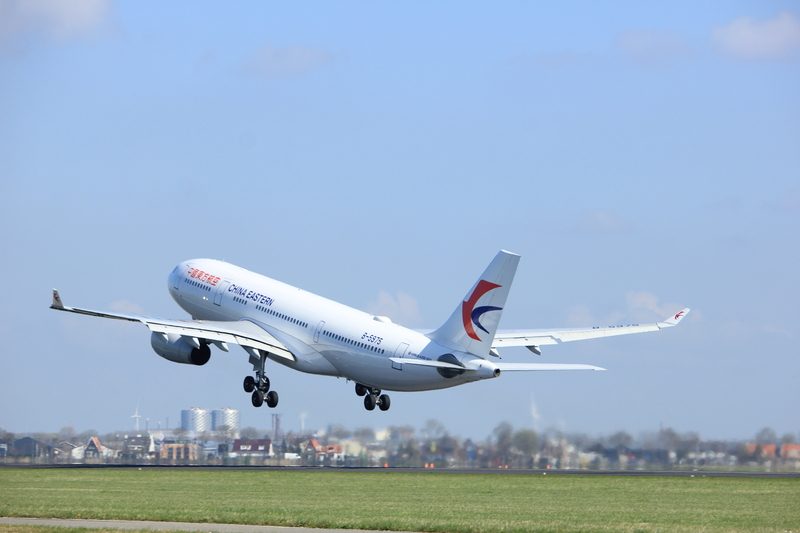
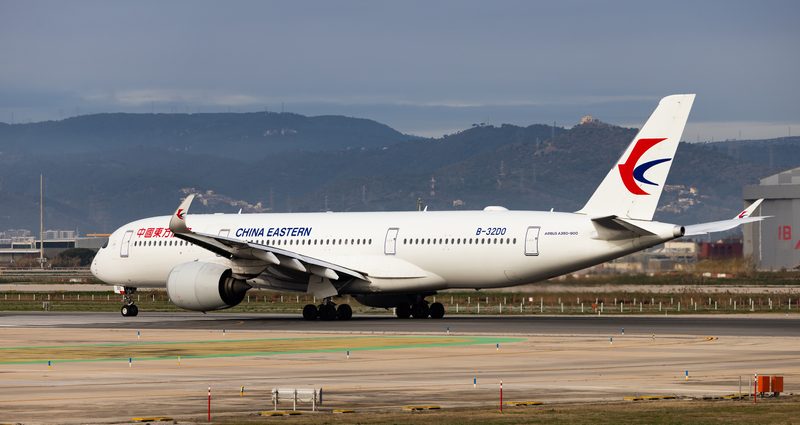
The return also puts Air Canada back into nonstop competition on one of Canada’s most important China markets. China Eastern Airlines has continued to serve the Toronto (YYZ)–Shanghai (PVG) corridor, and Air Canada’s reentry gives passengers and shippers another nonstop option between Canada’s largest metropolitan region and mainland China’s largest city.
For Toronto Pearson (YYZ), the route strengthens the airport’s position as Air Canada’s primary global hub. YYZ can feed the Shanghai (PVG) flight from across Canada, the northeastern United States, and parts of the Midwest, while also offering China-originating passengers onward connections throughout Air Canada’s domestic and transborder network.
Montréal Opens Canada’s First Nonstop Link To Sicily
One day after restoring Shanghai (PVG), Air Canada turned to the Mediterranean. On June 4, the airline inaugurated Montréal (YUL) to Catania (CTA), giving Sicily its first scheduled nonstop link to Canada.
The new YUL–CTA service operates three times weekly as AC932 from Montréal (YUL) to Catania (CTA), with return flights operating as AC933 from Catania (CTA) to Montréal (YUL). The outbound flight departs YUL in the evening and arrives at CTA the following morning, a standard west-to-east transatlantic pattern that works well for leisure travelers beginning a Mediterranean holiday. The return from CTA to YUL is scheduled as a daytime westbound crossing.
Air Canada is using the Boeing 787-8 Dreamliner on the route. The 787-8 is the smaller Dreamliner variant in Air Canada’s long-haul fleet, making it a logical aircraft for a new, relatively thin transatlantic market. It provides the range needed for YUL–CTA while limiting capacity risk compared with a larger widebody.
The choice of aircraft is important. Catania (CTA) is not Rome (FCO), Milan (MXP), or Venice (VCE). It is a strong leisure market with deep cultural and visiting-friends-and-relatives demand, but it is also a destination that benefits from careful capacity discipline. The 787-8 gives Air Canada a premium-cabin product, international economy capacity, and belly space without overcommitting seats in a market that is heavily seasonal.
For Sicily, the route is a major milestone. Catania-Fontanarossa Airport (CTA) is the principal gateway to eastern Sicily, serving the island’s busiest tourism corridor, including Mount Etna, Taormina, Siracusa, and the southeastern coast. Montréal (YUL), meanwhile, is a natural Canadian gateway for the service because of Québec’s strong cultural ties with Italy and the broader transatlantic strength of Air Canada’s Montréal hub.
The Catania (CTA) route also fits into a wider trend: North American airlines are becoming more willing to bypass traditional European megahubs and fly directly into high-demand leisure regions. Sicily has seen a noticeable rise in North American attention, with Delta Air Lines serving New York-JFK (JFK) to Catania (CTA), United Airlines serving Newark (EWR) to Palermo (PMO), and Neos linking Palermo (PMO) with New York (JFK). Air Canada’s YUL–CTA service adds a Canadian dimension to that growing market.
For Air Canada, the move strengthens Montréal (YUL) as a summer transatlantic platform. The airline has increasingly used YUL to support routes with strong leisure, cultural, and francophone or Mediterranean demand. Catania (CTA) is a good example of a route that may not have fit the long-haul network profile of a previous era, but now works with the right aircraft, seasonal schedule, and hub feed.
Budapest Returns, This Time With Mainline Dreamliner Service
The third launch came on June 5, when Air Canada restored Toronto Pearson (YYZ) to Budapest (BUD). The first eastbound YYZ–BUD departure arrived in Hungary on June 6, marking the return of nonstop Air Canada service to the Hungarian capital after several years away from the market.
Air Canada previously served Toronto (YYZ)–Budapest (BUD) through Air Canada Rouge between 2016 and 2019. The restored service is different. This time, the route is being operated by Air Canada mainline with the Boeing 787-9 Dreamliner, offering a full three-cabin widebody product, including Business Class, Premium Economy, and Economy.
That shift matters for both passengers and the route’s economics. A mainline 787-9 brings a more competitive premium product than Rouge offered in the past, while also providing stronger belly cargo potential and better alignment with Air Canada’s global hub strategy at Toronto (YYZ).
The YYZ–BUD service operates seasonally through late October. Air Canada’s base schedule lists four weekly flights, with the Budapest (BUD) side of the operation initially running four times weekly before increasing to five weekly services during July and August. That peak-summer increase is a strong signal that Air Canada expects the route to perform well during the height of transatlantic leisure demand.
Budapest (BUD) is also regaining broader North American connectivity. American Airlines launched Philadelphia (PHL) to Budapest (BUD) on May 21, using Boeing 787-8 aircraft on a daily seasonal schedule. With both PHL–BUD and YYZ–BUD now operating, Hungary has direct links to two major North American gateways for the 2026 summer season.
For Budapest Airport (BUD), Air Canada’s return is especially valuable because Toronto (YYZ) provides access beyond the local Canada–Hungary market. Through YYZ, passengers from BUD can connect across Canada, the United States, the Caribbean, and parts of Latin America. In the opposite direction, Air Canada gains a nonstop gateway to Hungary and a convenient entry point for travelers continuing into Central and Eastern Europe.
The route also has a strong diaspora and visiting-friends-and-relatives component. Canada has a significant Hungarian community, and nonstop YYZ–BUD service reduces the need for connections over Frankfurt (FRA), Munich (MUC), London Heathrow (LHR), Amsterdam (AMS), Paris Charles de Gaulle (CDG), or other European hubs. That nonstop convenience is particularly attractive during peak summer, when major European connecting airports are under seasonal pressure.
Three Routes, Three Very Different Network Roles
What makes this three-day launch sequence interesting is that each route serves a different strategic purpose.
Toronto (YYZ) to Shanghai (PVG) is a long-haul global business, trade, and cargo route. It restores Air Canada to a major China market and brings back a nonstop link that had been absent since 2020.
Montréal (YUL) to Catania (CTA) is a new market creation route. It gives Air Canada a unique Canada–Sicily nonstop and positions Montréal (YUL) as a stronger Mediterranean leisure gateway.
Toronto (YYZ) to Budapest (BUD) is a network restoration route. It brings back a previously served Central European market, but with a better aircraft and a stronger premium proposition than the earlier Rouge operation.
The common denominator is the Boeing 787. The Dreamliner family has become central to Air Canada’s long-haul strategy because it allows the airline to serve markets that might be too long, too thin, or too seasonal for older widebody economics. The 787-8 gives Air Canada a lower-capacity long-haul option for routes such as YUL–CTA, while the 787-9 provides additional range and capacity for markets such as YYZ–PVG and YYZ–BUD.
This flexibility is especially important in the post-pandemic long-haul environment. Airlines are no longer simply rebuilding the same networks they operated in 2019. They are selectively restoring core business routes, adding premium leisure destinations, and testing city pairs that benefit from smaller long-haul aircraft and strong seasonal demand.
Air Canada’s June launches reflect that shift. Shanghai (PVG) reconnects a major global commercial center. Catania (CTA) opens a new leisure and cultural market. Budapest (BUD) restores a Central European capital with upgraded mainline service.
Bottom Line
Air Canada’s three long-haul launches in three days represent more than a busy start to the summer season. They show how the airline is using its Boeing 787 fleet to rebuild and reshape its international network from both Toronto Pearson (YYZ) and Montréal–Trudeau (YUL).
The return of Toronto (YYZ)–Shanghai (PVG) restores a strategically important Asia-Pacific link. The launch of Montréal (YUL)–Catania (CTA) gives Canada its first nonstop connection to Sicily. The return of Toronto (YYZ)–Budapest (BUD) brings Air Canada back to Hungary with a stronger mainline product than it offered during the Rouge era.
For passengers, the result is more nonstop access to Asia, the Mediterranean, and Central Europe. For Air Canada, it is a clear statement that long-haul growth remains central to the carrier’s strategy, especially where the 787 can match range, capacity, premium demand, and seasonal opportunity in a way that older widebodies could not.
Keep reading FlyMag
Get the Daily Brief in the morning or the Route Watch weekly recap on Fridays. Or both.