Avelo’s 50-Route Network Cull Looks Brutal – But It Also Reveals A More Focused Airline
Avelo Airlines has cut 50 routes from its spring and summer network compared with the same April-to-September period last year, a dramatic retrenchment on paper that makes the carrier look like it is shrinking hard.

And in one sense, it is.
But the more useful way to read the cuts is this: Avelo is not simply contracting. It is consolidating. The airline is pulling back from scattered, lower-performing experiments and concentrating around a much smaller set of airports where it believes it can build a more durable business before its next fleet phase begins.
That makes this less a collapse story than a reset story.
The Scale Of The Cuts Is Real
When you compare Avelo’s Q2–Q3 2026 schedule with the same months in 2025, the airline has removed 50 routes and cut more than 3,000 flights, a reduction of roughly 29% year over year.
That is a major network retreat by any standard.
But raw route count can also be misleading with a carrier like Avelo, because Avelo’s model has always involved launching a lot of routes, testing them quickly, and then abandoning the ones that do not work. It behaves less like a legacy network airline and more like a market experimenter with a fleet attached.
So the headline number is severe, but not entirely out of character.
The Airline Has Consolidated Around Four Main Bases
The core of the reset is geographic.
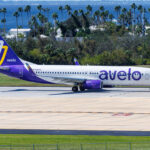
Avelo is now centered on four principal bases:
- Tweed New Haven Airport (HVN)
- Wilmington Airport, Delaware (ILG)
- Lakeland International Airport (LAL)
- Concord-Padgett Regional Airport (USA)
That matters because the carrier has moved away from a more dispersed operating model and toward a smaller number of anchor stations where it can concentrate aircraft, crews, and marketing strength.
The biggest strategic message is clear: Avelo no longer wants to be everywhere a little bit. It wants to be strong somewhere specific.
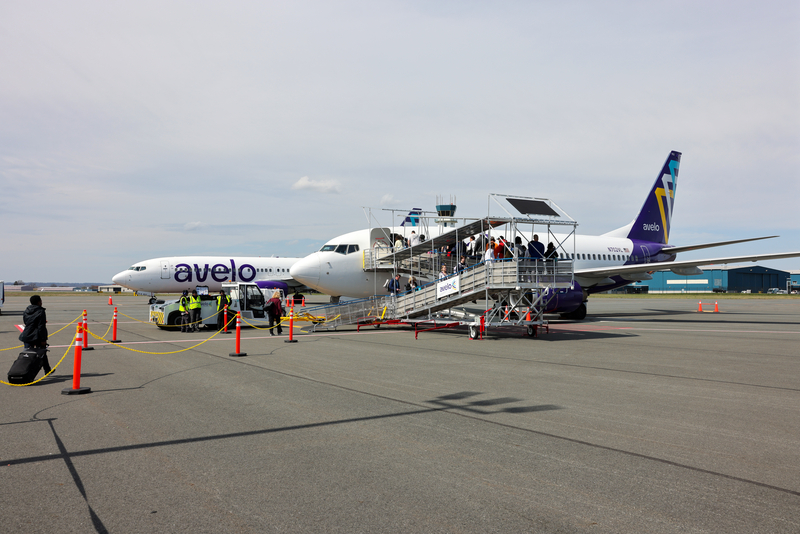
ID 274840715 | Airport © Davidshenbo | Dreamstime.com
Raleigh-Durham, Wilmington, And Burbank Were The Biggest Casualties
The most visible cuts came from airports where Avelo once looked more ambitious.
The airline has wound down its bases at:
- Raleigh-Durham International Airport (RDU)
- Wilmington International Airport, North Carolina (ILM)
- Hollywood Burbank Airport (BUR)
Those moves tell you where management believes the biggest overreach happened.
RDU, in particular, was always difficult ground. Delta has been building it up as a focus city, and Breeze has also become a meaningful competitor there. Burbank represented a different kind of challenge: heavy West Coast experimentation in markets that may have looked attractive on paper but proved difficult to sustain with Avelo’s fleet and network structure.
Here Are The 50 Routes Avelo Has Cut
The full list of routes removed from the comparable summer map is:
- Concord–Daytona Beach
- Concord–Manchester
- Concord–Nashville
- Hartford/Bradley–Cancún
- Hartford/Bradley–Daytona Beach
- Hartford/Bradley–Montego Bay
- Hartford/Bradley–Punta Cana
- Hollywood Burbank–Arcata/Eureka
- Hollywood Burbank–Eugene
- Hollywood Burbank–Kalispell/Glacier Park
- Hollywood Burbank–Medford
- Hollywood Burbank–Pasco/Tri-Cities
- Hollywood Burbank–Salem
- Las Vegas–Salem
- Long Island Islip–Lakeland
- Manchester–Lakeland
- Manchester–Myrtle Beach
- Manchester–Wilmington, NC
- New Haven–Destin/Fort Walton Beach
- New Haven–New Orleans
- New Haven–Portland, Maine
- New Haven–Traverse City
- New Haven–Washington Dulles
- Raleigh-Durham–Albany
- Raleigh-Durham–Fort Myers
- Raleigh-Durham–Grand Rapids
- Raleigh-Durham–Manchester
- Raleigh-Durham–Montego Bay
- Raleigh-Durham–Punta Cana
- Redmond/Bend–Hollywood Burbank
- Redmond/Bend–Las Vegas
- Redmond/Bend–Palm Springs
- Santa Rosa/Sonoma County–Boise
- Santa Rosa/Sonoma County–Hollywood Burbank
- Santa Rosa/Sonoma County–Kalispell/Glacier Park
- Santa Rosa/Sonoma County–Las Vegas
- Santa Rosa/Sonoma County–Palm Springs
- Santa Rosa/Sonoma County–Redmond/Bend
- Santa Rosa/Sonoma County–Salt Lake City
- Wilmington, DE–Jacksonville
- Wilmington, DE–Nashville
- Wilmington, DE–Raleigh-Durham
- Wilmington, NC–Detroit
- Wilmington, NC–Fort Lauderdale
- Wilmington, NC–Fort Myers
- Wilmington, NC–Houston Hobby
- Wilmington, NC–Long Island Islip
- Wilmington, NC–Miami
- Wilmington, NC–Orlando
- Wilmington, NC–Washington Dulles
It is a very long list, but it also tells a clear story: many of the losses are concentrated in markets where Avelo had stretched itself geographically or competitively.
All International Flying Has Been Removed
One of the most important consequences of the reset is that Avelo has effectively exited international service.
The routes from Hartford/Bradley to Cancún, Montego Bay, and Punta Cana, plus the former Raleigh-Durham Caribbean flying, are all gone from the comparable summer schedule.
That matters because international expansion had been one of the airline’s more eye-catching growth themes. But those routes now look like part of the overreach management wanted to unwind. In the current network, Avelo seems far more comfortable focusing on domestic point-to-point flying and a smaller number of bases than trying to carry a Caribbean leisure program at the same time.
The Remaining Bases Are Actually Growing
This is where the story becomes more nuanced.
Even as the total map shrinks, Avelo is growing at the four bases it has chosen to keep. Flying at those airports is up about 10% year over year, and nearly 60% of the airline’s total operation now touches Tweed New Haven (HVN).
Two bases in particular stand out:
- Lakeland (LAL) is up sharply
- Concord-Padgett (USA) has more than doubled in capacity
That tells you the cuts are not random austerity. They are being used to feed concentration elsewhere.
The Airline Is Still Adding New Routes
This is another reason the narrative should not be reduced to “Avelo is shrinking.”
Even while cutting 50 routes, the airline has still been adding a handful of new ones, including:
- New Haven–Key West
- New Haven–Cleveland
- New Haven–Indianapolis
- Concord–Cleveland
- Concord–Indianapolis
- Concord–San Juan
- Lakeland–Atlanta
- Lakeland–Detroit
That reinforces the basic point: Avelo is not trying to preserve every past experiment. It is trying to build a smaller, more coherent route map around markets it thinks can survive.
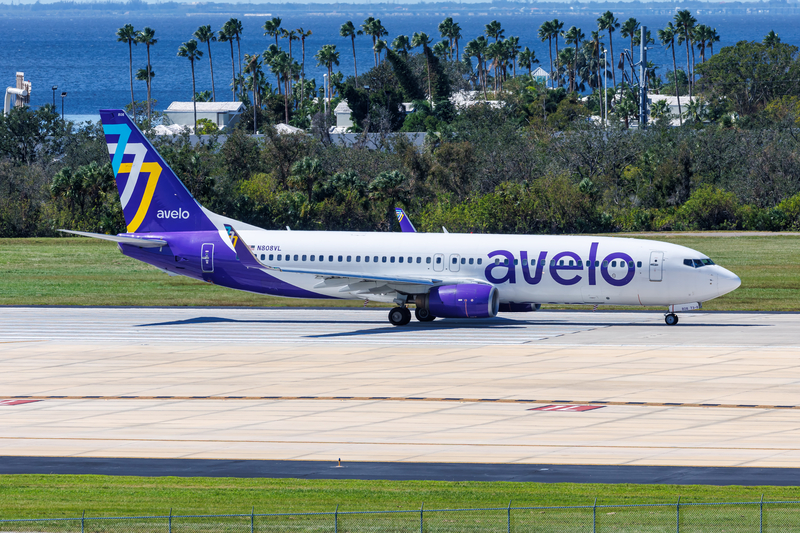
ID 347018772 | Airport © Boarding1now | Dreamstime.com
The Fleet Transition Is Driving Much Of This
The network reset makes more sense when viewed through the fleet plan.
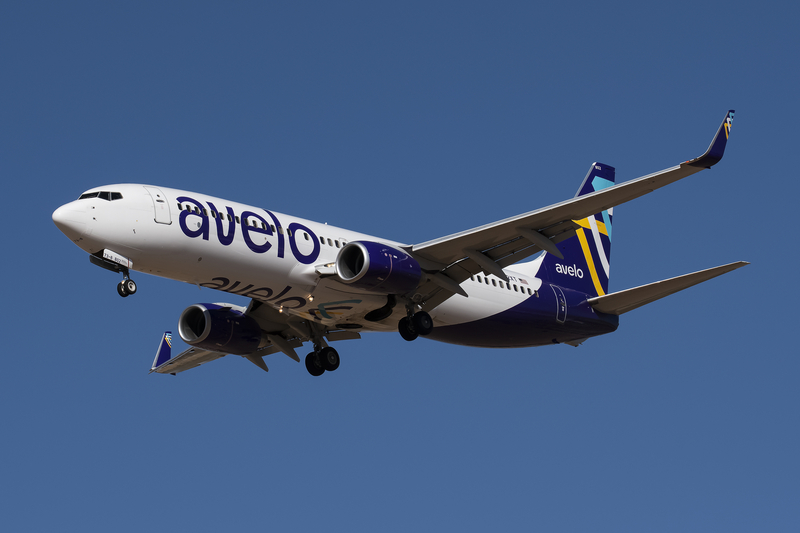
Avelo has already retired its Boeing 737-700s and now flies only 737-800s, a move that simplifies the operation but also forces tougher decisions about route fit. The 737-800 is larger, and that means thinner, riskier markets become harder to defend unless they are performing well enough.
That is especially relevant now because Avelo has committed to the Embraer E195-E2 as its long-term future fleet. The airline ordered 50 firm aircraft with rights for 50 more, but the first deliveries now appear pushed back to 2028 rather than arriving sooner.
That means Avelo has to make the 737-800 work longer than it may originally have hoped. The current route cuts are part of buying time until the fleet becomes better matched to the markets it wants to serve.
McKinney Is The Next Big Bet
Even with all the retrenchment, Avelo is still looking forward.
Later this year, the airline plans to open a new base at McKinney National Airport (TKI) in North Texas. That is a notable move because TKI is a future-oriented airport play rather than an immediate mature market. Avelo is trying to be the first airline to establish itself there, hoping to benefit from commercial growth as the airport develops.
That is a classic Avelo move: smaller airport, lower friction, first-mover advantage.
Bottom Line
Avelo’s 50-route network cut looks harsh because it is harsh. But it is also highly strategic.
The airline is exiting international flying, abandoning weaker experiments, and consolidating around four main bases where it believes the economics are stronger. At the same time, it is still adding select new routes and preparing for a future built around the Embraer E195-E2.
So yes, the map is much smaller than it was a year ago. But the clearer takeaway is that Avelo is trying to become a more focused airline before its next fleet chapter begins.