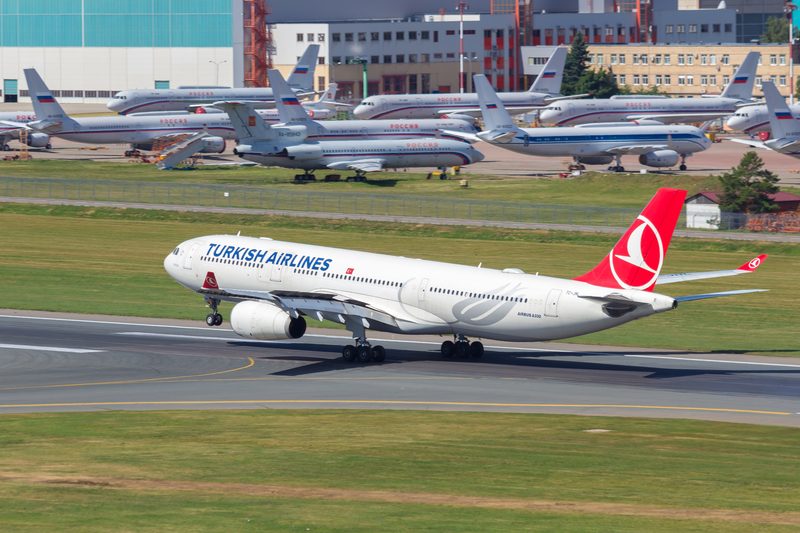
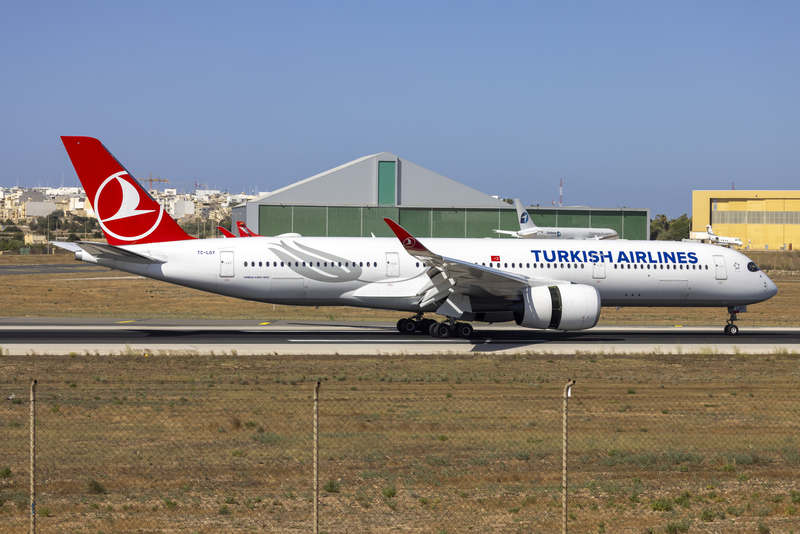
A Turkish Airlines Airbus A330 was evacuated at Tribhuvan International Airport (KTM) after a fire broke out in the landing gear area following arrival from Istanbul, forcing a temporary airport shutdown and leaving the aircraft grounded for inspection.
The incident involved 277 passengers and 11 crew, all of whom were evacuated safely. No injuries were reported. For aviation readers, the key point is that this was not an in-flight emergency but a post-landing ground event, one serious enough to trigger a full evacuation and close Nepal’s main international gateway for roughly an hour.
The Fire Started After Landing
According to Nepal’s civil aviation authorities, the problem developed after touchdown, with fire breaking out in the right rear tire area of the aircraft.
Read our stories in your inbox
Two aviation newsletters. Zero fluff.
That matters because tire and landing-gear fires after landing are very different from airborne engine or cabin-fire scenarios. They often follow a sequence involving brake heat, tire stress, hydraulic issues, or other landing-gear-related malfunctions that only become visible once the aircraft is on the ground and decelerating or taxiing.
In this case, the airplane had already landed and was no longer in the high-risk airborne phase. But once fire or smoke appears around the landing gear, the situation can still escalate quickly if not contained.
The Aircraft Was Evacuated Immediately
All passengers and crew were evacuated using the emergency exits after the fire was detected.
That is an important operational detail. A post-landing evacuation is never ordered lightly. Even when the airplane is already on the ground, evacuating hundreds of people via emergency exits carries its own injury risk and creates immediate disruption across the airfield. The fact that the evacuation was carried out with no reported injuries suggests the response on board and on the ground was handled effectively.
For airline and airport professionals, that is one of the clearest positive takeaways from the event.
Kathmandu Airport Had To Close Temporarily
Tribhuvan International Airport (KTM) was closed for about an hour while the incident was managed.
That reflects the significance of any disabled-aircraft event at Kathmandu. Unlike some larger multi-runway hubs, Kathmandu’s operational resilience is limited when a serious incident occurs on the movement area. Even a single aircraft problem can interrupt the entire airport flow until the fire is out, the aircraft is secured, and the operating surface is safe again.
The closure therefore matters not just because of the Turkish Airlines flight itself, but because it shows how a relatively contained landing-gear event can ripple across the whole airport operation.
Turkish Airlines Points To A Hydraulic Issue
Turkish Airlines later said that smoke was observed in the landing gear while the aircraft was taxiing and that initial technical assessment indicated the issue may have been caused by a malfunction in a hydraulic pipe.
That is a significant detail, because it suggests the visible fire or smoke may not have originated purely from brake or tire overheating alone. If a hydraulic line was involved, the incident may have had a systems-related trigger rather than being just a conventional hot-brake or wheel-well event.
That does not change the immediate outcome, but it does shape where investigators and maintenance teams will focus next.
The Aircraft Remains Grounded
After the fire was extinguished, the aircraft was towed clear and remains grounded for technical inspection.
That is standard in an event like this. Even when the visible fire is minor and quickly controlled, any landing gear or hydraulic-area fire can create hidden damage that must be examined before the aircraft can safely return to service. Tires, brake assemblies, hydraulic lines, wheel wells, and nearby structural areas all require close inspection.
For that reason, the flight’s return sector will not be operated by the same aircraft. Turkish Airlines has already said an additional flight is being arranged for the affected passengers.
This Was A Serious Incident — But The Safety System Worked
The most important fact is that everyone got off safely.
A landing-gear fire is a serious event, especially on arrival at an airport with limited operational redundancy like Kathmandu. But the sequence here shows the safety system working as intended: the aircraft landed, the problem was identified, the cabin was evacuated, emergency services extinguished the fire, and no one was injured.
That does not make the incident minor. It does mean the response chain held.
Bottom Line
The Turkish Airlines A330 incident at Kathmandu was a serious post-landing emergency involving a tire and landing-gear-area fire, a full evacuation, and a temporary airport shutdown. All 277 passengers and 11 crew escaped safely, and no injuries were reported.
The investigation will now focus on whether the fire was driven mainly by the tire and brake area or, as Turkish Airlines indicated, by a malfunctioning hydraulic pipe. Either way, the event is a reminder that some of aviation’s most consequential emergencies begin not in the sky, but in the final moments after landing.
Keep reading FlyMag
Get the Daily Brief in the morning or the Route Watch weekly recap on Fridays. Or both.