What began onboard as a sentimental final gesture has now become a serious compliance and safety story for Icelandair. The flight in question was FI521 from Frankfurt Airport (FRA) to Keflavík International Airport (KEF), operated by Boeing 757-256 TF-ISR. During the arrival into Iceland, the aircraft carried out a low pass over Vestmannaeyjar, the island community served by Vestmannaeyjar Airport (VEY). Passengers were reportedly told in advance that the captain, on his final flight before retirement, intended the flypast as a farewell over his hometown.

That briefing is what makes this story more layered than a standard “unauthorised manoeuvre” headline. Inside the cabin, the pass appears to have been received as a gift: a final-flight tribute, a scenic detour, a rare low-level view over one of Iceland’s most distinctive island communities. On the ground, however, the reaction was very different. Residents described alarm at the aircraft’s low altitude and noise, and Icelandair has made clear that whatever passengers were told, the manoeuvre was not known to the airline in advance and was not approved by it.
The key distinction is not the route change. It is the way it was flown.
That operational distinction matters. Local follow-up reporting indicates that the crew requested a route deviation and received approval from air navigation services. For airline professionals, though, that is only part of the picture. Tactical approval for a routing change is not the same as company authorisation for a low-altitude sightseeing pass over a populated area. Those are two very different decisions, governed by two very different layers of oversight.
Read our stories in your inbox
Two aviation newsletters. Zero fluff.
That is why the investigation is now focusing less on whether the aircraft went over Vestmannaeyjar and more on how low it went while doing so. Preliminary reporting suggests the aircraft may have descended to a level that would raise obvious questions about compliance with minimum-altitude expectations over a built-up area. In other words, the issue is no longer the symbolism of the farewell. It is whether the execution crossed a procedural and regulatory line.
This is also why the fact pattern is more serious than a casual reader might assume. FI521 was not a positioning flight, a ferry sector, or a non-revenue sortie with a pre-briefed demonstration profile. It was a scheduled passenger service from Frankfurt Airport (FRA) into Keflavík International Airport (KEF). That puts the event squarely inside the framework of normal commercial operations, where deviations are judged not by intent, but by procedure, risk margin, and accountability.
The Boeing 757 makes the incident even more striking
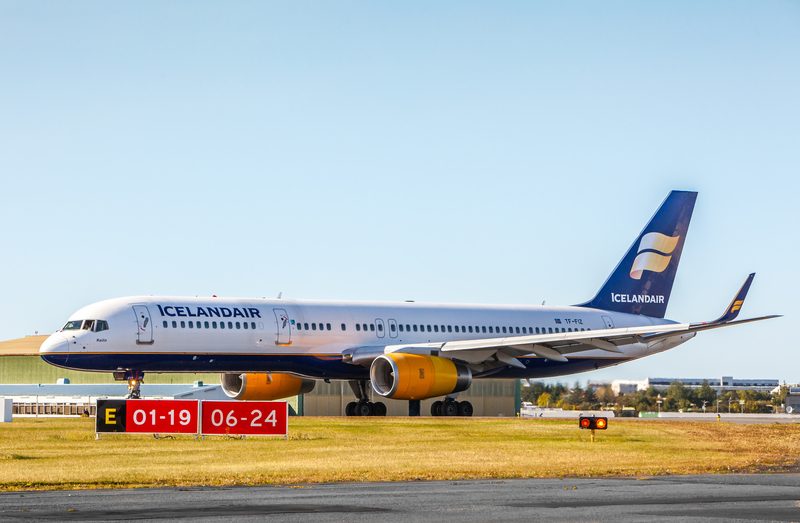
The aircraft type is worth noting here because it shapes both the optics and the operational context. TF-ISR is a Boeing 757-256, part of Icelandair’s long-serving 757-200 fleet. On Icelandair, the 757-200 is configured for 184 passengers and powered by Rolls-Royce RB211 engines. It has been one of the airline’s defining transatlantic workhorses for years: a long-range narrowbody with the legs to bridge Europe and North America through the KEF hub, while still being efficient enough for thinner markets.
That matters because a Boeing 757-200 is not a small island commuter and it is not an aircraft people expect to see making a dramatic low pass over homes near Vestmannaeyjar Airport (VEY). The 757 has always had an outsized visual and acoustic presence, especially at low altitude. Even for seasoned aviation observers, a 757 flown low over a built-up coastal town is going to look and sound far more dramatic than the same manoeuvre performed by a much smaller aircraft on a local circuit.
It also matters from a reputational standpoint. Icelandair’s 757 fleet is closely associated with the carrier’s brand and operating model. When one of those aircraft becomes the center of a safety and procedure story, the incident carries more weight than a curiosity involving a lightly regulated local operation. This was a core Icelandair type, on a scheduled Icelandair service, arriving into Icelandair’s main international gateway at KEF.

A sharp contrast between the cabin and the ground
One of the reasons the story has gathered so much attention is the gap between how it appears to have felt onboard and how it was perceived outside the aircraft. Passenger accounts suggest the cabin was told what was about to happen, that the captain framed it as a final-flight farewell, and that many onboard responded warmly. Some reports describe applause after the pass and a generally appreciative mood in the cabin.
From a human standpoint, that is easy to understand. For many passengers, it likely felt like an unusually personal moment at the end of a routine FRA–KEF sector. But in airline operations, passenger approval is not the standard that governs whether a manoeuvre was acceptable. What matters is whether the flight remained inside the safety, procedural, and regulatory envelope expected of a revenue service.
That is where the ground reaction becomes much more important. Residents reportedly described the aircraft as unusually low and loud, with some fearing an accident was unfolding. Once that happens, the story stops being about a memorable retirement moment and starts becoming about whether a commercial flight departed from acceptable operating norms over a populated area.
Why Icelandair’s response has been so firm
Icelandair’s reaction suggests the airline understands that distinction very clearly. The carrier has said the flypast was not carried out with its permission, indicated it likely would not have been authorised had it been proposed formally, and confirmed that the matter has been referred to both the Icelandic Transport Authority and the police. That is not the language of an airline trying to downplay a sentimental one-off. It is the language of an operator protecting the integrity of its procedures.
That response also reflects a broader industry reality. Airlines can tolerate a great deal of individual style from experienced captains, but only inside a tightly controlled operational system. The moment a symbolic gesture appears to override that system on a live passenger flight, the matter becomes much bigger than the individual involved. It becomes a question of cockpit judgement, crew resource management, procedural discipline, and corporate oversight.
Bottom Line
The Icelandair Vestmannaeyjar incident is compelling precisely because it sits at the uncomfortable intersection of sentiment and standardisation. On one side is a retiring captain, a farewell flypast, and passengers who appear to have viewed the moment positively. On the other is FI521, a scheduled Boeing 757-256 service from Frankfurt Airport (FRA) to Keflavík International Airport (KEF), flown over Vestmannaeyjar near Vestmannaeyjar Airport (VEY) in a way Icelandair says it neither knew about nor approved.
For airline professionals, that second side is the one that matters most. A route deviation can be explained. A farewell can be understood. But a low-altitude pass on a revenue flight over a populated community is judged by procedure, not sentiment. That is why what looked like a graceful final gesture in the cabin has become a formal safety and regulatory case on the ground.
Keep reading FlyMag
Get the Daily Brief in the morning or the Route Watch weekly recap on Fridays. Or both.