Allegiant Breaks From ULCC Playbook With First-Class Cabin and Free Drinks
Allegiant Air is making one of the most significant passenger-experience changes in its history, introducing a dedicated first-class cabin while ending its policy of charging most travelers for basic nonalcoholic drinks.

Beginning August 1, 2026, passengers on every Allegiant flight will receive complimentary water, juice, or a soft drink. A considerably larger change will follow in spring 2027, when the airline begins installing an eight-seat premium cabin branded as Allegiant First on selected aircraft.
The two initiatives represent a notable shift for an airline built around low base fares, dense aircraft configurations, and an extensive menu of optional charges. Allegiant is not abandoning that model, but it is creating more opportunities to earn revenue from passengers willing to pay for comfort and convenience.
Read our stories in your inbox
Two aviation newsletters. Zero fluff.
According to Allegiant’s official announcement, Allegiant First seats are expected to go on sale in mid-August 2026, although flights will not begin until spring 2027. The carrier plans to reveal specific aircraft, routes, and onboard service details later in 2026.
Allegiant First Will Have Only Eight Seats
Allegiant First will occupy the first two rows of participating aircraft. Each row will contain four seats in a 2-2 configuration, eliminating the middle seat found in Allegiant’s existing 3-3 narrowbody cabins.
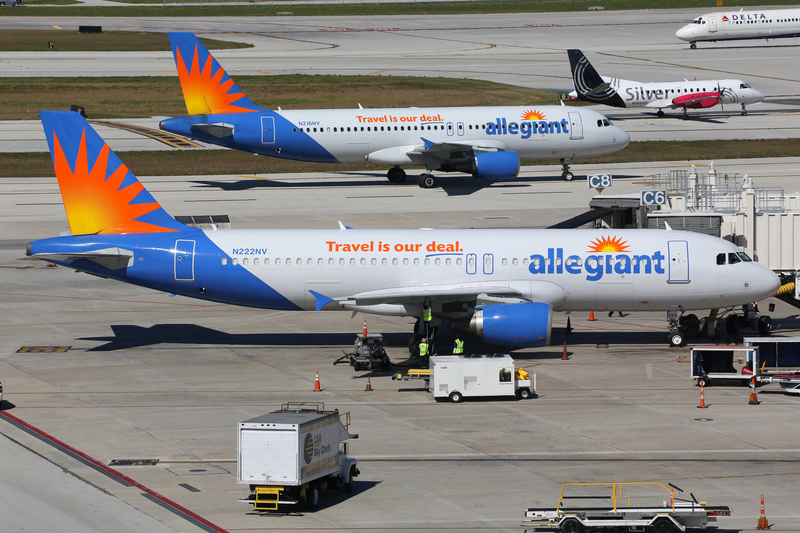
The seats will offer 37 inches of pitch, five inches of recline, adjustable headrests, and calf rests. Allegiant also promises enhanced amenities and upgraded onboard service, but it has not yet disclosed whether that will include meals, complimentary alcoholic drinks, power outlets, or dedicated inflight entertainment.
The airline has also not published the seat width or revealed the seat manufacturer. Those details will determine how closely Allegiant First resembles the domestic first-class cabins offered by American Airlines, Delta Air Lines, and United Airlines.
At 37 inches, the published pitch will be competitive with many domestic first-class seats, although it is not unusually spacious. The most significant improvement will likely be the wider 2-2 layout, combined with the absence of a middle seat and the inclusion of calf support.
Allegiant First will be sold as more than a seat assignment. The fare will include:
- Priority check-in and boarding
- One personal item
- One full-size carry-on bag
- One checked bag weighing up to 70 pounds
Those inclusions matter on Allegiant because standard fares generally require passengers to pay separately for carry-on and checked baggage. Packaging the seat, bags, and airport priority together should make the product easier to understand while giving Allegiant a higher-value fare to sell.
Aircraft Deployment Has Not Been Formally Announced
Allegiant says the new cabin will be phased into selected aircraft rather than immediately installed across the entire fleet.
The airline currently operates Airbus A319s, Airbus A320s, and Boeing 737-8200s. Its published aircraft specifications list 156 seats on the Airbus A319, between 177 and 180 seats on most Airbus A320s, and 190 seats on its Boeing 737 aircraft.
Allegiant has not said whether Allegiant First will initially be installed on the Airbus fleet, the newer Boeing 737-8200 fleet, or both.
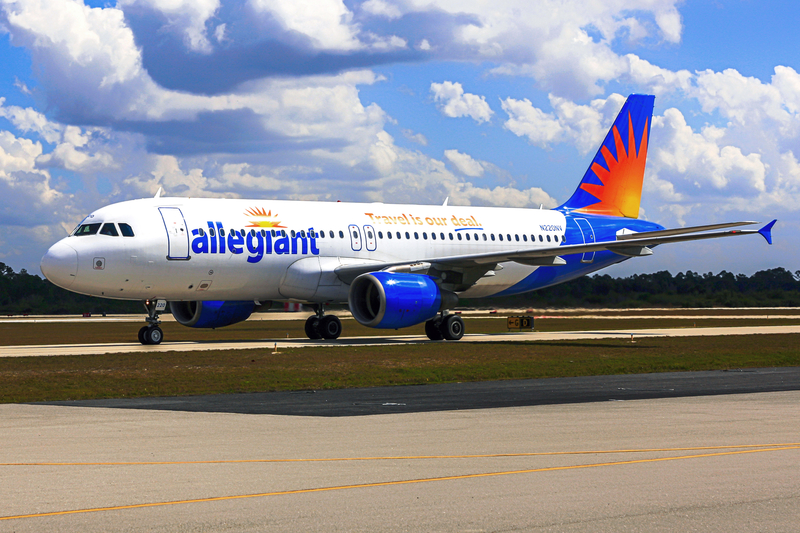
Passenger-experience publication PaxEx.Aero reports that the first equipped aircraft will operate from Allegiant’s base at Punta Gorda Airport (PGD) in Southwest Florida. However, Allegiant’s public announcement does not identify Punta Gorda Airport (PGD) or any specific route, stating instead that deployment details will be released later in 2026.
Some reduction in total aircraft capacity will be unavoidable. Replacing two 3-3 rows with two 2-2 rows removes at least four seats before accounting for any additional floor space needed to provide 37 inches of pitch.
The final capacity loss will depend on the existing configuration and whether Allegiant adjusts other parts of the cabin. Even a relatively small reduction could be financially attractive if the airline consistently sells the eight premium seats at a substantial fare difference.
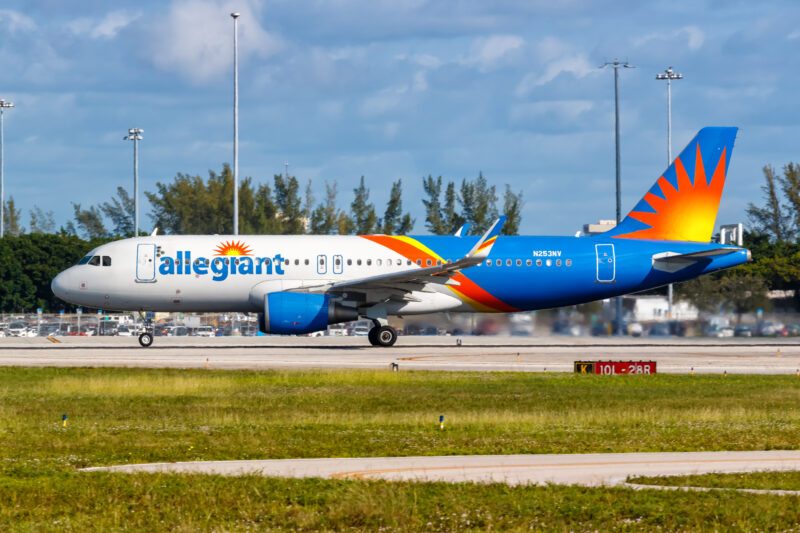
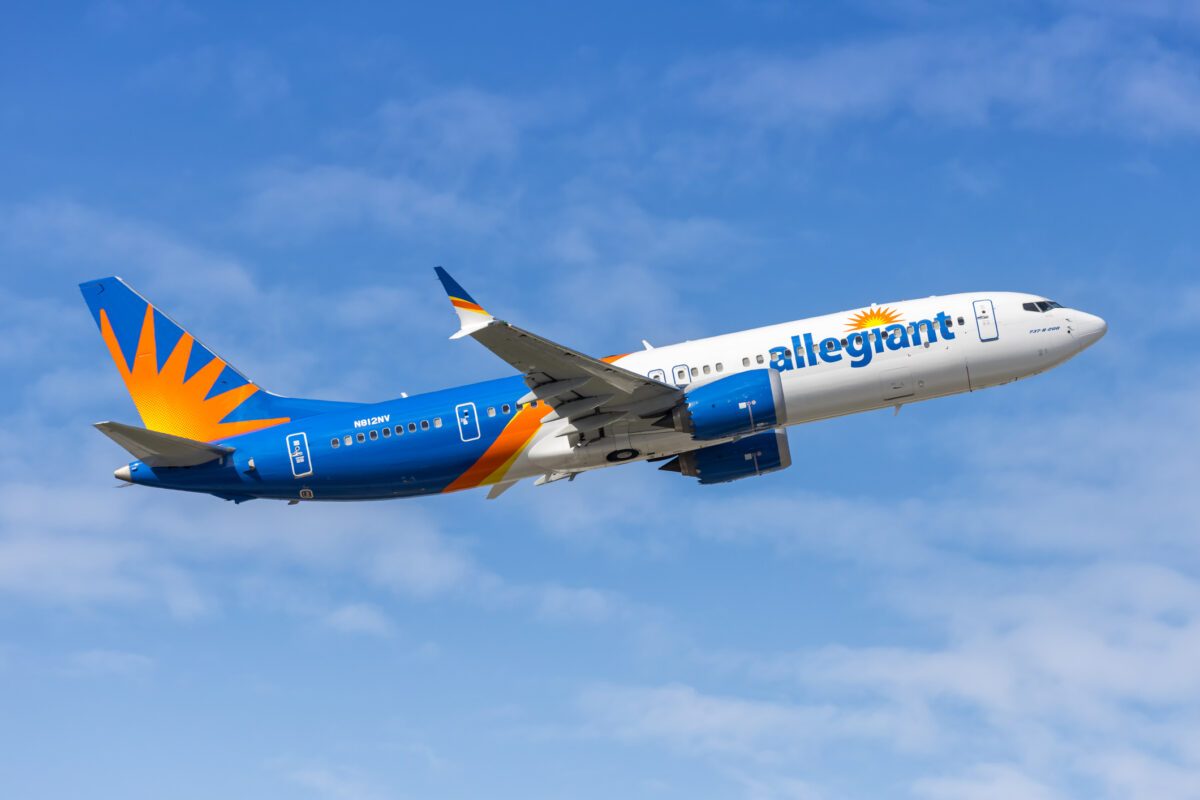
ID 273790747 | Air © Boarding1now | Dreamstime.com
Allegiant Extra Will Remain
Allegiant First will complement rather than replace Allegiant Extra, the airline’s existing extra-legroom economy product.
That will give equipped aircraft at least three distinct seating categories: Allegiant First, Allegiant Extra, and standard economy. The resulting cabin will look more like the segmented interiors used by full-service carriers, even though Allegiant will continue operating a low-cost business model.
Allegiant Extra provides additional legroom and selected benefits but retains the standard narrowbody economy seat and 3-3 arrangement. Allegiant First will create a much clearer physical difference at the front of the aircraft.
This distinction is commercially important. Extra-legroom economy usually generates an incremental seat-assignment fee, while a first-class fare can bundle baggage, priority services, flexibility, food, and other benefits into a substantially more expensive purchase.
Allegiant can therefore serve several passenger groups on the same aircraft: travelers focused almost entirely on price, customers willing to pay for additional legroom, and passengers prepared to purchase a more complete premium package.
Free Drinks Begin Much Earlier
The first-class rollout will take several months, but the complimentary beverage change begins almost immediately.
Starting August 1, every Allegiant passenger will be offered selected sodas, juices, or water at no charge. The airline’s updated inflight menu lists products including Coca-Cola soft drinks, ginger ale, seltzer water, tonic water, and apple, cranberry, and orange juice. Drinks are served by the cup and remain subject to availability.
Premium nonalcoholic drinks, snacks, beer, wine, liquor, and cocktails will remain available for purchase. Allegiant is therefore not eliminating its buy-on-board program; it is creating a basic complimentary tier while retaining more expensive options.
Allways Rewards Visa cardholders will continue receiving one upgraded beverage per flight. Eligible choices can include canned drinks, coffee, juice, or an alcoholic beverage with a mixer valued at up to $16. Alcohol is limited to passengers aged 21 or older who present valid identification.
Although a free cup of soda may appear minor, the change is strategically meaningful. Charging for basic drinks reinforced Allegiant’s image as a highly unbundled airline. Providing them at no additional cost removes a visible difference between Allegiant and many larger U.S. carriers.
Sun Country Influenced the Timing
The changes come less than three months after Allegiant Travel Company completed its acquisition of Sun Country Airlines.
The transaction closed on May 13, 2026, creating a combined company with approximately 195 aircraft, more than 650 routes, and service to nearly 175 cities. Allegiant and Sun Country continue operating as separate airlines in the near term while the company works toward a longer integration.
Sun Country already provides complimentary water, coffee, juice, and soft drinks. It also sells “Best” seats at the front of its Boeing 737-800s with 34 inches of pitch, additional recline, priority boarding, and a complimentary premium beverage.
Adding free drinks to Allegiant creates greater consistency between the two carriers. Allegiant First goes further by introducing a separate 2-2 cabin that Sun Country does not currently offer on scheduled passenger flights.
Allegiant Chief Commercial Officer Drew Wells directly connected the changes with the integration, saying the combined airline sees an opportunity to expand both complimentary and premium offerings. The company wants to serve a wider spectrum of leisure passengers, ranging from highly price-sensitive travelers to customers seeking more comfort and flexibility.
The strategy does not require Allegiant to become a traditional network carrier. It can retain low base fares and optional services while using premium seats to generate additional revenue from customers who previously had little opportunity to spend more.
This Is Not Allegiant’s First Oversized Seat
Allegiant First is the airline’s first modern, dedicated cabin carrying a first-class brand, but it is not the first time Allegiant has sold a wider premium seat.
In 2014, the airline installed six “Giant Seats” on each of its Boeing 757s. Those seats were located in the first row and at a mid-cabin emergency exit and were primarily used on flights between the mainland United States and Hawaii.
The seats were initially connected to updated FAA crew-rest requirements, but Allegiant also sold available Giant Seats to passengers. The 757 reconfiguration reduced capacity from 223 to 215 seats and introduced a separate Legroom+ section with up to 34 inches of pitch.
That earlier product was limited to six Boeing 757s and disappeared when Allegiant ended its Hawaii operation and retired the aircraft.
Allegiant First is fundamentally different because it is being developed as a repeatable commercial product rather than a specialized feature on a small subfleet. It will have consistent branding, a defined fare package, airport priority benefits, and a planned rollout across selected aircraft.
Premium Demand Has Changed the ULCC Model
Allegiant’s decision reflects a broader shift in the U.S. airline industry.
Low-cost airlines once concentrated almost exclusively on maximizing seat count and offering the lowest possible advertised fare. That strategy remains important, but many leisure passengers are now willing to pay more for additional space, priority services, and bundled benefits.
Premium seating can also be particularly valuable to Allegiant because many of its routes have limited nonstop competition. Passengers traveling between smaller cities and destinations such as Punta Gorda Airport (PGD), Orlando Sanford International Airport (SFB), St. Pete-Clearwater International Airport (PIE), and Phoenix-Mesa Gateway Airport (AZA) may choose Allegiant primarily because it offers the only convenient nonstop flight.
Some of those travelers are not necessarily selecting the airline because they cannot afford a more expensive ticket. They may simply prefer a nonstop itinerary over connecting through a major hub.
Allegiant First gives the airline a way to collect more revenue from those customers without increasing the base price paid by its most cost-conscious passengers.
Important Details Remain Unknown
Allegiant has provided the basic seat and fare specifications, but several important questions remain unanswered.
The airline has not revealed which aircraft will be modified, how many will receive the cabin, what the final aircraft capacities will be, or which routes will receive Allegiant First after the initial rollout.
It also has not disclosed whether first-class passengers will receive complimentary snacks, meals, alcoholic drinks, ticket flexibility, dedicated customer-service access, or other benefits normally associated with a premium fare.
There is no indication that Allegiant plans to build airport lounges, and the airline has not announced upgrades to its inflight entertainment or internet connectivity as part of the first-class project.
The success of Allegiant First will ultimately depend on pricing. The cabin must generate enough incremental revenue to offset the seats removed during reconfiguration, installation costs, additional service expenses, and any increase in turnaround complexity.
With only eight seats per aircraft, Allegiant does not need every passenger to purchase a premium fare. A relatively small number of higher-paying customers could make the cabin economically worthwhile while preserving most of the aircraft for standard economy seating.
Bottom Line
Allegiant Air will introduce complimentary water, juice, and soft drinks on every flight beginning August 1, 2026, ending one of the most visible elements of its fully unbundled onboard service.
A much larger change will arrive in spring 2027 with Allegiant First. The new cabin will contain eight seats across two rows in a 2-2 configuration, with 37 inches of pitch, five inches of recline, calf rests, and adjustable headrests.
Fares will include priority check-in and boarding, one personal item, one carry-on bag, and one checked bag weighing up to 70 pounds. Allegiant Extra will remain available as an intermediate option between first class and standard economy.
The airline has not officially identified the aircraft or routes that will receive the product, although industry reporting indicates the initial equipped aircraft will operate from Punta Gorda Airport (PGD).
For Allegiant, the move is not an abandonment of the ultra-low-cost model. It is an effort to broaden that model by keeping inexpensive base fares while offering a much more valuable package to passengers willing to spend more.
Combined with the acquisition of Sun Country Airlines, the introduction of free drinks and a dedicated first-class cabin shows that Allegiant increasingly sees passenger segmentation—not a one-size-fits-all economy cabin—as central to its future growth.
Keep reading FlyMag
Get the Daily Brief in the morning or the Route Watch weekly recap on Fridays. Or both.