British Airways New London Long-Haul Push Is Really a Heathrow-and-Gatwick Reset
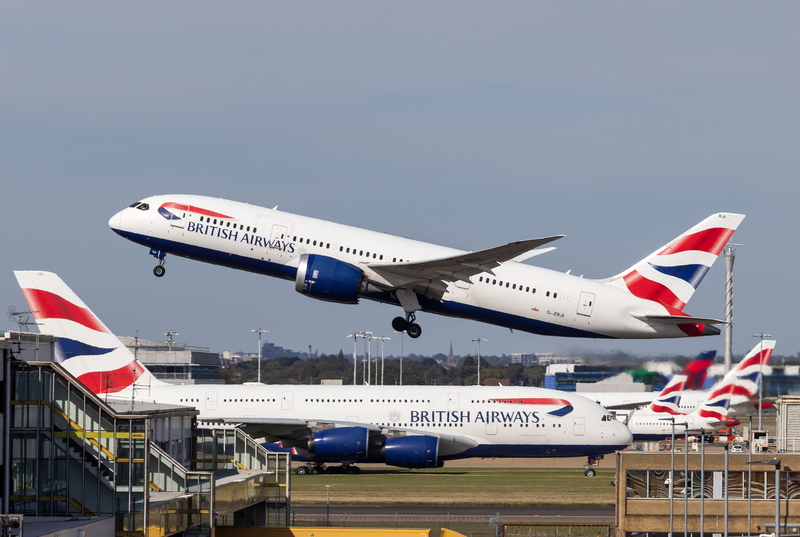
British Airways is preparing one of its more interesting long-haul schedule reshuffles in years, adding new destinations, restoring former markets, and moving several routes between London airports as it looks for better performance from a constrained London network.

The six-route package is not as simple as “six brand-new routes.” Only some are genuinely new additions at the city-pair level. Others are airport switches, limited seasonal resumptions, or strategic restorations that change how British Airways uses London Heathrow Airport (LHR) and London Gatwick Airport (LGW).
That distinction matters. Heathrow (LHR) remains one of the most slot-constrained airports in the world, while Gatwick (LGW) gives British Airways a different long-haul platform focused heavily on leisure and premium vacation demand. The latest changes show BA using both airports more deliberately: Heathrow for higher-yield, premium and connecting markets, and Gatwick for larger leisure flows to places such as the Caribbean, Florida and the Indian Ocean.
The headline additions include the return of Heathrow-Orlando, a Gatwick-Colombo comeback, more Barbados flying, a Heathrow move for Costa Rica and Tampa, and the long-awaited return of British Airways to Melbourne via Kuala Lumpur.
The Six Long-Haul Routes Coming From London
British Airways’ upcoming long-haul changes include three Heathrow (LHR) routes and three Gatwick (LGW) routes. The list also shows how varied BA’s London strategy has become.

| Start date | Route | Planned aircraft | What changes |
|---|---|---|---|
| July 21, 2026 | London Heathrow (LHR)-Orlando (MCO) | Boeing 777-200ER | Limited school-holiday resumption |
| October 23, 2026 | London Gatwick (LGW)-Colombo (CMB) | Boeing 777-200ER | Sri Lanka returns to BA’s network |
| October 25, 2026 | London Gatwick (LGW)-Barbados (BGI) | Boeing 777-200ER | Gatwick winter service returns alongside Heathrow |
| October 25, 2026 | London Heathrow (LHR)-San José, Costa Rica (SJO) | Boeing 787-8 | Moves from Gatwick to Heathrow |
| October 25, 2026 | London Heathrow (LHR)-Tampa (TPA) | Boeing 787-10 | Moves from Gatwick to Heathrow |
| January 9, 2027 | London Heathrow (LHR)-Melbourne (MEL) via Kuala Lumpur (KUL) | Boeing 787-9 | BA returns to Melbourne with fifth-freedom rights |
The aircraft choices are as important as the destinations. BA is using the Boeing 777-200ER where it needs leisure-heavy capacity, especially from Gatwick (LGW). It is using the Boeing 787 family where route economics depend more on range, premium mix, lower trip cost and Heathrow connectivity.
Heathrow-Orlando Returns, But Only for the Peak
British Airways will bring London Heathrow (LHR)-Orlando International Airport (MCO) back for a limited summer 2026 run, operating three times weekly from July 21 through August 29.
This is a targeted move, not a full Heathrow restoration. BA already has a major Orlando presence from Gatwick (LGW), where the route naturally fits the airport’s leisure profile. Adding Heathrow (LHR)-Orlando (MCO) during the U.K. school-holiday peak gives BA extra premium London capacity at the exact point when family and vacation demand is strongest.

The use of the Boeing 777-200ER makes sense. BA’s 777-200 fleet can carry up to 336 passengers depending on configuration, and the type is a proven long-haul workhorse for large leisure markets. Orlando is exactly that kind of route: high-volume, vacation-driven and highly seasonal.
For Heathrow (LHR), the route is also a slot-utilization play. A limited summer operation gives BA the ability to serve peak demand without committing scarce Heathrow slots to Orlando year-round. For travelers, it creates another nonstop London option into Central Florida, alongside the established Gatwick (LGW) operation and Virgin Atlantic’s Heathrow-Orlando service.
Colombo Gives Gatwick a Serious Indian Ocean Return
The most important Gatwick long-haul addition is London Gatwick (LGW)-Bandaranaike International Airport (CMB) serving Colombo, Sri Lanka. British Airways will launch the route on October 23, 2026, operating three times weekly during the winter season.

This marks BA’s return to Sri Lanka after more than a decade away. The airline last served Colombo in 2015, when the route was operated as part of a tag structure with Malé. The new service is more straightforward: a standalone Gatwick-Colombo operation aimed at winter leisure travelers, visiting-friends-and-relatives traffic, and premium vacation demand.
Colombo (CMB) is a large London-origin market, but much of the traffic has historically connected over Gulf hubs such as Dubai (DXB), Doha (DOH), Abu Dhabi (AUH) and Bahrain (BAH). That makes the nonstop important. A direct British Airways flight from Gatwick (LGW) gives travelers a simpler option and gives BA Holidays a stronger product for Sri Lanka packages.
The Boeing 777-200ER is the right aircraft here. It gives BA enough range for the roughly 11-hour sector and enough economy-heavy capacity for a market that is large but often price-sensitive. The route also fits Gatwick’s long-haul identity better than Heathrow’s. Sri Lanka is a powerful leisure destination, and LGW has long been BA’s lower-cost London platform for this type of demand.
Gatwick-Barbados Adds More Caribbean Scale
British Airways will also restore London Gatwick (LGW)-Grantley Adams International Airport (BGI) service for winter 2026, complementing its existing Heathrow-Barbados operation.
This is not just about Barbados. BA’s winter Caribbean plan uses Barbados (BGI) as a stronger connecting and tag point for several onward Caribbean markets, including Grenada, Guyana and Tobago. That replaces some of the role previously played by St. Lucia in BA’s Gatwick Caribbean structure.
For BA, that matters operationally. Caribbean flying from Gatwick often works as a pattern of direct services, tag sectors and leisure-focused rotations. The network is not built like a classic Heathrow hub operation. It is built around vacation flows, cruise traffic, diaspora demand and efficient widebody utilization.
The 777-200ER remains central to that strategy. From Gatwick (LGW), the aircraft provides the seat count BA needs for winter sun markets while keeping a three-cabin product: World Traveller, World Traveller Plus and Club World. It is not the newest aircraft in BA’s long-haul fleet, but it is a useful capacity tool for routes where volume is more important than the most premium-heavy cabin mix.
Barbados (BGI) also has a high strategic value for BA because it is one of the U.K.’s most mature Caribbean markets. Adding Gatwick back alongside Heathrow increases schedule choice and gives BA more ways to package the island through British Airways Holidays.
Costa Rica Moves to Heathrow for Better Yield and Connections
The move of San José, Costa Rica (SJO) from Gatwick (LGW) to Heathrow (LHR) may be the most strategically interesting change in the group.
From October 2026, British Airways’ Costa Rica flights will depart from Heathrow instead of Gatwick. The route is also scheduled to increase to five weekly flights, giving the Central America market a stronger London platform and more connection opportunities through BA’s main hub.
At Gatwick, San José (SJO) was largely a point-to-point leisure route. That is useful, but it limits the number of passengers BA can capture. At Heathrow, the route gains access to BA’s full connecting network across the U.K., Europe, the Middle East, India and beyond.
The aircraft change matters too. The route is planned with the Boeing 787-8, BA’s smallest Dreamliner variant. The 787-8 is a better match for Heathrow-San José than a large leisure-configured 777 because it lowers seat risk while increasing the premium share of the cabin. BA’s 787-8 has long-haul range, lower trip cost than a larger widebody and a cabin better suited to a route that needs both leisure traffic and connecting feed.
This is exactly how constrained Heathrow slots should be used: not just to chase volume, but to improve route quality. San José (SJO) at Heathrow can command better yields, offer better connections and support more consistent demand than the same route at Gatwick.
Tampa Gets a Heathrow Upgrade and a Better Aircraft
British Airways is also moving Tampa International Airport (TPA) from Gatwick (LGW) to Heathrow (LHR) on October 25, 2026. The route is planned at five weekly flights using the Boeing 787-10.
This is a meaningful upgrade. Tampa has been a long-running BA Florida market, but moving it to Heathrow changes the commercial proposition. Instead of relying primarily on local London and U.K. leisure demand, BA can now feed Tampa (TPA) from across its Heathrow network.
The 787-10 is also a major product improvement. It is the largest member of the 787 family and BA lists the type with 256 seats, including First, Club World, World Traveller Plus and World Traveller. That gives Tampa a four-cabin long-haul product and introduces First Class availability that was not part of the older Gatwick-heavy setup.
The route is not without risk. Tampa is a strong Florida gateway, but it is not as large as Orlando (MCO) or Miami (MIA) in global demand terms. Reducing the route to five weekly flights and using the 787-10 gives BA a more premium, more connected, and more disciplined version of the service.
For Tampa Bay, the Heathrow move is a win. Heathrow is a stronger global hub than Gatwick, and the 787-10 gives the route better appeal for business travelers, premium leisure passengers and connecting traffic.
Melbourne Returns Through Kuala Lumpur
The most eye-catching addition is the return of Melbourne Airport (MEL) to the British Airways network. BA will resume service from January 9, 2027, operating daily from Heathrow (LHR) to Melbourne (MEL) via Kuala Lumpur International Airport (KUL).
This is a major symbolic route. British Airways last served Melbourne in 2006, when the Boeing 747-400 operated via Singapore. More than two decades later, the route returns with the Boeing 787-9, a smaller and more efficient aircraft that makes the economics easier to support.
The Boeing 787-9 is a strong fit for the mission. BA lists the type with 216 seats in four classes, including First, Club World, World Traveller Plus and World Traveller. It also has the range and fuel efficiency needed for long sectors such as London-Kuala Lumpur and Kuala Lumpur-Melbourne.
The Kuala Lumpur (KUL)-Melbourne (MEL) leg is especially interesting because BA will have fifth-freedom rights, allowing it to sell seats between Malaysia and Australia as well as through journeys between London and Melbourne. That creates an additional local revenue pool on the second sector and helps support the daily operation.
For BA, Melbourne is also about brand positioning. The airline already serves Sydney, and returning to Melbourne gives it a stronger Australia presence at a time when long-haul travel demand between the U.K. and Australia remains resilient. Melbourne has a large U.K. expatriate base, strong visiting-friends-and-relatives traffic, major sporting events, and a high-value business and education market.
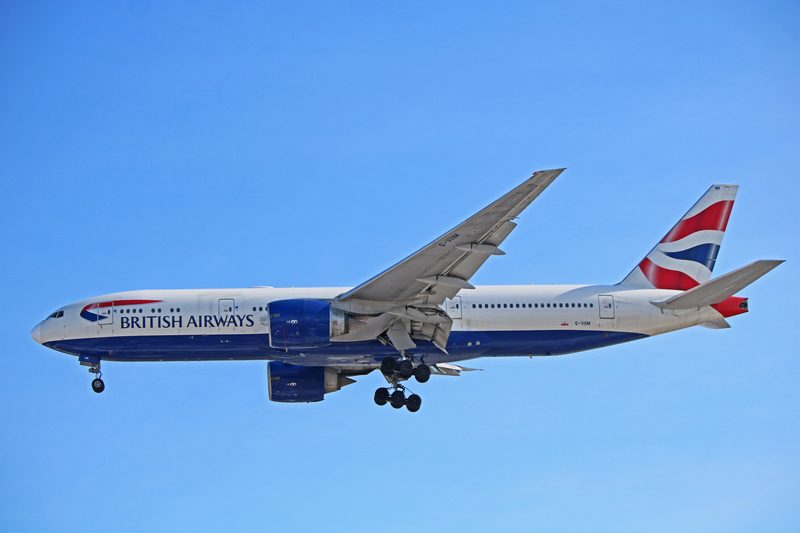
ID 143062202 © Tom Samworth | Dreamstime.com
Why Heathrow Gets Costa Rica, Tampa and Melbourne
The Heathrow choices are not random. San José (SJO), Tampa (TPA) and Melbourne (MEL) all benefit from Heathrow’s connecting power.
Costa Rica gains European and U.K. regional feed. Tampa gains stronger premium and international connectivity. Melbourne gains a global BA hub at one end and a fifth-freedom opportunity through Kuala Lumpur at the other.
That is the kind of flying Heathrow is built for. At a constrained airport, BA needs to justify every long-haul slot with a mix of local demand, premium demand, cargo, partner feed and onward connections. A route that might be marginal as a pure local leisure service can make more sense once it is plugged into Heathrow’s network.
This is also why the Dreamliner is so important to BA. The 787-8, 787-9 and 787-10 let the airline right-size long-haul routes more carefully than it could with a simpler 777-heavy fleet. The 787-8 can serve thinner long-haul routes, the 787-9 can handle longer premium missions, and the 787-10 offers more capacity where demand is stronger but still benefits from Dreamliner efficiency.
Why Gatwick Still Matters
The Heathrow moves should not be mistaken for a retreat from Gatwick. BA still needs Gatwick (LGW), especially for long-haul leisure markets where Heathrow’s slot cost and opportunity cost may be harder to justify.
Colombo (CMB) and Barbados (BGI) are classic Gatwick opportunities. They are large enough to support long-haul service, leisure-heavy enough to fit BA Holidays, and better suited to the lower-cost Gatwick platform than to Heathrow’s premium hub economics.
Gatwick also gives BA room to operate leisure-focused widebody routes that do not need the full connecting structure of Heathrow. That is valuable. Not every long-haul route needs to be a hub route. Some simply need the right airplane, the right season and the right vacation demand.
The challenge is consistency. BA has reworked its Gatwick long-haul network several times over the past decade, shifting routes, cutting some markets and restoring others. The latest changes suggest a more focused role: keep Gatwick strong where leisure demand is deep, while moving selected higher-yield or connection-friendly routes back to Heathrow.
A Network Built Around Yield, Not Just More Flying
British Airways’ six-route long-haul plan is best understood as a yield and network-quality exercise.
Orlando (MCO) from Heathrow is a peak-period capacity play. Colombo (CMB) from Gatwick is an Indian Ocean leisure return. Barbados (BGI) expands the Caribbean structure. San José (SJO) and Tampa (TPA) move to Heathrow for better network support. Melbourne (MEL) returns through Kuala Lumpur with a smaller, more efficient aircraft and fifth-freedom revenue potential.
That is a smart mix. It gives BA new headlines without requiring the airline to simply flood the market with capacity. It also shows how the carrier is using aircraft gauge more carefully: 777-200ERs for leisure volume, 787-8s for thinner long-haul routes, 787-10s for premium-capable medium-density markets, and 787-9s for long-range four-class flying.
The bigger picture is that BA is still rebuilding long-haul depth after years of fleet, engine and network disruption. These routes do not solve every constraint, but they show a more confident long-haul plan from London.
Bottom Line
British Airways’ six upcoming long-haul routes are less about pure expansion and more about smarter use of London’s two major long-haul airports.
Heathrow (LHR) gains Orlando (MCO), San José (SJO), Tampa (TPA) and Melbourne (MEL), with each route serving a different strategic purpose: peak leisure capacity, better Central America connectivity, a stronger Florida premium product and a restored Australia link. Gatwick (LGW) gains Colombo (CMB) and Barbados (BGI), reinforcing its role as BA’s long-haul leisure platform.
The aircraft choices tell the same story. The Boeing 777-200ER remains BA’s high-capacity leisure workhorse, while the Boeing 787 family gives the airline more precision on routes where range, premium cabin mix and lower trip cost matter.
For passengers, the changes mean more nonstop options, better Heathrow connectivity and a stronger winter leisure schedule. For British Airways, they show a carrier trying to get more value from every slot, every aircraft and every long-haul market it chooses to serve.