Emirates Brings the A350 to South Africa as Cape Town Moves to Three Daily Dubai Flights
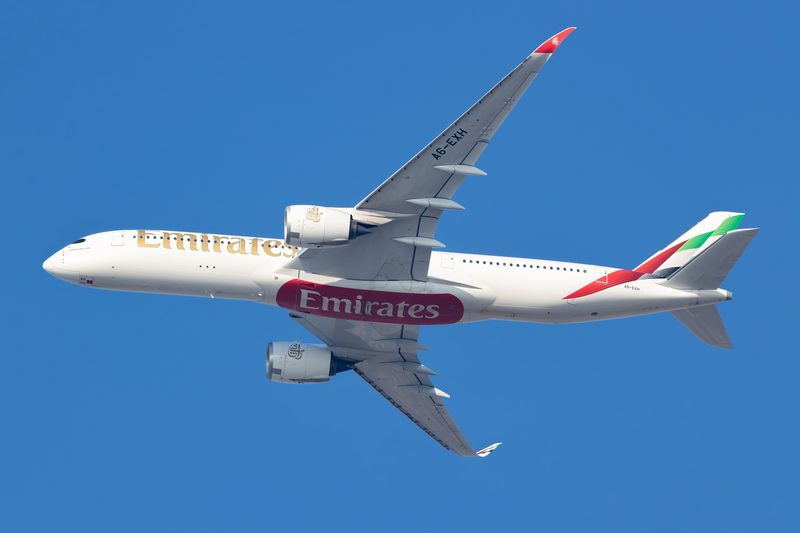
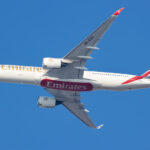
Emirates has added a third daily flight between Dubai International Airport (DXB) and Cape Town International Airport (CPT), giving South Africa its first regular Emirates Airbus A350 service and adding another layer of premium capacity into one of the carrier’s most important African markets.

The new flight, EK778, arrived at Cape Town (CPT) at 18:05 local time on July 1, marking both the launch of Emirates’ third daily Dubai-Cape Town frequency and the debut of the airline’s newest widebody type in South Africa. For Cape Town, this is not simply an extra arrival from Dubai. It is a meaningful expansion of long-haul connectivity at a time when international demand into the Western Cape continues to strengthen.
Emirates now offers 21 weekly flights between Dubai (DXB) and Cape Town (CPT). The new A350 rotation complements the airline’s existing Boeing 777 services on the route, giving travelers three daily departure windows in each direction and improving connection options over Dubai to Europe, India, Southeast Asia, Australasia, and the wider Middle East.
EK778 Adds A350 Capacity To A Proven Cape Town Market
The new DXB-CPT flight operates as EK778, departing Dubai (DXB) at 10:25 and arriving in Cape Town (CPT) at 18:05. The return flight, EK779, leaves Cape Town (CPT) at 20:00 and arrives back at Dubai (DXB) at 07:25 the following morning.
That schedule is useful on both ends. The morning departure from Dubai (DXB) allows Emirates to feed the flight with connecting passengers arriving from Asia, Europe, and the Indian subcontinent. The evening departure from Cape Town (CPT) gives South African travelers a full day before flying overnight to Dubai, where onward connections can continue the next morning.
For an airline built around banked long-haul connectivity, that timing matters. The added frequency is not just about putting more seats into Cape Town. It gives Emirates more network depth, more connection combinations, and more flexibility for passengers who previously had fewer options between Cape Town (CPT) and Dubai (DXB).
Why The Airbus A350 Matters For Cape Town
The aircraft choice is the most interesting part of the announcement. Emirates is using the Airbus A350 on the new Cape Town service, introducing the type to South Africa for the first time.
For Emirates, the A350 represents a significant fleet shift. The airline has long been defined by its all-widebody strategy built around the Boeing 777 and Airbus A380. The A350 gives Emirates a more efficient long-haul aircraft that is smaller than the A380, more modern than many older 777s, and well suited for markets where the carrier wants premium product consistency without necessarily deploying its largest aircraft.
The Airbus A350-900 is especially well matched to a route such as Dubai (DXB) to Cape Town (CPT). It has the range for the roughly nine-and-a-half-hour sector, the cargo capability Emirates needs for South African exports, and a cabin designed for long-haul comfort. Airbus highlights the A350’s quieter twin-aisle cabin, high ceilings, widebody comfort, advanced air systems, and modern lighting, all of which are relevant on an overnight or long daytime sector.
Emirates’ A350 brings three cabin classes to the Cape Town route: Business Class, Premium Economy, and Economy Class. The aircraft adds the airline’s latest-generation onboard product to a market that already supports strong premium and leisure demand.
Premium Economy Becomes More Important In South Africa
The A350 deployment also expands access to Emirates Premium Economy in South Africa. That is an important commercial detail.
Premium Economy first appeared in the South African market in September 2025 when Emirates introduced its retrofitted Boeing 777 product to Johannesburg (JNB) and Cape Town (CPT). The cabin has since become a useful middle ground for travelers who want more space and a better onboard experience than Economy, but who are not booking Business Class.
That segment matters on South Africa routes. Cape Town attracts high-yield leisure travelers, cruise passengers, safari and wine tourism traffic, and visiting-friends-and-relatives demand from Europe, North America, Australia, and Asia. Premium Economy gives Emirates a broader fare ladder and a more competitive product for passengers connecting over Dubai (DXB), especially against European and Gulf carriers offering similar intermediate cabins.
For Cape Town (CPT), the A350 also helps Emirates keep product quality consistent. The airline’s retrofitted Boeing 777s and A380s are central to that strategy, but the A350 is the clean-sheet aircraft in the fleet. Its arrival in South Africa signals that Cape Town is not being treated as a secondary long-haul market.
Cape Town Gains More Global Reach Through Dubai
The third daily Cape Town flight gives Emirates more than additional local South Africa-Dubai traffic. It strengthens Cape Town’s role as a long-haul destination that can be sold across the Emirates network.
Passengers can now connect over Dubai (DXB) to Cape Town (CPT) with more timing options from key inbound markets such as London, Mumbai, Singapore, Bangkok, Melbourne, Sydney, Perth, Frankfurt, and Paris. That is particularly valuable for the Western Cape, where tourism demand is international, seasonal, and often premium-heavy.
The move also aligns with Emirates’ broader tourism push in the region. Emirates and Wesgro, the tourism, trade, and investment promotion agency for Cape Town and the Western Cape, signed an agreement in April 2026 to help stimulate inbound tourism from markets including the Gulf, India, and the Far East. More lift into Cape Town (CPT) directly supports that effort.
From an airport development perspective, the added frequency improves Cape Town International Airport’s long-haul profile. CPT is already South Africa’s second-busiest airport and one of Africa’s most important international gateways. A third daily Emirates service gives the airport more seat capacity, more premium inventory, and more belly-hold cargo space without requiring a new airline entrant.
Johannesburg Also Gets A Bigger Emirates Schedule
Cape Town is not the only South African market receiving attention. Emirates also reinstated its fourth daily flight between Dubai (DXB) and O.R. Tambo International Airport (JNB) on July 1, restoring 28 weekly flights on the Johannesburg route.
That matters because Johannesburg (JNB) remains South Africa’s largest and busiest international gateway. It is the country’s primary business travel airport and an essential cargo market for Emirates SkyCargo. With four daily flights, Emirates can spread demand across multiple departure banks and offer better connections through Dubai (DXB) in both directions.
Emirates also says it is seasonally deploying a second Airbus A380 service into Johannesburg (JNB), including a fully retrofitted A380 with Premium Economy and refreshed interiors. That reinforces the scale difference between Johannesburg and Cape Town within the Emirates network. Cape Town gets the new-generation A350 and a third daily frequency; Johannesburg receives restored four-daily scale and additional A380 capacity.
Together, those moves show how Emirates is segmenting the South African market. Cape Town (CPT) is being strengthened as a premium leisure and tourism gateway, while Johannesburg (JNB) remains the high-volume business, connecting, and cargo anchor.
South Africa Returns To 56 Weekly Emirates Flights
With three daily flights to Cape Town (CPT), four daily flights to Johannesburg (JNB), and daily service to King Shaka International Airport (DUR), Emirates now offers 56 weekly flights between South Africa and Dubai (DXB).
That is a substantial schedule by any international standard. It gives Emirates a stronger position across South Africa’s three major international gateways and provides passengers with more one-stop options to markets that are not always easily served nonstop from South Africa.
The network is also important for cargo. Emirates SkyCargo can use belly capacity on the Boeing 777, Airbus A350, and Airbus A380 to move South African exports through Dubai. Emirates specifically highlighted fresh fruit and vegetables, chilled meat, dairy, seafood, and fresh-cut flowers as commodities moving from South Africa through its global network.
That cargo component should not be overlooked. Long-haul passenger flights into South Africa are not just passenger plays. Belly freight can materially improve route economics, particularly when aircraft are carrying high-value perishables and time-sensitive goods into a hub with global onward reach.
Bottom Line
Emirates’ third daily Dubai (DXB)-Cape Town (CPT) service is more than a schedule increase. It brings the airline’s Airbus A350 to South Africa for the first time, adds more Premium Economy availability, improves connection options through Dubai, and strengthens Cape Town’s position as a long-haul tourism and premium leisure market.
At the same time, the restoration of four daily Johannesburg (JNB) flights and the continued daily Durban (DUR) service bring Emirates back to 56 weekly South Africa-Dubai flights. That gives the airline a powerful three-city platform in South Africa, with Cape Town gaining the newest aircraft, Johannesburg receiving scale and A380 capacity, and Durban maintaining daily connectivity into the Emirates network.
For Cape Town, the arrival of EK778 is a strong signal. Emirates is not just adding seats. It is putting one of its newest aircraft into the market and betting that South Africa can support more premium, more flexible, and more globally connected air service.