China Eastern Commits To 25 Airbus A330-900neos For Shanghai Long-Haul Growth
China Eastern Airlines is placing a major bet on the Airbus A330neo as it prepares for the next phase of long-haul growth from Shanghai.

The Shanghai-based SkyTeam carrier has signed an agreement with Airbus to purchase 25 Airbus A330-900 aircraft, with deliveries scheduled between 2029 and 2033. The deal carries a catalogue value of approximately $9.35 billion, although China Eastern says the actual transaction price will be significantly lower after commercial discounts, as is standard for large aircraft orders.
For China Eastern, this is not simply a capacity purchase. It is a long-term fleet-planning move aimed at replacing older Airbus A330ceo aircraft, lowering unit operating costs, and strengthening the airline’s intercontinental network from Shanghai Pudong International Airport (PVG).
The order also gives Airbus another important widebody win in China, a market where long-haul demand is recovering, international networks are being rebuilt, and fleet decisions are increasingly tied to both operating economics and national aviation strategy.
China Eastern Orders The Larger A330neo Variant
The aircraft covered by the agreement are Airbus A330-900s, the larger member of the Airbus A330neo family. In airline and airport systems, the type is commonly identified by the ICAO designator A339.
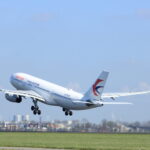
The A330-900 is the successor to the A330-300, but with new-generation engines, a redesigned wing, larger sharklets, improved aerodynamics, and the Airspace by Airbus cabin. It is powered exclusively by the Rolls-Royce Trent 7000, an engine developed specifically for the A330neo program.
Airbus lists the A330-900 with a range of up to 7,350 nautical miles and a typical three-class seating range of 287 to 303 passengers. Maximum certified seating is much higher, but for a full-service airline such as China Eastern, the aircraft will almost certainly be configured around a multi-cabin international product rather than high-density leisure seating.
That makes the A330-900 a useful middle-of-the-market widebody. It is smaller than a Boeing 777-300ER and generally less premium-focused than a flagship Airbus A350-900, but it offers enough range and belly-cargo capability for a wide spread of medium- and long-haul missions.
For China Eastern, that flexibility is the point.
Deliveries Will Run From 2029 To 2033
China Eastern’s delivery schedule is spread across five years, giving the airline time to phase the aircraft into the fleet gradually.
The current plan calls for four aircraft in 2029, five in 2030, six in 2031, seven in 2032, and three in 2033. The airline has also indicated that the exact timing and aircraft introduction plan could be adjusted depending on market conditions and future capacity planning.
That staggered schedule is important. China Eastern is not trying to absorb 25 widebodies in one sudden expansion wave. Instead, it is creating a long-term replacement and growth pipeline that aligns with aircraft retirements, route development, crew planning, financing, and airport-slot strategy at Shanghai Pudong (PVG).
The delivery window also overlaps with the expected retirement of at least 10 older A330ceo-family aircraft. That means the order is partly about growth, but also about renewal. China Eastern is not simply adding 25 incremental widebodies to the system; it is using the A330-900 to modernize a fleet segment that has been central to its international operation for years.
Why Shanghai Pudong Is Central To The Order
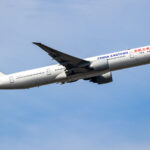
China Eastern says the new A330-900s will primarily support intercontinental growth from Shanghai Pudong International Airport (PVG).
That detail matters because China Eastern has two major Shanghai platforms: Shanghai Pudong (PVG) and Shanghai Hongqiao International Airport (SHA). Hongqiao (SHA) is heavily focused on domestic and regional flying, while Pudong (PVG) is the airline’s main international and long-haul gateway.
For China Eastern, Pudong (PVG) is the natural base for additional A330-900 flying. The airport has the runway infrastructure, international terminal capacity, customs facilities, widebody stands, and connecting flows needed to support long-haul growth. It is also the airport through which China Eastern can compete more effectively for traffic between China and Europe, the Middle East, Southeast Asia, Oceania, and other intercontinental markets.
The airline has also referenced a broader objective of building more structured long-haul flight banks at Shanghai Pudong (PVG). That is significant because true hub strength depends on more than simply adding routes. It requires arrival and departure waves that allow passengers to connect efficiently between domestic, regional, and long-haul services.
The A330-900 fits that strategy because it can support both new long-haul city pairs and higher frequencies on existing routes where a Boeing 777-300ER or Airbus A350-900 may be more aircraft than the market needs.
A Replacement For Older A330ceo Aircraft
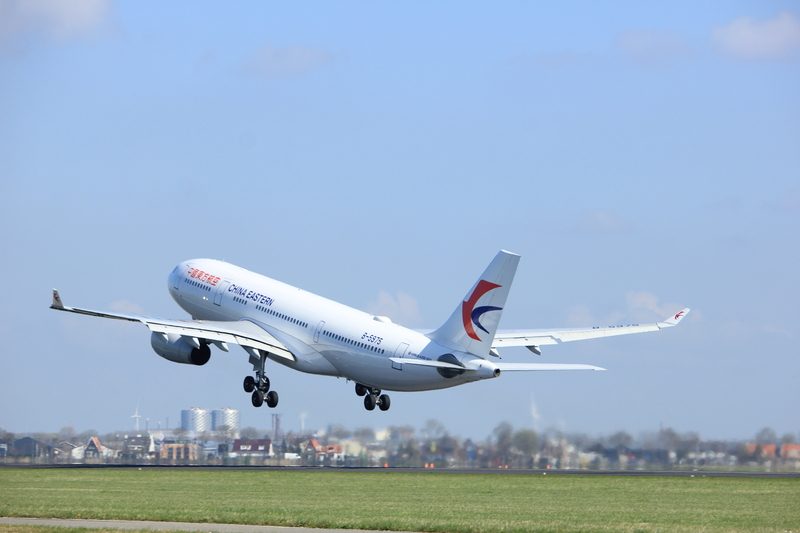
China Eastern has long been a major Airbus A330 operator. The older A330-200 and A330-300 aircraft, often referred to collectively as A330ceo aircraft, have served a wide range of domestic trunk, regional international, and long-haul routes for the airline.
Those aircraft remain capable, but by the 2029–2033 delivery period, some will be reaching the point where replacement economics become more compelling. Older widebodies tend to face rising maintenance costs, heavier fuel burn, lower cabin commonality with newer products, and greater pressure from emissions and sustainability targets.
The A330-900 gives China Eastern a relatively low-risk upgrade path. It keeps the airline within the Airbus A330 family while delivering a more efficient aircraft with improved range and a more modern passenger cabin. For crews, maintenance teams, planners, and ground operations, that continuity has value.
Fleet commonality is not just a technical phrase. It affects pilot training, simulator planning, spare-parts inventories, maintenance procedures, airport handling, cabin crew familiarization, and dispatch reliability. Airlines do not choose aircraft only on range and fuel burn. They choose fleet types based on how easily they can be integrated into a large operation.
For China Eastern, the A330-900 offers a way to modernize without completely changing the operating logic of a fleet segment it already knows well.
The A330-900 Is A Capacity Tool, Not A Flagship Aircraft
China Eastern already operates more premium long-haul aircraft, including the Airbus A350-900 and Boeing 777-300ER. Those aircraft are better suited to flagship missions, premium-heavy routes, and markets where either range, cabin product, or higher passenger volume justifies the larger aircraft.
The A330-900 fills a different role.
It is best understood as a flexible widebody for routes that need twin-aisle capacity but not necessarily the largest aircraft in the fleet. That could include established intercontinental routes where China Eastern wants more frequency, new long-haul markets where demand is still developing, and medium-haul international sectors where a narrowbody may be too small but a 777-300ER would be too much capacity.
That flexibility is especially valuable at Shanghai Pudong (PVG). A hub carrier trying to build connecting waves needs aircraft of different sizes. Not every route can support a 300-plus-seat aircraft every day. Some markets need the right gauge, not the biggest gauge.
The A330-900 gives China Eastern a widebody that can bridge the gap between its narrowbody Airbus A320neo-family fleet and its larger long-haul aircraft.
The $9.35 Billion Price Is A Catalogue Figure
The headline value of the order is approximately $9.35 billion, based on Airbus catalogue pricing. That number is useful for scale, but it should not be read as the actual amount China Eastern will pay.
Large aircraft orders are almost always negotiated at significant discounts to list prices. Final pricing can reflect aircraft quantity, delivery timing, escalation clauses, engine terms, support packages, maintenance arrangements, customer history, political context, and broader commercial relationships.
China Eastern has said the actual price is lower than the basic catalogue figure and that the aircraft will be funded through a mix of internal funds, bank loans, bond issuance, and other financing tools. Payments will be made in stages, which is typical for commercial aircraft acquisitions. Airlines generally make pre-delivery payments before each aircraft is handed over, with the remaining balance paid at delivery or financed through agreed structures.
That means the order is financially significant, but it is not a one-time $9.35 billion cash outflow.
Airbus Gains Another Widebody Win In China
For Airbus, the China Eastern order is strategically important.
The European manufacturer has a strong narrowbody position in China, supported by years of A320-family sales and local industrial cooperation. Widebody orders, however, are more complex. They are shaped by airline network strategy, international travel demand, financing, politics, and the competitive balance between Airbus and Boeing.
The A330neo has sometimes lived in the shadow of the Airbus A350, particularly among airlines that want maximum range and a more advanced clean-sheet platform. But the A330-900 still has a compelling role when airlines want lower capital cost, strong commonality with earlier A330s, proven widebody infrastructure compatibility, and efficient performance on medium- and long-haul sectors.
China Eastern’s order reinforces that role. The A330neo is not only a replacement aircraft. In the right network, it is a growth aircraft.
For Chinese carriers, the type is especially relevant because many long-haul markets are still being rebuilt after several years of disruption. Airlines need aircraft that can support growth without forcing every route into the economics of a larger, higher-cost widebody.
Part Of A Broader China Eastern Fleet Renewal
The A330-900 order follows China Eastern’s separate agreement earlier this year for 101 Airbus A320neo-family aircraft. Together, the two deals point to a broad fleet renewal program covering both narrowbody and widebody operations.
The A320neo-family aircraft will support domestic, regional, and high-frequency short- to medium-haul flying. The A330-900s will support the other side of the network: long-haul services, intercontinental growth, and additional widebody capacity from Shanghai Pudong (PVG).
That combination is important for hub building. Narrowbodies feed the hub. Widebodies carry long-haul traffic out of it. A carrier that wants to strengthen Shanghai Pudong (PVG) as an intercontinental transfer point needs both sides of the equation.
China Eastern’s challenge will be execution. Adding aircraft is easier than building profitable long-haul flying. The airline will need the right schedules, competitive cabin products, strong corporate and leisure demand, high aircraft utilization, and enough connecting traffic to support the expanded fleet.
Still, the A330-900 gives it a credible aircraft platform for that next stage.
Bottom Line
China Eastern’s order for 25 Airbus A330-900neos is a meaningful long-haul fleet decision, not just another widebody purchase.
The aircraft will arrive between 2029 and 2033, replacing part of the airline’s older A330ceo fleet while supporting more intercontinental flying from Shanghai Pudong (PVG). With its Trent 7000 engines, improved aerodynamics, long range, and A330-family commonality, the A330-900 gives China Eastern a practical aircraft for routes that need widebody capacity without the size or cost profile of larger long-haul jets.
For Airbus, the deal strengthens the A330neo’s position in China and adds another major customer commitment in one of the world’s most important aviation markets.
For China Eastern, the order is about preparing Shanghai Pudong (PVG) for the next decade of international growth. The airline is not only replacing aging aircraft. It is putting the pieces in place for a larger, more efficient, and more connected long-haul network.