ASL Airlines Belgium Opens New 747 Freighter Bridge Between Liège And Karaganda
ASL Airlines Belgium has launched a new direct freighter service between Belgium and Kazakhstan, adding another important Europe–Central Asia cargo link from one of the continent’s most active air freight gateways.

The new route connects Liège Airport (LGG) in Belgium with Sary-Arka International Airport (KGF) in Karaganda, Kazakhstan.
The service began on June 16, 2026, and is scheduled to operate five times per week using Boeing 747-400 freighter aircraft.
For ASL Airlines Belgium, the route adds another long-haul cargo lane from its Liège base. For Karaganda, it is a major step in the airport’s push to become a stronger logistics hub for Kazakhstan and Central Asia.
Five Weekly 747 Freighter Flights From LGG To KGF
The new Liège (LGG)–Karaganda (KGF) service is built around regular freighter capacity, not an occasional charter operation.
That is important.
A five-weekly cargo schedule gives forwarders, shippers and logistics companies a more dependable product. It also gives Karaganda a stronger position in air cargo flows between Europe and Kazakhstan.
Under the operation, aircraft carry freight from Europe to Karaganda. They can then load additional shipments at Sary-Arka Airport (KGF) for the return flight to Europe.
That two-way flow matters.

A freighter route is strongest when it can carry cargo in both directions. If the aircraft flies full in one direction but light on the return, the economics become weaker. The Karaganda model is designed to support both inbound and outbound cargo flows.
The Aircraft: Boeing 747-400F
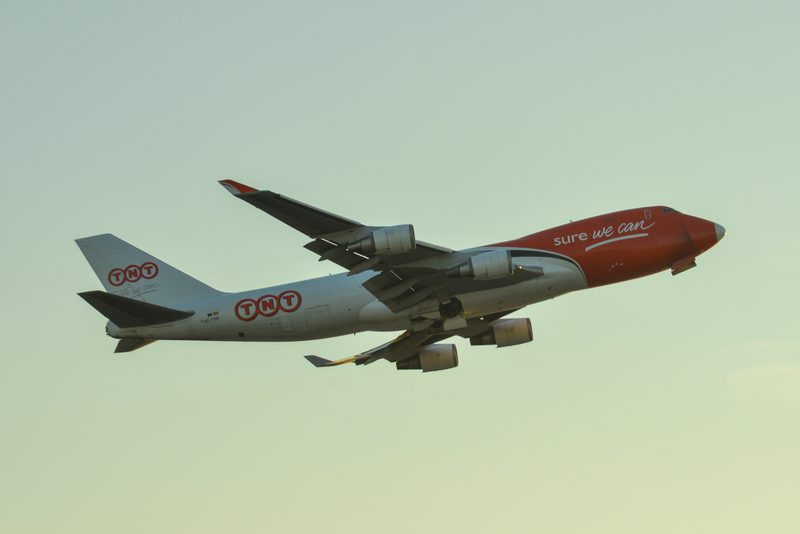
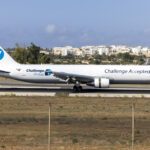
ASL Airlines Belgium is using the Boeing 747-400F on the route.
The 747 remains one of the most important aircraft in global cargo aviation. Even as passenger airlines have retired the type, freighter operators continue one of the most important aircraft in global cargo aviation. Even as passenger airlines to value it for its payload, range and loading flexibility.
ASL Aviation Holdings lists the Boeing 747-400 freighter with a cargo capacity of 117 tonnes and a range of 8,250 kilometers. That makes it well suited to a route such as Liège (LGG)–Karaganda (KGF).
The 747-400F also offers features that matter in heavy cargo operations.
It can carry large volumes of freight on the main deck and lower deck. It also has loading flexibility that is difficult to match with smaller converted freighters.
That is why the type remains useful for routes involving e-commerce, industrial cargo, oversized freight, high-volume shipments and long-haul airport-to-airport logistics.
Why The 747 Still Matters In Cargo
The Boeing 747 is no longer the future of passenger aviation. But in cargo, it still has a role.
The aircraft’s size is the advantage.
A 747-400F can move heavy and bulky shipments in one flight. It also allows operators to consolidate freight into fewer rotations, which can be valuable on long cargo lanes.
For a route such as LGG–KGF, that makes sense.
Liège is a major European cargo airport with strong forwarder and integrator activity. Karaganda is trying to build itself into a logistics platform with room to grow. A large freighter gives both sides the lift needed to make the route meaningful from the start.
Smaller aircraft could operate the route, but they would not offer the same volume or main-deck capability.
That is why a 747 freighter is a strong signal. This is not a symbolic launch. It is a serious cargo operation.
Liège Is One Of Europe’s Cargo Powerhouses
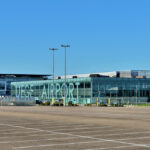
Liège Airport is a natural starting point for this route.
The airport is one of Europe’s leading cargo hubs and has built its identity around full-freighter operations. Liège says it is the first European airport specializing in air cargo and the fifth-largest cargo airport in Europe.
The airport handled about 1.325 million tonnes of cargo in 2025.
That scale gives ASL Airlines Belgium a strong operating base.
Liège (LGG) has the infrastructure, handlers, road links, warehousing and cargo community needed to support high-frequency freighter service. It is also located near major European logistics corridors, making it useful for cargo moving across Belgium, Germany, France, the Netherlands and beyond.
For shippers, LGG is not just an airport. It is a freight platform.
ASL Airlines Belgium’s Home Advantage
ASL Airlines Belgium is closely tied to Liège.
The carrier operates worldwide freight services from its home base at LGG, using Boeing 737 freighters and widebody Boeing 747-400ERF aircraft. ASL says its network includes major hubs in China and the United States.
That background matters because Liège–Karaganda is exactly the type of route ASL is built to operate.
The airline is not trying to fit cargo into the belly of passenger aircraft. It is operating dedicated freighters with cargo-specific schedules, loading procedures and customer requirements.
This gives shippers more flexibility.
Dedicated freighters can operate at night, carry larger shipments, use cargo-first airports and move freight without depending on passenger demand.
That is a major advantage in markets where reliability and timing are more important than passenger connectivity.
Karaganda Wants To Become A Logistics Hub
The route is also important for Karaganda.
Sary-Arka International Airport (KGF) serves Karaganda, one of Kazakhstan’s major industrial cities. The airport sits in central Kazakhstan and has room to grow as a cargo and logistics platform.
Karaganda’s cargo ambitions are not small.
Regional air cargo analysis describes Sary-Arka Airport as being developed into a multimodal hub with significant private investment. The goal is to increase cargo traffic from around 15,000 tonnes to 200,000 tonnes by 2030, create about 2,000 jobs and establish a free economic zone on airport territory.
That makes the ASL service more than a route announcement.
It supports a larger logistics strategy.
If Karaganda can attract regular freighter operators, build warehouse capacity and connect air cargo with road and rail networks, it can become a stronger cargo gateway for Kazakhstan.
Central Asia Is Becoming More Important For Cargo
Central Asia has become more important in global logistics.
The region sits between Europe and Asia. It is also gaining attention as companies diversify supply chains and look for alternative routings across Eurasia.
Kazakhstan is especially relevant because of its geography.
It connects China, Central Asia, Russia, the Caspian region and Europe through a mix of rail, road and air cargo corridors. Air freight will never replace rail or trucking for all goods, but it is valuable for time-sensitive shipments, high-value products and cargo that needs faster movement.
Karaganda (KGF) can play a role in that system.
A regular 747 route from Liège gives the airport a direct connection to one of Europe’s strongest air cargo platforms.
What Cargo Could Move On The Route
The route can support several cargo categories.
From Europe to Kazakhstan, potential traffic could include industrial equipment, machinery, pharmaceuticals, automotive parts, electronics, e-commerce shipments and high-value manufactured goods.
From Kazakhstan to Europe, the return flow may include regional exports, consolidated shipments and cargo gathered through Karaganda’s growing logistics network.
The airport’s ability to load freight for the return journey is important.
A cargo route becomes stronger when the destination is not only a receiving point, but also an origin point. Karaganda wants to be both.
That is the difference between being a stop on a cargo map and becoming a logistics hub.
Why Direct Service Matters
A direct Liège–Karaganda freighter service reduces complexity.
Without direct service, cargo may need to move through another hub, change aircraft, or travel by truck or rail for part of the journey. That can add time, handling risk and cost.
A direct 747 freighter reduces those steps.
It gives logistics companies a clearer lane between Europe and Kazakhstan. It also gives Karaganda a way to market itself as a direct cargo gateway, rather than only a secondary point behind larger regional hubs.
That can help attract forwarders and warehouse operators.
Cargo airports grow when routes, handlers, customs processes and logistics companies reinforce each other. The ASL service adds one of those key pieces.
A Route That Fits ASL’s Widebody Strategy
ASL Airlines Belgium is not only a short-haul cargo operator.
The airline’s widebody fleet gives it the ability to serve long-haul freight markets from Liège. ASL Aviation Holdings lists five Boeing 747-400 freighters across the group fleet, with widebody capacity also including Airbus A330 and A300 freighters.
That mix gives the group flexibility.
The 737 freighters can serve European and regional express markets. The 747s can handle long-haul, high-volume cargo. The A330 and A300 freighters fill medium-to-large cargo roles.
Liège–Karaganda belongs in the 747 category.
It needs range, payload and cargo-deck capacity. The 747-400F gives ASL the aircraft to make the operation viable at meaningful scale.
Karaganda Joins A Wider Cargo Pattern At LGG
Liège has been expanding as a cargo gateway for Asia and Eurasia.
The airport already handles significant e-commerce, express, perishables and general cargo flows. Its location and cargo-first operating model make it attractive for operators connecting Europe with Asia, the Middle East and Africa.
Adding Karaganda strengthens that eastbound network.
It also gives LGG another Central Asia link at a time when logistics companies are looking closely at alternative routing options.
For Liège Airport, the route reinforces the airport’s identity as a freighter-focused hub. For ASL Airlines Belgium, it adds a regular long-haul lane from its home base.
For Karaganda, it brings a high-profile European cargo operator into the airport’s growth plan.
A Boost For Kazakhstan–Europe Trade
The new service should support trade flows between Kazakhstan and Europe.
Kazakhstan has been working to strengthen its role as a logistics bridge across Eurasia. Air cargo is one part of that effort.
The ASL route gives exporters and importers another option.
It can support faster movement of goods, reduce reliance on indirect routing and help Karaganda build credibility with international freight customers.
That is especially useful for high-value cargo.
Air freight is expensive compared with ocean, road or rail. But it is valuable when speed, security or reliability matter more than cost alone.
The 747 freighter gives the route enough capacity to serve those needs at scale.
Bottom Line
ASL Airlines Belgium’s new Liège (LGG)–Karaganda (KGF) service is a meaningful addition to Europe–Central Asia cargo connectivity.
The route began on June 16, 2026, and is scheduled to operate five times weekly with Boeing 747-400 freighter aircraft.
For Liège, the service reinforces its position as one of Europe’s leading full-freighter airports. For Karaganda, it supports a larger ambition to turn Sary-Arka International Airport into a regional logistics hub.
The aircraft choice is also important.
A Boeing 747-400F brings serious payload, range and cargo-deck capability. That gives the route the scale needed to support industrial freight, e-commerce, high-value cargo and two-way trade flows.
This is not just another cargo frequency. It is a direct freighter bridge between one of Europe’s strongest air cargo airports and a Central Asian airport trying to become much more important.