Southwest Shrinks Atlanta Again As 26 Nonstop Routes Disappear From ATL
Southwest Airlines has sharply reduced its nonstop network from Hartsfield-Jackson Atlanta International Airport (ATL), cutting 26 routes from a market that once looked like one of the carrier’s biggest post-AirTran opportunities.

The cuts show how difficult Atlanta can be, even for a carrier with Southwest’s scale.
ATL remains the world’s busiest airport by passenger traffic. Airports Council International says Atlanta handled 106.3 million passengers in 2025, keeping its global No. 1 ranking.
Yet size does not always mean opportunity. Atlanta is also one of the toughest airports in the United States for a non-Delta carrier to build scale.
Delta Air Lines dominates ATL with one of the world’s largest airline hubs. Frontier Airlines has also grown in price-sensitive leisure markets. That leaves Southwest squeezed between a massive hub carrier and an aggressive low-fare competitor.
For Southwest, the answer has been clear: reduce weaker flying and move aircraft toward markets where returns look stronger.
Twenty-Six Nonstop Routes Have Been Removed
Schedule data cited in the original report shows that Southwest has removed 26 nonstop routes from Atlanta when comparing service operated between January 2022 and June 2026 with schedules available from July 2026 onward.
That is an important distinction.
Some city pairs may still be sold by Southwest as connecting itineraries. The cuts discussed here refer to nonstop ATL service.
The Florida reductions are the most visible. Southwest no longer lists nonstop Atlanta service in the analyzed schedule to Fort Lauderdale (FLL), Fort Myers (RSW), Jacksonville (JAX), Miami (MIA), Panama City (ECP), Pensacola (PNS), Sarasota (SRQ) or West Palm Beach (PBI).
That is a major retreat from short-haul leisure flying out of Atlanta.
The West Coast cuts are smaller in number but still notable. Los Angeles (LAX), Oakland (OAK) and San Diego (SAN) have also disappeared from Southwest’s nonstop ATL schedule.
Other removed nonstop markets include Cleveland (CLE), Louisville (SDF), Milwaukee (MKE), New York LaGuardia (LGA), Omaha (OMA), Philadelphia (PHL), Raleigh-Durham (RDU), Richmond (RIC) and Washington Reagan National (DCA).
The remaining cuts include Greenville-Spartanburg (GSP), Jackson (JAN), Little Rock (LIT), Memphis (MEM), Myrtle Beach (MYR) and Oklahoma City (OKC).
Together, those routes show a broad retrenchment. This is not one weak region. It is a network reset.
Florida Took The Biggest Hit
Florida stands out because it accounted for eight of the 26 route cuts.
That matters because Florida is usually one of the easiest regions for U.S. airlines to sell from Atlanta. The state has leisure demand, family traffic, cruise connections and strong seasonal flows.
However, it is also fiercely competitive.
Delta can flood the market from ATL. Ultra-low-cost carriers can stimulate demand with low fares. Other airlines can pull traffic over nearby hubs.
For Southwest, thin short-haul Florida routes from Atlanta may have become difficult to justify.
The airline’s model depends on high aircraft productivity and strong local demand. If fares fall too low or aircraft can earn more elsewhere, those Florida flights become vulnerable.
That appears to be what happened here.
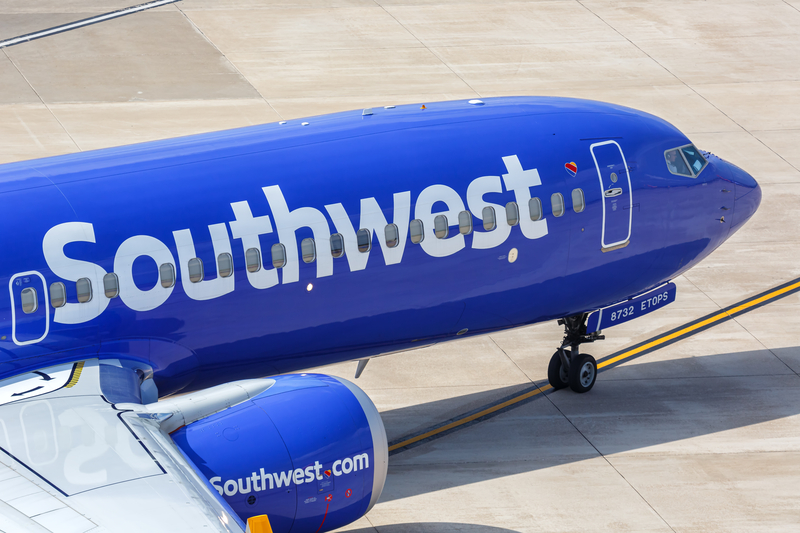
ID 154223263 | Southwest Airlines © Ajdibilio | Dreamstime.com
Atlanta Has Changed Since The AirTran Era
Southwest’s Atlanta story began with the acquisition of AirTran Airways, which closed in 2011.
That deal gave Southwest access to markets it did not previously serve, including Atlanta and Washington Reagan National. At the time, Atlanta looked like a major growth prize.
The logic was simple. AirTran had built a meaningful ATL operation. Southwest had the brand, balance sheet and low-fare reputation to make the airport more competitive.
For a while, the strategy looked serious.
Cirium schedule data cited in the original report shows Southwest reached 43,909 Atlanta departures in 2015. The carrier remained near that level for several years, with more than 40,000 annual ATL departures through 2019.
Then the pandemic reset the market.
Southwest’s Atlanta operation fell to 29,278 departures in 2020. It later recovered to 36,677 departures in 2023, but the rebound did not last.
The schedule fell again to 33,523 departures in 2024, then to 21,505 in 2025. In 2026, the figure drops further to 16,214 departures.
That is not a normal adjustment. It is a structural downsizing.
The 2024 Drawdown Was The Turning Point
The current cuts did not appear suddenly.
In September 2024, Reuters reported that Southwest planned to reduce Atlanta service the following year. The airline also planned to cut its Atlanta gates from 18 to 11.
Southwest said at the time that it was continuing to optimize its network to meet customer demand, use the fleet more effectively and maximize revenue opportunities.
That language is important.
It shows the Atlanta cuts were part of a bigger profitability push, not a one-off schedule cleanup.
Southwest was under pressure to improve financial performance, simplify operations and shift capacity toward better-performing markets. Atlanta became one of the places where the airline decided to pull back.
A Tough Market For Point-To-Point Flying
Atlanta is a difficult place for Southwest’s traditional point-to-point model.
ATL is not just a large local market. It is a fortress hub.
Delta’s hub gives it enormous schedule depth, corporate contracts, loyalty strength and connecting feed. That makes it hard for a smaller competitor to win premium or business-heavy traffic.
Southwest can compete well when it has scale. But in Atlanta, scale has been hard to maintain.
The airline also faces a basic network problem. Some routes work only when they are supported by enough connecting traffic. Others need strong local fares.
If neither is present, the route becomes exposed.
That is especially true for short-haul routes where Delta has high frequency and low-cost carriers can undercut fares.
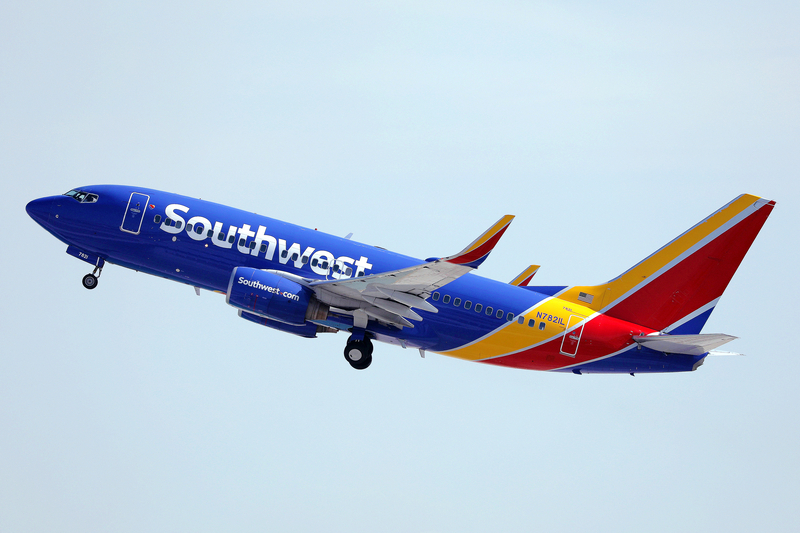
ID 175169964 | Southwest Airlines © jpg1902 | Dreamstime.com
Southwest Is Moving Capacity Elsewhere
Southwest has been reshaping its network around stronger stations and better aircraft utilization.
The airline’s broader transformation includes assigned seating, extra-legroom seating and new fare bundles. Those changes are part of a wider effort to improve revenue and attract more business travelers.
The network is changing as well.
Southwest has been shifting capacity toward stronger growth markets such as Nashville (BNA), Austin (AUS) and San Diego (SAN). Reuters reported in May 2026 that the airline was moving capacity to more profitable markets while scaling back in less successful ones.
Atlanta fits that second category.
It remains an important airport, but Southwest no longer appears willing to support a large ATL operation unless the returns justify it.
The Boeing 737 Fleet Adds Another Layer
Southwest’s fleet strategy also matters.
The airline still operates an all-Boeing 737 fleet, including the 737-700, 737-800 and 737 MAX 8.
That single-type fleet is central to Southwest’s operating model. It simplifies pilot training, maintenance, scheduling and spare parts.
However, it also limits flexibility.
Southwest cannot easily swap in a smaller regional jet on thin routes. If a market cannot support a 137-seat 737-700 or a 175-seat 737-800 or MAX 8 at the right fares, the airline has fewer aircraft-size options.
This is one reason Atlanta route cuts make sense.
A route that might work with a 76-seat regional jet for Delta may not work with a Southwest 737. Southwest needs enough demand and enough yield to support mainline narrowbody economics.
That becomes harder in short-haul markets where competition is intense.
ATL Is Still Not A Small Southwest Station
Even after the cuts, Southwest has not disappeared from Atlanta.
Cirium schedule data cited in the original report shows Southwest still ranks third at ATL this month by scheduled one-way departures, behind Delta and Frontier. Southwest has 1,313 scheduled departures, offering more than 210,000 seats.
That is still a meaningful presence.
The difference is that the airline’s ATL network is now much more concentrated.
Southwest’s strongest Atlanta route this month is Chicago Midway (MDW), with 135 scheduled departures. Baltimore/Washington (BWI) follows closely with 132 departures.
Dallas Love Field (DAL) and Houston Hobby (HOU) are also important, with 116 departures each.
Those routes make sense. They connect Atlanta with some of Southwest’s most important bases and focus cities.
In other words, Southwest is not abandoning ATL. It is turning Atlanta into a smaller, more focused spoke in its system.
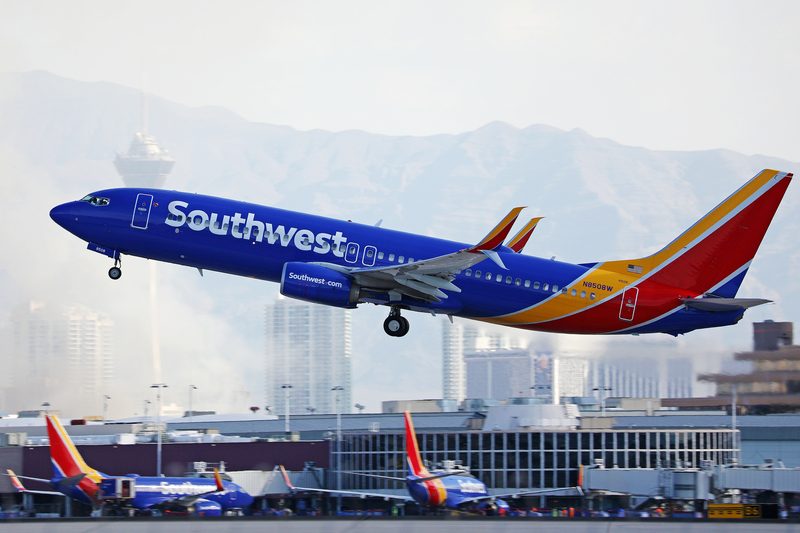
ID 156540949 © jpg1902 | Dreamstime.com
Cancun Is The Exception, Not The Rule
Southwest’s only international route from Atlanta in the analyzed schedule is Cancun (CUN).
That service is limited, with only four flights in the month cited in the original data. That is roughly weekly flying.
The small Cancun schedule shows how cautious Southwest has become at ATL.
International leisure routes can work well for the airline in stronger focus cities. But from Atlanta, Southwest appears to be limiting its exposure.
That makes sense given the local competitive environment.
Delta has deep international reach from ATL. Other carriers and tour operators can also compete for leisure traffic. Southwest may see better uses for aircraft elsewhere.
What The Cuts Mean For Atlanta Travelers
For passengers, the impact is straightforward.
Travelers who previously used Southwest nonstop from Atlanta to smaller or medium-size markets will have fewer direct choices. Some itineraries may still be possible with a connection, but the nonstop convenience is gone.
That matters most for travelers who preferred Southwest for its fare structure, Rapid Rewards loyalty program, no-change-fee policy and historically simple onboard product.
The cuts also reduce competition in some markets.
When Southwest exits a nonstop route, fares do not always rise immediately. But competition usually becomes less intense, especially if Delta remains the dominant carrier.
For price-sensitive travelers, that can matter.
What It Means For Southwest
For Southwest, the cuts are part of a larger reset.
The airline is no longer chasing growth in every large market. It is becoming more disciplined about where it flies, how often it flies and which stations deserve aircraft.
That is a major cultural shift.
Southwest built its reputation on broad domestic access, high frequency and point-to-point flying. But the post-pandemic market has changed. Costs are higher. Aircraft deliveries are constrained. Business travel patterns are different. Investors are demanding better returns.
In that environment, a big airport is not enough.
Atlanta has traffic, but Southwest needs profitable traffic. The 26 route cuts show that the airline has decided many ATL markets no longer meet that test.
Bottom Line
Southwest Airlines’ Atlanta cuts are one of the clearest signs of the carrier’s network reset.
Schedule data shows 26 nonstop routes have disappeared from ATL when comparing service operated since 2022 with schedules available from July 2026 onward. Florida took the largest hit, while West Coast, Northeast, Midwest and smaller Southeastern markets were also removed.
This does not mean Southwest is leaving Atlanta.
The airline still has a meaningful ATL presence and remains one of the airport’s larger carriers. But the operation is now smaller, more selective and more focused on connections to Southwest’s strongest cities.
For Atlanta, the cuts reinforce a familiar reality. ATL may be the world’s busiest airport, but it is also a very hard place for non-Delta carriers to build lasting scale.
For Southwest, the message is even clearer.
The airline is putting profitability ahead of footprint. If a route cannot earn its place in the network, even at the world’s busiest airport, it is no longer safe.