IndiGo’s A321XLR Push Reaches Bali With New Nonstop Delhi And Mumbai Flights
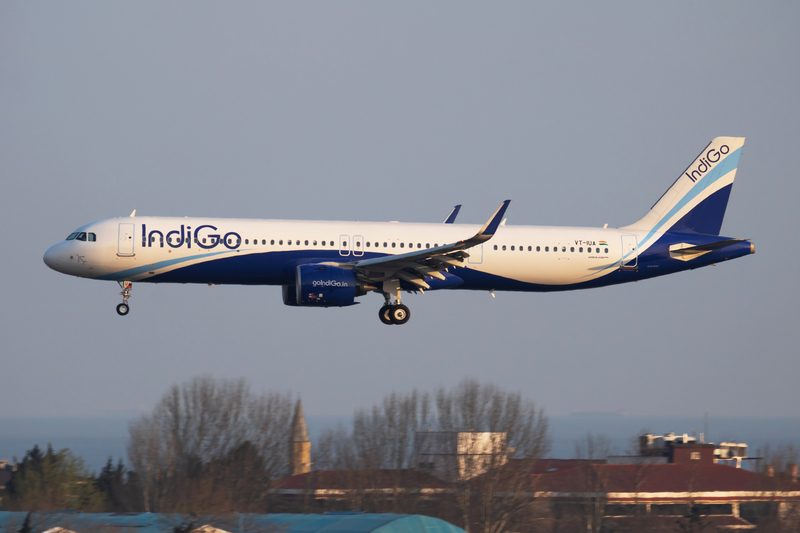
IndiGo is preparing to upgrade its Bali operation with nonstop Airbus A321XLR flights from Delhi and Mumbai, giving India’s largest airline another important test case for long-range narrowbody flying.

The airline has filed nonstop service from Indira Gandhi International Airport (DEL) in Delhi and Chhatrapati Shivaji Maharaj International Airport (BOM) in Mumbai to I Gusti Ngurah Rai International Airport (DPS) in Denpasar, Bali.
The change is significant because both routes currently rely on one-stop narrowbody operations. Delhi–Denpasar operates via Bhubaneswar (BBI), while Mumbai–Denpasar operates via Chennai (MAA).
With the Airbus A321XLR, IndiGo can remove those intermediate stops and turn both markets into true nonstop services.
That is exactly the type of mission the A321XLR was designed to unlock.

Daily Nonstop Delhi–Bali Flights Begin In October
The first change will come from Delhi (DEL).
IndiGo has filed daily Airbus A321XLR service between Delhi (DEL) and Denpasar (DPS) from October 25, 2026.
The outbound flight, 6E1611, is scheduled to depart Delhi (DEL) at 2:45 a.m. and arrive in Bali (DPS) at 1:00 p.m. local time.
The return flight, 6E1612, will leave Denpasar (DPS) at 2:00 p.m. and arrive back in Delhi (DEL) at 7:25 p.m.
The return sector is the longer of the two. It has a scheduled block time of 7 hours and 55 minutes.
That makes the route one of IndiGo’s longest narrowbody missions. It also gives the airline a nonstop product on a leisure market that has become increasingly popular with Indian travelers.
Mumbai–Bali Follows In January
Mumbai (BOM) will follow shortly after.
IndiGo has filed daily Airbus A321XLR flights between Mumbai (BOM) and Denpasar (DPS) from January 1, 2027.
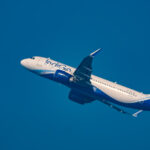
Flight 6E1607 is scheduled to depart Mumbai (BOM) at 12:30 a.m. and arrive in Bali (DPS) at 10:35 a.m.
The return flight, 6E1608, will leave Denpasar (DPS) at 11:35 a.m. and arrive in Mumbai (BOM) at 4:30 p.m.
This route will replace the current A320neo operation via Chennai (MAA). That should improve the passenger proposition immediately.
A nonstop flight removes the technical stop, cuts complexity and makes the schedule easier to understand. It also gives IndiGo a stronger product against one-stop competition through Southeast Asian hubs.
Why Bali Fits The A321XLR
Bali is a strong example of why the Airbus A321XLR matters.
The market has real demand. However, it does not necessarily need a widebody every day from multiple Indian cities.
That is where the XLR fits.
Airbus describes the A321XLR as a long-range route opener. The aircraft can fly up to 4,700 nautical miles, or 8,700 kilometers. It can also operate sectors of up to around 11 hours, depending on configuration and conditions.
For airlines, that changes the network equation.
A route that may be too thin for an Airbus A330, Boeing 787 or Airbus A350 can still work with a smaller single-aisle aircraft. The airline gets nonstop range without taking on widebody-level seat risk.
That matters for a leisure-heavy market like Bali.
Demand is strong, but it can be seasonal and price-sensitive. A lower-capacity aircraft gives IndiGo more flexibility.
The Aircraft Has A New Cabin For IndiGo
IndiGo’s A321XLR is also different from the airline’s traditional high-density narrowbody product.
The aircraft is configured with 195 seats. That includes 12 IndiGoStretch premium seats and 183 economy seats.
The premium seats are in a 2-2 layout with 44 inches of pitch and six inches of recline. Economy seats offer 31 inches of pitch and five inches of recline.
That is a major shift for an airline historically known for dense, short-haul, all-economy flying.
The A321XLR also brings in-seat power, device holders and digital inflight entertainment streamed to passengers’ own devices.
This is important on an eight-hour narrowbody flight.
Passengers may accept a basic product on a two-hour domestic sector. They expect more on a long international service. IndiGo appears to understand that difference.
A More Comfortable Narrowbody Product
IndiGo’s decision to put 195 seats on the A321XLR is notable.
Many A321neo aircraft can carry far more passengers. Airbus lists the A321XLR with a maximum seating capacity of up to 244 seats. IndiGo’s own standard A321neo aircraft also operate in higher-density layouts.
For the XLR, IndiGo has chosen a lower seat count.
That helps in two ways.
First, it improves passenger comfort. Second, it supports the aircraft’s long-range performance by limiting weight.
This balance matters on routes such as Delhi (DEL)–Denpasar (DPS) and Mumbai (BOM)–Denpasar (DPS). Both are long enough for comfort to affect customer satisfaction.
They are also long enough for payload, fuel and performance planning to matter.
The XLR is a capable aircraft, but it is still a single-aisle jet. Airlines have to manage range carefully, especially with weather, winds and airport conditions.
Replacing Technical Stops Changes The Product
The most immediate passenger benefit is the removal of stops.
Delhi–Bali via Bhubaneswar (BBI) and Mumbai–Bali via Chennai (MAA) allowed IndiGo to serve the market with available A320neo aircraft. However, the one-stop structure added time and complexity.
Passengers had to sit through an intermediate stop. The airline also had to manage extra ground handling, crew planning and schedule risk.
A nonstop service is cleaner.
It reduces journey time. It improves the customer experience. It also gives IndiGo a more marketable product.
For a destination like Bali, this matters. Leisure travelers often compare total trip time, price and convenience. Removing a stop makes IndiGo much more competitive.
Bali Is More Than A Leisure Experiment
Bali is an obvious leisure market, but it is not a simple one.
India–Bali demand has grown as Indian outbound travel has expanded. Bali is popular for weddings, honeymoons, family holidays, group travel and premium leisure.
IndiGo already serves Bali through its wider Indonesia network. The airline launched direct Bengaluru–Denpasar service in 2024 and added Mumbai–Denpasar in 2025.
The new A321XLR filings build on that foundation.
Instead of treating Bali as a limited experiment, IndiGo is turning the island into a more serious part of its long-haul narrowbody plan.
That is a useful signal.
IndiGo is not only using the XLR for Europe. It is also using it to improve medium-long-haul leisure flying in Asia.
Europe Shows The Harder Side Of XLR Flying
The Bali routes look relatively straightforward compared with some of IndiGo’s European and West Asia missions.
IndiGo’s first A321XLR routes were announced for Athens. The airline began with Mumbai (BOM)–Athens International Airport (ATH) and Delhi (DEL)–Athens (ATH), each operating three times weekly.
The airline later moved the A321XLR onto Delhi (DEL)–Istanbul Airport (IST) and filed Mumbai (BOM)–Istanbul (IST) as another nonstop XLR route.
Those missions are strategically important. However, they are more exposed to airspace disruption.
Indian carriers have faced major challenges from Pakistan airspace restrictions and instability across parts of West Asia. Reuters reported earlier this year that those disruptions increased flight times and forced airlines to adjust long-haul operations.
That is a key point for the XLR.
Range on paper is one thing. Real-world routing is another. If aircraft must avoid certain airspace, flight times and fuel burn can increase quickly.
Bali is different.
The India–Denpasar routings are more naturally aligned with Southeast Asian airspace. That makes the operation easier to plan than many India–Europe sectors.
IndiGo Is Testing A New International Model
IndiGo has built its scale on high-frequency domestic and short-haul international flying.
That remains the core business. The airline says it operates more than 2,200 daily flights and connects 141 destinations, including 45 international destinations.
However, the A321XLR gives IndiGo a new tool.
It can now test markets that sit between short-haul narrowbody flying and full widebody service. That includes parts of Europe, West Asia, East Asia and Southeast Asia.
This is a lower-risk way to grow internationally.
Instead of committing a 300-seat widebody to a new route, IndiGo can use a 195-seat A321XLR. If demand grows, it can add frequency or later upgauge. If demand underperforms, the airline has not taken on the same level of capacity risk.
That flexibility is the core value of the XLR.
The XLR Supports IndiGo’s Global Ambition
IndiGo has ordered 40 A321XLR aircraft. Nine were expected for delivery during 2026.
That is a meaningful commitment.
The aircraft is not a small subfleet for occasional experiments. It is becoming part of IndiGo’s wider international strategy.
The airline has also been moving beyond its old identity as a purely domestic low-cost carrier. It has added premium seating, expanded codeshares and used widebody aircraft on longer routes through leased capacity.
The A321XLR now gives IndiGo something more durable: its own long-range narrowbody platform.
That could help the airline move toward its goal of a much larger international network.
If routes such as Athens, Istanbul and Bali work, IndiGo can build a repeatable model. It can connect Indian metros to high-demand destinations that are too long for standard A320neo aircraft but too thin for widebodies.
A Strategic Move For Delhi And Mumbai
The new Bali flights also strengthen Delhi (DEL) and Mumbai (BOM).
Delhi remains one of IndiGo’s most important hubs. It gives the airline access to North India, strong outbound leisure traffic and a large connecting base.
Mumbai is equally important. It is India’s financial capital and one of the country’s strongest outbound travel markets.
Both cities can support Bali demand.
The difference now is that IndiGo can offer a nonstop flight from each. That improves its competitive position against carriers routing passengers through Singapore, Kuala Lumpur, Bangkok, Jakarta or other Southeast Asian hubs.
For many travelers, nonstop service changes the decision.
A slightly higher fare can become more attractive if the itinerary is shorter and simpler.
What To Watch Next
The big question is how IndiGo deploys the rest of its A321XLR fleet.
Bali is a logical destination. Athens and Istanbul are also logical. The next wave could include other European, East Asian or deep Southeast Asian markets.
The airline will likely study each route carefully.
Some markets will be limited by range. Others will be limited by airspace, airport slots, payload or yields. Some will work only seasonally.
That is why the Bali routes are useful.
They give IndiGo long stage lengths, strong leisure demand and relatively clean routing. They also let the airline prove the XLR product on routes where customer comfort matters but widebody economics may be too heavy.
If the aircraft performs well, IndiGo will have more confidence to push the network further.
Bottom Line
IndiGo’s planned Airbus A321XLR flights to Bali mark another important step in the airline’s international evolution.
Daily Delhi (DEL)–Denpasar (DPS) service is scheduled from October 25, 2026. Daily Mumbai (BOM)–Denpasar (DPS) service is scheduled from January 1, 2027.
Both routes replace current one-stop A320neo operations with nonstop A321XLR flights.
That changes the passenger experience immediately. It also shows how IndiGo plans to use the XLR: not only for Europe, but also for high-demand leisure markets across Asia.
For IndiGo, the A321XLR is more than a new aircraft type. It is a bridge between the airline’s short-haul past and a much larger international future.