Frontier Flight Returns To Gate At Orlando After Cabin Odor Sends Three Passengers To Hospital
A Frontier Airlines flight preparing to depart Orlando International Airport (MCO) returned to the gate Saturday afternoon after crew members reported an odor in the cabin, prompting a medical response and an inspection of the aircraft before takeoff.

Airport officials said seven passengers were evaluated after the aircraft returned to the gate at MCO, with three transported to a local hospital for treatment. The aircraft had not departed Orlando when the decision was made to return, making this a ground-return event rather than an airborne diversion.
The cause of the odor had not been publicly identified as of the latest local reporting. Frontier had also not publicly released the flight number, destination, aircraft registration, or final maintenance findings.
Even with those details still missing, the crew’s decision to stop the departure was the conservative and appropriate call. Cabin odors can range from benign sources to maintenance-related events requiring deeper inspection. Once passengers begin feeling unwell, the safest course is to bring the aircraft back to the gate, get medical support to the airplane, and keep the aircraft out of service until the source is understood.
A Return To Gate Before Takeoff At MCO
The incident occurred Saturday afternoon at Orlando International Airport (MCO), one of Frontier’s most important leisure gateways and a large base of operations for the ultra-low-cost carrier.
According to airport officials, the crew reported an odor onboard while the aircraft was still on the ground. The captain returned the aircraft to the gate before takeoff, where first responders met the flight.
That sequence matters. This was not a flight that became airborne and then diverted. The aircraft was still at MCO, or in the departure process at MCO, when the crew elected to stop the operation. That likely reduced the complexity of the response. Instead of dealing with an airborne emergency, the crew was able to bring the aircraft back to the terminal, allow medical personnel to evaluate passengers, and let maintenance teams inspect the aircraft on the ground.
Seven passengers were evaluated, and three were transported to a local hospital. Local reporting did not identify the nature or severity of their symptoms, and no cause for the odor had been publicly confirmed.
Frontier Has Not Identified The Aircraft
The exact aircraft involved has not been publicly confirmed.
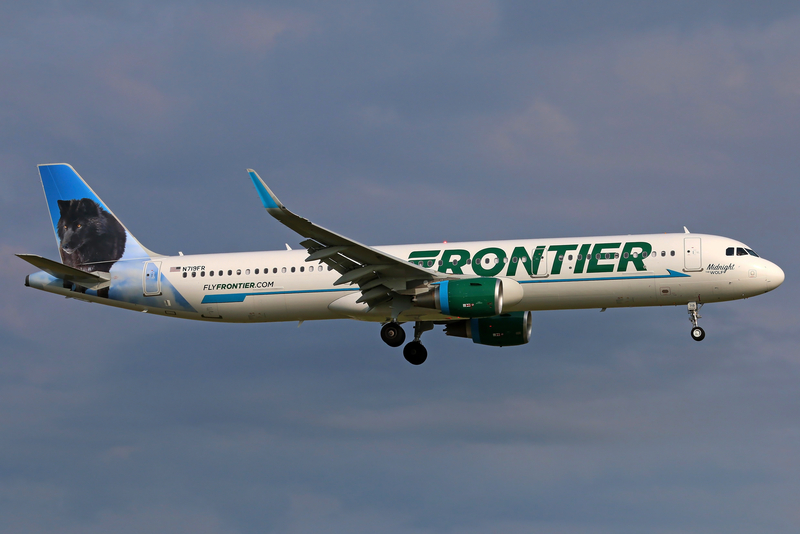
Frontier operates an all-Airbus fleet consisting of Airbus A320-family and A321-family aircraft. That means the flight was almost certainly operated by an Airbus narrowbody, but without a flight number or tail number, the precise aircraft variant cannot be stated with confidence.
Frontier’s fleet includes Airbus A320, A320neo, A321, and A321neo aircraft. These aircraft are the backbone of the airline’s ultra-low-cost model, offering high-density seating, low unit costs, and operational commonality across the network. The A320-family platform is also common across the global airline industry, with thousands of aircraft in service.
For an event like this, the specific aircraft matters because maintenance teams will need to inspect the environmental control system, air conditioning packs, recirculation system, auxiliary power unit, engines, cabin equipment, and any other possible source of odor. Different aircraft variants and engine types can have different inspection paths, but the first priority is the same: identify whether the odor came from the aircraft systems, cabin equipment, ground equipment, external fumes, or another source entirely.
Until Frontier identifies the aircraft and findings, it is better not to overstate the technical cause.
Why Cabin Odors Are Taken Seriously
Airline crews are trained to treat unusual odors seriously because they can indicate several different issues.
Some odors are relatively minor. They can come from galley equipment, cleaning products, catering items, lavatories, overheated electronics, external exhaust ingested during ground operations, or odors from nearby aircraft and ground vehicles. On the ground, aircraft ventilation systems can sometimes draw in fumes from ramp activity, especially around busy airports.
Other odors require a more cautious response. A smell associated with oil, hydraulic fluid, electrical components, smoke, or hot equipment may indicate a maintenance issue that needs immediate attention. In those cases, the aircraft should not depart until mechanics inspect the relevant systems and determine that the aircraft is safe to operate.
That is why the captain’s decision at Orlando (MCO) was important. Once the crew reported an odor and passengers required medical evaluation, continuing toward takeoff would not have been appropriate. Returning to the gate allowed the airline, airport responders, and maintenance personnel to manage the event in a controlled environment.
Is This A Fume Event?
It is too early to call this a confirmed fume event.
The term “fume event” is often used in aviation when smoke, vapor, odor, or potentially contaminated air enters the cabin or flight deck. These events are frequently associated with concerns about engine oil, hydraulic fluid, deicing fluid, electrical smells, or other contaminants entering the aircraft’s air supply.
However, the FAA does not use a single formal definition for “fume event,” and the cause of the Frontier odor at MCO has not been confirmed. The proper wording is that the aircraft experienced a reported cabin odor, with passengers evaluated and three transported for medical treatment.
That distinction matters for accuracy. Not every odor on an aircraft is caused by bleed-air contamination. Some are traced to non-aircraft sources, such as ground exhaust, cleaning chemicals, catering, lavatory issues, electrical equipment, or other cabin sources. Others can involve aircraft systems and require detailed maintenance follow-up.
The facts currently known do not support naming a cause.
How Cabin Air Can Become Contaminated
Most commercial aircraft, including Airbus A320-family aircraft, use conditioned air supplied through the aircraft’s environmental control system. In many large transport aircraft, outside air is compressed and heated by the engines or auxiliary power unit before being cooled, mixed with filtered recirculated air, and delivered to the cabin and flight deck.
Under normal conditions, this system provides clean, breathable air. But in rare cases, mechanical issues can allow unwanted fumes or odors into the cabin. Possible sources can include oil seal issues, hydraulic fluid, recirculation fan problems, electrical components, or external fumes entering the air system on the ground.
The Association of Flight Attendants has long warned that oil and hydraulic fluid fumes can have distinctive odors and may cause symptoms such as headache, dizziness, nausea, irritation, or slowed reaction. The FAA has also acknowledged that rare mechanical issues can allow fumes to enter the cabin and that airlines must report events involving smoke, vapor, or noxious odors.
That does not mean this Frontier incident was caused by oil or hydraulic fluid. It means the crew’s decision to return to the gate was consistent with how airlines are expected to respond when an unexplained odor is reported and passengers feel unwell.
Passenger Symptoms Change The Risk Assessment
A cabin odor by itself is a maintenance concern. A cabin odor with passengers reporting symptoms becomes a safety and medical concern.
That difference is significant.
If a crew smells something unusual but no one is ill, the aircraft may still return to the gate or undergo inspection depending on the odor, timing, and crew judgment. If multiple passengers require evaluation and some are transported to a hospital, the event becomes more serious. Medical responders need access to the passengers, and maintenance teams need to inspect the aircraft before any further operation.
At Orlando (MCO), seven passengers were evaluated and three were taken to a hospital. That number is enough to justify a cautious operational response, even if the eventual source turns out to be minor.
For passengers, this kind of event can be unsettling because the source is not immediately visible. There may be no smoke, no fire, and no obvious mechanical warning from the cabin perspective. But odors can still produce symptoms, and the absence of visible smoke does not automatically mean the event is harmless.
MCO Is A Major Frontier Station
The incident also happened at an airport where Frontier has a large presence.
Orlando International Airport (MCO) is one of the most important leisure airports in the United States and a major station for ultra-low-cost carriers. Frontier operates numerous routes from MCO, serving domestic, Caribbean, and Latin America markets with its Airbus fleet.
That scale matters operationally. A return-to-gate event at MCO can affect more than one flight. If the aircraft is removed from service for inspection, Frontier may need to find another aircraft, reposition crews, reaccommodate passengers, or delay downstream flights. On a low-cost carrier network, where aircraft utilization is a central part of the business model, even one aircraft going out of service can create knock-on effects.
The airline has not publicly released the flight’s destination or whether passengers continued on another aircraft. But in events involving unexplained odors, it is common for airlines to remove the aircraft from service until inspections are completed.
Similar Frontier Odor Incident Occurred In 2025
This was not the first recent odor-related event involving Frontier at Orlando (MCO).
In June 2025, Frontier Flight F91824 departed Orlando (MCO) for San Juan (SJU) but returned to MCO after flight attendants reported an unusual odor onboard. The aircraft landed safely, no passengers requested medical attention, and four flight attendants later sought medical treatment. Frontier arranged a replacement aircraft and crew to continue the trip to Puerto Rico.
That earlier event differs from the May 2026 incident in an important way. The 2025 flight had already departed and returned to Orlando while airborne. The May 2026 flight returned to the gate before takeoff.
Still, the two events show why airlines must take cabin air reports seriously. Whether the source is ultimately mechanical, environmental, or something else, unexplained odors can disrupt operations and create medical concerns for crew or passengers.
Why Maintenance Findings Matter
The most important unanswered question is what maintenance teams found after the aircraft returned to the gate.
For an odor report, mechanics may inspect the cabin, galleys, lavatories, ventilation system, air conditioning packs, filters, recirculation fans, avionics areas, engines, auxiliary power unit, and any recently serviced components. They may also review whether the odor appeared during engine start, taxi, APU operation, air conditioning pack changes, or other specific phases of ground operation.
Timing can help narrow the cause. An odor during engine start may point investigators in one direction. An odor while connected to ground air or while parked near other aircraft may point in another. An electrical smell, hydraulic odor, fuel smell, or musty odor all require different follow-up.
The fact that passengers were taken to the hospital increases the likelihood that the event will receive formal internal review and may require reporting depending on the findings. But without Frontier’s maintenance results, the exact cause remains unknown.
A Measured Response Is Better Than Speculation
There is a temptation to immediately label any cabin odor event as contaminated bleed air. That is not responsible without evidence.
Cabin odor events can come from many sources. Some are serious and system-related. Some are external. Some are traced to non-flight-critical cabin equipment. Some never produce a publicly disclosed cause. The aviation industry’s challenge is that passengers and crew experience symptoms in real time, while technical confirmation may require a lengthy inspection after the fact.
That is why a professional response should focus on what is known.
A Frontier aircraft at Orlando (MCO) returned to the gate before departure after the crew reported an odor. Seven passengers were evaluated. Three were transported to a hospital. The cause had not been identified publicly. The aircraft type and flight number had not been released. Frontier’s fleet consists of Airbus A320 and A321 aircraft.
Those facts are enough to show the seriousness of the event without overstating the cause.
Bottom Line
A Frontier Airlines flight departing Orlando International Airport (MCO) returned to the gate Saturday afternoon after crew members reported an odor onboard before takeoff.
Airport officials said seven passengers were evaluated and three were taken to a local hospital. The aircraft’s destination, registration, exact type, and the source of the odor had not been publicly disclosed.
The key point is that this was a ground return, not an airborne diversion. The crew stopped the departure before takeoff, returned the aircraft to the gate, and allowed first responders and maintenance personnel to handle the situation on the ground.
Frontier operates an all-Airbus A320/A321-family fleet, but the specific aircraft involved has not been identified. Until the airline or regulators release maintenance findings, the cause should remain described as an unexplained cabin odor rather than a confirmed fume event.
For passengers, the event was disruptive and serious enough to require medical transport. For the airline, it is exactly the kind of incident that demands careful inspection before the aircraft returns to service.