Venezuela Threatens Airlines Over Suspended Flights After US Safety Warning
Venezuela Retaliates Against Airlines Over Flight Suspensions
Tensions between the United States and Venezuela are spilling into the aviation world, leaving airlines caught in the middle. After several foreign carriers temporarily suspended flights to Venezuela in response to a US safety warning, the Venezuelan government has accused them of supporting “state terrorism” and is now threatening to revoke their operating rights.
Officials in Caracas insist that their airspace is safe and argue that the US has no jurisdiction over Venezuelan skies. Airlines, however, are weighing the political pressure against their obligation to protect passengers and crew.
FAA Warns Of “Potentially Hazardous” Situation
The situation escalated after the US Federal Aviation Administration (FAA) issued a NOTAM (Notice to Air Missions) advising extreme caution when operating in Venezuelan airspace. The alert warns of a “worsening security situation” and “heightened military activity in or around Venezuela,” and notes that potential threats could affect aircraft at all altitudes, during overflights, arrivals, departures, and even while parked on the ground.
While the NOTAM stops short of outright banning flights, it effectively signals elevated risk, and many international carriers treat such guidance very seriously—especially when it refers to possible military activity.
Six Airlines Suspend Flights To Venezuela
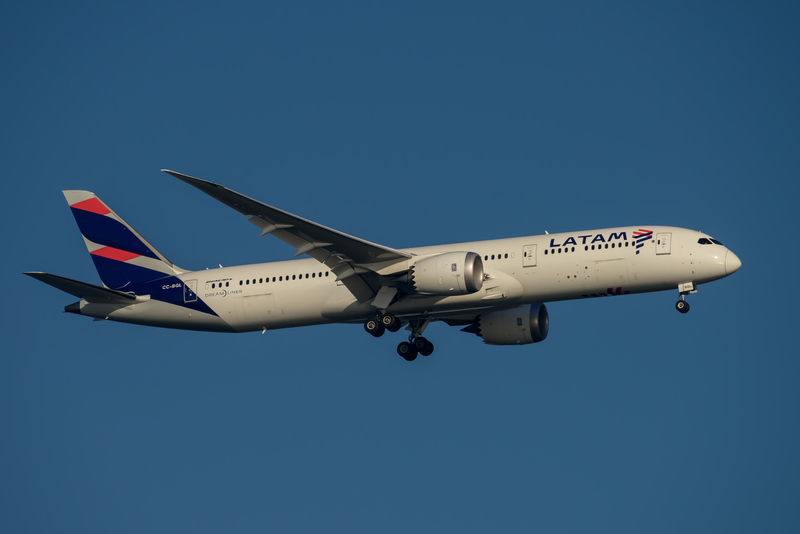
Following the FAA warning, several non-US airlines decided to temporarily suspend flights to Caracas rather than expose crews and passengers to uncertain conditions. Among the affected carriers are Avianca, GOL, Iberia, LATAM, TAP Air Portugal, and Turkish Airlines.
These suspensions were presented as precautionary and temporary, pending clarity on the security situation and further risk assessments. However, they have been interpreted by the Venezuelan government as politically motivated and aligned with Washington’s stance.
It’s worth noting that US airlines have not flown to Venezuela since 2019, when Washington cut diplomatic ties after Nicolás Maduro claimed victory in a disputed election. More recently, some US carriers have also stopped overflying Venezuelan airspace altogether.
Caracas Gives Airlines A 48-Hour Ultimatum
In response, Venezuela has accused the airlines of “joining the actions of state terrorism promoted by the United States government” by halting flights. Officials have stated that any airline that does not resume operations within 48 hours will have its operating permits revoked, effectively banning them from serving the country in the future.
Foreign governments and regulators have criticized this reaction as “totally disproportionate,” pointing out that airlines are making safety-driven decisions based on official warnings from a major aviation authority. For the carriers, returning under a political ultimatum is unlikely to inspire confidence, especially when the underlying security concerns remain unresolved.

Rising US–Venezuela Tensions In The Background
All of this is playing out against a backdrop of rapidly deteriorating relations between Washington and Caracas. The US has made its largest military deployment to the Caribbean in decades, accusing President Nicolás Maduro of involvement in the drug trade and actions that have harmed Americans.
Maduro, in turn, has denied the accusations, accused President Trump of trying to overthrow him, and framed US actions as aggression aimed at regime change. The aviation standoff over airspace safety and airline suspensions has now become another flashpoint in this broader geopolitical struggle.
Is Venezuela Overplaying Its Hand?
From a commercial and operational standpoint, Venezuela’s hardline response risks backfiring. Airlines are ultimately accountable for safety, and if they are uncomfortable with risk levels—even temporarily—they are unlikely to reverse suspensions just because they’re given a 48-hour deadline and threatened with bans.
Air connectivity is usually seen as vital for any country’s economy, tourism, and international links. If airlines feel coerced rather than reassured, they may hesitate to restore service even after tensions ease. At the same time, if the goal in Caracas is greater isolation from perceived hostile powers, then losing foreign carriers might be seen as an acceptable, or even desirable, outcome.
Bottom line
After the FAA warned of a potentially hazardous security environment in Venezuelan airspace, several international airlines temporarily suspended flights to the country. Venezuela has responded by accusing these carriers of supporting US “state terrorism” and threatening to revoke their operating rights if they don’t resume service within 48 hours.
Airlines are now stuck between safety guidance from the US and political pressure from Caracas. Venezuela’s aggressive stance may prove to be an overreach—most carriers are unlikely to return until they are satisfied the risks are manageable, regardless of ultimatums.