Palm Beach Airport Becomes President Donald J. Trump International as PBI Begins Transition to DJT
Palm Beach International Airport has officially been renamed President Donald J. Trump International Airport, marking one of the most visible U.S. airport rebrandings in recent memory and creating an unusual code transition for airlines, passengers, pilots, and travel systems.
The name change took effect on July 9, 2026, after Florida legislation signed earlier this year by Gov. Ron DeSantis and subsequent federal coordination. The airport, located in West Palm Beach, Florida, is only a short drive from Mar-a-Lago in Palm Beach, making the renaming especially symbolic given President Donald Trump’s long association with the area.
For travelers, however, the most important detail is not the sign on the terminal. It is the airport code.
The airport’s FAA location identifier changed from PBI to DJT on July 9, and its ICAO identifier changed from KPBI to KDJT. But the IATA code used by passengers, airline booking engines, baggage tags, boarding passes, and travel websites will remain PBI until August 18, 2026.
That means travelers should continue searching for PBI when booking flights until the IATA transition is complete.
Three Codes, Three Different Audiences
The airport-code change is more complicated than it may appear because aviation uses multiple airport identifiers for different purposes.
The FAA location identifier is primarily used in U.S. aviation systems, air traffic services, flight planning, and airport operations. That code has already changed to DJT.
The ICAO identifier is the four-letter international aviation code used by pilots, air traffic control, dispatchers, flight plans, and technical systems. Because U.S. continental airport ICAO codes typically begin with “K,” the airport’s ICAO code is now KDJT.
The IATA code is the one most passengers know. It appears on airline websites, booking engines, boarding passes, baggage tags, flight-status boards, and travel agency systems. That code remains PBI until August 18, when it is scheduled to change to DJT.
For aviation professionals, the transition requires code remains PBI until August 18, when it careful coordination. For passengers, the advice is simple: use PBI until August 18, then use DJT.
Operations Continue Normally
Airport officials have stressed that the name change is a branding transition, not an operational restructuring. Ownership, governance, airport finances, legal status, and operational control remain unchanged. The airport continues to be overseen by the Palm Beach County Department of Airports.
Airline routes, schedules, customer services, and airport operations are also unaffected. Passengers should not expect runway, terminal, TSA, airline, or baggage procedures to change because of the renaming.
That distinction matters. A high-profile airport renaming can create confusion, especially when the identifier change is being phased into different aviation systems at different times. But the airport itself remains the same commercial facility serving Palm Beach County, West Palm Beach, and the broader South Florida market.
A Phased Rebrand Across the Airport
Physical signs, digital platforms, terminal branding, roadway signs, and public-facing materials are being updated in phases. Airport officials have warned travelers that older Palm Beach International Airport branding and the new President Donald J. Trump International Airport name may coexist for several weeks during the transition.
That is normal for a rebrand of this scale. Airports are complex public facilities with exterior highway signage, terminal signs, wayfinding systems, airline counters, gate displays, concession materials, websites, emergency documents, airport diagrams, leases, public communications, and thousands of operational references.
A full change cannot happen instantly without creating confusion or unnecessary cost. The more important operational systems, including FAA and ICAO publications, have already been updated for pilots and aviation partners. Passenger systems will follow when the IATA code switch becomes effective.
What This Means for Airlines
The airport’s airline network does not change because of the new name. Carriers such as JetBlue Airways, Delta Air Lines, American Airlines, United Airlines, Southwest Airlines, Frontier Airlines, and other operators continue serving the airport as before.
Reuters reported that JetBlue, Delta, and American together account for a large share of the airport’s commercial flight activity, with JetBlue the largest carrier at the airport. That carrier mix reflects the airport’s strong role in Northeast-Florida traffic, premium leisure demand, seasonal travel, and South Florida point-to-point flying.
The code transition will require airline reservation systems, baggage systems, flight-status tools, airport displays, and internal operational platforms to update at the correct time. Until August 18, passengers searching airline websites should still use PBI.
After August 18, DJT is expected to appear on baggage tags, boarding passes, ticket confirmations, and commercial booking systems.
The Airfield Remains a Capable South Florida Gateway
President Donald J. Trump International Airport is not one of Florida’s largest airports by passenger volume, but it is an important South Florida gateway with a strong commercial and general aviation profile.
The airport has three paved asphalt runways, including a primary runway measuring roughly 10,000 feet long by 150 feet wide. That runway length gives the airport the ability to handle mainline narrowbodies such as the Airbus A320 family and Boeing 737 family, business jets, large VIP aircraft, and selected larger aircraft operations when required.
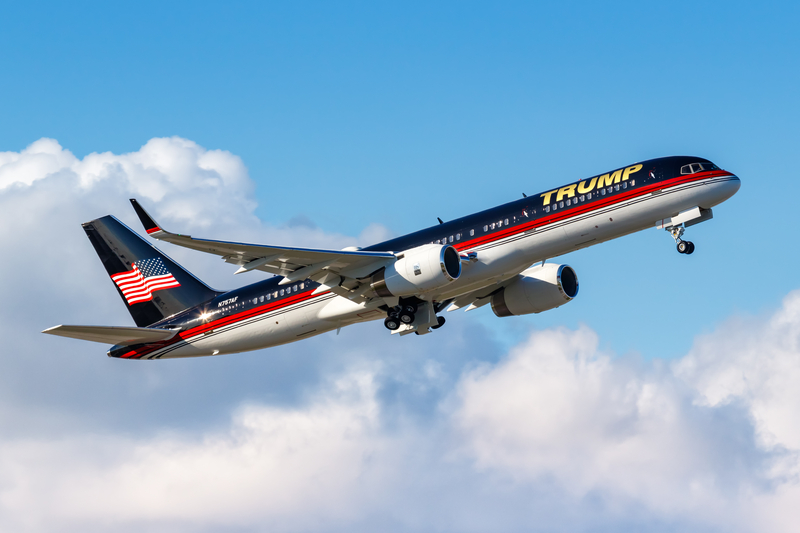
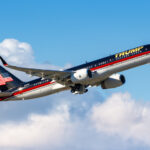
The airport is also a major general aviation and private aviation facility. That role has been especially visible because of its proximity to Palm Beach and Mar-a-Lago. The Trump Organization’s Boeing 757, widely known as “Trump Force One,” was reported as the first aircraft to land at the airport under the new name.
From an aviation standpoint, the airport’s identity now changes more than its function. It remains a commercial airport, a business aviation field, and a key access point for Palm Beach County.
The Cost and Funding Question
The rebranding is expected to cost about $5.5 million, covering signage, branding, system updates, and related transition work. Airport officials say the transition will not be funded by property taxes. Instead, the airport says it will use airport revenues, other airport funding sources, and approved state funding support.
That detail is politically and operationally relevant. Airport renamings can be expensive because the work extends far beyond a few signs. A name change affects road approaches, terminal entrances, maps, emergency materials, vendor references, airport documents, digital assets, and aviation databases.
The cost also has to be weighed against public visibility. Airport names are among the most widely seen civic brands in transportation. Once the IATA code changes to DJT, the new identity will appear in airline and travel systems worldwide.
A Rare Renaming for a Sitting President
The airport now becomes one of the most prominent U.S. commercial airports named for a president and is being widely described as the first U.S. commercial airport named for a sitting president.
Other major U.S. airports carry presidential names, including John F. Kennedy International Airport (JFK), Ronald Reagan Washington National Airport (DCA), George Bush Intercontinental Airport (IAH), Bill and Hillary Clinton National Airport (LIT), and Gerald R. Ford International Airport (GRR).
What makes the Palm Beach change unusual is the timing and the code. Many renamed airports keep long-standing IATA identifiers for continuity. Little Rock, for example, retained LIT after being renamed for the Clintons. Palm Beach’s move from PBI to DJT is therefore more visible in the airline system than a name-only rebranding would have been.
Why the IATA Change Matters Most to Passengers
For passengers, the IATA code is the practical airport identity. It is what travelers type into airline websites, what appears on luggage tags, and what shows up on departure boards.
That is why the August 18 transition date is important. Until then, a passenger searching for “DJT” in a booking engine may not see the expected results, depending on how quickly each airline or travel platform updates its systems. PBI remains the safe booking code through the transition period.
After August 18, the reverse may become true. Travelers familiar with decades of PBI branding will need to adjust to DJT in airline systems.
That kind of code change can create short-term confusion, especially for travelers booking through third-party platforms, corporate travel tools, global distribution systems, or older saved airport preferences. Airlines and the airport will need clear messaging during the transition.
A Branding Change With Operational Precision
Airport renamings are public-facing events, but aviation code changes are technical projects. The FAA, ICAO, IATA, airport officials, airlines, air traffic control, dispatchers, pilots, baggage vendors, travel platforms, and airport technology providers all have to coordinate the timing.
That is why the FAA/ICAO and IATA changes are not taking effect on the same day. Operational systems used by pilots and air traffic control moved first on July 9. Passenger-facing commercial systems are scheduled to follow on August 18.
The split timeline may seem awkward, but it reduces the risk of a poorly synchronized change. Aviation systems prioritize safety and continuity, and a major airport identifier change has to be implemented carefully.
Bottom Line
Palm Beach International Airport has officially become President Donald J. Trump International Airport, with the FAA location identifier now changed from PBI to DJT and the ICAO identifier changed from KPBI to KDJT.
For passengers, the most important date is August 18, 2026. Until then, airline bookings, baggage tags, travel websites, and passenger-facing systems continue to use PBI. After that, the IATA code is scheduled to switch to DJT.
The airport’s ownership, operations, airline service, and customer procedures remain unchanged. What changes is the identity: a major South Florida airport now carries President Trump’s name, and soon its three-letter commercial airport code will as well.