JetBlue’s Short Manchester Experiment Ends as Fort Lauderdale Takes Priority
JetBlue’s final departure from Manchester-Boston Regional Airport (MHT) was more than the end of a single Florida route. It closed a brief, closely watched experiment in whether New Hampshire’s largest airport could support a meaningful JetBlue presence alongside the carrier’s much larger focus-city operation at Boston Logan International Airport (BOS).
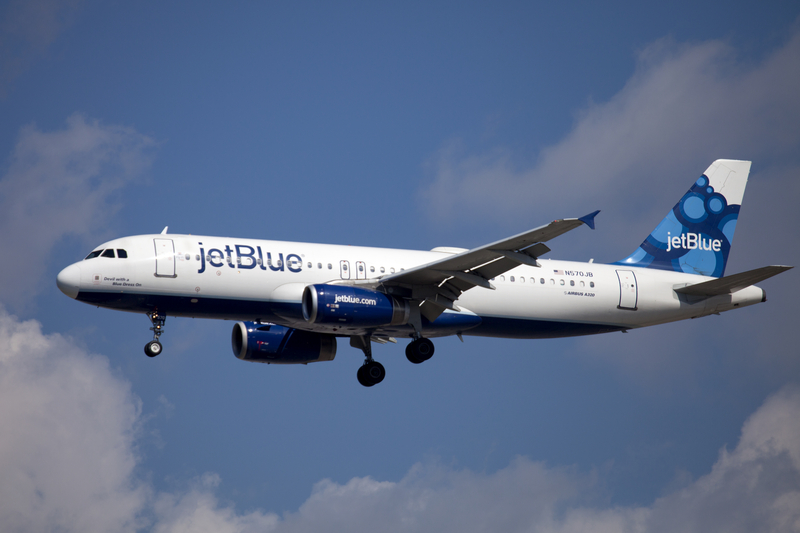
The last flight, B61143 from Manchester (MHT) to Orlando International Airport (MCO), departed on July 8, 2026, operated by an Airbus A320. Flight-tracking data shows the aircraft as N640JB, a JetBlue A320, which departed MHT at 4:36 p.m. and landed in Orlando at 7:25 p.m. local time.
For passengers in southern New Hampshire, the departure was disappointing but not surprising. JetBlue had announced in May that it would pull out of Manchester entirely, ending its MHT routes to Orlando (MCO), Fort Lauderdale-Hollywood International Airport (FLL), and Southwest Florida International Airport (RSW) in Fort Myers.
The official explanation was network discipline. JetBlue needed aircraft and crews for stronger opportunities elsewhere, especially at Fort Lauderdale (FLL), where the collapse of Spirit Airlines opened a larger competitive window. For Manchester, the result is a painful loss: after years of courting JetBlue, the airport had the airline for only about 18 months.
A Promising Launch That Did Not Last
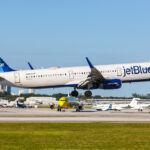
JetBlue’s arrival at Manchester (MHT) was celebrated when service began on January 23, 2025. The airline launched daily, year-round Manchester-Orlando (MCO) flights and seasonal service to Fort Myers (RSW), followed one day later by seasonal Fort Lauderdale (FLL) flights.
At the time, JetBlue described Manchester as its tenth New England airport and positioned the service as a complement to its large Boston Logan (BOS) operation. The appeal was obvious. MHT sits under 50 miles from Boston, offers easier parking and terminal access, and gives northern New England travelers a lower-stress alternative to Logan.
The airline also used the launch to promote its onboard product. JetBlue said the Manchester flights would operate with Airbus A320 aircraft featuring free high-speed Fly-Fi, complimentary snacks and drinks, seatback entertainment, and the carrier’s well-known extra-legroom positioning in the U.S. domestic market.
That mattered because MHT passengers were not just gaining another low-cost carrier. They were gaining JetBlue’s product on nonstop Florida routes from a smaller, more convenient airport.
The Aircraft: JetBlue’s Airbus A320
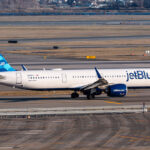
The aircraft used on the final Orlando flight reflects the route’s original operating plan. JetBlue’s A320 fleet is the backbone of much of its domestic network, and the airline’s restyled A320s carry 162 seats in a single-class layout with Even More Space rows available for extra legroom.
The Airbus A320 is a logical aircraft for Manchester-Florida flying. It has the range for New Hampshire to Florida sectors, enough capacity to serve leisure-heavy demand, and the right economics for JetBlue’s East Coast operation.
But the A320 is also a scarce asset. JetBlue has been dealing with aircraft availability constraints, engine issues, network restructuring, and a broader push to improve profitability. In that environment, an A320 assigned to Manchester (MHT)-Orlando (MCO) is an A320 that cannot be used at Fort Lauderdale (FLL), New York JFK (JFK), Boston (BOS), San Juan (SJU), or another higher-priority market.
That is the central issue. The Manchester routes may not have been empty. The Orlando route reportedly averaged around 82% full. But aircraft are not assigned only by load factor. Airlines also consider fare quality, ancillary revenue, connecting value, competitive position, airport costs, operational reliability, crew efficiency, and strategic importance.
By those broader measures, JetBlue clearly saw better use for the aircraft elsewhere.
Fort Lauderdale Became the Bigger Prize
JetBlue’s Manchester exit is best understood through the lens of Fort Lauderdale (FLL).
After Spirit Airlines ceased operations, Fort Lauderdale became one of the most important competitive opportunities in the U.S. airline market. Spirit had been deeply tied to FLL, and its exit left routes, customers, airport capacity, and local market share available for other carriers.
JetBlue moved quickly. In May, the airline announced a major Fort Lauderdale expansion with 11 new nonstop routes, including new JetBlue cities such as Baltimore (BWI), Charlotte (CLT), Columbus (CMH), Indianapolis (IND), Barranquilla (BAQ), and Cali (CLO), plus new FLL service to existing JetBlue cities including Nashville (BNA), Detroit (DTW), Houston (IAH), Chicago (ORD), and Ponce (PSE).
That expansion required aircraft. It also required crews, gate space, local marketing focus, ground resources, and network attention. JetBlue’s position was straightforward: Fort Lauderdale was a market where the airline believed it could win, while Manchester required more time to mature.
For a carrier still trying to restore consistent profitability, the choice was harsh but understandable. A small New Hampshire station with three Florida routes could not compete with a chance to strengthen a major focus city.
Manchester Was a Convenience Play
The reason passengers are upset is simple: MHT is convenient.
For many travelers in New Hampshire, northern Massachusetts, southern Maine, and parts of Vermont, Manchester-Boston Regional Airport (MHT) is easier than Boston Logan (BOS). It has shorter drives for many northern New England customers, easier parking, faster curb-to-gate movement, and a less congested terminal experience.
That convenience has always been MHT’s strongest selling point. The airport does not need to replicate Logan’s network to be useful. It needs a strong set of nonstop routes to the places local travelers actually want to go.
Florida is high on that list. Orlando (MCO), Fort Lauderdale (FLL), and Fort Myers (RSW) all fit the New Hampshire leisure profile: winter sun, family vacations, retirees, visiting friends and relatives, cruise connections, theme parks, beaches, and seasonal second-home travel.
JetBlue’s presence gave MHT a premium low-fare brand on those routes. Losing it pushes many passengers back toward Boston Logan (BOS), where JetBlue remains a much larger player, or toward other carriers and routings from Manchester.
Boston Logan Is the Obvious Alternative, But Not an Easy One
JetBlue still offers extensive Florida service from Boston Logan (BOS), including Orlando (MCO) and Fort Lauderdale (FLL). For the airline, consolidating Florida flying at BOS and FLL makes network sense.
For passengers, it is less attractive.
Boston Logan is a much larger, more congested airport. Depending on time of day, the drive from New Hampshire can be unpredictable. Parking can be more expensive. Terminal congestion is higher. Security, traffic, and airport access can add stress that MHT travelers specifically wanted to avoid.
That is why the local reaction has been so negative. The loss is not only about a nonstop flight. It is about losing an alternative to Logan.
Some travelers may shift to Southwest Airlines, American Airlines, or United Airlines at MHT, depending on their destination. Others may use Boston (BOS), Burlington International Airport (BTV), Portland International Jetport (PWM), or Rhode Island T.F. Green International Airport (PVD). But none fully replaces the convenience of a JetBlue nonstop from Manchester to Florida.
MHT’s Long Courtship Makes the Exit Sting
Manchester did not get JetBlue easily. The airport had pursued the airline for years before service finally launched in 2025.
That is part of why the exit hurts. Airport officials had invested marketing effort, incentives, public promotion, and local goodwill into helping the new routes succeed. The arrival of JetBlue was viewed as a major win for the airport’s air service development strategy.
The departure after only 18 months creates a difficult lesson for smaller airports. Attracting a carrier is only the first step. Keeping it requires the route to perform not just adequately, but strongly enough to survive airline-wide network resets.
That bar can change quickly. A route that looks promising in 2025 can become expendable in 2026 if the airline faces aircraft shortages, higher fuel prices, financial pressure, or a better opportunity somewhere else.
MHT did not necessarily fail as an airport. The market may simply not have matured fast enough for JetBlue’s current priorities.
The Orlando Load Factor Raises a Bigger Question
The reported 82% average load factor on Manchester-Orlando (MCO) is one of the most interesting details in the story. On its face, 82% does not look weak.
But load factor is not profit.
A flight can be reasonably full and still underperform if fares are too low, if too many seats are sold during promotions, if ancillary revenue is weak, if airport incentives expire, if operating costs rise, or if the aircraft could make more money elsewhere.
This is especially true for leisure-heavy routes. Orlando can generate strong passenger volumes, but it is also a highly competitive market. Travelers compare fares aggressively, and multiple airports across New England provide Florida access.
For JetBlue, the question was not whether Manchester-Orlando had customers. It was whether the route was the best use of a scarce Airbus A320 and crew pairing when Fort Lauderdale (FLL) was suddenly available for growth.
The answer, from JetBlue’s perspective, was no.
JetBlue’s Network Is Becoming More Focused
JetBlue’s decision fits a broader pattern.
The airline has spent the past few years reworking its network after a blocked Spirit merger, financial losses, aircraft availability pressure, and changing demand patterns. It has reduced weaker routes, leaned harder into focus cities, and tried to concentrate flying where it has brand strength and competitive relevance.
The carrier’s core East Coast structure remains built around New York JFK, Boston (BOS), Fort Lauderdale (FLL), Orlando (MCO), and San Juan (SJU). Manchester was a useful add-on to the Boston/New England strategy, but it was not core.
That is the difference between a focus city and a spoke. A focus city gets protected when aircraft are scarce. A spoke has to prove it can compete with every other use of the airplane.
MHT could offer loyal local customers, convenience, and decent load factors. Fort Lauderdale offered JetBlue a chance to reshape a major market after Spirit’s exit.
What Manchester Needs Next
Manchester-Boston Regional Airport (MHT) still has a strong case to make to airlines. It serves a sizable catchment area, offers convenience over Boston Logan, and sits in a region with steady leisure and visiting-friends-and-relatives demand.
The airport’s challenge is finding airlines whose strategies fit that demand. Southwest has historically been important at MHT. Breeze Airways, Avelo-style point-to-point operators, Allegiant-style leisure carriers, and other low-cost or hybrid airlines may see opportunities if aircraft are available and fares support service.
The most obvious route opportunities remain Florida, the Carolinas, and other leisure-heavy markets. But MHT also needs business-oriented connectivity, which is where American and United can matter through hubs.
The JetBlue experience may make future airline recruitment harder in one respect: carriers will see that even a well-promoted, popular airline can exit quickly if economics do not develop fast enough. But it also gives MHT a data point. The airport can show that there was real customer support for Florida service, especially Orlando.
That evidence may help attract another carrier later.
A Small-Airport Reality Check
The Manchester exit is a reminder that small and mid-sized airports live with a different kind of route risk.
Major hubs can lose one route and still have hundreds of departures. Smaller airports can lose one airline and feel an immediate change in passenger choice, parking revenue, concession activity, airport marketing, and regional confidence.
JetBlue’s exit also shows how airline consolidation of capacity can affect local communities. When aircraft become scarce or costs rise, airlines often retreat toward markets where they have the most pricing power or strategic leverage. That usually means focus cities, hubs, and large leisure gateways.
Manchester was convenient. Fort Lauderdale was strategic.
That is why the airplane moved.
Bottom Line
JetBlue’s departure from Manchester-Boston Regional Airport (MHT) ended a short but meaningful chapter for New Hampshire travelers. The airline launched MHT service in January 2025 with Airbus A320 flights to Orlando (MCO), Fort Lauderdale (FLL), and Fort Myers (RSW), giving passengers a convenient alternative to Boston Logan (BOS). By July 8, 2026, the experiment was over.
The final Manchester-Orlando flight, B61143, departed aboard Airbus A320 N640JB, closing JetBlue’s 18-month run at the airport.
For MHT, the loss is frustrating because the service was convenient and locally popular. For JetBlue, the decision reflects a sharper network reality: aircraft and crews are limited, Fort Lauderdale became a major strategic opening after Spirit’s collapse, and the airline is prioritizing markets where it believes it can win faster.
Manchester may yet attract replacement service, especially to Florida. But JetBlue’s exit is a clear reminder that in today’s airline market, even full airplanes can lose if another market offers a better return.