Why 29 U.S.-Europe Routes Disappeared From Summer Schedules
The transatlantic market is still one of the most important profit engines in global aviation, but the 2026 summer schedule shows a clear message: airlines are becoming more selective.
A schedule comparison between Q3 2025 and Q3 2026 shows 29 U.S.-Europe routes no longer operating during the peak July-September period. That does not mean transatlantic demand has collapsed. Far from it. The North Atlantic remains one of the world’s deepest long-haul markets. But the route removals show how quickly airlines are reallocating aircraft away from weaker, thinner, or more competitive markets.
The cuts include European leisure carriers, long-haul low-cost airlines, U.S. network carriers, and a few routes that were experimental from the start. In some cases, the airline left the market entirely. In others, capacity shifted to a different London airport, a stronger hub, a partner carrier, or a route with better aircraft economics.
For passengers, the result is fewer nonstop options in several city pairs. For airline planners, it is a textbook example of post-pandemic network discipline.
The North Atlantic Is Growing, But Not Everywhere
The headline number is striking because Q3 is usually the strongest quarter for U.S.-Europe flying. Demand is high, fares are stronger, aircraft utilization improves, and airlines use the summer peak to build cash ahead of the more difficult winter season.
Yet route-level churn remains high. Airlines are not simply adding capacity wherever they can. They are comparing aircraft time, fuel cost, crew availability, slot value, competitive pressure, and premium demand route by route.
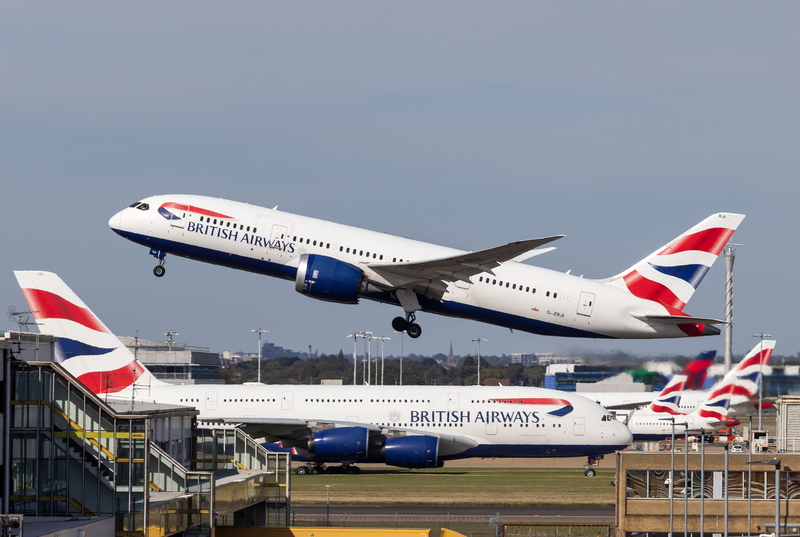
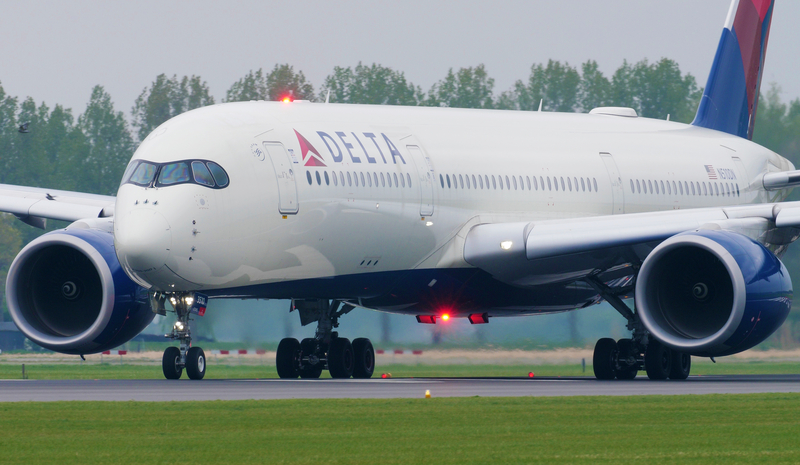
That is why a route can disappear even when the broader transatlantic market is healthy. A carrier may still be growing overall while cutting a specific city pair. British Airways can remove London Gatwick (LGW)-New York JFK and LGW-Las Vegas while increasing service from London Heathrow (LHR). Delta can remove New York JFK-Geneva and JFK-Gatwick while adding other Europe routes from JFK and other hubs. Norse Atlantic can cut U.S. routes while moving Boeing 787 flying toward other long-haul opportunities.
The story is not “airlines are abandoning the Atlantic.” The story is “airlines are abandoning the wrong Atlantic routes.”
European Airlines Account for Most of the Cuts
European carriers account for 24 of the 29 removed U.S.-Europe routes. That is not surprising. The European side of the market includes more long-haul leisure airlines, low-cost experiments, seasonal operators, and secondary-airport plays than the U.S. side.

The biggest theme is that long-haul low-cost remains brutally difficult. Norse Atlantic Airways alone accounts for several of the discontinued routes, while PLAY Airlines exited the U.S. market entirely after ending service from Keflavik International Airport (KEF) to New York Stewart (SWF), Boston (BOS), and Baltimore/Washington (BWI).
PLAY’s exit is especially revealing. The carrier used Airbus A320neo-family aircraft to connect North America and Europe over Iceland, following a model similar to the one once used by WOW Air. But the airline later said the North American market had changed significantly, citing more legacy-carrier capacity, long-range narrowbody competition, and a consumer shift toward more premium travel.
That is a difficult environment for a bare-bones low-cost operator, especially when full-service carriers can match aggressively on basic economy fares while still offering loyalty programs, lounges, premium cabins, corporate contracts, and better recovery options during disruptions.
Full List: European Carriers That Removed U.S. Routes
| Final month served | Airline | Route removed | Aircraft / network context |
|---|---|---|---|
| August 2025 | Azores Airlines | Lajes/Terceira (TER) – New York JFK (JFK) | A niche Azores-U.S. route serving a small island market with limited local demand |
| September 2025 | Discover Airlines | Frankfurt (FRA) – Anchorage (ANC) | Seasonal leisure route; Discover has confirmed it would not continue FRA-ANC in summer 2026 |
| September 2025 | Edelweiss | Zurich (ZRH) – Denver (DEN) | Swiss leisure-carrier capacity removed from a competitive Mountain West market |
| September 2025 | Edelweiss | Zurich (ZRH) – Seattle (SEA) | Removed from a route with strong U.S. network-carrier and alliance alternatives |
| September 2025 | Iberojet | Madrid (MAD) – Orlando (MCO) | Did not return after Iberia launched scheduled MAD-MCO service |
| September 2025 | Norse Atlantic | Athens (ATH) – Los Angeles (LAX) | Boeing 787-9 seasonal route; a high-profile but very long leisure-heavy sector |
| September 2025 | Norse Atlantic | Berlin (BER) – New York JFK (JFK) | Part of Norse’s broader reduction of thin U.S.-Europe flying |
| September 2025 | Norse Atlantic UK | London Gatwick (LGW) – Miami (MIA) | Removed despite strong leisure appeal; London-Miami capacity remains concentrated at Heathrow |
| September 2025 | PLAY | Keflavik (KEF) – Baltimore/Washington (BWI) | Ended as PLAY exited the U.S. market |
| September 2025 | PLAY | Keflavik (KEF) – Boston (BOS) | Ended as PLAY pivoted away from North America |
| September 2025 | PLAY | Keflavik (KEF) – New York Stewart (SWF) | Ended; SWF remains a difficult airport for transatlantic traffic because of distance from New York City |
| October 2025 | British Airways | London Gatwick (LGW) – New York JFK (JFK) | BA removed the seasonal daily route from summer 2026 filings |
| October 2025 | British Airways | London Gatwick (LGW) – Las Vegas (LAS) | BA retained Las Vegas from Heathrow while removing the Gatwick seasonal operation |
| October 2025 | Condor | Frankfurt (FRA) – Miami (MIA) | A leisure-heavy route removed from the summer comparison |
| October 2025 | Neos | Bari (BRI) – New York JFK (JFK) | Neos officially suspended Bari-New York for summer 2026 after United added Newark-Bari |
| October 2025 | Norse Atlantic UK | London Gatwick (LGW) – Los Angeles (LAX) | Summer 2026 bookings were closed; route had been planned up to six weekly |
| October 2025 | Norse Atlantic | Paris CDG (CDG) – New York JFK (JFK) | Removed from Norse’s U.S. schedule after winter 2025/26 flying |
| October 2025 | Norse Atlantic | Paris CDG (CDG) – Los Angeles (LAX) | One of three Norse Los Angeles routes removed from summer 2026 sales |
| October 2025 | TUI Airways | Birmingham (BHX) – Melbourne Orlando (MLB) | A U.K.-Florida leisure route removed from the Q3 comparison |
| November 2025 | Norse Atlantic | Rome Fiumicino (FCO) – Los Angeles (LAX) | Another long West Coast sector removed as Norse reduced LAX exposure |
| January 2026 | Icelandair | Keflavik (KEF) – Detroit (DTW) | Icelandair withdrew from Detroit after launching the route in 2023 |
| February 2026 | Aer Lingus | Manchester (MAN) – New York JFK (JFK) | Part of Aer Lingus’ closure of its Manchester transatlantic base |
| March 2026 | Aer Lingus | Manchester (MAN) – Orlando (MCO) | Removed as Aer Lingus ended Manchester long-haul flying |
| April 2026 | LEVEL | Barcelona (BCN) – San Francisco (SFO) | Suspended before later cuts to Barcelona-Boston and Barcelona-Los Angeles |
This list shows the different types of cuts happening at once. Some were low-cost failures. Some were seasonal experiments that did not return. Some were airport reallocations. Some were competitive withdrawals after a stronger carrier entered or expanded.

Norse Atlantic Shows the Risk of Widebody Low-Cost Flying
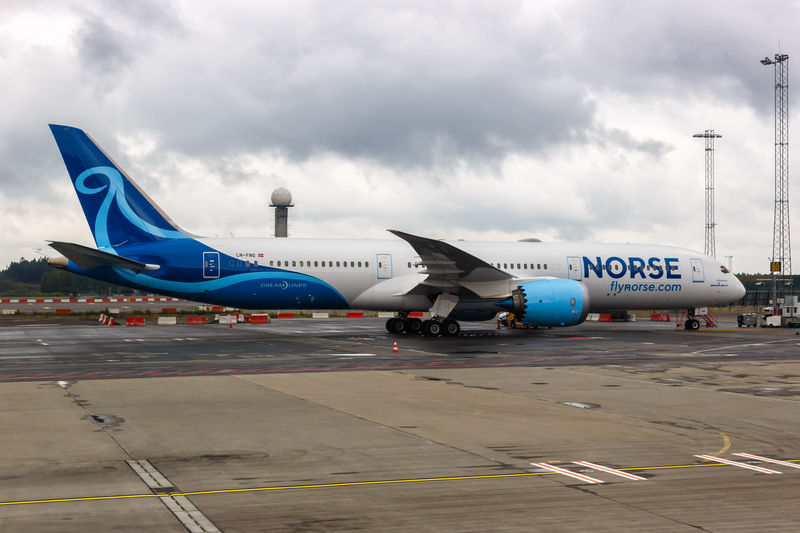
Norse Atlantic’s reductions are the clearest example of the pressure facing long-haul low-cost operators.
The airline built its model around the Boeing 787-9 Dreamliner, an efficient aircraft with strong range and good passenger appeal. On paper, the 787-9 should be an excellent platform for low-cost long-haul flying. It has modern fuel burn, long range, and enough seats to spread trip costs.
But aircraft efficiency does not solve every problem. Long-haul low-cost airlines still face expensive airport costs, volatile fuel prices, high crew costs, seasonality, distribution challenges, and limited premium revenue. A 787 flying a thin leisure route such as Athens (ATH)-Los Angeles (LAX), Rome (FCO)-Los Angeles (LAX), or Paris (CDG)-Los Angeles (LAX) must produce enough revenue in both directions to justify an aircraft that could otherwise be leased, chartered, or used on a stronger seasonal market.
Norse’s later strategy shift made that clear. The airline agreed to lease a large portion of its 787 fleet to IndiGo and moved more attention toward Asia and Africa, including Bangkok and Cape Town. That is not the behavior of an airline that believes every U.S.-Europe leisure route is worth defending.
It is the behavior of an airline choosing aircraft certainty over thin-route risk.
Gatwick Lost Several U.S. Links
London Gatwick (LGW) appears repeatedly in the list, and that is significant.
Gatwick has long been a transatlantic alternative to Heathrow, especially for leisure routes, low-cost long-haul experiments, and secondary long-haul operations. But the airport’s U.S. network has become more uneven. Delta left JFK-Gatwick. British Airways removed Gatwick-JFK and Gatwick-Las Vegas from summer 2026 filings. Norse cut Gatwick-Miami and Gatwick-Los Angeles, while keeping a more limited U.S. presence.
That does not mean Gatwick has lost its long-haul value. It remains important for Orlando (MCO), the Caribbean, leisure-heavy routes, and lower-cost London operations. But it does show a key truth: when airlines can consolidate at Heathrow, they often prefer Heathrow.
Heathrow offers more premium demand, more connecting traffic, more corporate relevance, and stronger alliance feed. Gatwick can work extremely well for the right leisure route, but it is harder to make a marginal U.S. business case work from LGW if Heathrow service already exists or if competitors are heavily discounting.
That is why BA’s removals should be viewed as a London airport optimization, not simply a retreat from the United States.
U.S. Airlines Removed Five Europe Routes
The U.S. carrier reductions are fewer, but they are strategically important.
| Final month served | Airline | Route removed | Aircraft / network context |
| August 2025 | United Airlines | Newark (EWR) – Stockholm Arlanda (ARN) | United’s seasonal 757-200 route did not return for summer 2026 |
| September 2025 | Delta Air Lines | New York JFK (JFK) – London Gatwick (LGW) | Delta canceled the route after returning to Gatwick in 2023 |
| October 2025 | Delta Air Lines | New York JFK (JFK) – Geneva (GVA) | Seasonal 2026 service canceled in Delta schedule filings |
| October 2025 | JetBlue | New York JFK (JFK) – Amsterdam (AMS) | JetBlue canceled the summer 2026 seasonal A321LR route |
| January 2026 | Delta Air Lines | New York JFK (JFK) – Brussels (BRU) | Final JFK-BRU flight operated in early January 2026; Delta shifted Belgium focus to Atlanta |
United’s Newark-Stockholm cut was notable because the route had been one of the longest transatlantic missions for the Boeing 757-200. The Boeing 757 has been a uniquely useful aircraft across the North Atlantic because it can serve thinner long-haul markets with fewer seats than a widebody. But the type is aging, expensive to maintain, and increasingly difficult to justify when newer narrowbodies or widebodies can be used elsewhere.
JetBlue’s JFK-Amsterdam cut is also important. JetBlue’s Airbus A321LR has allowed it to enter several transatlantic markets with a smaller aircraft, but Amsterdam (AMS) is slot-constrained, competitive, and already served by strong joint-venture players. JetBlue still has a transatlantic presence, but not every early route is becoming permanent.
Delta’s cuts show a different story. The airline is not walking away from Europe. It has been adding other European markets, including premium leisure and secondary destinations. But Delta has removed routes where the economics or strategic fit were weaker, including JFK-Gatwick, JFK-Geneva, and JFK-Brussels.
Why These Routes Were Vulnerable
The removed routes share several common traits.
First, many were highly seasonal. Routes like Zurich-Denver, Frankfurt-Anchorage, Birmingham-Melbourne Orlando, and Athens-Los Angeles depend heavily on a narrow summer window. If the margin is thin, aircraft can often earn more elsewhere.
Second, many lacked strong premium demand. Leisure traffic can fill aircraft, but full airplanes do not always mean profitable airplanes. Airlines care about fare mix, premium cabin revenue, ancillary revenue, cargo, and connection quality. A 95% load factor can still be disappointing if average fares are too low.
Third, several routes were exposed to stronger competitors. Iberojet did not need to return to Madrid-Orlando once Iberia entered the route with a full network-carrier product. Neos faced a different Bari-New York market once United added Newark-Bari. British Airways could consolidate U.S. flying at Heathrow rather than keep thinner Gatwick transatlantic routes. Delta and JetBlue had to contend with strong joint-venture networks across Amsterdam, London, Geneva, and Brussels.
Fourth, aircraft availability matters. Long-haul aircraft remain scarce across the industry. Pratt & Whitney engine issues, Boeing delivery delays, Rolls-Royce Trent 1000 constraints, cabin retrofit programs, and maintenance backlogs have all forced airlines to be more careful. If a route is not clearly profitable, it becomes an easy candidate for removal.
Aircraft Economics Are Driving the Route Map
Aircraft type explains many of these decisions.
Norse’s Boeing 787-9 is efficient, but it is still a widebody. It needs strong revenue across a long sector. PLAY’s Airbus A320neo-family aircraft kept trip costs lower, but its model depended on connecting traffic over Iceland and a no-frills product in a market increasingly pulled toward premium cabins. JetBlue’s A321LR has excellent economics for thinner transatlantic markets, but it cannot overcome every slot, fare, and competitive problem.
Delta’s older Boeing 767 fleet has been useful for Europe, but it is no longer the most efficient long-haul platform. United’s Boeing 757-200 remains one of the great transatlantic niche aircraft, but age and fleet complexity make every route decision harder. British Airways’ Gatwick-configured Boeing 777-200ERs can move a lot of leisure passengers, but they are not always the right tool for competitive U.S. routes when Heathrow alternatives exist.
That is the aircraft reality of 2026: new-generation narrowbodies can open routes, but they do not guarantee permanence. Widebodies can make big leisure markets work, but only if fares support the trip cost. Older aircraft can preserve network breadth, but only while maintenance and utilization remain defensible.
Some Cuts Are Really Consolidations
It is important not to overstate the passenger impact in every market. Some routes disappeared, but the broader city or country link remains.
British Airways dropped Gatwick-Las Vegas, but BA still serves Las Vegas from Heathrow. BA dropped Gatwick-JFK, but London-New York remains one of the most heavily served long-haul markets in the world. Delta ended JFK-Brussels, but it continues serving Brussels from Atlanta. Neos suspended Bari-JFK, but United now links the New York area with Bari through Newark. Iberojet left Madrid-Orlando, but Iberia entered the same city pair.
Those are not pure losses of connectivity. They are changes in which airline, airport, or hub controls the traffic.
The more painful cuts are the routes where the nonstop disappears without an obvious replacement, such as PLAY’s U.S. network, United’s Newark-Stockholm service, or Discover’s Frankfurt-Anchorage. In those markets, travelers now face one-stop itineraries, longer elapsed travel times, or higher fares if fewer competitors remain.
The Transatlantic Market Is Becoming More Premium
Another theme behind the cuts is the premiumization of long-haul travel.
U.S. airlines in particular have been investing heavily in premium cabins, lounges, premium economy, and co-branded credit card loyalty economics. Delta, United, and American increasingly view the Atlantic through the lens of premium revenue and corporate demand, not just seat count.
That makes life harder for long-haul low-cost airlines. A passenger who only wants the cheapest fare may still choose Norse, PLAY, or another low-cost option. But a growing share of transatlantic profit is coming from premium cabins, loyalty members, corporate accounts, and high-spending leisure travelers. Those passengers often prefer full-service carriers, better schedules, and stronger disruption recovery.
This is one reason a route can look successful from the outside and still be cut. Load factor is only one part of the equation. Yield, cabin mix, ancillary revenue, cargo, and network feed decide whether an airline keeps flying.
Bottom Line
The removal of 29 U.S.-Europe routes from Q3 2026 schedules does not signal a transatlantic collapse. It signals a more disciplined market.
European carriers accounted for most of the cuts, led by Norse Atlantic’s broad pullback and PLAY’s complete exit from the U.S. market. London Gatwick lost several U.S. links as airlines consolidated around stronger hubs or more defensible leisure routes. U.S. carriers cut fewer routes, but the removals still mattered: United left Newark-Stockholm, JetBlue canceled JFK-Amsterdam, and Delta pulled JFK-Gatwick, JFK-Geneva, and JFK-Brussels.
The underlying message is clear. Airlines are still investing across the Atlantic, but they are no longer giving weak routes unlimited time to prove themselves. Aircraft are too scarce, fuel is too expensive, competition is too intense, and premium demand matters too much.
For travelers, the cuts mean fewer nonstop choices in specific city pairs. For airline professionals, they show the North Atlantic returning to a more rational phase: not less important, but more selective.