Delta’s Next International Expansion Blends Saudi Arabia, Sun Markets and Strategic Hub Flying
Delta Air Lines is adding a fresh group of international routes between fall 2026 and spring 2027, but the story is more nuanced than a simple list of new dots on the map.


Some of the routes are true firsts. Others are resumptions, airport swaps or seasonal leisure additions. Taken together, they show how Delta Air Lines is building its international network around three very different priorities: long-haul strategic growth, high-demand winter leisure traffic and stronger connectivity from its biggest hubs.
The most important addition is Hartsfield-Jackson Atlanta International Airport (ATL) to Riyadh King Khalid International Airport (RUH), Delta’s first nonstop route to Saudi Arabia. The most commercially familiar additions are in the Caribbean and Latin America, where Delta is adding or restoring winter service to Bermuda, Aruba and Costa Rica. The most competitive route is Los Angeles International Airport (LAX) to Vancouver International Airport (YVR), a market already served by several carriers but strategically important for Delta’s West Coast ambitions.
This is not a scattershot expansion. It is a deliberate mix of hub defense, long-haul partnership strategy and seasonal demand capture.
The Six International Routes Delta Is Adding
Delta’s upcoming international additions cover the Middle East, Canada, the Caribbean, Central America and Israel. The routes are scheduled from October 2026 onward, with aircraft ranging from the Airbus A319 to the Airbus A350-900.

| Start date | Route | Planned aircraft | Service pattern |
|---|---|---|---|
| October 6, 2026 | New York LaGuardia (LGA)-Bermuda (BDA) | Airbus A319 | Four weekly |
| October 23, 2026 | Atlanta (ATL)-Riyadh (RUH) | Airbus A350-900 | Daily at launch, then three weekly |
| November 21, 2026 | Los Angeles (LAX)-Vancouver (YVR) | Airbus A319 | Twice daily |
| December 19, 2026 | Atlanta (ATL)-Tel Aviv (TLV) | Airbus A350-900 | Three weekly |
| December 19, 2026 | Detroit (DTW)-Aruba (AUA) | Boeing 737-900ER | Weekly seasonal |
| December 19, 2026 | New York JFK (JFK)-Liberia/Guanacaste (LIR) | Airbus A321neo | Weekly seasonal |
The aircraft choices are telling. Delta is using its long-haul Airbus A350-900 on the two most geopolitically and strategically significant routes, Riyadh and Tel Aviv. It is using smaller narrowbodies on short international sectors where frequency, airport access and winter leisure demand matter more than widebody scale.
Atlanta-Riyadh Is the Strategic Headliner
The standout route is Atlanta (ATL)-Riyadh (RUH). Beginning October 23, 2026, Delta will become the first U.S. airline to operate nonstop service between the United States and the Saudi capital.
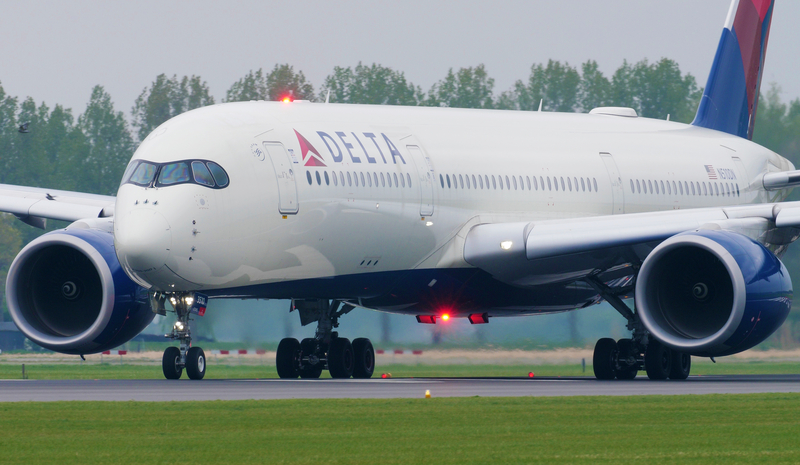
The flight will operate with Delta’s Airbus A350-900, one of the carrier’s flagship long-haul aircraft. Delta’s 275-seat A350-900 layout includes 40 Delta One seats, 40 Delta Premium Select seats, 36 Delta Comfort seats and 159 Main Cabin seats, giving the airline a premium-heavy aircraft for one of its longest routes.
That premium cabin mix matters. Riyadh is not being launched as a conventional beach or VFR route. It is a business, government, investment and partnership-driven market tied to Saudi Arabia’s Vision 2030 strategy, the growth of Riyadh as a commercial center and Delta’s relationships with Saudia and Riyadh Air.
Delta has said the route will give travelers from Riyadh one-stop access to more than 150 U.S. cities through Atlanta. That is the real commercial logic. Local Atlanta-Riyadh demand is not large enough by itself to support a route of this length. The flight will rely heavily on ATL’s enormous connecting power, including traffic from the Southeast, Florida, Texas, the Midwest and the West Coast.
At more than 7,000 miles, ATL-RUH is also a serious aircraft-utilization commitment. The eastbound flight benefits from time-zone directionality, but the westbound return to Atlanta faces a longer block time and more demanding fuel planning. The A350-900 is the right tool because it combines range, premium capacity and strong fuel efficiency for an ultra-long sector.
Tel Aviv Returns to Atlanta, But With a Watchful Eye on Regional Risk
Delta is also bringing back Atlanta (ATL)-Tel Aviv Ben Gurion Airport (TLV) service, scheduled from December 19, 2026, with three weekly Airbus A350-900 flights.
This route has a different profile from Riyadh. Delta has served Atlanta-Tel Aviv before, and Israel has long been an important long-haul market for U.S. airlines because of business, technology, religious, diplomatic and visiting-friends-and-relatives traffic. The route also fits ATL’s role as Delta’s largest global hub.
The caveat is regional stability. U.S.-Israel service has been repeatedly affected in recent years by security concerns, airspace changes and airline schedule suspensions. Delta has resumed and paused Tel Aviv service at different points depending on conditions and internal risk assessments.
That makes the planned December 2026 return important but still subject to the realities of Middle East operations. If conditions allow, ATL-TLV gives Delta another major long-haul international spoke from Atlanta and strengthens its ability to serve Israel-bound passengers from across the Southeast and central United States.
The use of the A350-900 is appropriate. Tel Aviv is a long sector from Atlanta, and the route benefits from a full long-haul premium product, including Delta One and Premium Select. It also gives Delta cargo capability on a market where belly freight can contribute meaningfully to route economics.
LaGuardia-Bermuda Moves Delta’s New York Strategy Closer to the City
Delta’s New York-Bermuda shift is smaller in distance but still strategically interesting. From October 6, 2026, Delta is moving its Bermuda service from John F. Kennedy International Airport (JFK) to LaGuardia Airport (LGA), with four weekly flights to L.F. Wade International Airport (BDA) using the Airbus A319.
That is a smart airport swap. Bermuda is a short-haul premium leisure and business market, and LaGuardia is often more convenient for Manhattan and many New York-area travelers than JFK. The move puts the route closer to Delta’s domestic LaGuardia customer base and may improve local appeal for travelers who do not need JFK’s broader international hub structure.
The Airbus A319 is a good fit here. Delta configures the aircraft with 132 seats, including 12 First Class seats, 24 Delta Comfort seats and 96 Main Cabin seats. That provides enough premium inventory for Bermuda’s higher-yield profile without overcommitting capacity.
This is not Delta entering Bermuda for the first time. It is a reshaping of how the airline serves the market from New York. The route’s value is less about raw growth and more about better airport placement.
LAX-Vancouver Rebuilds Delta’s Canada Presence From Los Angeles
Delta’s return to Los Angeles (LAX)-Vancouver (YVR) is one of the more competitive additions. Starting November 21, 2026, Delta plans twice-daily Airbus A319 service between the two cities.
This will restore Delta-operated Canada flying from Los Angeles, a market the airline has not served with its own aircraft since 2018. It also adds Delta back into a crowded city pair already served by carriers including Air Canada, American Airlines, Flair Airlines, United Airlines and WestJet.
That competitive backdrop matters. Delta is not adding LAX-YVR because the market lacks service. It is adding the route because Los Angeles is a strategic gateway, Vancouver is a major West Coast business and leisure market, and Delta wants more control over its international offering at LAX.
The route also has partnership logic. WestJet is a Delta partner, but operating its own LAX-YVR flights gives Delta more schedule control, brand presence and corporate-account relevance in the market. Twice-daily frequency is especially important because business and premium leisure passengers value timing flexibility.
The A319 is again the right aircraft. With 132 seats, it keeps the trip cost manageable while allowing Delta to offer First Class, Delta Comfort and Main Cabin on a short international sector. LAX-YVR is not a route that needs a large aircraft to make a statement. It needs frequency, reliability and network relevance.
Detroit-Aruba Adds a New Winter Leisure Link
The newest Caribbean market in the group is Detroit Metropolitan Wayne County Airport (DTW)–Queen Beatrix International Airport (AUA). Delta is scheduled to launch Saturday seasonal service on December 19, 2026, with flights running through April 11, 2027.
This is a clean winter leisure play. Detroit has a strong Delta hub, a large upper Midwest catchment area and substantial winter demand for warm-weather destinations. Aruba is one of the Caribbean’s most reliable premium leisure markets, with strong resort demand and broad appeal for travelers escaping northern winter weather.
Delta is expected to use the Boeing 737-900ER, a 180-seat aircraft in Delta’s standard configuration with 20 First Class seats, 27 Delta Comfort seats and 133 Main Cabin seats. That gives the airline a larger narrowbody than the A319 while still avoiding widebody capacity.
For DTW, the route strengthens Delta’s winter sun portfolio. For Aruba, it adds another nonstop from a major U.S. hub. For Delta, it is a low-frequency, lower-risk way to test and serve peak seasonal demand without committing daily aircraft time.
JFK-Liberia Restores a Costa Rica Leisure Link
Delta is also restoring New York JFK (JFK)-Guanacaste Airport / Daniel Oduber Quirós International Airport (LIR), the airport serving Liberia and Costa Rica’s north Pacific tourism region.
The route begins December 19, 2026, and is scheduled to operate Saturdays through April 10, 2027, using the Airbus A321neo. Delta’s A321neo seats 194 passengers, including 20 First Class seats, 60 Delta Comfort seats and 114 Main Cabin seats.
This aircraft choice is notable. The A321neo gives Delta a modern, efficient, larger-gauge narrowbody with strong passenger appeal, seatback entertainment, power, Wi-Fi and a sizable premium cabin for a leisure route. For a winter Saturday flight to Costa Rica, that is a strong product.
Liberia (LIR) is one of Costa Rica’s most important tourism gateways, serving Guanacaste beach resorts, national parks, wellness destinations and luxury leisure traffic. For New York-area travelers, JFK-LIR is a natural winter route, especially during school holidays and peak vacation periods.
This is not a brand-new Delta market, but it is a useful restoration. The route gives Delta another winter Latin America option from JFK and reinforces the airline’s position in Costa Rica alongside its existing service to San José (SJO) and other Central America flying.
The Pattern Is Clear: Premium Long-Haul and Seasonal Narrowbody Growth
Delta’s six additions do not all belong in the same category.
Riyadh and Tel Aviv are strategic long-haul routes. They require the A350-900, strong hub feed, premium demand and careful risk management. They are about Delta’s global network and its positioning in the Middle East.
Bermuda, Aruba and Liberia are winter leisure routes. They are about seasonality, warm-weather demand, premium vacation traffic and using narrowbody aircraft efficiently during peak periods.
Vancouver is a West Coast network route. It is about rebuilding Delta’s Canada presence from Los Angeles and improving LAX’s role as an international gateway.
That mix says a lot about Delta’s international planning. The airline is not chasing volume everywhere. It is adding capacity where it can connect a strong hub to a clear demand pool.
Aircraft Gauge Shows Delta’s Discipline
The aircraft assignments tell the story as clearly as the destinations.
The A350-900 goes to Riyadh and Tel Aviv because those routes need range, cargo space, premium seating and long-haul product depth. The A321neo goes to Liberia because Delta wants efficient larger-gauge leisure capacity with a modern passenger experience. The 737-900ER goes to Aruba because it offers more seats than an A319 but remains well matched to a weekly Caribbean schedule. The A319 goes to Bermuda and Vancouver because those routes benefit from smaller-gauge frequency.
That is disciplined aircraft deployment. Delta is not using the same airplane everywhere. It is matching aircraft to demand, route length, seasonality and hub role.
That matters in the current airline environment. International growth is attractive, but aircraft, crews, airport slots and maintenance capacity remain finite. The winners are airlines that place the right capacity in the right markets, not just the most capacity.
Bottom Line
Delta’s next six international routes show an airline adding growth with different objectives in different regions. Atlanta (ATL)-Riyadh (RUH) is the headline, giving Delta its first nonstop route to Saudi Arabia and one of its longest A350 missions. Atlanta (ATL)-Tel Aviv (TLV) restores an important long-haul market, assuming regional conditions support the service.
The rest of the expansion is more surgical. LaGuardia (LGA)-Bermuda (BDA) moves a premium short-haul market closer to New York City. Los Angeles (LAX)-Vancouver (YVR) rebuilds Delta’s Canada flying from LAX. Detroit (DTW)-Aruba (AUA) and New York JFK (JFK)-Liberia (LIR) strengthen the airline’s winter leisure schedule with narrowbody aircraft sized for seasonal demand.
The result is not one big international bet. It is six smaller network decisions that together show where Delta sees opportunity: premium long-haul growth, stronger hub relevance and carefully targeted leisure flying.