easyJet’s Castlelake Deal Could Reshape One of Europe’s Most Valuable Low-Cost Airlines
easyJet has moved closer to one of the most significant European airline ownership changes in years, after agreeing in principle to a raised takeover proposal from U.S. investment firm Castlelake that would take the British low-cost carrier private.
The proposal values easyJet at £6.90 per share, equal to about £5.23 billion in equity value and up to £5.5 billion on a fully diluted basis. The board has not yet recommended a firm offer because one has not formally been made. Instead, easyJet has said it would be minded to recommend the bid to shareholders if Castlelake submits a binding offer by the current August 3 deadline.
That distinction matters. This is not a closed transaction. It is a serious agreement in principle, but it remains subject to the formal UK takeover process, financing, shareholder approval, regulatory review, and, critically, European airline ownership rules.
For the airline industry, the potential deal is important because easyJet is not just another budget carrier. It is one of Europe’s most slot-rich, airport-diverse, all-Airbus operators, with powerful positions at London Gatwick Airport (LGW), London Luton Airport (LTN), Geneva Airport (GVA), Paris Charles de Gaulle Airport (CDG), Paris Orly Airport (ORY), Milan Malpensa Airport (MXP), and other constrained European airports.
A Higher Offer After Several Rejections
Castlelake’s current proposal follows a series of rejected approaches. Reuters reported that Castlelake first disclosed its interest in easyJet in late May, then returned with multiple proposals before the airline opened limited access to commercial information.
The earlier bids were not enough. easyJet rejected Castlelake’s £6.50-per-share proposal in June, saying it undervalued the company. The new £6.90 offer changed the board’s position. easyJet is now effectively saying the price is high enough to continue toward a possible recommendation, assuming Castlelake turns the proposal into a firm offer.
The premium is substantial. Reuters reported that £6.90 per share represents a 73% premium to easyJet’s closing share price on May 29, the day Castlelake’s interest became public. That is the kind of premium that forces a board to take the approach seriously, especially after months of pressure on European airline shares.
But easyJet is not distressed in the traditional sense. It has a large fleet, a valuable brand, a strong holidays business, major airport positions, and a large Airbus orderbook. Castlelake is not bidding for a small carrier on the edge of the market. It is trying to acquire one of Europe’s most important point-to-point airlines.

ID 14524672 © Tommy Beattie | Dreamstime.com
Why easyJet Is Attractive
The appeal starts with the network. easyJet’s own investor materials list the airline at 165 airports, 1,273 routes, 37 countries, and 356 aircraft as of March 31, 2026. That scale is difficult to replicate.
The real value, however, is not just the number of routes. It is where easyJet flies.
At London Gatwick (LGW), easyJet has one of the strongest short-haul positions at the airport. Gatwick slots are valuable because the airport is capacity-constrained, heavily used, and strategically important for London leisure and visiting-friends-and-relatives traffic. At Geneva (GVA), easyJet is a major low-cost operator in a wealthy, high-yield catchment. In Paris, its presence at both Charles de Gaulle (CDG) and Orly (ORY) gives it access to two of France’s most important airport markets.
Those airport positions are not easily replaceable. Aircraft can be ordered. Slots at constrained airports cannot simply be manufactured.
That is why easyJet has long looked attractive to financial investors. It owns access to some of Europe’s best short-haul demand pools, and it operates a relatively simple Airbus narrowbody fleet that can be analyzed, financed, leased, refinanced, and renewed with clear asset logic.
Castlelake Is Not a Random Buyer
Castlelake’s aviation background is central to the story. The firm is not just a general private equity investor looking at an airline balance sheet. It is an asset-based investment manager with deep experience in aviation leasing and lending.
That matters because airlines are unusually asset-intensive businesses. Fleet commitments, lease structures, sale-and-leaseback opportunities, engine maintenance exposure, residual values, aircraft financing, and delivery timing all have major effects on airline profitability.
Castlelake has worked in aircraft investing, leasing, and aviation finance for years. In 2024, the firm agreed to sell a $5 billion, 118-aircraft portfolio to Avolon, one of the world’s largest aircraft lessors. That transaction alone shows Castlelake understands commercial aircraft as financial assets, not just operational equipment.
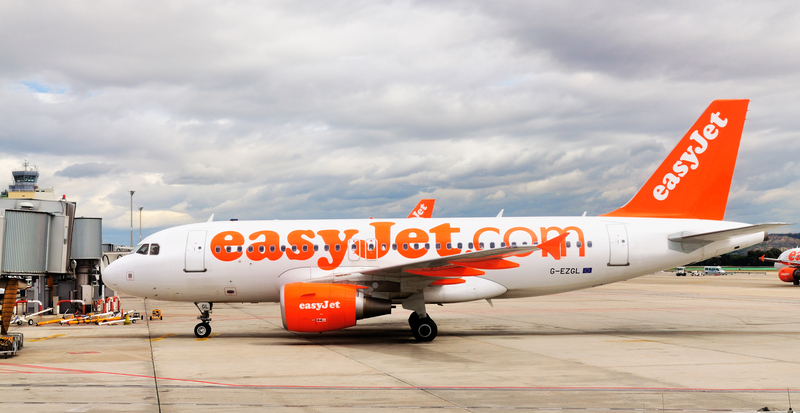
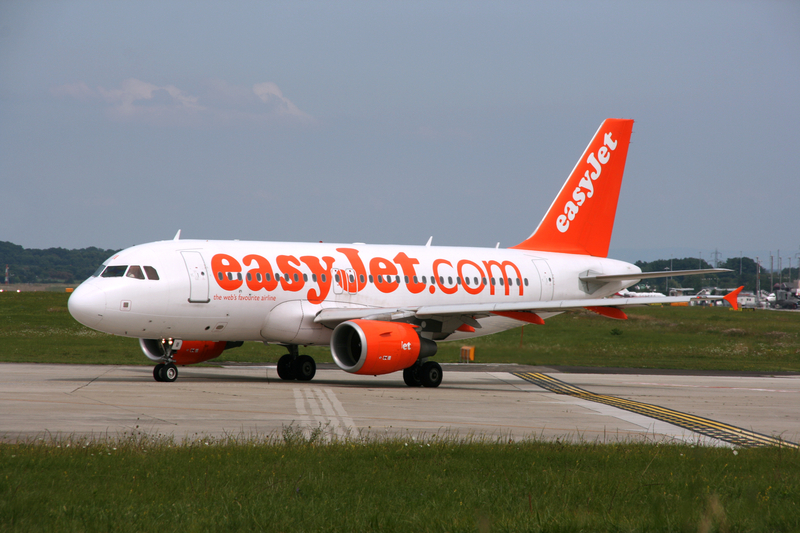
easyJet’s fleet and orderbook would be a major part of any value thesis. The airline operates only Airbus A320-family aircraft, including the A319, A320, A320neo, and A321neo. It also has a substantial orderbook that supports renewal, upgauging, and lower fuel burn over time.
ID 29859474 | Easyjet © Dennis Dolkens | Dreamstime.com
The Aircraft Story: A320 Family Scale and A321neo Upside
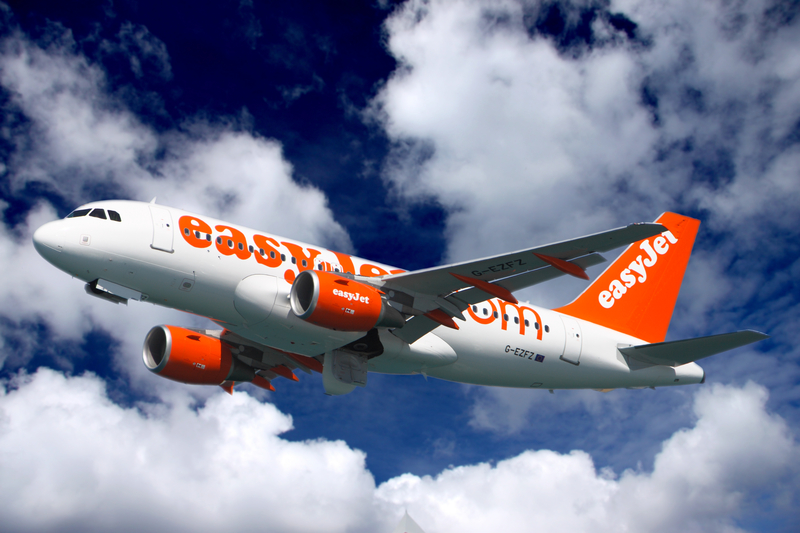
easyJet’s all-Airbus fleet is one of its biggest strategic strengths. The airline’s current fleet includes Airbus A319, A320, A320neo, and A321neo aircraft, giving it commonality across pilots, maintenance, training, spares, and airport operations.
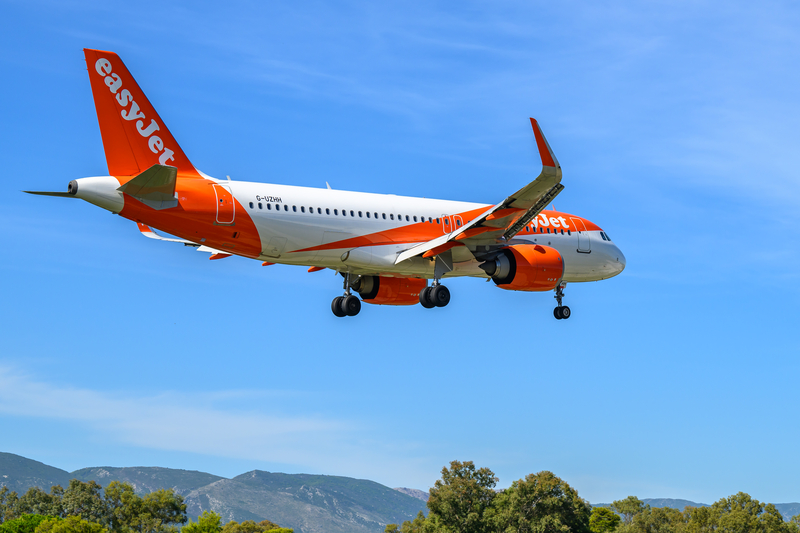
The Airbus A321neo is especially important. easyJet configures the A321neo with 235 seats, making it the airline’s largest aircraft and a powerful tool at slot-constrained airports such as Gatwick (LGW), Geneva (GVA), Amsterdam (AMS), Milan Malpensa (MXP), and Paris Orly (ORY).
That larger gauge helps easyJet grow without necessarily adding more slots. At airports where runway capacity and slot availability are limited, upgauging from an A319 or A320 to an A321neo can add seats at lower unit cost. For a low-cost airline, that is one of the cleanest ways to improve economics.
The A320neo family also supports easyJet’s fuel and emissions strategy. Airbus says the A320neo family delivers lower fuel burn and CO2 emissions compared with previous-generation aircraft, while easyJet has been steadily modernizing its fleet around newer-generation aircraft.
For Castlelake, that fleet profile likely matters. A large Airbus narrowbody operator with valuable slots and a major orderbook offers multiple levers: fleet renewal, aircraft financing, sale-and-leaseback optimization, gauge planning, and potentially tighter capital allocation away from weaker flying.
The Deal Would Take easyJet Private
If completed, the transaction would remove easyJet from the public markets and place it under private ownership.
That could give management more room to make strategic changes without quarterly market pressure. A private easyJet could potentially move faster on fleet financing, network pruning, cost restructuring, and investment in easyJet Holidays. It could also take a longer view on fleet renewal and airport positioning.
There is a tradeoff. Public-market shareholders get liquidity and a visible valuation. Private ownership can bring sharper capital discipline, but it also raises questions about leverage, labor relations, growth priorities, and whether the airline’s network strategy changes under a new owner.
In the airline industry, taking a carrier private is never just a financial exercise. Airlines are operationally complex, politically visible, labor-intensive, and regulated across multiple jurisdictions. easyJet employs roughly 19,000 people and operates across Europe, so any ownership change will be watched closely by regulators, unions, airport partners, and governments.
ID 18151702 © Brett Critchley | Dreamstime.com
EU Ownership Rules Are a Major Hurdle
The regulatory question is not a detail. It may be one of the central issues in the entire deal.
Airlines operating within the European Union must meet ownership and control requirements that generally require majority ownership and effective control by EU nationals. easyJet is headquartered in the United Kingdom, but it operates a major pan-European airline group with important EU operations, including easyJet Europe.
Because Castlelake is U.S.-based, it cannot simply buy and control the European airline operation in a way that violates EU airline ownership rules. Reuters reported that Castlelake previously proposed a structure in which it would own 49% of the bidding vehicle, with the balance held by EU nationals including former Malaysia Airlines chief executive Peter Bellew and senior aviation executive Mark Breen.
That structure would likely receive heavy scrutiny. Regulators will not only look at share percentages. They will look at control, governance, decision-making rights, financing arrangements, board composition, and whether EU nationals genuinely control the airline where required.
This is one reason the agreement in principle should not be treated as a finished deal. The financial price may now be acceptable to easyJet’s board, but the ownership structure still has to work.
Gatwick, Geneva and Paris Are the Prize Assets
For airline professionals, the most interesting assets are easyJet’s constrained-airport positions.
At London Gatwick (LGW), easyJet has scale in one of Europe’s most valuable short-haul leisure markets. Gatwick gives easyJet access to London-origin passengers, inbound tourism, UK-Europe VFR traffic, beach markets, city routes, and strong package-holiday flows. It is also the natural home for a large part of the easyJet Holidays business.
Geneva (GVA) is another high-value airport. It combines business traffic, diplomatic demand, affluent leisure passengers, ski-season flows, and cross-border catchment from Switzerland and France. easyJet’s Geneva base gives it a strong position in one of Europe’s most lucrative short-haul markets.
Paris Charles de Gaulle (CDG) and Paris Orly (ORY) add further strategic depth. CDG gives easyJet access to France’s largest global gateway, while ORY is one of the most constrained and valuable airports in Europe for short-haul and domestic French flying.
Those slots and bases are difficult to reproduce. Any buyer looking at easyJet is not just buying an airline. It is buying access.
ID 7013221 | Easyjet © Tupungato | Dreamstime.com
A Competitive Market With Ryanair, Wizz Air and Jet2
easyJet’s challenge is that it operates in one of the most competitive airline markets in the world.
Ryanair remains Europe’s largest low-cost carrier and has built an enormous cost advantage around high aircraft utilization, dense seating, direct distribution, and aggressive airport cost discipline. Wizz Air is a major competitor in Central and Eastern Europe and has a large A321neo-family orderbook, though it has faced engine-related operational disruption. Jet2 has become a formidable UK leisure competitor with a strong package-holiday model.
easyJet sits in a different place. It is not as cost-aggressive as Ryanair, but it has stronger access to some primary airports. It has a major brand in the UK and continental Europe. It also has a fast-growing holidays business, which gives it more control over the leisure travel value chain than a seat-only airline model.
That may be part of Castlelake’s attraction. easyJet has pressure points, but it also has assets that competitors cannot easily duplicate.
Founder Stelios Haji-Ioannou Remains a Key Figure
Sir Stelios Haji-Ioannou, easyJet’s founder, remains the airline’s largest investor through his family stake of more than 15%. If the deal is completed at the proposed price, The Guardian reported that the stake could be worth nearly £800 million.
Stelios has had a long and sometimes combative relationship with easyJet management, especially over fleet growth and capital allocation. His position will matter because any takeover requires shareholder support, and a large founding shareholder can influence sentiment around whether the price is acceptable.
The £6.90-per-share proposal is high enough for the board to continue, but not so high that every shareholder will necessarily view it as a clear win. Some investors may believe easyJet is being bought before the full benefits of fleet renewal, holidays growth, and network optimization are reflected in the share price.
That debate will intensify if Castlelake submits a firm offer before the August 3 deadline.
ID 341602368 © Andrew David Periam | Dreamstime.com
What Could Change Under Castlelake
If Castlelake completes the takeover, the most likely changes would not be immediate rebranding or a dramatic route-map overhaul. easyJet is a strong consumer brand, and that brand has value.
The more likely changes would be behind the scenes: aircraft financing, ownership and lease structures, fleet delivery pacing, capital spending discipline, network profitability review, and perhaps a harder look at underperforming bases or routes.
The A321neo could become even more central to the strategy. Upgauging at slot-constrained airports is one of easyJet’s best ways to grow capacity without adding complexity. The holidays business could also receive more investment, because it gives easyJet a higher-margin revenue stream tied directly to its leisure network.
A private owner may also look closely at whether easyJet’s airport portfolio is being used to maximum effect. In a constrained European airport market, every slot pair matters. The question will be whether Castlelake sees easyJet primarily as a growth platform, an asset-optimization opportunity, or both.
Bottom Line
easyJet’s agreement in principle with Castlelake is a major moment for European aviation, but it is not yet a completed takeover. The £6.90-per-share proposal values the airline at up to £5.5 billion on a fully diluted basis, and easyJet’s board has said it would be minded to recommend the offer if Castlelake submits a firm bid by August 3.
The strategic logic is clear. easyJet brings a powerful European low-cost brand, a large all-Airbus fleet, valuable positions at slot-constrained airports such as Gatwick (LGW), Geneva (GVA), Paris Charles de Gaulle (CDG), and Paris Orly (ORY), and a growing holidays business. Castlelake brings aviation finance experience and a clear understanding of aircraft as both operational tools and financial assets.
The hard part is what comes next. Castlelake still needs to formalize the offer, satisfy UK takeover rules, deal with European ownership and control requirements, win shareholder support, and show regulators that easyJet’s operating structure will remain compliant.
If the deal closes, easyJet would enter a very different chapter: still orange, still low-cost, still Airbus, but privately owned and potentially run with a sharper focus on fleet value, slot productivity, and disciplined growth.