Eurowings Adds Pristina, Tbilisi And Belgrade From Cologne/Bonn In Summer Network Push
Eurowings is adding three capital-city routes from its Cologne/Bonn base, strengthening the Lufthansa Group carrier’s position at one of its most important German airports and giving travelers in North Rhine-Westphalia more nonstop access to Southeast Europe and the Caucasus.

The new routes connect Cologne Bonn Airport (CGN) with Pristina International Airport (PRN) in Kosovo, Tbilisi International Airport (TBS) in Georgia, and Belgrade Nikola Tesla Airport (BEG) in Serbia.
Pristina (PRN) launched on July 1, Tbilisi (TBS) followed on July 2, and Belgrade (BEG) is scheduled to begin on July 17. Together, the additions give Eurowings a stronger summer offer from Cologne/Bonn (CGN) across visiting-friends-and-relatives markets, leisure destinations, and culturally important city pairs that are not always well served by nonstop flights from western Germany.
For Cologne/Bonn (CGN), the expansion is also symbolic. Eurowings calls the airport its home base, and these routes show the airline continuing to build around demand that sits between classic holiday traffic and family-driven travel.
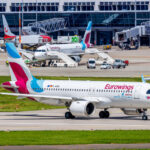
Three Capital Routes In Three Weeks
The launch pattern is compact. Eurowings is adding three new capital-city routes from Cologne/Bonn (CGN) within roughly three weeks.
Pristina (PRN) is now served twice weekly, on Wednesdays and Sundays. Tbilisi (TBS) begins with one weekly flight on Thursdays before increasing to two weekly flights, on Mondays and Thursdays, from July 20. Belgrade (BEG) will operate twice weekly, on Mondays and Fridays, from July 17.
That frequency profile is typical for Eurowings’ summer growth strategy. These are not daily trunk routes designed primarily around business shuttle traffic. They are targeted point-to-point markets where two weekly flights can support family visits, summer leisure, longer stays, and flexible travel patterns.
The Monday/Friday Belgrade (BEG) schedule is particularly useful for long weekends and visiting-friends-and-relatives traffic. The Wednesday/Sunday Pristina (PRN) schedule works well for weeklong stays or split-week travel. Tbilisi (TBS), the longest of the three routes, gains a more balanced pattern once Monday service is added from July 20.
Why Pristina Matters From Cologne/Bonn
The Cologne/Bonn (CGN)–Pristina (PRN) route is likely to be the most diaspora-driven of the three additions.
Kosovo has one of the strongest diaspora travel markets in Europe, and Germany is a major source country for travel to and from Pristina. For many passengers, this is not a once-a-year vacation route. It is a family, work, education, and community link.
That kind of traffic can be highly resilient. Travelers may be price-sensitive, but they also value nonstop service, predictable schedules, baggage options, and flights timed around school breaks and holiday periods. A two-weekly Eurowings service from Cologne/Bonn (CGN) gives passengers in the Rhine-Ruhr region another direct option to Kosovo without needing to travel through Düsseldorf (DUS), Frankfurt (FRA), Munich (MUC), Vienna (VIE), or another connecting airport.
Pristina International Airport (PRN) is Kosovo’s main international gateway and handles a large amount of traffic tied to family travel and migration flows. For Eurowings, it is exactly the kind of market that fits a value-carrier model: strong ethnic demand, high seasonal peaks, and enough local traffic to support nonstop service without relying on hub connections.
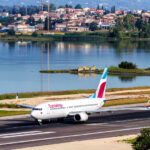
Tbilisi Extends Eurowings Deeper Into The Caucasus
Tbilisi (TBS) is the most strategically distinctive route in the group.
At roughly 1,900 miles from Cologne/Bonn (CGN), Tbilisi is a longer medium-haul sector and sits well beyond Eurowings’ traditional near-European beach network. It gives the airline a direct link into the Caucasus, a region that has become increasingly popular with European travelers looking for city breaks, food and wine tourism, mountain access, and cultural travel.
Georgia has built a strong tourism identity around Tbilisi’s old town, sulfur baths, wooden balconies, wine culture, and access to the Caucasus Mountains. For German travelers, the country offers a mix of value, scenery, history, and a travel experience that feels different from more established Mediterranean markets.
From a network-planning perspective, Tbilisi (TBS) also helps diversify Cologne/Bonn’s summer schedule. It is not a pure beach route, and it is not solely a family-visit market. It can draw from tourism, business, visiting-friends-and-relatives demand, and passengers with regional ties across Georgia and the wider Caucasus.
The route will initially operate once weekly before increasing to twice weekly from July 20. That staged approach is sensible. Eurowings can enter the market carefully, build awareness, and avoid placing too much capacity into a route that is longer and more operationally demanding than Belgrade (BEG) or Pristina (PRN).
Belgrade Adds A Strong Southeast Europe Market
Belgrade (BEG) is another logical addition from Cologne/Bonn (CGN).
Serbia’s capital has become one of Southeast Europe’s most dynamic city markets, with demand driven by tourism, business, family travel, students, events, and the Serbian diaspora in Germany. Belgrade Nikola Tesla Airport (BEG) has also grown rapidly in recent years, supported by Air Serbia’s network expansion and rising international interest in the city.
For Eurowings, Cologne/Bonn (CGN)–Belgrade (BEG) is a shorter and more straightforward route than Tbilisi. The sector is around two hours and can be operated efficiently with Airbus A320-family equipment. The Monday/Friday pattern is also commercially useful, supporting weekend travel in both directions.
Belgrade’s appeal is broad. It is a capital-city destination with nightlife, restaurants, the Kalemegdan Fortress, the confluence of the Sava and Danube rivers, and a growing reputation as a city-break market. But it is also a practical route for family and business travel between Serbia and Germany.
That mix gives the route a stronger foundation than a purely seasonal leisure destination.
Aircraft: Airbus A320 And A321 Family
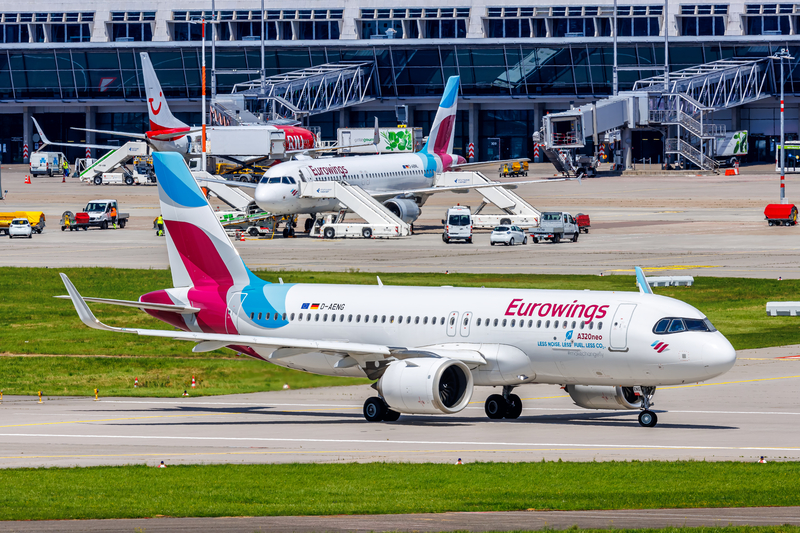
Cologne Bonn Airport says Eurowings will use modern aircraft from the Airbus A320 and A321 family on the new routes.
That is exactly the right fleet for this kind of network. The Airbus A320 family is the backbone of European short- and medium-haul flying, giving airlines a range of aircraft sizes, common pilot training, strong operating economics, and flexibility across sectors from under one hour to more than four hours.
Eurowings’ A320-family fleet includes Airbus A319, A320, A320neo, A321, and A321neo aircraft. The smaller A319 is useful for thinner routes, the A320 and A320neo are the workhorses of the fleet, and the A321/A321neo give the airline more seats where demand is stronger.
That flexibility matters on these routes. Belgrade (BEG) and Pristina (PRN) may be suited to standard A320-family operations with moderate stage lengths and strong seasonal demand. Tbilisi (TBS), by contrast, is a longer mission where aircraft range, fuel planning, crew timing, and schedule reliability become more important.
The A320 family allows Eurowings to rotate aircraft across different route types without building a specialized subfleet for each market. That is one of the reasons the family is so dominant in European point-to-point operations.
A Value Carrier, Not A Pure Ultra-Low-Cost Play
Eurowings positions itself as the Lufthansa Group’s value airline, not as a pure ultra-low-cost carrier.
That distinction matters on routes such as Cologne/Bonn (CGN)–Pristina (PRN), Cologne/Bonn (CGN)–Tbilisi (TBS), and Cologne/Bonn (CGN)–Belgrade (BEG). Many passengers will be price-sensitive, but they may also care about baggage, schedule reliability, airport convenience, rebooking options, and the reassurance of flying with a Lufthansa Group airline.
Eurowings has built much of its business around this middle ground. It is more flexible and leisure-oriented than Lufthansa mainline, but less bare-bones than the most aggressive low-cost competitors. That makes it well suited to routes where passengers may be traveling for family reasons, carrying checked baggage, or booking around school holidays and work schedules.
For Cologne/Bonn (CGN), that product positioning is useful. The airport serves a large catchment area across Cologne, Bonn, the Rhine-Ruhr region, and parts of western Germany. It attracts leisure travelers, ethnic travel, business traffic, and price-conscious passengers who want direct flights without using larger airports.
Cologne/Bonn’s Role In Eurowings’ Network
Cologne/Bonn (CGN) is one of Eurowings’ most important bases and a natural platform for routes like these.
The airport sits in one of Europe’s densest population regions and gives Eurowings access to a large local market without relying on hub connections. That makes it different from Lufthansa’s Frankfurt (FRA) or Munich (MUC) operations. Cologne/Bonn is about direct traffic, local demand, and point-to-point flying.
The three new routes fit that model perfectly. Pristina (PRN), Tbilisi (TBS), and Belgrade (BEG) are not primarily about connecting passengers through Cologne/Bonn. They are about linking the Rhine-Ruhr catchment directly with places where people want to go.
Cologne/Bonn also has a strong leisure profile. The airport’s summer schedule includes beach, island, city, family, and diaspora markets, and Eurowings is one of the key airlines shaping that mix. The addition of three capital cities gives CGN more depth beyond traditional Mediterranean holiday flying.
More Than Tourism
It would be too narrow to view the three routes only as city-break additions.
Pristina (PRN) is heavily tied to diaspora and family travel. Belgrade (BEG) blends family, business, and leisure demand. Tbilisi (TBS) brings tourism, culture, and regional connectivity into the mix. Together, the routes show Eurowings targeting demand that is more durable than a simple beach-season spike.
That matters in a summer schedule. Airlines want destinations that can fill aircraft during peak holiday weeks, but they also want routes with enough underlying demand to avoid collapsing outside the highest peak. Family and diaspora markets can help with that, because passengers travel for weddings, holidays, school breaks, work, and family obligations across a longer calendar.
For Cologne/Bonn (CGN), this adds resilience to the route network. For Eurowings, it improves aircraft utilization by giving the airline more varied missions from a strong base.
Competitive And Strategic Context
The Cologne/Bonn market is competitive, especially for leisure flying.
Travelers in the region can choose between Cologne/Bonn (CGN), Düsseldorf (DUS), Dortmund (DTM), Frankfurt (FRA), and other airports depending on destination, fare, schedule, and airline. That means Eurowings needs routes that give passengers a reason to choose CGN.
Nonstop service is one of the strongest reasons. If Eurowings can offer a direct flight from Cologne/Bonn to Pristina, Tbilisi, or Belgrade, it reduces the need for passengers to connect elsewhere or drive to another airport.
The routes also help Eurowings defend its position at CGN. As Europe’s leisure and visiting-friends-and-relatives markets become more competitive, airlines that hold strong local airport positions need to keep adding relevant destinations. Otherwise, passengers will migrate to airports with better nonstop coverage.
These additions show Eurowings using its home-base advantage to keep Cologne/Bonn relevant in markets with real demand.
Bottom Line
Eurowings’ new Cologne/Bonn routes to Pristina (PRN), Tbilisi (TBS), and Belgrade (BEG) are small in frequency but meaningful in strategy.
Pristina gives the airline a strong Kosovo diaspora and family-travel market. Tbilisi extends Eurowings deeper into the Caucasus with a longer medium-haul route that appeals to tourism, culture, and regional demand. Belgrade adds one of Southeast Europe’s most important capital cities and strengthens the airline’s Balkan network.
All three routes operate from Cologne Bonn Airport (CGN), one of Eurowings’ most important bases. Pristina is served Wednesdays and Sundays, Tbilisi begins weekly on Thursdays before increasing to Mondays and Thursdays from July 20, and Belgrade starts July 17 with Monday and Friday flights.
The aircraft choice also fits the mission. Eurowings will use Airbus A320 and A321-family aircraft, giving it the right range, capacity, and operational flexibility for short- and medium-haul routes from western Germany.
For passengers, the benefit is simple: more nonstop access from Cologne/Bonn to capital cities that previously required more complicated travel. For Eurowings, the routes reinforce CGN as a home-base platform for leisure, family, business, and diaspora travel — exactly the kind of point-to-point demand where the airline’s value-carrier model works best.