British Airways Adds A Heathrow-Orlando Summer Burst As Florida Demand Peaks
British Airways is adding a short, sharp burst of Heathrow–Orlando flying this summer, restoring nonstop service between London Heathrow Airport (LHR) and Orlando International Airport (MCO) for six weeks during the height of the UK school-holiday travel period.

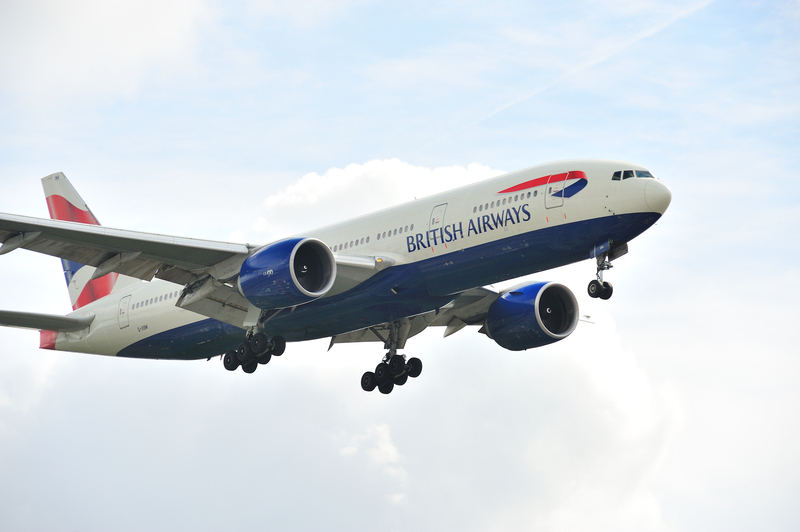
The limited-time route begins on July 21, 2026, and is scheduled to operate through August 29, 2026. Flights will run three times weekly on Tuesdays, Thursdays, and Saturdays using a Boeing 777-200ER configured with British Airways’ Club Suite business-class product.
The service is not replacing British Airways’ larger Orlando operation from London Gatwick Airport (LGW). Instead, it adds Heathrow (LHR) capacity at the exact point in the summer when UK demand for Central Florida is strongest. For a market driven heavily by families, theme-park travel, cruises, holiday packages, and premium leisure demand, the timing is hard to miss.
Heathrow Returns To Orlando For A Six-Week Summer Window
British Airways will operate the Heathrow (LHR)–Orlando (MCO) service as BA205 westbound and BA204 eastbound.

The schedule is unusually early by transatlantic standards. BA205 departs Heathrow (LHR) at 08:20 and arrives in Orlando (MCO) at 12:55 local time. The return flight, BA204, departs Orlando (MCO) at 18:10 and arrives back at Heathrow (LHR) at 07:45 the following morning.
| Flight | Route | Days | Departure | Arrival | Aircraft |
|---|---|---|---|---|---|
| BA205 | London Heathrow (LHR) – Orlando (MCO) | Tue, Thu, Sat | 08:20 | 12:55 | Boeing 777-200ER |
| BA204 | Orlando (MCO) – London Heathrow (LHR) | Tue, Thu, Sat | 18:10 | 07:45+1 | Boeing 777-200ER |
The early Heathrow departure is commercially useful. It gets passengers into Orlando (MCO) early enough to reach hotels, rental cars, resorts, or cruise-prepositioning plans the same afternoon. The evening return from Orlando gives UK travelers most of the final day in Central Florida before an overnight flight back to London.
For families traveling to Walt Disney World, Universal Orlando, SeaWorld, Port Canaveral cruises, or Florida beach extensions, that schedule is attractive. It avoids a late-night U.S. arrival and gives travelers a more practical first day on the ground.
Why Heathrow–Orlando Is Back Now
The reason for the route’s short operating window is straightforward: UK school holidays.
Orlando is one of the most seasonal U.S. long-haul leisure destinations in the British Airways network. Demand rises sharply during school breaks, especially in late July and August, when families are more willing to pay for nonstop flights and package holidays.
British Airways already serves Orlando (MCO) from Gatwick (LGW), where its Florida leisure operation has historically been concentrated. Gatwick works well for holiday traffic because it has strong leisure distribution, British Airways Holidays feed, and aircraft configurations designed around higher economy capacity.
Heathrow (LHR), however, adds a different layer. It gives British Airways more premium traffic potential, better long-haul connectivity, and easier access for passengers connecting from UK regions, Europe, the Middle East, India, and other points in the BA and oneworld network.
That makes the Heathrow (LHR)–Orlando (MCO) service less about year-round Orlando volume and more about peak-season network optimization. British Airways can use Heathrow slots and a premium-equipped 777 during a high-demand period, then pull the route when the summer surge fades.
The Aircraft: Boeing 777-200ER With Club Suite
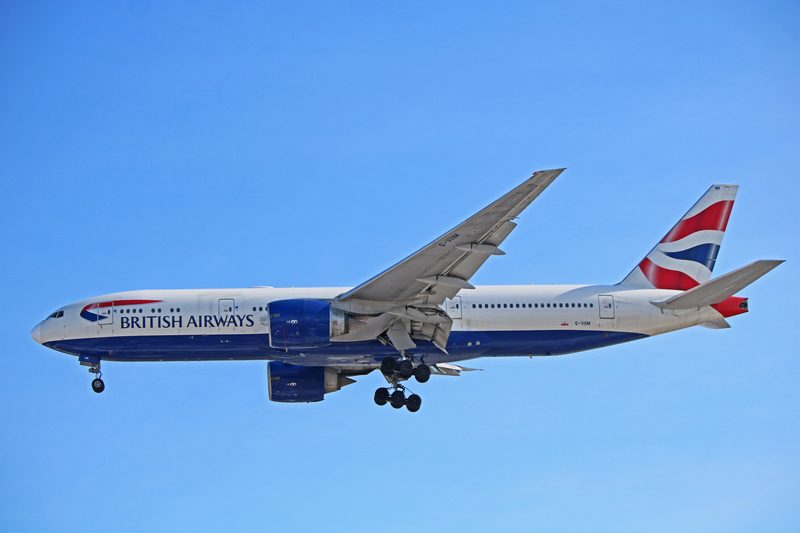
British Airways is using a 272-seat Boeing 777-200ER on the Heathrow (LHR)–Orlando (MCO) service.
This is not the high-density Gatwick leisure 777 layout. The Heathrow aircraft scheduled for the route is a three-class 777-200ER with 48 Club World Suites, 40 World Traveller Plus seats, and 184 World Traveller seats.
That cabin mix matters. The aircraft has no First cabin, but it does offer British Airways’ newest Club World Suite product, giving business-class passengers direct aisle access, a sliding privacy door, a fully flat bed, and a much more competitive transatlantic hard product than the airline’s older Club World layout.
For Orlando, that may sound more premium than the market requires, but the choice makes sense. Central Florida is not only a budget family market. It also attracts high-spending leisure travelers, cruise passengers, villa renters, corporate incentive groups, convention traffic, and families willing to pay for comfort on an eight- to nine-hour flight.
The Boeing 777-200ER remains one of British Airways’ most important long-haul aircraft. The type has the range, cargo capability, and cabin flexibility to serve everything from premium-heavy transatlantic routes to leisure-heavy Florida flying. BA’s 777 fleet includes several layouts, and the airline uses those configurations carefully depending on route economics.
Heathrow Versus Gatwick: Two Different Orlando Products
The Heathrow (LHR)–Orlando (MCO) service should be understood alongside British Airways’ Gatwick (LGW)–Orlando (MCO) operation, not instead of it.
Gatwick is British Airways’ main Florida leisure base. In July, BA is scheduled to operate Orlando from Gatwick with two daily flights, using larger, more leisure-oriented Boeing 777-200ER aircraft. Those aircraft typically carry more passengers and are designed around holiday-market volume.
Heathrow is different. LHR gives BA access to a much deeper connecting network and a more premium passenger base. A traveler connecting from Manchester, Edinburgh, Paris, Amsterdam, Dubai, Delhi, or Madrid may find Heathrow easier to use than Gatwick, especially when booked through BA’s global network.
That is the strategic value of the temporary Heathrow route. It allows British Airways to capture incremental Orlando demand from passengers who are better served through LHR while leaving Gatwick to handle the larger leisure flows.
It also gives BA a stronger answer to Virgin Atlantic, which has long used Heathrow for Florida flying and benefits from a strong leisure brand in the Orlando market.
ID 143062202 © Tom Samworth | Dreamstime.com
Orlando Remains One Of The UK’s Strongest U.S. Leisure Markets
Orlando (MCO) is not a typical U.S. long-haul destination for British Airways.
Unlike New York (JFK), Boston (BOS), Chicago (ORD), Washington Dulles (IAD), Los Angeles (LAX), or San Francisco (SFO), Orlando is not primarily a corporate market. Its strength comes from leisure, and especially from UK families who plan trips months in advance around school calendars.
That gives airlines a different booking curve and revenue profile. Passengers may book far ahead through holiday packages. Baggage demand is high. Cabin mix matters, but not in the same way as on a finance-heavy New York or tech-heavy San Francisco route. Premium cabins can still sell, but much of the aircraft economics depends on filling economy and premium economy seats at strong holiday-period fares.
British Airways’ decision to add Heathrow capacity for only six weeks reflects that reality. The airline is not pretending Orlando needs year-round Heathrow service at the same scale as New York or Miami. It is using a peak-demand window where the additional capacity is most likely to work.
BA’s U.S. Network Is Heavily Heathrow-Led
The Orlando return comes during a summer when British Airways’ U.S. network remains overwhelmingly centered on Heathrow (LHR).
In July 2026, British Airways is scheduled to operate 28 U.S. routes, with most of them from Heathrow and only a small number from Gatwick. That distribution reflects BA’s long-term U.S. strategy: keep the most important premium and connecting markets at LHR, while using LGW for selected leisure-heavy services.
Heathrow gives British Airways its strongest U.S. platform because it brings together corporate demand, premium cabins, alliance feed, transatlantic joint-venture strength, and high-frequency schedules. That is why BA has consolidated some U.S. flying at Heathrow, including routes that previously operated from Gatwick.
The Heathrow–Orlando addition fits into that wider pattern, even though it is temporary. It gives BA another U.S. route from LHR during the busiest summer period and briefly expands the airline’s Heathrow U.S. footprint to include one of the most important Florida leisure markets.
The Route Has Recent History
British Airways has flown Heathrow (LHR)–Orlando (MCO) before, most recently during the pandemic-era network reshuffling.
Those flights were partly a product of unusual operating conditions, when schedules, aircraft deployment, and airport strategies were disrupted across the industry. This 2026 return is different. It is a deliberate, short-term seasonal deployment built around school-holiday demand.
That makes the route more interesting. It is not a distressed schedule move or a temporary pandemic workaround. It is a targeted capacity decision.
British Airways has the data from previous Heathrow–Orlando flying, plus decades of experience in the UK–Central Florida market from Gatwick. The airline knows the seasonality, booking patterns, cabin mix, holiday-package demand, and competitive environment. If it is bringing LHR–MCO back for six weeks, it is because the summer peak makes the numbers worth testing again.
Tampa’s Heathrow Move Shows The Florida Strategy Is Shifting
Orlando is not the only Florida market changing in British Airways’ schedule.
From October 25, 2026, British Airways will move Tampa International Airport (TPA) service from Gatwick (LGW) to Heathrow (LHR). The Tampa route is scheduled to operate five times weekly from Heathrow using the Boeing 787-10 Dreamliner.
That is a very different move from Orlando. Tampa is shifting airports for the winter season and gaining a more premium aircraft with First, Club Suite, World Traveller Plus, and World Traveller cabins. The 787-10 has 256 seats in BA’s configuration, including 8 First, 48 Club Suite, 35 World Traveller Plus, and 165 World Traveller seats.
The move suggests British Airways sees more premium and connecting potential in Tampa than its Gatwick operation was capturing. It also positions BA more directly against Virgin Atlantic, which serves Tampa from Heathrow.
Together, Orlando and Tampa show that BA is being more flexible with Florida. Gatwick remains important for leisure scale, but Heathrow is being used more selectively where premium demand, connectivity, or competitive positioning justify it.
Why The 777-200ER Still Works For Short-Term Peaks
Using a Boeing 777-200ER on a six-week route is a practical fleet decision.
The aircraft is large enough to add meaningful capacity but flexible enough to be redeployed elsewhere once the summer peak ends. Its belly cargo capacity is also useful, though Orlando is primarily a passenger-led market.
The 272-seat Heathrow layout is especially useful because it does not overexpose BA to First Class demand on a leisure-heavy route. Instead, the aircraft puts the premium focus on Club Suite and World Traveller Plus, two cabins that can perform well on long leisure trips when travelers are willing to pay for space but may not need or want a First product.
That makes the aircraft a good match for Orlando. BA gets a modern business-class product, a strong premium economy cabin, and enough economy capacity to serve the family leisure base.
The alternative would be a higher-density Gatwick 777 or a smaller 787. The choice of the 272-seat Heathrow 777 splits the difference: premium enough for LHR, but still large enough for Florida.
What Passengers Should Know
For passengers, the biggest advantage is convenience.
Travelers who prefer Heathrow (LHR), or who need to connect through it, will have a nonstop Orlando option during the most important part of the UK summer. That can simplify journeys for passengers outside London and for international travelers connecting through BA’s Heathrow hub.
The three-weekly schedule is limited, so flexibility will matter. Families booking around school dates may need to adjust departure days or consider Gatwick (LGW) if the Heathrow flights do not match their preferred itinerary.
The Orlando arrival at Terminal C is also worth noting for travelers used to MCO’s older terminal flows. Terminal C is Orlando’s newer international facility, with more modern processing and baggage facilities. For a long-haul arrival from London, that can make a noticeable difference.
The route is scheduled for only six weeks, so it should not be treated as a permanent return unless British Airways later extends or repeats it.
Competitive Implications
British Airways and Virgin Atlantic have long competed heavily in the UK–Florida market.
Virgin has built a strong leisure identity around Orlando and Florida, while British Airways has relied on its scale, holiday business, oneworld connectivity, and dual-airport London strategy. Adding a temporary Heathrow–Orlando flight gives BA another way to compete, particularly for passengers who prefer LHR or who are connecting beyond London.
The timing also helps BA defend share during the most lucrative family-travel weeks. In leisure markets, airlines do not need year-round frequency to make an impact. They need capacity when people are actually traveling and willing to pay.
That is what this route appears designed to do.
Bottom Line
British Airways’ Heathrow (LHR)–Orlando (MCO) return is a short-term route, but a strategically smart one.
From July 21 to August 29, 2026, BA will operate three weekly flights using a 272-seat Boeing 777-200ER with Club Suite, World Traveller Plus, and World Traveller cabins. The service is timed around peak UK school-holiday demand and gives passengers another nonstop option to Central Florida from London’s primary global hub.
This is not a replacement for British Airways’ Gatwick (LGW)–Orlando (MCO) operation. It is a Heathrow overlay for the busiest part of the summer, designed to capture premium leisure, connecting traffic, and families who want nonstop access to Orlando through LHR.
The wider Florida strategy is also evolving. Orlando gets a six-week Heathrow boost in summer, while Tampa (TPA) moves from Gatwick to Heathrow in October with a premium Boeing 787-10. Together, the moves show British Airways using Heathrow more selectively in Florida, not simply for business markets, but for leisure routes where connectivity and premium demand can justify the airport’s scarce capacity.
For travelers, it means more choice. For BA, it is a carefully timed capacity play in one of the strongest leisure corridors across the Atlantic.