Ryanair Changes Family Seating Rules As Regulators Target Ancillary Fees
Ryanair has revised its family seating policy, ending the requirement for parents to pay for a reserved adult seat if they want to be seated next to young children.
The change applies to bookings made from June 25 and brings Ryanair’s family seating policy closer to the approach used by most major European carriers. Families who do not want to pay for reserved seats will now receive free allocated seating after check-in, with children aged 2 to 11 seated next to an accompanying adult on the same booking.
For Europe’s largest airline group, this is a small policy adjustment with a larger commercial story behind it. Ryanair is not abandoning paid seat selection. It is changing where the free option sits in the booking flow, and likely where those passengers sit onboard the aircraft.
What Ryanair Is Changing
Under the revised policy, families now have two options.
They can pay to reserve seats in advance, choosing specific rows and seat positions at the time of booking. In that case, children’s seats must be selected beside the adult’s reserved seat, and Ryanair says one adult can select seats for up to four children on the same booking at no additional seat-selection charge for the children.
Alternatively, families can skip paid seat selection and accept free random allocation after online check-in. In that case, children aged 2 to 11 will still be seated next to an accompanying adult, but Ryanair says those seats are likely to be toward the rear of the aircraft because forward rows and higher-demand locations are normally sold first.
That is the real operational shift. Previously, Ryanair’s model gave families certainty at the time of booking, but required at least one adult to pay for a reserved seat. Now the airline is offering free adjacent seating, but moving the certainty later in the journey and placing most of that free inventory in less commercially valuable parts of the cabin.
For passengers, the change means family seating is no longer automatically tied to an adult paid seat reservation. For Ryanair, it preserves the paid-seat upsell for customers who care about location, early certainty, forward rows, or specific seat numbers.
Why The Rear Of The Aircraft Matters
Ryanair’s comment that free family allocations will likely be toward the rear of the cabin is not incidental. It reflects how low-cost carriers manage seat inventory.
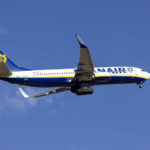
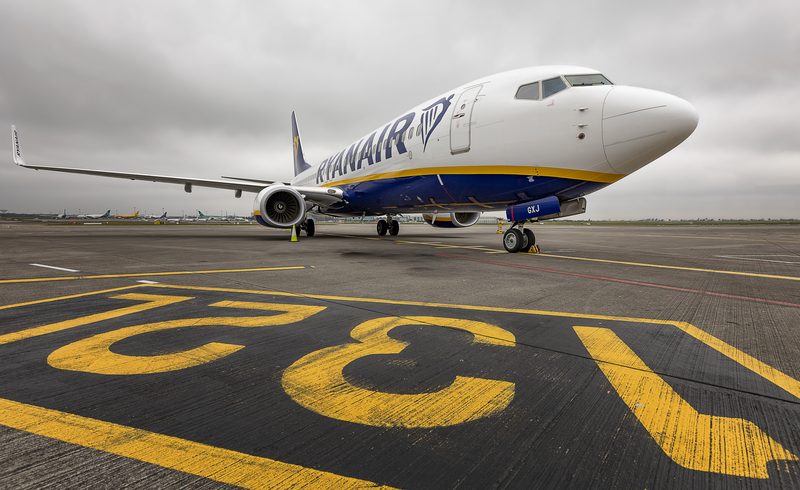
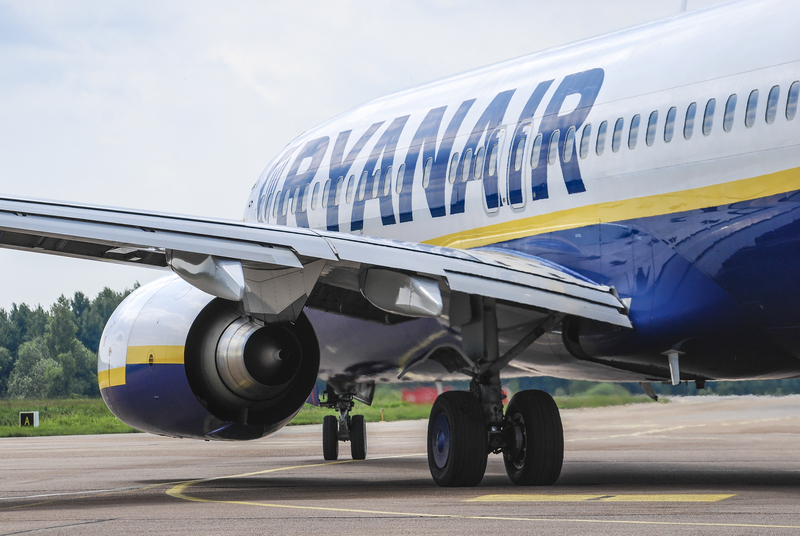
On a typical Ryanair Boeing 737-800, the aircraft is configured with 189 all-economy seats. On the newer Boeing 737-8200, which Ryanair brands as the “Gamechanger,” the cabin carries 197 seats. The airline group also has Boeing 737 MAX 10 aircraft on order, a larger type planned with 228 seats.
In a high-density single-class cabin, not all seats have equal commercial value. Forward rows, extra-legroom rows, and seats that allow faster boarding or deplaning are easier to sell. Middle seats, rear rows, and less convenient locations are typically less valuable.
That makes the new policy commercially logical. Ryanair can comply with regulator expectations by seating children next to an adult free of charge, while protecting the revenue potential of premium rows and preferred locations. Families that simply need to sit together can do so at no extra cost. Families that want to sit near the front, avoid the back of the aircraft, or lock in seats early can still pay.
This is the same basic ancillary-revenue logic that underpins seat selection across the low-cost sector. The fare buys transportation. The extras create segmentation.
ID 56088932 © MrFly | Dreamstime.com
The CMA Pressure Behind The Move
The change follows scrutiny from the UK Competition and Markets Authority, which opened an investigation into Ryanair’s previous family seating approach earlier in June.
The CMA’s concern was not simply that Ryanair charged for seats. Many airlines do that. The issue was that Ryanair’s own terms required at least one adult to sit with children aged 2 to 11, while the airline charged that adult a mandatory family seat fee to make the arrangement happen.
For other passengers, seat reservation remained optional. For families with young children, the CMA questioned whether the fee was effectively unavoidable and whether it could amount to an unfair contract term under consumer law.
Ryanair strongly rejected the criticism. The airline argued that its previous policy was transparent, gave families confirmed seats at the time of booking, and allowed up to four children to sit next to the paying adult without additional child seat fees.
That argument is not without logic. Ryanair’s previous model did give families certainty early in the process, which many parents value. The problem, from the regulator’s perspective, was that the adult charge sat next to a safety-related seating requirement. When a business requires a customer to do something and then charges them for the mechanism to do it, regulators tend to look closely.
O’Leary’s Argument: Transparency Versus Standardization
Ryanair Chief Executive Michael O’Leary has framed the policy change as a reluctant move toward industry-standard practice rather than a consumer victory.
His argument is that Ryanair’s former approach was clearer: pay one discounted adult seat fee, receive adjacent seating for up to four children, and know the seats at the time of booking. Under the new model, families who do not pay will sit together for free but may need to wait until after check-in to learn where those seats are.
That is a classic Ryanair position. The airline often argues that regulators focus on headline fees while ignoring the total cost advantage Ryanair delivers through lower base fares. In Ryanair’s view, unbundling is not anti-consumer; it is the mechanism that lets passengers choose what they value.
The regulator’s view is different. The CMA is focused on whether unavoidable or near-unavoidable charges are being presented clearly and whether parents are being asked to pay for something the airline is already required to manage safely.
Both positions can be true at once. Ryanair’s unbundled model has helped make air travel cheaper across Europe. But the most aggressive versions of unbundling also create pressure points where optional extras begin to feel mandatory.
Aircraft Cabin Economics Are Central To The Story
This policy change is easier to understand when viewed through the cabin of a Ryanair aircraft.
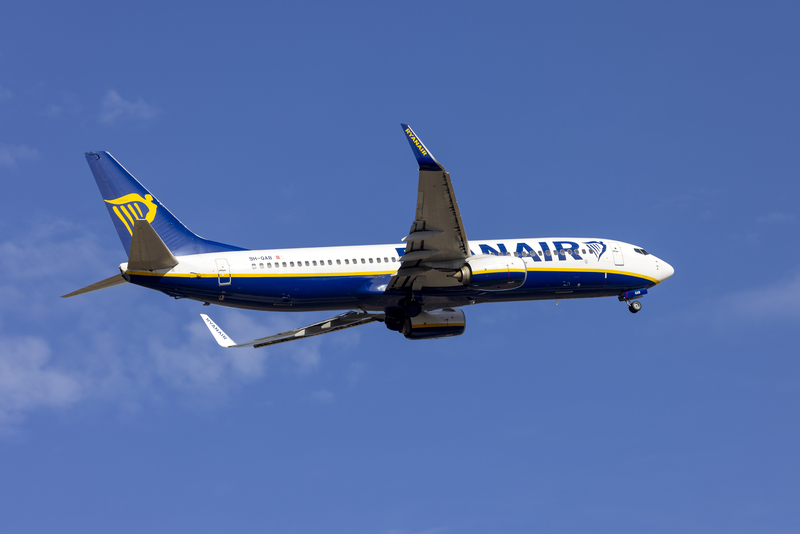
Ryanair’s network is built around high-density narrowbody aircraft, especially the Boeing 737-800 and Boeing 737-8200. The Boeing 737-800 has long been the backbone of the airline’s short- and medium-haul operation, while the 737-8200 gives Ryanair eight more seats per aircraft and improved fuel burn compared with older 737 Next Generation aircraft.
For an airline operating hundreds of short European sectors every day from airports such as Dublin (DUB), London Stansted (STN), Manchester (MAN), Milan Bergamo (BGY), Madrid (MAD), Barcelona (BCN), Rome Ciampino (CIA), and Vienna (VIE), the difference between sold and unsold ancillary inventory is material.
Seat selection is especially attractive because it produces revenue without adding meaningful aircraft weight, handling complexity, catering cost, or airport infrastructure requirements. Once the seat map exists, monetizing preferred locations is largely a pricing and distribution exercise.
That is why Ryanair will be careful not to weaken its paid-seat model more than necessary. The airline can allocate rear-cabin adjacent seats to families for free while continuing to sell forward seats, extra-legroom rows, and preferred locations to passengers who want them.
ID 341890260 | Air © Gordzam | Dreamstime.com
What This Means For Families
For families, the new policy should reduce one of the more irritating booking-stage costs on Ryanair.
Parents traveling with children aged 2 to 11 can now choose free random allocation and still expect the child to be seated next to an accompanying adult. That removes the need to pay the adult seat fee simply to satisfy the family-seating requirement.
However, the tradeoff is control. Families using the free option may not know their exact seats until after check-in, and they should expect rear-cabin assignments more often than forward-cabin seating. Other adults or teenagers on the same booking may also be seated separately, depending on the aircraft load and seat availability.
That means the policy is better for families whose main priority is having each young child beside an adult. It is less useful for larger groups that want everyone in the same row, families who strongly prefer forward seating, or passengers who want certainty at the time of booking.
In those cases, paying for reserved seats will remain the cleaner option.
A Wider Test Of Low-Cost Airline Fees
The Ryanair case is part of a broader regulatory focus on airline ancillary revenue.
Across Europe, airlines have increasingly separated the fare from the full travel experience. Seat selection, cabin bags, priority boarding, checked luggage, payment methods, airport check-in, and itinerary changes can all become separate revenue lines. For low-cost carriers, that model is fundamental. For regulators, the question is whether consumers understand the final price early enough to compare options properly.
Family seating is especially sensitive because it involves children and safety. Regulators are more likely to challenge a fee when the customer is not merely choosing comfort, but trying to comply with a rule or avoid a potentially unsafe seating arrangement.
That is why this policy shift matters beyond Ryanair. Other airlines will be watching closely, especially carriers that rely heavily on ancillary fees but want to avoid being the next test case for consumer-law enforcement.
Bottom Line
Ryanair’s revised family seating policy is not a major retreat from its low-cost model. It is a targeted adjustment designed to satisfy regulatory pressure while preserving the economics of paid seat selection.
Families who do not pay for seats will now receive free adjacent seating after check-in, with children aged 2 to 11 seated beside an accompanying adult. In practice, many of those free assignments are likely to be in the rear of Ryanair’s Boeing 737 cabins, while preferred seats and forward rows remain paid options.
For passengers, the change removes a frustrating mandatory-style fee. For Ryanair, it protects the core ancillary model that supports its low base fares. For regulators, it is an early sign that family seating may become one of the next major battlegrounds in airline pricing transparency.