Israir’s First Airbus A330 Arrives In Tel Aviv Ahead Of New York Launch
Israir has taken delivery of its first Airbus A330-200, marking a major step toward the airline’s planned return to long-haul flying.

The aircraft, registered 4X-BAK, arrived at Ben Gurion Airport (TLV) after preparation work in the United States. It is the first of two Airbus A330 widebodies purchased by the Israeli carrier for its planned Tel Aviv–New York operation.
The aircraft is a former American Airlines and US Airways Airbus A330-243. It previously flew as N284AY and had been out of regular airline service since the early months of the COVID-19 pandemic.
For Israir, this is more than a fleet addition. It is the aircraft that allows the airline to re-enter the transatlantic market after more than a decade away.
A Former American Airlines A330 Finds A New Home
The newly arrived aircraft has a long and interesting history.

The Airbus A330-243 was delivered to US Airways in 2010. It later joined American Airlines after the US Airways–American merger and became part of American’s inherited A330 fleet.
American retired its Airbus A330 aircraft during the pandemic as it simplified its long-haul fleet. Many of those aircraft were parked in storage at Roswell Air Center (ROW) in New Mexico.
The aircraft that is now 4X-BAK was one of them.
After years out of service, the aircraft passed through Jetran and has now emerged in a very different role: helping a smaller Israeli airline launch its biggest international expansion in years.

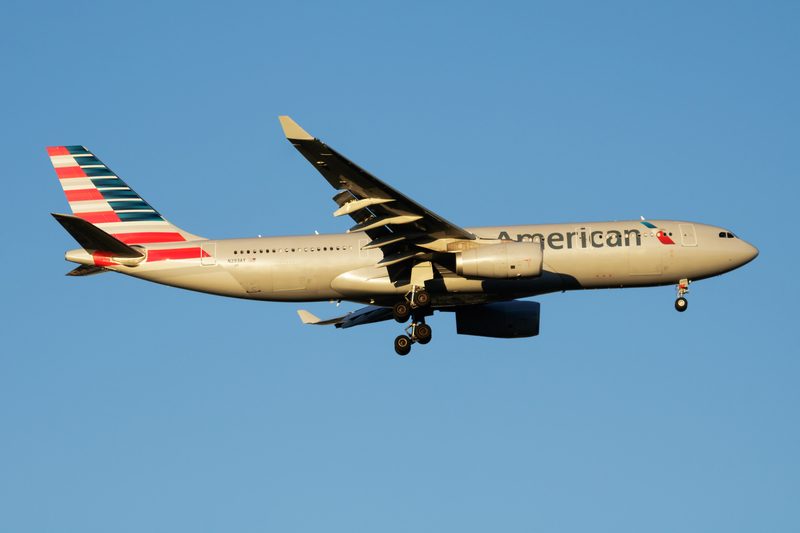
ID 150630740 | Air © Jozsef Soos | Dreamstime.com
A Second A330 Is Also Joining The Fleet
Israir’s second A330 is expected to follow shortly.
That aircraft is registered 4X-BAL and is also a former US Airways and American Airlines Airbus A330-200. It previously flew as N285AY.
Together, the two aircraft form the foundation of Israir’s new long-haul fleet.
The deal is valued at roughly $85 million. That is a major investment for an airline historically built around short- and medium-haul flying.
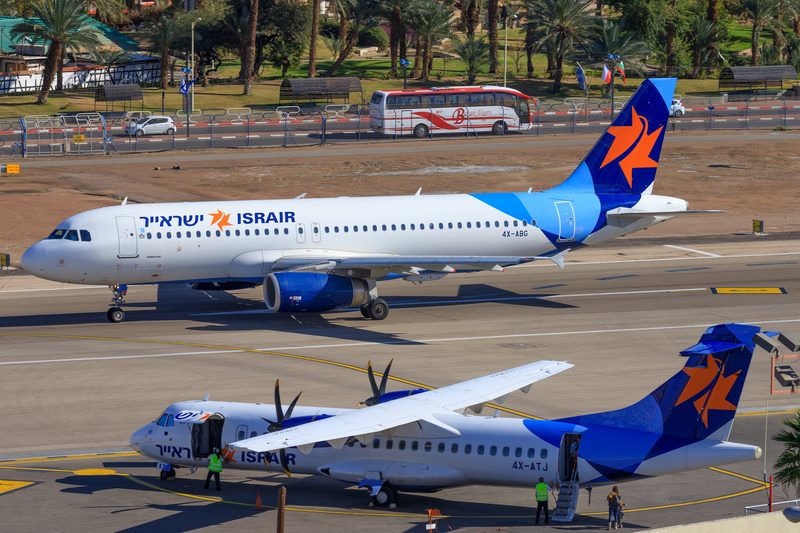
Until now, Israir has operated mainly Airbus A320-family aircraft on routes to Europe, the Mediterranean and domestic Israeli destinations. Adding the A330 changes the airline’s scale immediately.
It gives Israir widebody range, long-haul cabin capability and the ability to compete directly in the Israel–U.S. market.
New York JFK Is The First Target
Israir plans to launch direct flights between Tel Aviv (TLV) and New York John F. Kennedy International Airport (JFK) in early August.
That route is the prize.
New York is the most important long-haul market from Israel. It has deep business traffic, family travel, tourism, religious demand and high year-round visibility.
Israir has served New York before. The airline operated transatlantic flights from 2004 until 2008, using Boeing 767 aircraft and a leased A330 at different points.
The route was later dropped because of high costs and difficult market conditions.
Now, the airline is coming back with its own widebody aircraft. That is a very different position from relying only on leased lift.
Why The Timing Matters
The timing of Israir’s move is significant.
The Israel–U.S. market has been heavily disrupted by regional security concerns. U.S. carriers have repeatedly paused or delayed Tel Aviv service, leaving Israeli airlines with a larger share of nonstop demand.
El Al remains the dominant player on U.S.–Israel routes. Arkia has also entered the New York market.
Israir’s arrival would make it the third Israeli airline serving the United States.
That matters for competition.
More carriers mean more seats, more fare options and more pressure on a market that has often seen very high prices during periods of limited capacity.
The Airbus A330-200 Is The Right Aircraft For The Job
The Airbus A330-200 is a logical aircraft for Israir’s New York plan.
It is a twin-engine widebody with the range needed for Tel Aviv (TLV)–New York (JFK). Airbus lists the A330-200 with a range of around 7,250 nautical miles, or 13,450 kilometers.
That puts JFK well within reach from Israel.
The A330-200 also gives Israir enough capacity for a major long-haul route without requiring the airline to jump into an even larger aircraft such as the Boeing 777 or Airbus A350.
That balance is important.
For a new long-haul entrant, too much capacity can be dangerous. Too little capacity limits revenue. The A330-200 sits in a practical middle ground.
Powered By Rolls-Royce Trent 700 Engines
The two former American Airlines aircraft are Airbus A330-243s, meaning they are powered by Rolls-Royce Trent 700 engines.
That is an important technical detail.
The Trent 700 has been one of the most widely used engines on the A330 family. Rolls-Royce describes it as a major A330 powerplant with more than 60 million hours in service.
For Israir, the engine choice matters because long-haul reliability will be central to the New York operation.
A new transatlantic route cannot afford weak dispatch reliability. Delays, technical issues and aircraft availability problems can quickly damage passenger confidence.
That is why maintenance planning is just as important as the aircraft purchase itself.
Three Cabins For A Long-Haul Product
Israir has said the A330s will offer three cabin classes: Business, Premium and Economy.
That appears to reflect the aircraft’s previous American Airlines interior structure.
American’s later A330-200 configuration included 20 Business Class seats, 21 Premium Economy seats and 206 Economy seats. That gives a total of 247 seats.
For Israir, that layout is useful.
Business Class is important on Tel Aviv–New York because the route has strong premium demand. Premium Economy gives the airline another revenue layer between Business and standard Economy. Economy provides the volume needed to make the route work.
This is a much more mature product than Israir’s traditional short-haul all-economy operation.
It also gives the airline a chance to attract travelers who want a lower-fare alternative but still value a true long-haul cabin.
A Big Change From Israir’s A320 Network
Israir’s existing fleet has been centered on Airbus A320-family aircraft.
Those aircraft are well suited to short- and medium-haul flying from Tel Aviv (TLV). They work for leisure routes, European city pairs and Mediterranean markets.
The A330 is different.
It changes the airline’s crew training, maintenance, fuel planning, catering, airport handling, cabin service and revenue management.
A long-haul aircraft does not simply extend the route map. It changes the airline’s operating model.
That is why the A330 arrival is such a major milestone for Israir.
The airline is moving from a regional and leisure-focused carrier into a more ambitious long-haul role.
European Flying Will Come First
Before launching New York, Israir is expected to use the A330s on European routes.
That makes sense.
European flights give the airline a chance to test the aircraft, crews, catering, ground handling and maintenance support on shorter sectors before committing the aircraft to a transatlantic mission.
This is a common approach when an airline introduces a new widebody type.
Shorter proving flights help identify operational issues. They also allow cabin crews and technical teams to gain live experience before the route that really matters begins.
For passengers in Israel, it may also create a short-term chance to fly a widebody Israir aircraft on selected European services before the New York launch.
Maintenance Support Is A Key Part Of The Plan
Israir has been preparing the maintenance side of the operation as well.
The airline’s group maintenance arm, Bird Aviation, is based in Larnaca, Cyprus. Israeli media reported that Bird Aviation received approval from Israel’s Civil Aviation Authority to perform line maintenance on Airbus A330 aircraft.
That is strategically useful.
Larnaca International Airport (LCA) is close to Israel, making it a practical support point for aircraft operating from Tel Aviv.
Line maintenance matters because it covers routine checks, troubleshooting and technical support between flights.
For a two-aircraft long-haul fleet, that support is critical. If one aircraft goes technical, the airline has very little backup capacity.
Why Owning The Aircraft Matters
Israir’s CEO Uri Sirkis has emphasized that the A330s are owned by the airline.
That is an important point.
Owning the aircraft gives Israir more control than a short-term wet lease. It can train its own crews, build its own product and manage the aircraft as part of a longer-term strategy.
It also creates more risk.
Widebody ownership brings financing costs, maintenance exposure and the need to keep aircraft flying enough hours to justify the investment.
For Israir, the A330s need to do more than launch New York. Over time, they may also support other long-haul markets.
The airline has discussed future opportunities in Miami, Asia and other major international destinations.
That does not mean those routes are guaranteed. But it shows the A330 is being treated as a platform for growth, not a one-route experiment.
The Israel–New York Market Is Still Challenging
New York may be attractive, but it is not easy.
El Al has enormous brand strength on the route. It also has loyalty, corporate relationships, multiple daily frequencies and experience operating during unstable periods.
Arkia has added competition with its own New York service.
Israir will need to find its place between them.
Price will matter. So will reliability. Hebrew-speaking service, direct sales, tour packages and local brand recognition may also help.
However, long-haul passengers are demanding. If Israir wants to win repeat business, it will need a consistent product and strong operational performance.
The A330 gives the airline the tool. Execution will decide whether the route works.
Why The Former American A330s Are Interesting
These aircraft are also fascinating from a fleet-history perspective.
American’s A330-200s were relatively young when they were retired. They came from US Airways and were used on long-haul routes across the Atlantic.
American removed them during the pandemic as part of a broader fleet simplification. The airline focused its future long-haul strategy around the Boeing 787 and Boeing 777.
Some analysts later questioned whether American retired the A330 fleet too early, especially as widebody availability became tight after travel demand recovered.
Israir now benefits from that decision.
Instead of waiting years for new widebody aircraft, it is taking proven A330s that still have useful life left.
That is a smart shortcut for a smaller airline entering long-haul flying.
A Strategic Moment For Israeli Aviation
Israir’s A330 arrival comes at a highly unusual moment in Israeli aviation.
Foreign-airline service to Tel Aviv has remained unstable. Some carriers have returned, paused again, or delayed relaunch plans. U.S. airline service has been especially inconsistent.
That has created an opportunity for Israeli carriers.
When foreign capacity is limited, local airlines can capture more demand. They can also position themselves as more reliable options for travelers who need to fly regardless of regional uncertainty.
Israir is trying to use that moment.
By adding its own widebody aircraft, it is not just adding seats. It is entering a market that has become both underserved and strategically important.
Bottom Line
Israir’s first Airbus A330-200 arrival at Ben Gurion Airport (TLV) is a major turning point for the airline.
The former American Airlines aircraft, now registered 4X-BAK, is the first of two A330s that will support Israir’s planned Tel Aviv (TLV)–New York JFK (JFK) launch in early August.
The aircraft gives Israir long-haul range, a three-cabin product and a real chance to compete in one of Israel’s most important aviation markets.
It also marks the airline’s return to transatlantic flying after many years away.
The opportunity is clear. U.S. carrier service to Israel remains disrupted, fares have been high, and nonstop capacity is limited. Israir now has the aircraft to enter that gap.
The challenge is just as clear.
A two-aircraft widebody fleet leaves little room for operational mistakes. Long-haul flying is expensive, complex and unforgiving.
Still, this is one of the most important developments in Israir’s history. With the A330 now in Tel Aviv, the airline’s New York ambition is no longer theoretical. It is sitting on the ramp at TLV.