Liberia’s $19 Million Cocaine Seizure Puts Monrovia-Brussels Air Cargo Controls Under Scrutiny
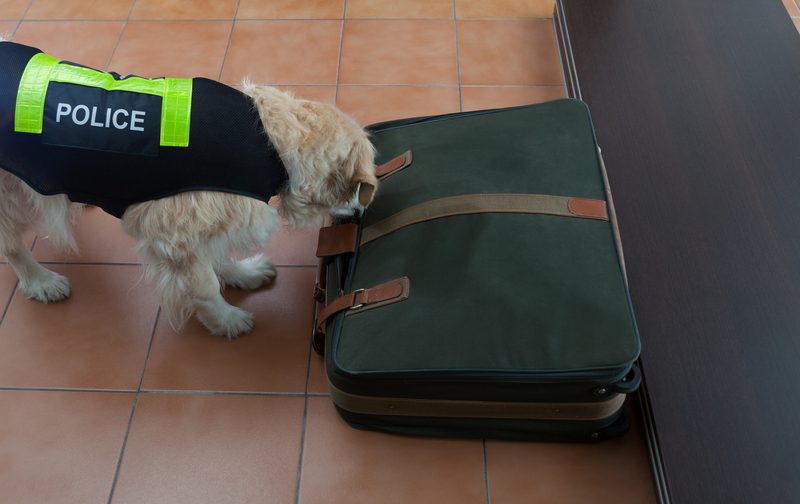
Liberian authorities have intercepted 237.6 kilograms of cocaine at Roberts International Airport (ROB), stopping one of the largest narcotics shipments ever recorded in the country before it could enter the European air transport network.

The seizure took place at Liberia’s main international gateway near Monrovia. The cocaine was reportedly hidden inside six cargo boxes and was being processed for export through Brussels Airlines, with Europe listed as the intended destination.
For the aviation sector, this is not only a drug-enforcement story. It is also a cargo-security story.
The case highlights how passenger airlines, airport cargo warehouses, ground handlers and security agencies all sit inside the same high-risk supply chain. It also shows why airports such as Roberts International Airport (ROB), which link West Africa with Europe, remain attractive targets for transnational trafficking networks.
What Liberian Authorities Say Was Found
The Liberia Drug Enforcement Agency said officers seized 198 compressed plates of cocaine weighing 237.6 kilograms.
The shipment was valued at more than US$19 million. Liberian President Joseph Boakai later called it one of the largest narcotics interdictions in the country’s history.
The drugs were discovered at Roberts International Airport (ROB), also known locally as RIA. The airport is Liberia’s most important aviation gateway and handles the country’s main international services.
According to local reporting, the cocaine was concealed in six cargo boxes that had entered the export process. The shipment was reportedly linked to Brussels Airlines’ outbound operation from Monrovia to Europe.
That point is important, but it should be handled carefully.
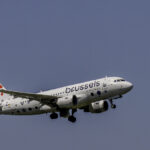
No official information reviewed so far accuses Brussels Airlines of wrongdoing. The airline appears in the case because the cargo was reportedly being processed for carriage through its scheduled service.
Why Brussels Airlines Matters In This Case
Brussels Airlines is one of the most important European carriers serving Liberia.
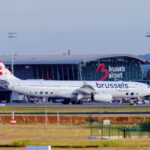
The airline sells flights to Monrovia and connects Liberia with Brussels Airport (BRU), its home hub in Belgium. From Brussels (BRU), passengers and cargo can move onward across Europe and the wider Lufthansa Group network.
This makes the Monrovia (ROB)–Brussels (BRU) link strategically valuable. It also makes it attractive to smugglers who want to move goods from West Africa into Europe.
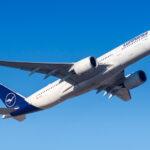
Brussels Airlines’ long-haul African services are operated by Airbus widebody aircraft. The carrier lists the Airbus A330-300 as the largest aircraft in its fleet, with 295 seats across Business, Premium Economy and Economy.
That aircraft is central to the aviation angle.
An Airbus A330-300 is a passenger aircraft, but like most widebodies, it also carries belly cargo below the passenger cabin. That cargo can include commercial freight, mail, high-priority shipments and checked baggage.
So, even when a narcotics case involves a passenger airline, the real weak point may be the cargo chain, not the passenger cabin.
The Reported Cargo Trail Raises Serious Questions
Local reporting has started to reconstruct how the shipment allegedly moved through the airport system before discovery.
According to documents reviewed by Liberian media, the cargo may have entered the export process several days before the seizure. It was reportedly documented, screened and stored before the cocaine was discovered.
One report said the shipment had been assigned an air waybill and routed through Brussels, with London Heathrow Airport (LHR) listed as a later destination. That same reporting said the consignment had received security status after X-ray and visual inspection.
If confirmed by investigators, that would be a major concern.
It would mean the shipment was not necessarily caught at the first screening point. Instead, it may have been flagged later during cargo verification, after discrepancies emerged in the handling or documentation process.
That detail matters because cargo security depends on layers. X-ray screening is only one layer. Documentation checks, weight verification, warehouse controls, chain of custody and access control are just as important.
A Cargo-Security Case, Not Just A Drug Case
Air cargo is built around trust, documentation and custody.
The International Air Transport Association says the Consignment Security Declaration is designed to create an audit trail showing how, when and by whom cargo has been secured along the supply chain.
That is exactly the type of trail investigators will now need to examine.
Who delivered the cargo? Who accepted it? Who screened it? Who stored it? Who had warehouse access? Was the shipment resealed, moved or reweighed? Did the declared weight match the actual weight? Were documents changed?
These questions matter at every airport. However, they matter even more at gateways that handle long-haul flights into Europe.
International aviation security standards are also relevant. ICAO Annex 17 is the global framework for aviation security standards and recommended practices. It covers measures designed to protect civil aviation from unlawful interference.
In practical terms, that means cargo must be screened and controlled before it is loaded onto a commercial aircraft.
This case suggests the system worked in one critical way: the cocaine was stopped before departure. Yet it also raises difficult questions about how the shipment advanced as far as it did.
President Boakai Orders A National Security Investigation
President Joseph Boakai addressed the nation after the seizure and framed the case as a national security issue.
In his official statement, Boakai said Liberia would not be used as a safe haven, transit point, warehouse, financial center or operational base for drug-trafficking networks.
He also directed that the investigation be handled by Liberia’s National Joint Security structure under the authority of the National Security Council.
That means the probe now reaches beyond a single airport seizure.
The investigation is being coordinated by the Liberia Drug Enforcement Agency and the Liberia National Police, with support from the National Security Agency, the Executive Protection Service, the Financial Intelligence Agency, immigration authorities, customs, airport security and the Ministry of Justice.
That broad structure tells us how seriously Liberia is treating the case.
The goal is not only to identify couriers. Officials say they want to dismantle the network behind the shipment, including financiers, logistics coordinators, facilitators and any corrupt enablers.
Possible European Crime Links Remain Unconfirmed
Some local and European media reports have suggested investigators are examining possible links to Dutch fugitive Jos Leijdekkers, also known as “Bolle Jos.”
That claim has not been formally confirmed by Liberian authorities.
However, Leijdekkers is a major figure in European organized-crime reporting. His EU Most Wanted profile describes him as one of the key players in international cocaine trafficking and money laundering.
Dutch prosecutors have also said he has been living in Sierra Leone, which borders Liberia.
That regional detail is one reason the Liberia airport seizure has attracted wider attention. If the shipment is connected to a larger European criminal network, the case may extend far beyond airport employees or local handlers.
For now, the responsible approach is to separate confirmed facts from reported leads.
The confirmed facts are the seizure, the cocaine weight, the estimated value, the airport location and the national security investigation. The alleged links to specific international figures remain part of the wider reporting and investigation.
West Africa’s Role In The Cocaine Route
The Liberia seizure fits into a broader pattern.
West Africa has long been used as a transit corridor for cocaine moving from Latin America toward Europe. Traffickers can exploit maritime routes, private logistics chains, cargo warehouses, border gaps and weaker enforcement capacity.
The UN Office on Drugs and Crime has warned that cocaine supply and demand continue to rise. UNODC has also highlighted West Africa as part of the expanding transatlantic trafficking picture.
That is why airports such as Roberts International Airport (ROB) matter.
They are not only passenger gateways. They are part of a wider logistics network. A single long-haul flight can connect a West African capital with Europe overnight.
From an airline-security perspective, that creates both value and risk.
The value is legitimate trade, tourism, business travel and connectivity. The risk is that criminal networks may try to hide illicit cargo inside the same system.
Why The Aviation Industry Should Watch This Case
This seizure should be closely studied by airport operators, airlines and cargo-security teams.
The core issue is not only whether one shipment was found. The deeper issue is how far the shipment moved before it was stopped.
If cargo passed through documentation, screening and storage before being flagged, then investigators will need to review the full chain of custody. That includes the shipper, freight forwarder, cargo agent, warehouse personnel, security screeners and anyone with access to restricted cargo areas.
The human factor is just as important as technology.
X-ray machines, screening declarations and cargo manifests are useful. But they do not replace trained staff, strict access controls and a culture where irregularities are acted on quickly.
Weight discrepancies, incomplete paperwork and unusual cargo behavior can all become warning signs.
That appears to be what happened here. A routine cargo-control issue may have helped expose a major transnational trafficking attempt.
What It Means For Brussels Airlines And ROB
For Brussels Airlines, the case is reputationally sensitive but operationally different from an onboard security incident.
There is no indication that passengers were at risk in the cabin. The issue appears to involve cargo being processed for transport, not a threat carried into the passenger compartment.
Still, airlines cannot ignore cargo-chain risk.
Passenger airlines carrying belly freight depend on secure upstream processes. They need confidence that cargo accepted for transport has been properly documented, screened and protected from tampering before loading.
For Roberts International Airport (ROB), the case is even more significant.
ROB is Liberia’s main international aviation gateway. It supports passenger travel, air cargo, diplomacy, tourism and trade. A seizure of this size will likely increase scrutiny of airport security, warehouse procedures and cargo acceptance controls.
That scrutiny is necessary.
A successful interdiction is good news. However, the scale of the shipment shows that organized traffickers believed the route was worth trying.
Bottom Line
Liberia’s seizure of 237.6 kilograms of cocaine at Roberts International Airport (ROB) is one of the country’s most important aviation-security cases in years.
The drugs were reportedly concealed in six cargo boxes and being processed for export through Brussels Airlines toward Europe. They were stopped before entering the air transport network, which prevented a major cocaine shipment from moving through a commercial passenger-aircraft cargo system.
The case does not show that Brussels Airlines was involved in the trafficking attempt. Instead, it highlights the vulnerability of airport cargo chains and the value of layered controls.
For Liberia, the seizure is now a national security investigation. For the aviation industry, it is a reminder that cargo security depends on more than screening equipment.
It depends on documentation, custody, staff vigilance, warehouse control and the willingness to question every irregularity before a shipment reaches the aircraft.