Alaska Ends Saver Fare Mileage Earning As Atmos Rewards Gets More Selective
Alaska Airlines is making its lowest fares less rewarding.
Beginning this summer, most newly booked Saver fares will no longer earn Atmos Rewards points or status points, ending one of the remaining loyalty advantages attached to Alaska’s version of basic economy. The change applies to Saver fares booked after June 11, 2026, for travel on or after August 1, 2026.
Until now, Alaska’s Saver fares still earned 30% of miles flown. That was modest compared with Main Cabin earning, but it was still meaningful for budget-conscious travelers, especially on longer routes such as Seattle (SEA) to New York JFK (JFK), Portland (PDX) to Boston (BOS), Anchorage (ANC) to Chicago (ORD), or transpacific Hawaiian Airlines flights between Honolulu (HNL) and the U.S. mainland.
Read our stories in your inbox
Two aviation newsletters. Zero fluff.
That earning window is now closing.
For Alaska, the change sharpens the line between Saver and Main Cabin. For passengers, it makes the lowest fare more of a pure price product: cheaper upfront, but with less long-term value.
What Is Changing On Saver Fares
The new rule is straightforward, but the transition dates matter.
Saver fares will continue to earn 30% of points and status points if the flight departs by July 31, 2026. Travelers who book a Saver fare before June 11, 2026, will also keep the current 30% earning rate, even if they fly after July 31.
The real cutoff applies to new bookings made after June 11 for travel on or after August 1. Those Saver tickets will earn no Atmos Rewards points and no status points.
That means a passenger buying a Saver fare on June 12 for an August flight from Seattle (SEA) to Los Angeles (LAX) will earn nothing toward redeemable points or status. A passenger who bought the same ticket before June 11 would still earn at the old 30% rate.
There is one important exception. Saver fares on Alaska Airlines and Hawaiian Airlines will still count toward Million Miler qualification based on 100% of actual distance flown. That keeps the lifetime-status clock running for long-term loyalists, but it does not help ordinary earning balances or annual elite qualification.
Saver Is Becoming A True Basic Economy Fare
Alaska has long tried to position Saver as less punitive than basic economy products at some other U.S. carriers.
Saver passengers still receive a carry-on bag allowance, the same general Main Cabin onboard amenities, and the ability to buy upgrades to Premium Class or First Class where available. Status members also retain some elite benefits, including status-based boarding and applicable baggage benefits.
But Saver comes with meaningful restrictions. Seats are typically assigned at check-in, parties are not guaranteed seats together, changes are limited, standby is not allowed, and no-shows can result in the cancellation of the remaining itinerary.
Removing points and status earning makes Saver feel much more like a conventional basic economy product. The fare still gets passengers from A to B, whether on an Alaska Boeing 737-900ER from Seattle (SEA) to Phoenix (PHX), a Boeing 737 MAX 9 from Portland (PDX) to San Diego (SAN), or a Horizon/SkyWest Embraer 175 from Boise (BOI) to Seattle (SEA). But from a loyalty standpoint, it becomes a dead-end ticket for most travelers.
That is the point. Alaska is making the fare cheaper in exchange for fewer benefits, while pushing anyone who values loyalty earning toward Main Cabin or higher.
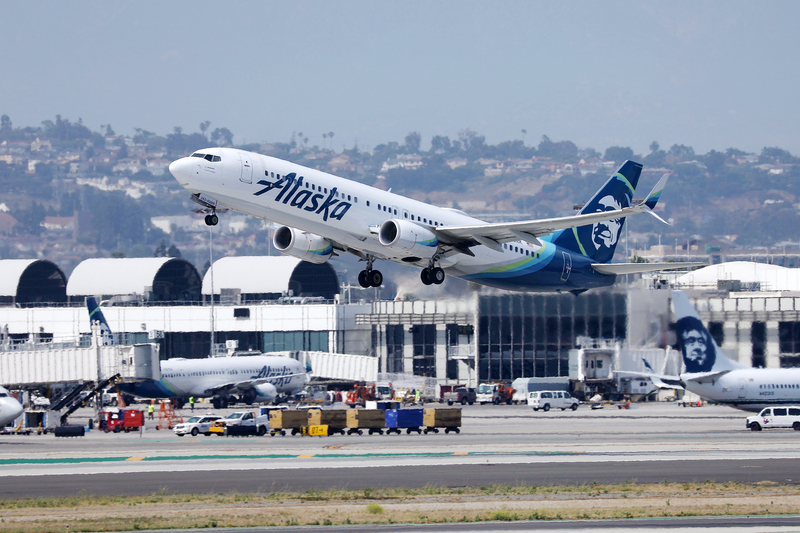
ID 171241202 | Air © Colicaranica | Dreamstime.com
Why Alaska Is Doing This Now
The change is happening as Alaska and Hawaiian continue integrating under Alaska Air Group.
Atmos Rewards is now the combined loyalty platform for Alaska Airlines and Hawaiian Airlines. That means the program has to support a much larger and more complicated network than the old Alaska Mileage Plan alone. It now touches Alaska’s Boeing 737 domestic system, Hawaiian’s interisland Boeing 717 operation, Hawaiian’s Airbus A321neo West Coast routes, Airbus A330 long-haul services, and Boeing 787-9 flying.
That creates opportunity, but also cost.
Loyalty programs are no longer simple mileage clubs. They are major financial engines tied to credit cards, partner revenue, elite benefits, award redemptions, upgrades, and customer data. Every point issued has a cost. Every elite-status credit affects future benefits. Every award seat or partner redemption has economic consequences.
By removing earning from the lowest fare bucket, Alaska can reduce the cost of rewarding passengers who are buying primarily on price. At the same time, it preserves earning for travelers who buy Main Cabin, Premium Class, First Class, or higher-value itineraries.
This is not just a loyalty tweak. It is revenue management.
Main Cabin Becomes The Loyalty Entry Point
The practical message to customers is simple: Saver is for price; Main Cabin is for loyalty.
That distinction will matter most for passengers who are close to status or who fly enough that even partial earning adds up. A single Saver flight earning 30% may not sound significant. But on longer routes, it could still move the needle.
A round trip from Seattle (SEA) to New York JFK (JFK), for example, covers more than 4,800 miles. Under the old Saver earning structure, a traveler could still earn roughly 30% of that distance in points and status credit. Under the new structure, a newly booked Saver fare after the cutoff earns nothing toward annual status.
For occasional travelers, that may not matter. For families chasing the lowest fare to Hawaii, the savings may be more important than points. But for frequent flyers, business travelers, and status-minded leisure passengers, the value equation changes quickly.
If the fare difference between Saver and Main Cabin is small, Main Cabin will often be the smarter purchase.
The Hawaiian Angle Matters
This change is also important because Atmos Rewards now includes Hawaiian Airlines.
Hawaiian has a very different network profile from Alaska. Its mainland routes can be long, especially flights from Honolulu (HNL), Maui/Kahului (OGG), Kona (KOA), and Līhuʻe (LIH) to the West Coast, Mountain West, and beyond. Hawaiian also operates widebody Airbus A330-200 and Boeing 787-9 aircraft on longer missions, while the Airbus A321neo is used heavily for thinner West Coast–Hawaii flying.
On those longer routes, mileage earning historically mattered more because the distances were substantial. A passenger flying a low fare from Honolulu (HNL) to Seattle (SEA), San Francisco (SFO), Los Angeles (LAX), or Las Vegas (LAS) could still earn a meaningful number of miles even at a reduced rate.
Under the new rules, newly booked Saver fares after the cutoff will no longer earn redeemable points or status points, even if the flight is long. That makes the shift more noticeable for Hawaii travelers than for someone taking a short West Coast hop.
The Million Miler exception softens the blow only for a specific group: travelers who care about lifetime flown miles. For everyone else, the lowest fare simply stops contributing to Atmos Rewards.
Alaska Follows A Broader U.S. Airline Trend
Alaska is not acting in isolation.
U.S. airlines have increasingly used basic economy to segment customers. The lowest fare is designed to compete with budget carriers and price-sensitive search results, while higher fare products preserve flexibility, loyalty benefits, and better treatment.
Delta’s Main Basic fare does not earn SkyMiles or Medallion credit. American has also tightened its basic economy earning and elite-benefit rules. United has historically taken a different approach in some areas, but the broader direction across the industry is clear: airlines want customers to pay more if they want flexibility and loyalty value.
Alaska had been more generous than many competitors by continuing to award 30% earning on Saver fares. Ending that benefit makes Atmos Rewards less distinctive at the bottom of the fare ladder.
At the same time, Alaska can argue that the program remains strong for customers who buy above Saver. Atmos Rewards still has distance-based earning roots, global airline partners, oneworld access, and new earning options tied to distance, spend, or segments. The generosity has not disappeared; it has become more selective.
What Status Members Still Keep
The change does not strip every elite benefit from Saver fares.
Atmos Rewards status members traveling on Saver tickets still keep some benefits. They may board according to status, receive applicable baggage-fee waivers, and get the same onboard refreshments and entertainment. Status holders can also be eligible for complimentary upgrades to Premium Class or First Class within two hours of departure, subject to availability.
But Saver restrictions still apply.
That means no normal standby access, limited flexibility, restricted seating rules, and no standard earning for newly booked post-cutoff travel. Even elite members must decide whether the lower fare is worth giving up points and status progress.
For top-tier travelers, the answer may often be no. A frequent Alaska passenger based in Seattle (SEA), Portland (PDX), Anchorage (ANC), San Francisco (SFO), or Los Angeles (LAX) may value status points enough to avoid Saver unless the fare difference is substantial.
For an infrequent traveler, the answer may be different. If a family can save hundreds of dollars by booking Saver, the lack of points may be acceptable.
That is exactly the segmentation Alaska wants.
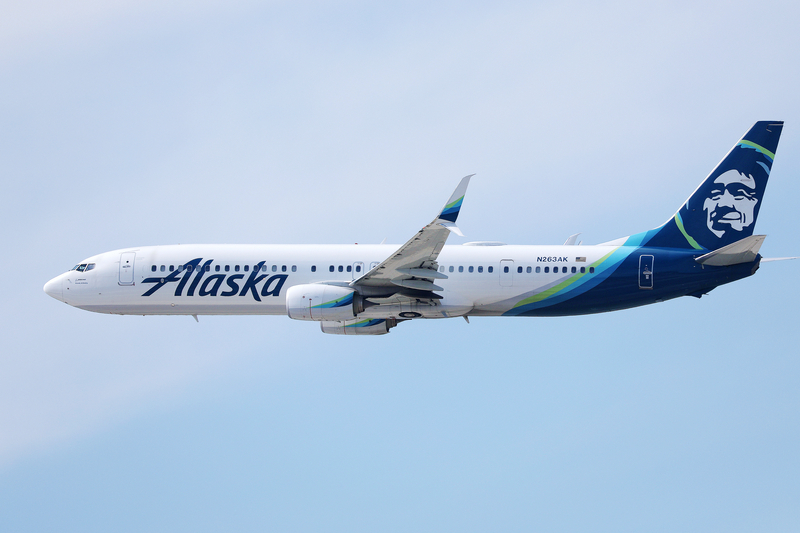
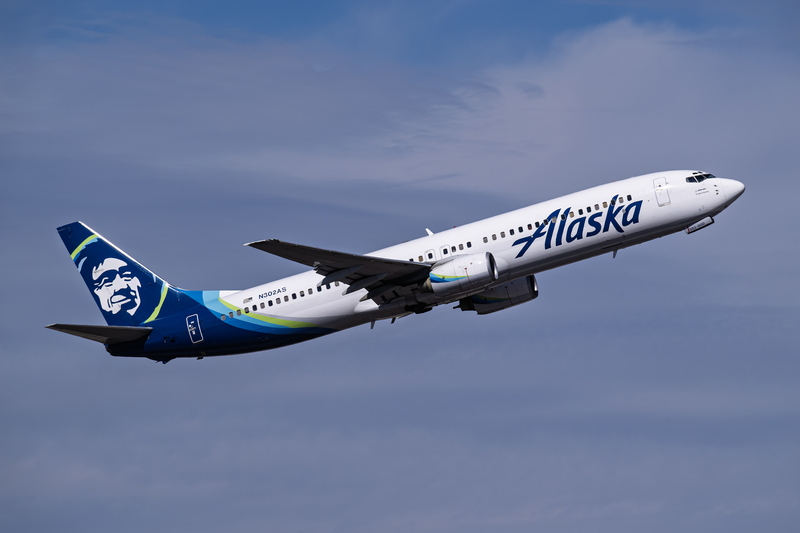
ID 171240739 | Alaska Airlines © Colicaranica | Dreamstime.com
Partner Award Fees Are Also Going Up
The Saver fare change is not the only Atmos Rewards adjustment this year.
Beginning July 1, the partner award booking fee is increasing from $12.50 to $20 per person, each way. The fee applies when members redeem Atmos Rewards points for flights on partner airlines rather than Alaska or Hawaiian-operated services.
That is a 60% increase, and it adds up quickly.
For a solo traveler booking a one-way partner award, the difference is only $7.50. For a family of four booking a round trip, the partner booking fee rises from $100 to $160 before taxes and other charges.
The increase is not catastrophic, but it signals the same underlying trend: Atmos Rewards is tightening the economics of both earning and redemption. Alaska is trying to preserve attractive award pricing and partner access while collecting more cash from redemptions that involve other airlines.
Holders of the premium Atmos Rewards Summit card are expected to keep a waiver for partner award booking fees, which makes that card more valuable for frequent redeemers.
Why Loyalty Programs Are Tightening
Airline loyalty programs have become too financially important to be left unchanged.
For major carriers, loyalty programs are among the most valuable parts of the business. They generate revenue through credit card partnerships, point sales, partner activity, elite engagement, and customer retention. They also create liabilities, because every point issued may eventually be redeemed.
That is why airlines are increasingly careful about who earns what.
A passenger buying the lowest fare may still be valuable, but not as valuable as a customer buying Main Cabin, purchasing upgrades, carrying an airline credit card, checking bags, booking hotels through airline portals, or redeeming within the airline ecosystem.
The result is a loyalty landscape where the cheapest ticket increasingly earns little or nothing. Airlines are not only rewarding flying. They are rewarding profitability, engagement, and customer behavior that supports the broader loyalty business.
Alaska’s Saver change fits that pattern.
Aircraft And Product Are Unchanged
It is important to separate fare rules from the onboard experience.
A Saver passenger is not flying a different aircraft or sitting in a separate cabin. The same Boeing 737 MAX 9, 737-900ER, 737-800, or Embraer 175 operates the flight regardless of fare type. On Hawaiian routes, the same Airbus A321neo, Airbus A330-200, Boeing 717, or Boeing 787-9 may carry passengers booked across multiple fare classes.
The difference is what the ticket includes.
A Saver passenger may board later, have less control over seat selection, face stricter change rules, and now earn no redeemable or status points after the cutoff. A Main Cabin passenger on the same aircraft may earn Atmos Rewards points, earn status points, have better flexibility, and receive a more complete loyalty proposition.
For passengers, that means the booking screen matters more than the cabin. The onboard seat may look similar, but the fare conditions behind it are increasingly different.
Who Loses The Most
The biggest losers are budget-conscious travelers who still cared about loyalty earning.
That includes occasional Alaska flyers who booked Saver but wanted to build an Atmos balance slowly. It also includes travelers who fly long routes infrequently, such as Hawaii mainland passengers, transcontinental travelers, or those using Alaska’s West Coast network for seasonal trips.
The change is less painful for passengers who never cared about points in the first place. If someone books purely on price and flies Alaska once or twice a year, the loss of points may not affect behavior.
It may also have limited impact on corporate travelers, because many business travel policies already avoid basic economy due to seat selection, flexibility, and change restrictions.
The most interesting group is value-focused frequent flyers. These are travelers who understand fare rules, chase status, and sometimes book Saver when the fare gap is large. Alaska is now making that tradeoff harder.
How Travelers Should Think About Saver Now
The decision comes down to the fare difference.
If Saver is only $20 or $30 cheaper than Main Cabin, Main Cabin may be a better deal for anyone who values points, status points, seat control, or flexibility. If Saver is $100 or more cheaper, the math may shift, especially for families or travelers who do not care about loyalty.
Passengers should also consider route length. The longer the flight, the more earning is being surrendered. Giving up points on a short Portland (PDX) to Seattle (SEA) flight is very different from giving them up on Honolulu (HNL) to New York JFK (JFK), Seattle (SEA) to Orlando (MCO), or Anchorage (ANC) to Chicago (ORD).
Timing matters as well. Travelers who already booked Saver before June 11 keep the old 30% earning rate. Those flying before July 31 also earn under the existing rules. The change becomes most important for new bookings after the cutoff.
In short, Saver is still useful. It is just less rewarding.
A Less Generous Bottom Of The Fare Ladder
Alaska has long enjoyed a reputation for having one of the more valuable airline loyalty programs in the United States. Atmos Rewards still has strong features, particularly for travelers who use partners, value distance-based earning, or fly frequently across the Alaska-Hawaiian network.
But the Saver fare change weakens one of the program’s more customer-friendly edges.
The lowest fare used to provide at least partial progress. Now, for most newly booked post-cutoff travel, it provides transportation only. That may be good business for Alaska, but it reduces the long-term value for price-sensitive customers.
This is the direction U.S. airline loyalty has been moving for years. Basic economy products are no longer just about seat assignment or boarding order. They are increasingly about whether the trip counts at all.
Bottom Line
Alaska Airlines is ending Atmos Rewards points and status-point earning on most newly booked Saver fares beginning with travel on or after August 1, 2026.
The change applies to Saver fares booked after June 11, 2026. Flights through July 31 still earn under the current rules, and Saver tickets booked before June 11 retain the existing 30% earning rate. Alaska and Hawaiian Saver fares will still count toward Million Miler qualification based on actual distance flown, but they will not earn ordinary redeemable points or annual status points under the new post-cutoff rules.
For Alaska, this makes Saver a clearer basic economy product and helps protect the economics of Atmos Rewards. For passengers, it makes Main Cabin more important as the lowest fare that still supports meaningful loyalty earning.
The airline is not changing the aircraft, the route network, or the basic onboard seat. It is changing the value attached to the ticket.
Saver will still be the cheapest option. It just will not be the smart option for travelers who care about earning Atmos Rewards points or qualifying for elite status.
Keep reading FlyMag
Get the Daily Brief in the morning or the Route Watch weekly recap on Fridays. Or both.