SAS and Norse Atlantic Turn Norway’s World Cup Run Into a Miami Widebody Airlift
Norway’s historic FIFA World Cup quarter-final has created a rare kind of airline opportunity: a sudden, emotionally charged, long-haul travel surge that had to be solved in days, not months.


With Norway set to face England in Miami on July 11, both SAS and Norse Atlantic Airways have added special direct flights from Oslo Airport (OSL) to Miami International Airport (MIA), giving Norwegian supporters a nonstop path to one of the biggest matches in the country’s soccer history.
This is not normal scheduled expansion. It is event-driven aviation at its most responsive: widebody aircraft, short booking windows, scarce seats, urgent airport coordination, and a national fan base willing to cross the Atlantic for one match.
For airlines, these flights are a commercial opportunity. For supporters, they are part of the tournament experience. For aviation professionals, they show how quickly long-haul capacity can be mobilized when demand is immediate, emotional, and concentrated around a single event.
SAS Adds a 266-Seat Airbus A330 From Oslo to Miami
SAS has scheduled a special nonstop round-trip between Oslo (OSL) and Miami (MIA), operating with a 266-seat Airbus A330.
The outbound flight departs Oslo (OSL) on Friday, July 10 at 13:00 and arrives in Miami (MIA) at 17:10 local time. The return flight leaves Miami (MIA) on Sunday, July 12 at 18:00 and lands back in Oslo at 09:05 the following morning.
That schedule is built around the match window. It allows supporters to leave Norway the day before the quarter-final, arrive in South Florida the same afternoon, attend the game on Saturday, and return home Sunday evening. It is a compressed itinerary, but it is exactly the kind of schedule soccer fans will accept for a once-in-a-generation match.
The aircraft choice is also logical. SAS’ Airbus A330-300 seats 266 passengers and has the range for the roughly 4,200-nautical-mile Oslo-Miami mission. The type is a proven transatlantic widebody in the SAS fleet, with enough capacity to move a meaningful supporter group without requiring the airline to use its larger Airbus A350-900.
The A330 may not be SAS’ newest long-haul aircraft, but for a one-off event flight, it is the right tool: reliable, available, and large enough to matter.
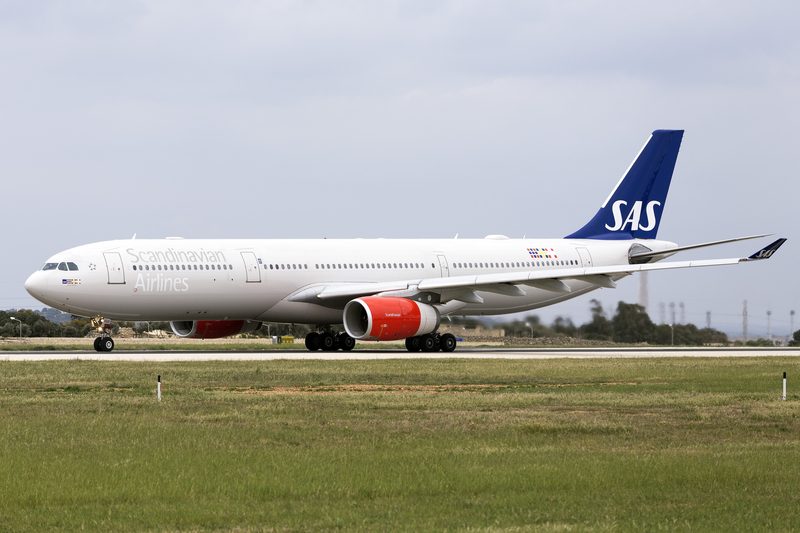
ID 69145967 © Gordzam | Dreamstime.com
Norse Atlantic Adds Two Dreamliners After Demand Surges
Norse Atlantic moved even more aggressively. After Norway’s victory over Brazil sent demand through the roof, Norse first announced a direct Oslo (OSL)-Miami (MIA) Dreamliner flight. That aircraft sold out almost immediately, prompting the airline to secure a second direct service.
With two Boeing 787 Dreamliners, Norse expects to carry 676 Norwegian supporters to Miami. That figure is notable because it suggests the airline is using its high-density 338-seat Dreamliner layout, a cabin configuration well suited to event, leisure, charter, and peak-demand long-haul flying.
The 787 is central to Norse’s business model. The airline operates a fleet of fuel-efficient Dreamliners across long-haul markets in North America, Europe, Africa, and Asia, and its aircraft are well matched to special-event missions like this one. The 787-9 offers long transatlantic range, strong fuel efficiency, lower cabin altitude, larger windows, and modern long-haul passenger comfort.

For Norse, the Miami flights are also brand-building opportunities. The airline has leaned into the fan experience, describing the trip as more than transportation. Its earlier special World Cup flight to New York reportedly turned into a flying supporter section, complete with singing and Norway’s now-famous rowing celebration.
That matters commercially. Norse is not just selling a seat from Oslo to Miami. It is selling the start of the matchday experience.
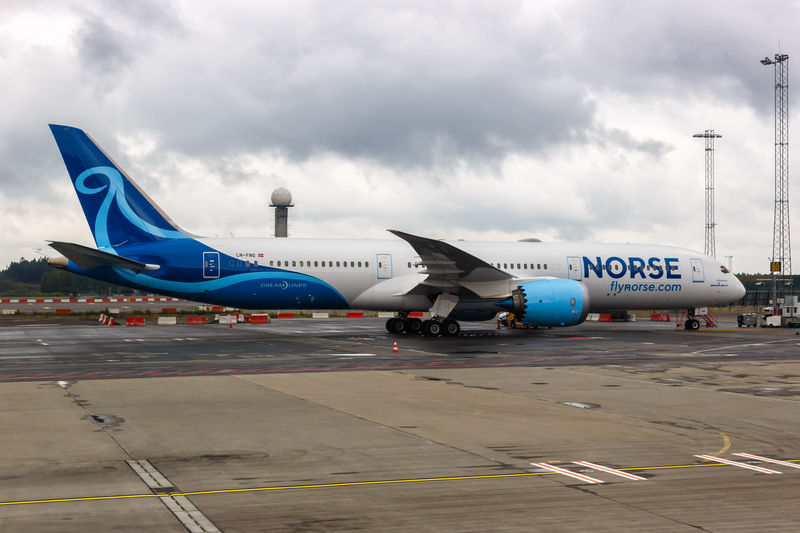
ID 257727948 | Airport © Boarding1now | Dreamstime.com
Why Miami Became the Focus
The match is scheduled for July 11 at Miami Stadium, FIFA’s tournament name for Hard Rock Stadium in Miami Gardens. For Norway, the game is historic: the men’s national team had never previously reached a FIFA World Cup quarter-final.
That kind of sporting breakthrough creates unusually concentrated air demand. Unlike regular leisure traffic, which spreads across weeks or months, knockout-stage sports traffic compresses into a narrow travel window. Supporters do not just want to go to the United States. They need to be in Miami on a specific day, preferably with minimal connection risk.
That is why nonstop flights from Oslo (OSL) are so valuable. A one-stop itinerary through London (LHR), Amsterdam (AMS), Frankfurt (FRA), Paris (CDG), Copenhagen (CPH), New York (JFK/EWR), or another hub may work on paper, but it introduces missed-connection risk and longer elapsed travel time.
For a fan trying to reach a quarter-final, the nonstop is worth a premium.
The Operational Challenge Behind the Scenes
Adding a one-off long-haul flight is more complicated than simply finding an airplane.
SAS and Norse needed aircraft availability, crew coverage, airport slots, ground handling, catering, fuel planning, passenger processing, U.S. entry coordination, and return-flight logistics. Miami (MIA) is already a busy international airport, and July is a high-demand period because of summer travel and World Cup traffic.
From an airline operations perspective, this kind of flight has several pressure points. The aircraft has to be pulled from, or worked around, an existing schedule. Crews must remain legal for long-haul duty periods. Ground handling must be arranged at both Oslo (OSL) and Miami (MIA). If the flight is delayed, the knock-on effects can be costly because the aircraft may be needed elsewhere after returning to Europe.
Norse’s response is especially notable because the airline said it had to source an additional aircraft, crew, and airport slots after the first Miami flight sold out. That is not easy to do at short notice, particularly during peak summer.
The fact that both airlines acted quickly shows how powerful the demand signal was.
A330 vs. 787: Two Different Widebody Tools
The SAS and Norse flights also provide an interesting aircraft comparison.
SAS is using the Airbus A330-300, a twin-engine widebody that has served as a core transatlantic aircraft for many airlines. SAS lists the A330-300 with 266 seats, a range of 10,100 km, and Rolls-Royce Trent 772B engines. It is a mature, capable long-haul aircraft that works well on routes between Northern Europe and the eastern United States.
Norse is using the Boeing 787 Dreamliner, a newer-generation widebody built around composite structures, efficient engines, and long-haul fuel performance. The 787 is particularly attractive for a carrier like Norse because it supports long routes with lower fuel burn than many older widebodies, while still offering enough seats to make event flights commercially meaningful.
In practical terms, SAS is using a traditional network-carrier long-haul aircraft. Norse is using the core aircraft of its long-haul low-cost model. Both work for Oslo-Miami. The difference is commercial positioning.
SAS brings an established Scandinavian full-service brand, EuroBonus loyalty, and a long tradition of supporting Norwegian sports travel. Norse brings high-density long-haul capacity, a leisure-heavy price model, and a willingness to turn the flight itself into part of the event.
Special Sports Flights Are High-Risk, High-Reward
For airlines, event-driven flights can be very attractive, but they are not risk-free.
The upside is obvious. Demand is urgent, fares can be high, and the marketing value can be substantial. A direct World Cup flight creates visibility far beyond the number of passengers on board. The airline becomes part of the national story.
The risk is timing. These flights depend on a single match, a single travel window, and fast execution. If operational problems occur, passengers have little flexibility. A delay of several hours on a normal vacation flight is frustrating. A delay that causes supporters to miss kickoff is a reputational problem.
There is also limited reuse of demand. Once the match is over, the reason for travel disappears. Airlines cannot build a long-term route case around one knockout game. They can only capture the moment.
That is why these flights are best understood as tactical widebody deployments, not route launches.
Oslo-Miami Is Not a Normal Scandinavian Market
Oslo (OSL)-Miami (MIA) is not typically one of the deepest year-round transatlantic city pairs from Scandinavia. Miami is more commonly supported through broader European hub connections or seasonal leisure flying. But the World Cup changes the equation.
A quarter-final creates temporary demand that does not behave like ordinary origin-and-destination traffic. Many passengers who would normally never fly Oslo-Miami nonstop at short notice suddenly want exactly that product. They are not shopping primarily for the cheapest multi-stop itinerary. They are looking for speed, certainty, atmosphere, and the chance to travel with other supporters.
That is ideal for a dedicated fan flight. The aircraft becomes more than transportation; it becomes a shared national movement.
For Miami, the flights add another layer to what is already a major aviation and tourism event. MIA is one of the largest U.S. international gateways, and the World Cup has intensified its role as a global arrival point for supporters from Europe and Latin America.
The Pricing Shows the Scarcity
Norwegian media reported very high prices for these short-notice flights and match tickets, with some total trip costs reaching levels normally associated with premium long-haul leisure travel. That is not surprising.
There are only so many seats that can be added from Oslo (OSL) to Miami (MIA) at this stage. Aircraft, crews, and airport slots are finite. Hotels in South Florida are under pressure. Match tickets are scarce. The travel window is fixed.
That combination creates classic event-driven scarcity pricing. Airlines do not need to fill months of demand. They need to price a small number of seats for a highly motivated group of travelers with a hard deadline.
For supporters, it is expensive. For airlines, it is one of the few situations where adding long-haul capacity at very short notice can make strong commercial sense.
The Aviation Story Is Bigger Than the Match
The quarter-final is the reason these flights exist, but the aviation story is broader.
SAS and Norse are both using long-haul aircraft in ways that match their strategic identities. SAS is deploying established transatlantic capacity through a traditional flag-carrier lens, supporting national travel demand and reinforcing its role as a Scandinavian network airline. Norse is using its Dreamliner fleet with agility, turning special-event demand into a high-profile long-haul operation.
Both carriers benefit from the emotional power of sports travel. World Cup flights are not ordinary inventory. They carry fans, flags, songs, and national identity. That is why airlines often add capacity for major finals, international tournaments, Olympic events, and championship matches. These flights create loyalty and visibility in ways a normal schedule announcement cannot.
For Norwegian aviation, the moment is especially striking because two Scandinavian long-haul operators are serving the same sudden demand spike with widebody aircraft from the same origin to the same destination.
That does not happen often.
Bottom Line
SAS and Norse Atlantic have turned Norway’s World Cup quarter-final into a short-notice widebody airlift from Oslo (OSL) to Miami (MIA). SAS is operating a 266-seat Airbus A330 round trip departing July 10 and returning July 12, while Norse Atlantic is deploying two Boeing 787 Dreamliners carrying 676 supporters in total.
The flights are not conventional route launches. They are rapid-response, event-driven long-haul operations built around one historic match: Norway vs. England in Miami on July 11.
For passengers, the nonstop flights offer speed, simplicity, and the chance to travel as part of a national supporter movement. For SAS and Norse, they are commercial opportunities and brand moments. For the airline industry, they are a reminder that when sports demand moves fast enough, widebody aircraft can become temporary bridges between a country and history.