Tehran FIR Goes Dark: Iran’s Sudden Airspace Shutdown Sends Airlines Scrambling
A short-notice closure of Iran’s Tehran Flight Information Region (FIR) jolted airline ops across the Middle East, Europe, and Asia this week—another reminder that geopolitics can redraw flight plans faster than a dispatcher can rebuild a release.
Iran temporarily restricted the Tehran FIR, forcing carriers to reroute around one of the most efficient east–west corridors for traffic linking the Gulf with Europe, the Caucasus, Central Asia, and the Indian subcontinent. Even when closures are measured in hours, the knock-on effects can last far longer: crews time out, aircraft land out of position, and bank structures at major hubs like Dubai (DXB), Doha (DOH), Abu Dhabi (AUH), and Istanbul (IST) get stressed as arrivals bunch up and departures wait for slots.
What Actually Closed—and Why It Matters
This wasn’t a single airport interruption. The Tehran FIR (ICAO: OIIX) is a massive volume of controlled airspace, and closing it pushes overflights into already-busy adjacent routes. When that happens, the constraint often shifts from the closed airspace itself to the surrounding sectors—where flow management, slot restrictions, and holding stacks can quickly become the real bottleneck.
Operationally, FIR closures are among the most disruptive events because they hit three things at once:
-
Route geometry: Great-circle routings become unusable, adding track miles and sometimes pushing flights outside optimal altitudes.
-
Fuel planning: Dispatchers must recalculate contingency fuel for longer routings and potential airborne holding, especially on long-haul widebodies.
-
Crew legality: A “small” reroute can become a duty-day breaker, particularly for medium-haul narrowbody turns and for long-haul operations arriving near curfew windows.

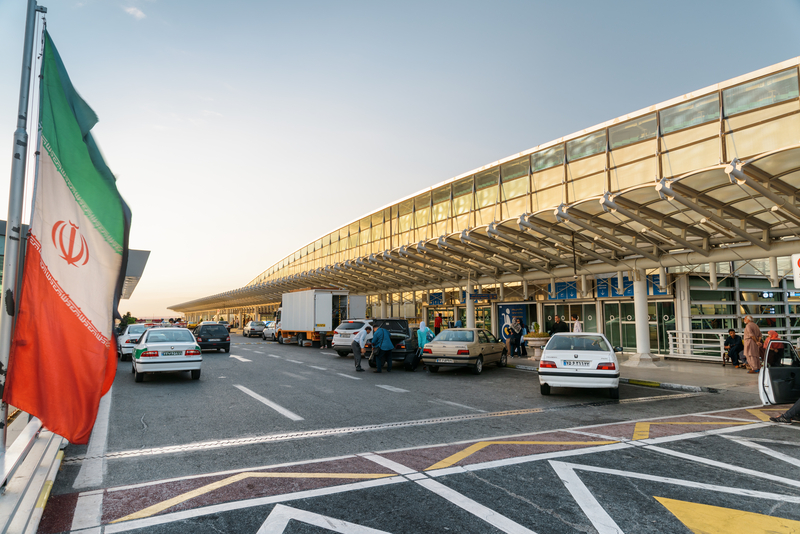
Iran’s restriction still allowed certain international arrivals and departures with prior approval, meaning Tehran Imam Khomeini (IKA) and other international stations could technically remain accessible—at least for flights cleared in advance. But for most global carriers, the headline wasn’t “Can we land in Tehran?” It was “Can we safely and efficiently cross Iran at all?”
The Reroute Reality: When One NOTAM Forces a Network to Breathe Through a Straw
When a central corridor disappears, airlines typically swing south through Saudi Arabia and Egypt—often routing near airports like Riyadh (RUH), Jeddah (JED), and Cairo (CAI)—or they shift north depending on airspace availability, winds, and company risk policy. Either way, the outcome is similar: traffic concentrates into fewer lanes, air traffic management metering increases, and delays cascade.

A single example shows how quickly this can escalate from “reroute” to “diversion.” Emirates flight EK325, a Boeing 777-300ER operating Seoul Incheon (ICN) to Dubai (DXB), altered course near Iran and ultimately diverted to Islamabad (ISB). It’s a textbook illustration of what happens when timing, traffic management, and fuel margins intersect: even if the closure is short, you may not have the fuel—or the slot certainty—to simply “go around and continue.”
And that’s the key point airline professionals tend to focus on: airspace disruptions aren’t binary. The closure window may be brief, but the operational disruption includes the time required to re-sequence traffic, reopen sectors, reposition aircraft, and reset crew pairings.
Why Airlines Treat Iran Differently Than “Routine” Weather or ATC Delays
A snow event at Paris Orly (ORY) is painful, but predictable: you plan alternates, you expect holding, you swap aircraft, you recover. A sudden security-driven airspace restriction is different because the risk model changes.
Even if there’s no confirmed threat to civil aviation at the moment of closure, airlines must consider:

-
Misidentification risk in elevated air-defense postures (especially at night or during high alert).
-
Rapidly changing authorizations and the potential for repeated, short-notice restrictions.
-
Limited diversion options depending on route stage length and aircraft performance.
That risk calculus is shaped by history. Operators and insurers still reference the 2020 shootdown of Ukraine International Airlines Flight PS752 departing Tehran, and it continues to influence overflight policy, particularly when tensions spike.
What to Watch Next: The Tells Dispatchers Actually Care About
When a state closes a FIR on short notice, airline ops teams immediately look for clues about whether it was a one-off event or the start of a pattern. The practical indicators include:
-
Repeat NOTAM behavior: short windows that recur nightly or are extended at the last minute.
-
Airspace “emptiness” on tracking: whether carriers continue to avoid the region even after reopening.
-
Official advisories and company risk bulletins: whether risk ratings change and whether restrictions expand to neighboring FIRs.
If restrictions recur, airlines will start building the avoidance into schedules rather than treating it as an irregular operation. That’s when you see block times increase, connection banks get padded, and rotations restructured—especially for aircraft types like the Boeing 777, Airbus A350, and Boeing 787 that frequently traverse the region on Europe–Asia and Gulf–Europe flows.
Bottom Line
Iran’s short-notice restriction of the Tehran FIR (OIIX) was brief on paper, but the operational impact was anything but. Reroutes concentrate traffic into fewer corridors, holding increases, fuel margins tighten, and diversions become more likely—as seen with EK325 (ICN–DXB) diverting to Islamabad (ISB). For airlines, the real question isn’t just when airspace reopens; it’s whether the risk of sudden repetition forces a longer-term reroute strategy that reshapes schedules, crews, and costs.