San Francisco Now Has 16 Airlines Flying To Europe
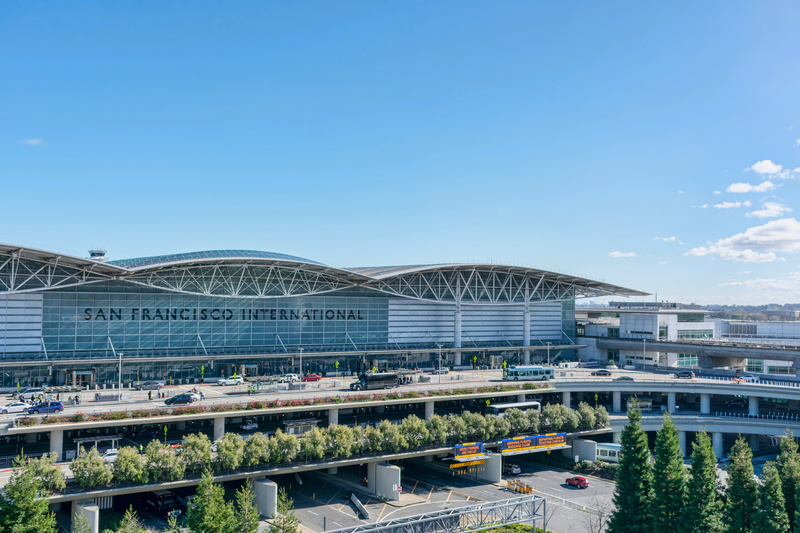
San Francisco International Airport (SFO) has always punched above its weight across the Pacific—but the Atlantic side of the house is now just as much of an avgeek playground. For the 2026 schedules, SFO is set up with nonstop service to 16 European airports on 16 different airlines, spanning everything from legacy flag carriers and alliance-heavy hub flying to low-cost long-haul and niche island links.
It’s the kind of route map that tells you something important: the Bay Area isn’t just “strong demand.” It’s diverse demand—premium tech traffic, leisure volume, visiting friends and relatives (VFR) flows, and cargo belly capacity that makes widebodies pencil out even when fares soften.
From Mills Field to transatlantic breadth
SFO’s story starts earlier than most people realize. The airfield that would become SFO was officially commissioned on May 7, 1927, when Mills Field Municipal Airport of San Francisco opened on what was then a cow pasture south of the city. That early-start DNA matters: SFO grew up alongside the long-haul era, and today’s Europe bank structure is the modern expression of a century-long push to connect the Bay Area to the world.
The nonstop map: 16 European airports from SFO
Here’s the cleanest way to understand SFO’s Europe footprint: 16 airports, each a different “type” of Europe. Traditional mega-hubs, boutique gateways, leisure-centric links, and a couple of routes that exist because aviation is wonderfully weird.
SFO’s nonstop European airports (IATA codes) and who flies them:

-
Amsterdam (AMS) — KLM, United (seasonal)
-
Barcelona (BCN) — LEVEL (seasonal), United (seasonal)
-
Copenhagen (CPH) — SAS
-
Dublin (DUB) — Aer Lingus
-
Frankfurt (FRA) — Lufthansa, United, Condor (seasonal)
-
Istanbul (IST) — Turkish Airlines
-
Lisbon (LIS) — TAP Air Portugal
-
London Heathrow (LHR) — British Airways, United, Virgin Atlantic
-
Madrid (MAD) — Iberia (seasonal)
-
Munich (MUC) — Lufthansa, United
-
Paris Charles de Gaulle (CDG) — Air France, United
-
Paris Orly (ORY) — French bee
-
Rome Fiumicino (FCO) — ITA Airways, United (seasonal)
-
Terceira (TER) — TAP Air Portugal (seasonal)
-
Warsaw (WAW) — LOT Polish Airlines (seasonal; launches May 2026)
-
Zurich (ZRH) — SWISS, United (seasonal)

That’s a very “SFO” mix: Star Alliance-heavy at the core, a strong oneworld presence at LHR and MAD, SkyTeam represented via CDG/AMS/CPH, plus two low-cost long-haul operators feeding Paris and Barcelona from the “other” Paris airport (ORY) and Catalonia’s primary gateway (BCN).
United at SFO: the hub that makes the math work
United’s SFO hub is the anchor that turns a handful of flagship routes into a full transatlantic network. The airline’s Europe flying from SFO leans into hub-to-hub pairings—FRA, MUC, LHR, CDG, AMS, ZRH—where connectivity on both ends improves load factors and yield.
Aircraft-wise, United’s transatlantic schedule out of SFO typically rotates through the carrier’s long-haul workhorses: Boeing 777 and Boeing 787 Dreamliner variants, depending on season, timing, and fleet availability. For avgeeks, the fun part is how flexible this can be—route economics might stay the same, but the gauge can shift with demand, maintenance planning, or widebody availability.
London (LHR): the marquee battleground
If you want one market that proves SFO is a serious Atlantic gateway, it’s London Heathrow (LHR). In peak summer scheduling, SFO–LHR is dense, premium-heavy, and slot-constrained—meaning airlines tend to put their best product forward and protect frequencies.
The result: multiple daily departures split between United, British Airways, and Virgin Atlantic, with widebodies that frequently include Boeing 777 and Airbus A350 family aircraft. For readers who track cabins as much as tails: this is where you’ll most often see the strongest business-class demand patterns out of SFO, with significant connecting volume beyond London as well.
Lufthansa’s two-hub strategy: FRA and MUC, plus the widebody candy
Lufthansa is one of the more interesting SFO-Europe operators because it’s effectively running a two-hub play from the Bay Area: Frankfurt (FRA) and Munich (MUC).
This matters operationally: two hubs means two different banks, two different connection profiles, and (often) two different aircraft types. Lufthansa’s long-haul fleet choices can turn SFO into a rotating showcase—ranging from modern twins like the Airbus A350-900 (composite-heavy, Rolls-Royce Trent XWB-powered efficiency) to high-capacity classics like the Boeing 747-8 Intercontinental, powered by GEnx-2B engines.
And yes, when schedules and fleet planning align, A380 seasonality can enter the conversation—less because SFO “needs” a quadjet, and more because global widebody puzzle pieces sometimes make California the beneficiary.
The “new Europe” for SFO: WAW, TER, ORY, and BCN
Some of the most compelling additions aren’t the obvious hubs—they’re the routes that exist because an airline has spotted a specific pocket of demand (and can serve it with the right airplane).
Warsaw (WAW): LOT brings the Dreamliner west
LOT Polish Airlines is scheduled to launch SFO–WAW in May 2026 with four weekly seasonal frequencies. Expect the Boeing 787 Dreamliner, an aircraft that tends to be a strong fit for “long and thin” markets—efficient range, right-sized capacity, and passenger-friendly cabin features (notably higher humidity and lower cabin altitude compared to older widebodies).
Terceira (TER): the Azores connection you didn’t know you needed
TAP Air Portugal’s Lisbon (LIS) – Terceira (TER) – San Francisco (SFO) routing is peak avgeek material: a strategic island stop that’s as much about matching demand as it is about building a unique network proposition. TER is small, but it taps into VFR flows and niche leisure demand that doesn’t always show up in headline passenger totals—yet still supports a route when the airplane and schedule are right.
Paris (ORY): French bee goes Orly instead of CDG
Paris isn’t just CDG. French bee’s SFO–ORY is a reminder that airport choice matters: Orly can be a very different experience operationally and commercially, and low-cost long-haul carriers often structure service around cost base, slot availability, and the ground-side experience their customers actually use.
Barcelona (BCN): seasonal variety via LEVEL and United
With both LEVEL and United operating SFO–BCN seasonally, this market becomes a litmus test for leisure demand and summer capacity discipline. When the Bay Area appetite for Spain is strong, BCN gets more lift; when the market softens, it’s one of the first places you’ll see trimming—exactly because it’s seasonal by design.
Who pulled out of SFO—and what it says about the market
SFO’s Europe growth story is real, but it hasn’t been linear. Over the last couple of decades, the airport has also lost nonstop links to a handful of European airports—including Berlin (TXL), Düsseldorf (DUS), Helsinki (HEL), Keflavík (KEF), London Gatwick (LGW), Manchester (MAN), and Milan (MXP).
That list is revealing. These are the routes most exposed to shifting fuel costs, aircraft availability, and competitive pressure—especially when an airline’s long-haul strategy changes (as happened with multiple low-cost long-haul models post-pandemic). In other words: SFO can support Europe breadth, but the marginal routes still live and die on fleet economics and network strategy.
Bottom Line
San Francisco International Airport (SFO) has quietly become one of the most varied transatlantic departure points in the U.S., with 16 airlines offering nonstop service to 16 European airports—from megahubs like LHR, FRA, and CDG, to niche links like TER, and a brand-new Eastern Europe nonstop to WAW.
For readers who love airline strategy as much as aircraft types, SFO’s Europe map is a case study in modern long-haul: alliances and hubs for stability, seasonal flying for flexibility, and efficient widebodies—787s, A350s, A330neos, and even the occasional 747-8—to make the economics work.