Qatar Airways Trims San Francisco Flights for Summer 2026 as the DOH–SFO Market Cools
Qatar Airways is dialing back capacity to Northern California next summer, trimming its flagship Doha Hamad International Airport (DOH)–San Francisco International Airport (SFO) route from daily service to five flights per week. For an airline that’s built its network around high-frequency, banked connections over DOH, any move away from “daily” is notable—especially on a route designed to feed long-haul traffic flows between the US West Coast and the Indian Subcontinent.
San Francisco joined Qatar Airways’ map in late 2020, and the route has typically been operated daily. For Summer 2026, however, the carrier has filed a five-weekly pattern across the peak season, signaling a more cautious approach to matching capacity with demand and yield.
The New Summer Pattern on DOH–SFO
Under the schedule currently filed for the northern hemisphere summer season (late March through late October), Qatar Airways plans to operate DOH–SFO five times weekly on Mondays, Tuesdays, Thursdays, Saturdays, and Sundays.
The published timings are built for connectivity at DOH—particularly the mid-morning arrival wave and late-evening departures that help link SFO to onward banks across South Asia, the Gulf, East Africa, and beyond:
-
QR737 DOH–SFO: departs 08:05, arrives 13:35 (local)
-
QR738 SFO–DOH: departs 15:55, arrives 17:25 (+1 day, local)
Block times remain in the ~15.5-hour range each way, underscoring just how long and mission-demanding the DOH–SFO sector is for any twinjet.
The Aircraft: Airbus A350-1000, and Why It Matters
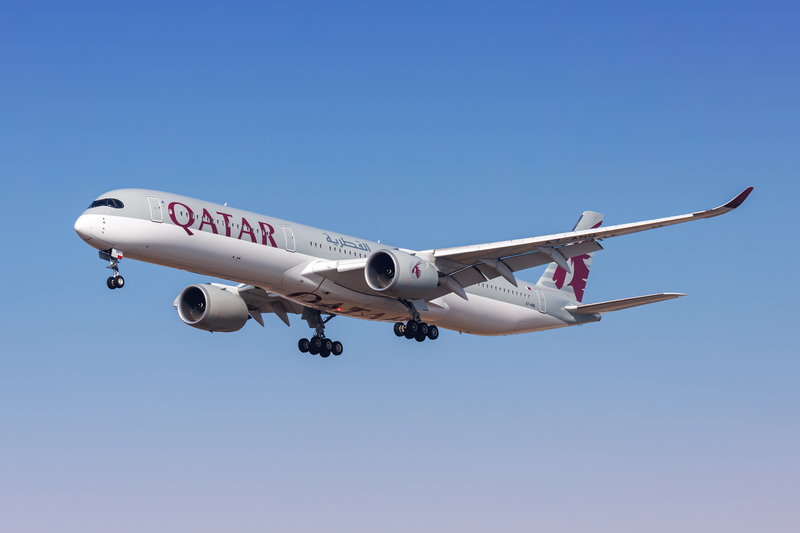
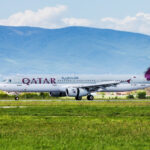
Qatar Airways plans to keep the Airbus A350-1000 on the DOH–SFO route for Summer 2026—an important detail, because it tells you this isn’t a retreat from the premium strategy so much as a frequency adjustment.
On this route, Qatar typically uses its higher-premium A350-1000 layout with 327 seats total:
-
46 Qsuite Business Class seats (1-2-1)
-
281 Economy seats (3-3-3)
From a fleet and performance standpoint, the A350-1000 is well-suited to ultra-long missions like DOH–SFO thanks to its composite-heavy structure and efficiency-focused widebody design. It’s powered by Rolls-Royce Trent XWB-97 engines—the high-thrust variant developed specifically for the A350-1000—giving the aircraft the legs and payload flexibility airlines need for long-haul sectors that can be sensitive to winds, routing, and seasonal performance constraints.
What a “Five-Weekly” Cut Really Means in Capacity
Dropping from 7x weekly to 5x weekly is a clean 28.6% frequency reduction. With a 327-seat A350-1000, that also equates to a meaningful capacity trim:
-
Daily (7x weekly): 2,289 seats per week each direction
-
Five-weekly (5x weekly): 1,635 seats per week each direction
-
Net reduction: 654 seats per week each direction
That’s not subtle. Airlines usually make this kind of change when they believe the route performs better with fewer seats—because it improves load factor quality, supports yields, and reduces the need to “buy the cabin” with discounting.
Why SFO Might Be the Route Getting Trimmed
San Francisco (SFO) is a high-value market, but it’s also competitive and increasingly complex:
-
Competitive long-haul mix: SFO has deep nonstop coverage to Europe and the Middle East, plus strong global connectivity via partner hubs.
-
Connectivity-driven traffic: DOH–SFO leans heavily on connections beyond DOH (not just point-to-point demand). That’s great when connection flows are strong—but it also means performance can swing with pricing pressure in connecting markets.
-
Fleet opportunity cost: Every A350-1000 day spent on DOH–SFO is one less frame-day available for other high-demand trunk routes where daily frequency is strategically essential.
In short: cutting frequency can be an efficient way to protect profitability without walking away from the market—or from the premium positioning that comes with flying an A350-1000 into SFO.
What to Watch Next
Two things will determine whether this becomes a one-season experiment or a longer-term reset:
-
Whether Qatar restores daily service for peak travel weeks (mid-summer, late-summer) if bookings and yields strengthen.
-
Whether competitors add capacity or pricing pressure increases, particularly on itineraries that overlap heavily with Qatar’s India-bound connection flows.
For travelers, the practical impact is simple: fewer departure options from SFO, and potentially tighter award/upgrade inventory if Qatar is able to fill a smaller number of flights at stronger yields.
Bottom Line
Qatar Airways is set to reduce its Doha (DOH)–San Francisco (SFO) schedule to five weekly flights for Summer 2026, while keeping the Airbus A350-1000 on the route. The move trims capacity by nearly 29%, suggesting a deliberate effort to better align supply with demand and protect yields on one of the carrier’s longest ultra-long-haul markets.