Greek ATC Radio Blackout Shuts Athens FIR, Forces Europe Into Reroutes
Greece’s airspace rarely goes quiet in winter. Even outside the peak summer rush, the Athens Flight Information Region (FIR) sits astride a steady stream of intra-Europe sectors, island shuttles, and long-haul flows linking Western Europe with the Middle East and onward to Asia.
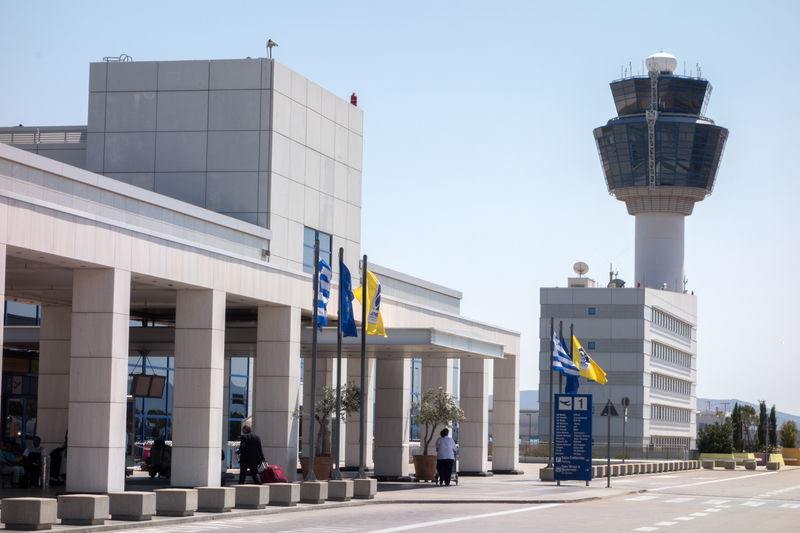
That’s why what happened on Sunday, January 4, 2026 landed like a shockwave across airline operations centers: a sudden, widespread breakdown in air traffic communications severed normal controller–pilot contact across the Athens FIR, prompting Greek authorities to impose a “zero rate” stop on traffic. For hours, departures and arrivals were effectively frozen nationwide—most visibly at Athens International Airport (ATH), but with knock-on effects felt from Thessaloniki (SKG) down to the islands and outward across the European network.
When the Radios Fail, the System Has to Slow Down
The disruption began at 08:59 local time, when Greek officials reported massive interference across most aviation radio frequencies serving the Athens FIR. The key detail here isn’t simply “a radio issue.” These VHF channels are the primary real-time link for tactical control: headings, levels, speeds, clearances, and last-minute coordination that keep a busy airspace safe and efficient.
When that link is compromised, ATC has only two options: reduce the traffic rate drastically under contingency procedures—or stop it outright while protecting aircraft already airborne.
That’s effectively what Greece did. Flights already in the air had to be handled with heightened caution and limited tools while new movements were curtailed. Within a short window, the country took the extraordinary step of suspending flights into and across its airspace, because safe tactical separation without reliable communications is simply not a risk any regulator can accept.

ATH Took the Headline, But the Entire Network Took the Hit
At ATH, the immediate consequence was a departure hall full of passengers watching boards flip from “Delayed” to “Cancelled” as aircraft, crews, and slots drifted out of alignment. Greece’s largest hub is designed for high throughput, but even a modern terminal struggles when an entire day’s schedule compresses into a partial-capacity restart.
Crucially, this wasn’t just an Athens problem. Greece’s airspace closure impacts every airport operating under the Athens FIR umbrella—major domestic points, island gateways, and holiday routes. That means the typical weekend pattern of Airbus A320-family and Boeing 737-family aircraft shuttling between cities like Athens (ATH), Thessaloniki (SKG), Heraklion (HER), Rhodes (RHO), Santorini (JTR) and Mykonos (JMK) becomes a parking and reaccommodation puzzle almost instantly.
And because so much Greek flying is banked—arrivals feeding departures, island flights feeding international connections—any interruption quickly turns into a multi-day recovery exercise. You don’t just restart where you left off. You rebuild rotations.
Diversions, Holding, and the Europe-Wide Ripple
Once the Athens FIR constricted, the rest of Europe had to absorb the displacement. That meant:
-
Diversions to nearby alternates when aircraft couldn’t land as planned, often to airports with stronger connectivity and handling capacity.
-
Reroutes around Greek airspace for overflights, shifting demand into neighboring corridors.
-
Knock-on cancellations as crews timed out, aircraft landed in the “wrong” place, and ground schedules snapped.
The most telling evidence was the diversion pattern. Reports described flights intended for Athens (ATH) being pushed to airports such as Rome (FCO) and Dubrovnik (DBV), while other disrupted services ended up in places like Budapest (BUD), Tirana (TIA), and Larnaca (LCA)—classic alternates when the Eastern Mediterranean goes sideways. One example routing showed a flight originally bound for Heraklion (HER) holding its journey in Cyprus at Larnaca (LCA), underscoring how quickly a “national” communications outage becomes a regional air traffic management event.
EUROCONTROL’s role matters here. In modern Europe, large-scale disruptions are rarely handled by one state in isolation; traffic flow management and rerouting decisions quickly become coordinated, especially when a major FIR turns into what one source described as a “black hole” for communications.
The Aircraft Angle: Why Narrowbodies Jam First, and Why Widebodies Hurt More
Most services into and within Greece are narrowbody missions—high-frequency, short-to-medium-haul flights dominated by the A320 family (A319/A320/A321 and neo variants) and the Boeing 737 family. That fleet mix is efficient in normal operations, but during an ATC stoppage it creates a specific kind of congestion: lots of flights, tight turn times, and an enormous number of passenger itineraries tied to a relatively small set of daily aircraft rotations.
Long-haul aircraft raise different pressures. A widebody arriving into ATH—whether an Airbus A330/A350 or Boeing 777/787-class aircraft—carries a far larger passenger load and typically requires more specialized handling resources. Diverting one widebody can consume gate space, busing, and baggage infrastructure at an alternate, while also creating a much larger reaccommodation problem for the airline.
Even when the disruption is “only” a few hours, the math is unforgiving:
-
A narrowbody cancellation might strand 150–220 passengers.
-
A widebody disruption can strand 250–350+ passengers in one move—often with complex international connections.
That’s why airspace events like this can feel bigger than weather: the schedule recovers unevenly. Airlines can add extra narrowbody sections later, but widebody recovery is constrained by aircraft cycles, crew availability, and international slot structures.
Restoration: Backup Channels, Reduced Rates, and a Long Tail
By later in the day, limited operations began to return as controllers and technicians worked to restore communications and bring alternative channels online. Departures reportedly ramped to around 45 flights per hour by late afternoon, but the key phrase for airline professionals is “capacity availability.” A partial restart rarely means “normal.” It means metered release—carefully reopening the tap to prevent the system from overwhelming itself.
Even once movements resumed, average delays stacked across the schedule and spilled into the next day. Aircraft were out of position, crews were displaced, and passenger misconnects multiplied—especially on a weekend when many travelers were trying to return ahead of the Monday, January 5 workweek.
What Caused It, and Why Greece’s Infrastructure Is Now Under a Microscope
As of the initial reporting window, authorities had not pinned down a single definitive cause. What’s clear is that the incident triggered immediate scrutiny around resilience and redundancy.
Officials publicly emphasized that there was no indication of a cyberattack, while investigations launched on multiple tracks—operational, technical, and judicial. At the same time, Greece’s air traffic controllers’ representatives used unusually direct language, pointing to aging systems and modernization needs.
The most aviation-relevant takeaway isn’t the speculation—it’s the vulnerability exposure. A failure mode that affects primary communications is serious. A failure mode that also compromises backup layers, even temporarily, forces the most conservative response: stop the flow, protect aircraft already airborne, then rebuild in a controlled way.
Longer term, the event is likely to intensify pressure to accelerate upgrades. Modernization programs are measured in years, but operational credibility is measured in minutes—especially when ATH, a key European leisure and connecting gateway, is at the center of the disruption.
Bottom Line
The January 4 communications failure in the Athens FIR wasn’t just a “bad day at ATH.” It was a system-level outage that demonstrated how quickly European airspace can destabilize when a major FIR loses reliable controller–pilot communications.
For airlines, the story is the recovery tail: diversions to alternates like FCO, DBV, BUD, TIA, and LCA; aircraft and crews displaced across the map; and a restart that had to be metered back carefully even after backup channels returned. For regulators and infrastructure planners, it’s a stark reminder that redundancy isn’t a luxury—it’s what keeps a single technical anomaly from becoming a continent-wide schedule disruption.