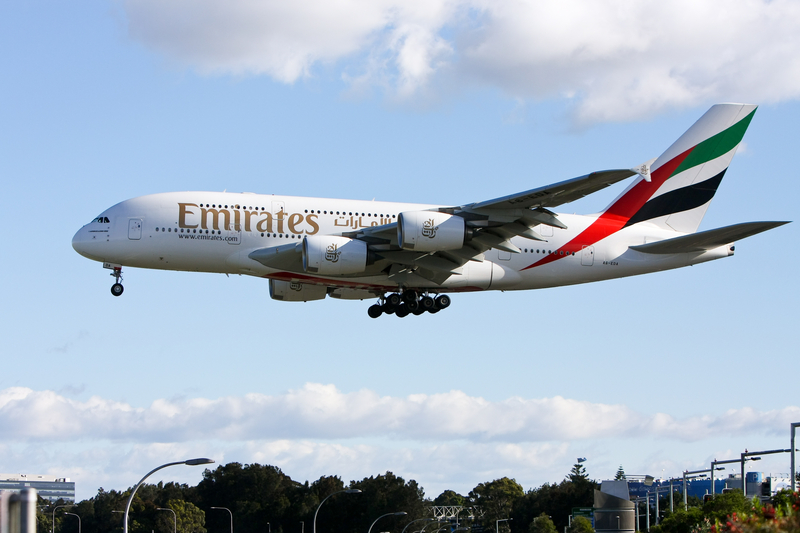
Emirates’ A380 Turns 20: The Oldest Airbus A380 Still Flying Passenger Service
The Airbus A380 entered commercial service in 2007 with Singapore Airlines, created to move huge numbers of passengers between slot-constrained global hubs. But as the industry shifted toward more fuel-efficient twin-engine widebodies—and as Airbus faced early production and delivery challenges—the superjumbo’s long-term market narrowed. In 2019, Airbus confirmed it would end A380 production after Emirates (the largest A380 operator) reduced its remaining orders. Even so, a substantial number of A380s remain active worldwide today.
Emirates operates the oldest active A380 in the world
Emirates operates the world’s oldest A380 still flying commercial passenger routes, the aircraft registered A6-EDF, which is set to mark its 20th anniversary in February. The airframe was built in 2006 and delivered to Emirates in December 2009.
As of September 30, 2025, A6-EDF had accumulated roughly:
-
43,604 flight hours
-
7,174 cycles
Storage, return to service, and how Emirates uses it today
Like many A380s, A6-EDF spent time in storage following the COVID-19 demand collapse—first at Dubai Al Maktoum International and later at Dubai International. Emirates eventually returned it to commercial operations on April 3 with a flight from Dubai to Cairo, and the aircraft has since rotated across a mix of high-demand long-haul routes in Europe, Africa, and Asia.
Recent routes flown by A6-EDF
| Date | Route | Flight Number |
|---|---|---|
| Dec 22 | Dubai – Kuala Lumpur | EK342 / EK343 |
| Dec 23 | Dubai – Casablanca | EK751 / EK752 |
| Dec 24 | Dubai – London | EK15 / EK16 |
| Dec 26 | Dubai – Seoul | EK322 / EK323 |
| Dec 27 | Dubai – Zurich | EK87 / EK88 |
| Dec 28 | Dubai – London | EK31 / EK32 |
| Dec 29 | Dubai – Zurich | EK87 / EK88 |
| Dec 30 | Dubai – Casablanca | EK751 / EK752 |
| Dec 31 | Dubai – Madrid | EK141 / EK142 |
Cabin layout: a 517-seat A380 without premium economy
A6-EDF is configured with 517 seats and does not include Emirates’ premium economy cabin.
-
Economy (main deck): 427 seats in 3-4-3
-
Business (upper deck): 76 fully-flat seats
-
First (upper deck): 14 suites in 1-2-1
Economy seating is typically described as featuring a 32-inch pitch and seatback IFE screens, while the premium cabins include Emirates’ signature A380 product with lie-flat business seating and enclosed first-class suites.
Where the earliest A380s ended up
While A6-EDF is the oldest A380 still operating passenger flights, even earlier A380 airframes exist—most notably Airbus’ first-built example (MSN 001), retained by the manufacturer for testing and later stored. Several early-production aircraft were ultimately withdrawn from service, preserved in museums, or parked long-term after airline retirement.
Bottom Line
A6-EDF’s continued flying is a reminder that the A380 era isn’t over yet—especially at Emirates, where demand, fleet strategy, and capacity needs still justify keeping even the earliest examples active. As it approaches its 20-year milestone, the aircraft stands out as the clearest symbol of the superjumbo’s surprising staying power.