Delta’s Holiday Network Surge: 13 Fresh Nonstops for Winter Sun
Delta Air Lines used the days leading into Christmas to flip the switch on a batch of seasonal international flying—exactly the kind of tactical schedule move that can meaningfully reshape a carrier’s short-haul international footprint in a single peak period. Rather than leaning only on the usual “big hub to big resort” playbook, Delta’s latest push spreads capacity across multiple U.S. gateways, mixes aircraft types, and targets markets that consistently overperform during school breaks and year-end PTO.
Most importantly for travelers: these are true nonstops. For Delta: it’s a smart way to keep aircraft productive during a window when domestic business travel softens, while leisure demand spikes to Mexico, the Caribbean, and Central America.
The 13 nonstop routes Delta just turned on
Below are the routes (all nonstop) that began operating for the holiday ramp-up, with airports shown using IATA three-letter codes throughout.
Atlanta (ATL) additions
-
ATL → St. Vincent (SVD) — Daily seasonal service; typically operated by a Boeing 737-family aircraft.
-
ATL → Grenada (GND) — Daily seasonal service; typically operated by a Boeing 737-family aircraft.

Austin (AUS) goes international with new leisure nonstops
-
AUS → Cancún (CUN) — Daily seasonal service; operated by an Airbus A320-family aircraft.
-
AUS → Los Cabos/San José del Cabo (SJD) — Seasonal service; this is the notable “small-jet” outlier in the group, commonly flown by an Embraer E175 in Delta Connection-style flying (a deliberate capacity match for a still-maturing international origin market).

More Cancún (CUN) from the U.S. interior
-
Nashville (BNA) → CUN — Weekly seasonal service (Saturday pattern is typical in this wave); generally Boeing 737-family.
-
Indianapolis (IND) → CUN — Weekly seasonal service; commonly Airbus A320-family.
-
Kansas City (MCI) → CUN — Weekly seasonal service; generally Boeing 737-family.

U.S. territories get new/boosted Northeast access
-
Raleigh-Durham (RDU) → San Juan (SJU) — Weekly seasonal service; generally Boeing 737-family.
-
Boston (BOS) → St. Thomas (STT) — Daily seasonal service; notably operated by a Boeing 757-200.
Upper Midwest and Detroit (DTW) get more winter leisure lift
-
Minneapolis–St. Paul (MSP) → Nassau (NAS) — Weekly seasonal service; generally Boeing 737-family.
-
Detroit (DTW) → Grand Cayman (GCM) — Weekly seasonal service; generally Boeing 737-family.
-
New York (JFK) → GCM — Weekly seasonal service; generally Boeing 737-family.
-
DTW → Liberia, Costa Rica (LIR) — Weekly seasonal service; generally Boeing 737-family.
What the aircraft choices say about Delta’s strategy
This rollout is a good snapshot of how U.S. network airlines now “right-size” international leisure:
Boeing 737-family: the workhorse for short-haul international
Delta’s 737 variants are well suited for Mexico/Caribbean stage lengths: efficient trip costs, solid cargo capability (depending on variant and payload), and enough range to cover longer Caribbean sectors comfortably. These missions also benefit from strong fleet commonality—swapping aircraft around the network during irregular ops is much easier when the backbone is a high-volume narrowbody family.
Airbus A320-family: targeted capacity with strong economics
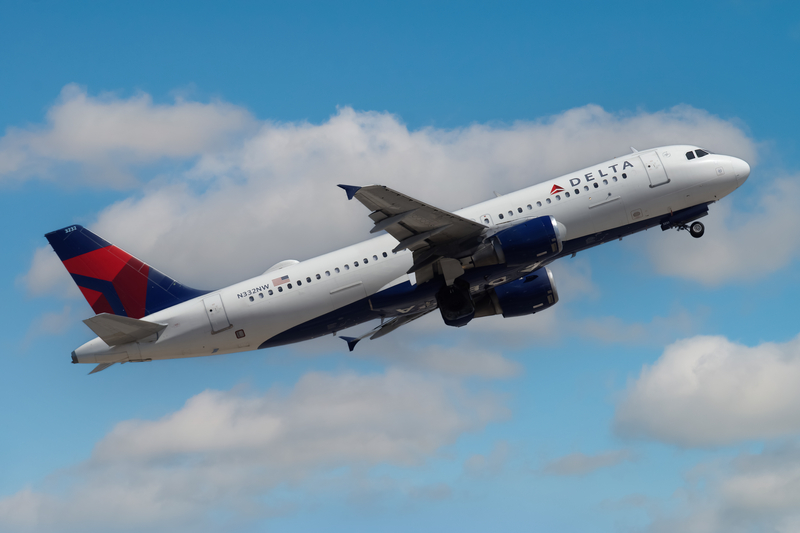
The A320-family (including A320ceo/neo variants across the industry) remains a staple for leisure routes where you want mainline capacity but not the larger gauge of widebodies. On a market like AUS–CUN, the A320-family hits a sweet spot: enough seats to be meaningful, without overcommitting capacity outside peak weeks.
Boeing 757-200: still a high-performance tool where it counts
Seeing the 757 on BOS–STT is a reminder that the type still earns its keep. The 757’s combination of runway performance and range makes it a flexible choice for longer overwater leisure segments, particularly when operators want operational margin and a “bigger than narrowbody” feel without jumping to a widebody.
Embraer E175: surgical growth without overstimulating demand
The E175 (typically 76 seats in a 2-2 layout) is a very deliberate way to test and build an international market from a fast-growing airport like AUS. It limits downside risk, protects yields, and gives Delta a daily presence that can be scaled later if demand holds. For premium-leaning leisure traffic, the E175’s cabin geometry is also a surprisingly strong product: no middle seats, quick boarding, and a calmer onboard flow.
Route-by-route angles worth watching
ATL–SVD and ATL–GND: “new island” routes that rely on hub power
Atlanta (ATL) is built for this: even if local ATL-origin demand is modest, the connectivity across the U.S. Southeast, Midwest, and Northeast can fill these flights quickly during holiday peaks. These routes also tend to do well with longer-stay leisure itineraries—exactly what late-December travel looks like.
DTW–LIR: Costa Rica continues to graduate from niche to mainstream
Liberia (LIR) is a strong tell. It’s not just “beach”; it’s also a gateway to Guanacaste’s resorts and eco-tourism. Seasonality is pronounced, so a weekly pattern is a sensible opening move that can expand with proven performance.
AUS international growth: Delta is building habits, not just seats
Getting travelers to think of Austin (AUS) as an international departure point is a long game. A daily AUS–CUN is about presence and reliability. Pairing it with AUS–SJD on smaller gauge aircraft is what disciplined market development looks like: build the lane, protect the economics, then upgauge only when the booking curve proves it.
CUN from BNA/IND/MCI: a classic “Saturday leisure bank” play
Weekly service from interior U.S. cities to Cancún (CUN) is often designed around vacation packaging, school calendars, and resort check-in rhythms. If the flights stick, the next step is usually either a longer season, additional peak-week frequencies, or upgauging on the strongest travel weeks.
Bottom Line
Delta’s latest winter ramp isn’t just “more flights to warm places.” It’s a tightly structured seasonal deployment across ATL, JFK, BOS, DTW, MSP, AUS, BNA, IND, MCI, and RDU, aimed at capturing holiday leisure demand without overcommitting capacity once the calendar flips back to shoulder season. The fleet mix—737-family, A320-family, a strategically placed 757, and a precision E175—shows a carrier balancing network ambition with disciplined risk management.