Alaska’s New Boston-Anchorage Nonstop Shows How Far the 737 MAX Has Pushed U.S. Route Planning
Alaska Airlines’ new nonstop between Ted Stevens Anchorage International Airport (ANC) and Boston Logan International Airport (BOS) is not just another summer leisure route. It is a useful case study in how modern narrowbody aircraft are changing what U.S. airlines can justify flying nonstop.

The route began June 13, 2026, and is scheduled to run once weekly through August 15. It operates on Saturdays from Anchorage to Boston, with the return scheduled as a Monday morning departure from Boston back to Alaska. That makes it a very limited seasonal experiment, but the aircraft and distance make it far more interesting than the frequency suggests.
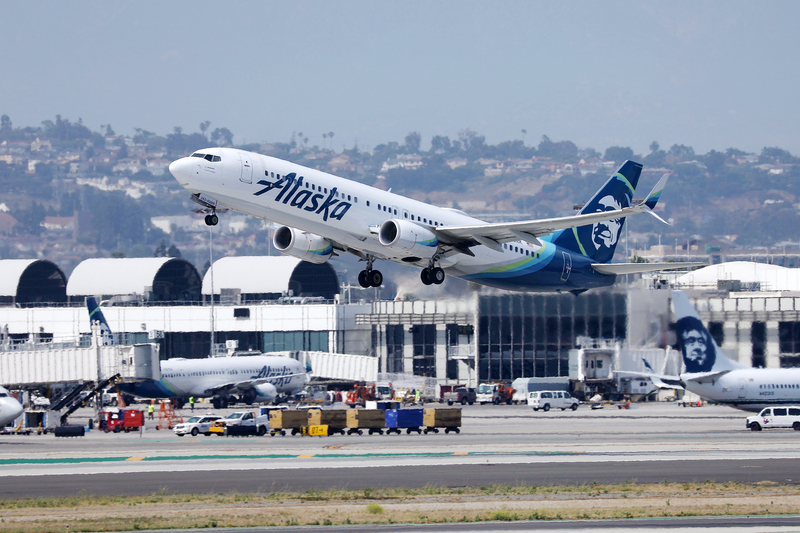
The flight is scheduled with the Boeing 737-8 MAX, putting a single-aisle aircraft on a city pair of roughly 2,930 nautical miles. The eastbound flight is blocked at about seven hours and 15 minutes, while the westbound return is scheduled at close to seven hours and 53 minutes because of prevailing winds.
For passengers, it means New England can reach Alaska nonstop without connecting in Seattle, Portland, Chicago, Denver, or New York. For airline planners, it shows how far narrowbody economics have moved.
Anchorage–Boston Is a Thin Route That No Longer Needs a Widebody
A nonstop between Anchorage (ANC) and Boston (BOS) would have been much harder to justify in an earlier aircraft era. The market is long, highly seasonal, and not large enough to support high-frequency widebody flying. That combination once made it the kind of route airlines might study, admire, and then reject.
The Boeing 737 MAX 8 changes the math.
Alaska’s route is not built around daily corporate demand or a deep year-round local market. It is built around a specific summer travel window when Alaska demand is strongest, when cruise and adventure travel peak, and when New England-origin leisure passengers are more willing to travel long distances.
That is why the once-weekly pattern is important. Alaska is not trying to make Anchorage-Boston behave like Boston-Los Angeles or Seattle-Boston. It is using one weekly aircraft rotation to capture high-season demand while keeping exposure low.

This is network planning with a scalpel, not a hammer.
Why the 737 MAX 8 Makes the Route Work
The 737-8 MAX is the right aircraft for this mission because it combines range, seat count, and lower trip cost in a way older narrowbodies could not.
Boeing lists the 737-8 with range of up to 3,500 nautical miles, which gives it enough published capability for a route like Anchorage (ANC)-Boston (BOS), even after real-world factors such as winds, routing, reserves, payload, and operating conditions are considered.
Alaska’s 737-8 MAX is also smaller than its 737-9 MAX. Alaska’s fleet page lists the 737-8 MAX with 159 or 161 seats, depending on configuration, compared with 178 seats on the 737-9 MAX. That lower seat count matters on a route like Anchorage-Boston. It reduces the number of seats Alaska has to sell while preserving enough capacity to make the flight meaningful.

In simple terms, the MAX 8 gives Alaska a long-range narrowbody with a manageable cabin size. That is exactly what a thin long-haul domestic route needs.
This Is the Kind of Route the 757 Used to Own
For years, the Boeing 757-200 was the aircraft airlines used when they needed narrowbody range beyond what a 737 or A320 could normally provide. The 757 was especially valuable on thin transcontinental, Hawaii, and transatlantic routes because it could fly farther than most single-aisle aircraft and carry a useful passenger load.
But the 757 is now an aging aircraft. It is capable, but it is not efficient by modern standards. It also brings maintenance complexity, higher fuel burn, and limited fleet availability.
A route like Anchorage (ANC)-Boston (BOS) is exactly the type of market that once might have required a 757 or a small widebody such as a Boeing 767-300ER. The problem is that either aircraft would have added too much cost or too much capacity for a limited summer route.
The 737 MAX 8 does not perfectly replace the 757. It does not have the same runway performance, payload capability, or cabin flexibility in every scenario. But on this kind of mission, it gives Alaska enough range with a much lower-risk seat count.
That is the breakthrough.
Alaska Is Using the MAX 8 as a Specialized Long-Range Tool
Alaska Airlines has a large Boeing 737 operation, but not all 737s play the same role. The airline’s larger 737-9 MAX and 737-900ER aircraft are better suited to dense domestic routes where more seats can be sold reliably. Those aircraft are central to Alaska’s core network across the West Coast, transcontinental markets, Hawaii, Mexico, and major domestic city pairs.
The MAX 8 is different. It gives Alaska slightly less capacity but more range margin, making it useful on the airline’s longest narrowbody missions.
That is why Alaska has used or scheduled the 737-8 MAX on routes such as Anchorage (ANC)-New York JFK, Anchorage (ANC)-Boston (BOS), and Seattle (SEA)-Reykjavik Keflavik (KEF). These are not ordinary domestic sectors. They are long, thin, and highly dependent on aircraft economics.
Alaska’s official fleet page listed 19 Boeing 737-8 MAX aircraft as of June 2026, compared with 80 737-9 MAX aircraft. That tells the story. The MAX 8 is not the airline’s default growth aircraft. It is a high-performance subfleet for routes where the extra range and smaller gauge matter.
Boston Gives Alaska a New Northeast Gateway to the State
Boston is a logical addition to Alaska’s summer Anchorage network. New England has strong leisure demand for Alaska, including cruise passengers, national park travelers, outdoor adventure tourists, and travelers visiting friends and relatives.
Historically, those passengers usually had to connect. Seattle (SEA) has been the natural Alaska Airlines gateway, while other options could include Chicago (ORD), Denver (DEN), Minneapolis/St. Paul (MSP), New York (JFK/EWR), or other connecting points depending on airline choice.
A nonstop BOS-ANC flight removes that friction. It also gives Alaska Airlines a strong marketing angle in the Northeast: Boston travelers can reach Alaska’s largest city directly, without backtracking over another hub.
That matters because Alaska is not just selling Boston as an origin. It is selling Alaska as a destination. Nonstop service makes the vacation feel easier, especially for travelers considering a high-value summer trip.
The Schedule Keeps the Risk Low
The route’s schedule is conservative by design. Once-weekly service is not ideal for every traveler, but it works for certain leisure patterns. Seven-night, nine-night, and cruise-linked itineraries can be built around limited nonstop service if the timing is clear.
For Alaska, the schedule keeps opportunity cost low. A daily route would require far more aircraft time and would need consistent demand across the week. A Saturday eastbound and Monday return pattern allows the airline to capture peak weekend travel while preserving aircraft for other uses.
That is especially important because Alaska is also expanding across several fronts. The carrier is growing long-haul international flying after its Hawaiian Airlines acquisition, adding Boeing 787 activity, building Seattle’s global role, and continuing to defend its core West Coast and Alaska franchises.
In that environment, a once-weekly seasonal route is a smart way to test demand without creating a major aircraft commitment.
Narrowbody Range Is Redrawing the U.S. Map
Anchorage-Boston is part of a larger pattern. Long-range narrowbodies are making routes viable that once required a widebody, a 757, or no nonstop at all.
United Airlines has used the 737 MAX 8 on long routes to Alaska and across the Atlantic, including Newark (EWR)-Anchorage (ANC), Washington Dulles (IAD)-Anchorage (ANC), and thinner European markets from Newark. JetBlue and other carriers have used the Airbus A321LR across the Atlantic. Air Canada is deploying the Airbus A321XLR on thinner long-haul routes such as Berlin (BER)-Montréal (YUL).
The aircraft are different, but the network logic is similar. Airlines can now serve long routes with fewer seats and lower trip costs. That allows them to test thinner markets, add seasonal nonstops, and avoid committing widebody capacity where demand is not deep enough.
This does not mean every city pair can suddenly fly nonstop. It means the threshold has moved.
The 737 MAX 8 Still Has Limits
The MAX 8 makes Anchorage-Boston possible, but it does not erase the limits of long narrowbody flying.
A flight approaching eight hours creates passenger-experience and crew-planning challenges. The aircraft is still a single-aisle cabin, with narrowbody lavatory capacity, narrowbody galley space, and limited room for passengers to move around. On a nearly eight-hour westbound flight, that can feel very different from a two-hour domestic hop.
Crew planning also matters. Once block times move beyond certain thresholds, airlines may need augmented crews depending on rules, duty periods, and schedule design. A 737 does not have built-in widebody-style crew rest facilities, so any additional crew requirements can reduce revenue seats or increase cost.
Payload-range is another consideration. Published range is not the same as every-day operational capability under every condition. Strong headwinds, full passenger loads, cargo, alternate requirements, runway conditions, and fuel reserves all matter.
That is why routes like Anchorage-Boston remain specialized. The aircraft can do it, but the airline still has to manage the mission carefully.
Why a Widebody Would Be Too Much Airplane
A widebody could easily fly Anchorage (ANC)-Boston (BOS), but that does not mean it would be the right aircraft.
A Boeing 767, 787, Airbus A330, or A350 would bring more seats, more cargo capacity, more cabin space, and better long-haul passenger comfort. But it would also bring much higher trip cost. Unless the route could support those extra seats at acceptable fares, the widebody would weaken the economics.
That is the narrowbody advantage. A 159- or 161-seat 737 MAX 8 can serve the route without forcing Alaska to fill 250 to 300 seats. On a once-weekly summer route, that is the difference between a smart seasonal experiment and an oversized gamble.
This is the same logic that has driven airlines toward the Airbus A321LR and A321XLR on transatlantic routes. Smaller long-range aircraft give airlines more precision.
What This Says About Alaska’s Strategy
The route also fits Alaska Airlines’ broader identity. Alaska has always had a unique role connecting the state of Alaska with the Lower 48. Anchorage is not just another spoke. It is part of the airline’s history, brand, and strategic geography.
Alaska’s official announcement said the airline would serve 17 nonstop destinations from Anchorage to the Lower 48 and Hawaii during summer 2026, its largest-ever peak-season Alaska schedule. Boston is part of that push.
The route also supports Alaska’s transition into a broader global carrier. The airline is adding long-haul flying with Boeing 787s through the Hawaiian Airlines integration, growing Seattle as an international gateway, and using narrowbodies for long seasonal routes that support its brand.
Anchorage-Boston is not a global route, but it belongs to the same story: Alaska is finding ways to connect more distant markets with aircraft sized to the demand.
The Route Is a Preview, Not a Revolution
It is tempting to frame Anchorage-Boston as a total rewrite of U.S. route planning. It is better to see it as a preview of what selective narrowbody range can do.
The route will not suddenly create a wave of daily nonstops between Alaska and every major East Coast city. Demand still matters. Seasonality still matters. Crew cost still matters. Passenger comfort still matters. Aircraft availability still matters.
But it does show that the old line between “possible” and “commercially practical” has moved. A route that would have been difficult to justify with a 757 or 767 can now be tested with a 737 MAX 8 and limited seasonal frequency.
That is a meaningful change. It gives airlines more options, especially in large countries like the United States where domestic city pairs can approach transatlantic distances.
Bottom Line
Alaska Airlines’ new Anchorage (ANC)-Boston (BOS) nonstop is a small route with large implications. Operating once weekly from June 13 to August 15, 2026, the nearly eight-hour Boeing 737 MAX 8 service links New England directly with Alaska for the summer peak.
The route works because the 737-8 MAX gives Alaska enough range, a manageable 159- to 161-seat cabin, and lower trip costs than the older aircraft that once would have been needed for a mission this long. A Boeing 757-200 or small widebody could have flown the route, but likely with more cost and more seat risk.
For passengers, it means a rare nonstop from Boston to Alaska. For Alaska Airlines, it is a disciplined seasonal test. For the industry, it is another sign that modern narrowbodies are reshaping the edge of the route map — not by replacing widebodies everywhere, but by making long, thin, highly seasonal routes far more realistic than they used to be.