LATAM’s 767 Tire Failure at Atlanta Turned a Routine Arrival Into a Runway Recovery
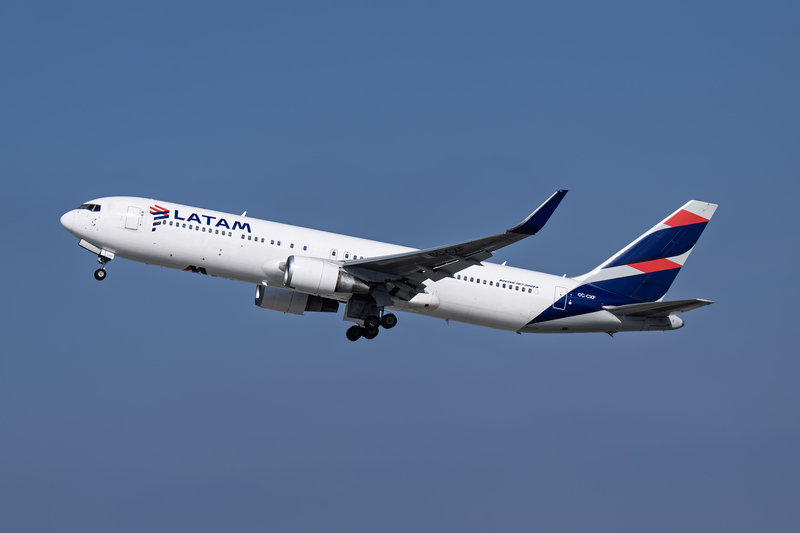
A routine long-haul arrival into Hartsfield-Jackson Atlanta International Airport (ATL) turned into an uncommon runway recovery on Tuesday, January 6, when a LATAM Airlines Peru Boeing 767-300ER (B763) suffered a multi-tire failure during its landing rollout.

The aircraft—operating flight LA2482 from Lima (LIM) to Atlanta (ATL)—touched down safely around 7:38 p.m. local time and came to a controlled stop. But with the main landing gear tires damaged, the 767 was left immobilized on the pavement while airport teams responded, inspected for debris, and worked through the logistics of moving a widebody that can’t taxi normally.
A LIM–ATL arrival that ended with a runway shutdown
By the time LA2482 arrived at ATL, the flight had already logged a full long-haul sector—over seven hours from LIM—meaning the landing phase carried all the usual variables: aircraft weight, braking demand, runway conditions, and the need to clear quickly at one of the busiest hubs in the world.
Instead, emergency vehicles surrounded the aircraft shortly after it stopped. Local reporting and FAA statements described the failure as involving the main landing gear tires—the “rear” tires on the aircraft—triggering a response from Atlanta Fire Rescue and a temporary operational impact.
ATL’s runway system is built with redundancy, but a disabled aircraft on an active strip is never a non-event. In this case, Runway 26R at ATL was temporarily affected while responders secured the scene and the airfield was checked for hazards such as rubber debris or wheel fragments—exactly the kind of foreign object debris (FOD) that can create a second incident if traffic is allowed to resume too quickly.
Why a 767 can’t simply “limp” off the runway
A Boeing 767-300ER uses a two-truck main landing gear configuration: four wheels per main gear (left and right), for a total of eight main-gear tires. That architecture spreads landing loads effectively and provides braking authority across multiple wheels—but it also means that when you lose tire integrity across the mains, you’re no longer dealing with a minor maintenance write-up.
Even if the aircraft is structurally intact and the crew has full control, taxiing becomes problematic because:
-
the wheel assemblies may be riding on damaged tires or rims
-
braking and steering (through differential braking) can be compromised
-
dragging rubber and debris risks damaging runway surfaces and nearby aircraft
Moving a widebody in that condition typically requires a controlled recovery: stabilize the landing gear area, confirm brake and wheel temperatures are safe, then tow using procedures that prevent further structural damage to the gear, wheels, and brake assemblies.
Aircraft tire engineering: designed for extreme loads, built with safeguards
Airliner tires live a hard life. On touchdown, a tire goes from essentially zero spin to runway speed almost instantly, absorbing heat and shear forces before braking even begins. On aircraft the size of a 767, tires are also inflated to very high pressure—Boeing planning data lists 767 main-gear pressures around 200+ psi—because that stiffness is part of how the tire carries heavy loads and maintains predictable handling during landing and taxi.
Two design features matter when things go wrong:
Nitrogen inflation
Airliner tires are typically inflated with nitrogen because it’s dry and inert. Under high heat—particularly if a wheel/brake assembly overheats—nitrogen reduces the risk of internal combustion compared with oxygen-rich air.
Thermal relief devices (fuse plugs)
Many transport-category wheels incorporate thermal relief mechanisms intended to release pressure if brake heat reaches a critical threshold. The goal is to prevent a violent wheel or tire rupture after heavy braking or abnormal heating. It’s not a cure, but it’s part of the layered safety philosophy that keeps tire and wheel issues from becoming something far worse.
What the FAA will likely focus on
The FAA has opened an investigation, and the interesting technical question isn’t simply “why did a tire fail?”—it’s why a broad failure occurred across the main gear set.
Investigators and maintenance teams typically look at the entire chain of events:
Braking and anti-skid logic
A locked-wheel scenario at landing speed can destroy tires quickly. If anti-skid, autobrake logic, or a related sensor fault causes wheels to remain locked (or braking to remain commanded), friction and heat can escalate fast. Aviation experts cited in local reporting pointed to this as a plausible mechanism—important context, but not an official conclusion.
Runway condition and FOD
If the aircraft rolls through debris, damage can be compounded across multiple tires. That’s why runway inspection is as critical as the aircraft inspection after an event like this.
Tire condition and maintenance history
Tires are cycle-managed and inspected constantly for cuts, tread wear, and casing condition (including retread history). A single weak casing can fail; multiple failures raise the bar for what investigators will want to rule out.
Wheel/brake thermal state
Overheated brakes can trigger thermal relief events and secondary damage patterns. Expect detailed review of brake wear, heat signatures, and whether the wheel assemblies show evidence of abnormal temperature.
Bottom Line
LATAM’s LA2482 from Lima (LIM) to Atlanta (ATL) ended safely—but not normally. A Boeing 767-300ER immobilized on ATL Runway 26R is operationally disruptive even when there are no injuries, because the real work begins after the aircraft stops: securing the scene, protecting the airfield from FOD, and recovering a widebody that can’t taxi under its own power.
The deeper takeaway is that “multiple tire failures” often points to a bigger systems story—braking logic, anti-skid performance, thermal conditions, or runway factors—rather than a single bad tire. The FAA’s findings will determine which link in that chain mattered most.